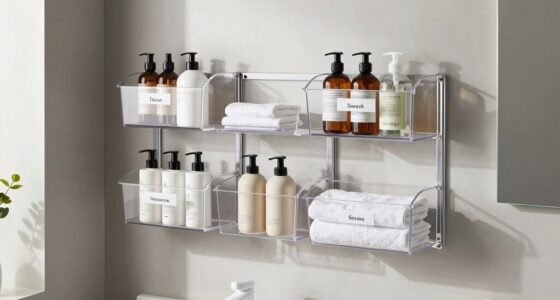
To plan your closet system effectively, start by measuring carefully—double-check all dimensions of your space, including height, width, and depth, and note any uneven walls. Use these precise measurements to choose the right storage solutions and avoid dead space. Sketch your layout to visualize the design, making adjustments for door swings and accessibility. Continuing with these tips will help you create an organized, functional closet that maximizes every inch.
Key Takeaways
- Use a sturdy tape measure and a level to ensure accurate, consistent measurements of height, width, and depth.
- Double-check all measurements at different times and lighting conditions to prevent errors.
- Plan layout with visualization tools or sketches to identify and eliminate dead space before installation.
- Incorporate adjustable or modular components to accommodate future wardrobe needs and prevent rework.
- Measure all door swings, existing furniture, and obstructions to optimize space and avoid clutter or awkward gaps.
Why Accurate Measurements Are Key to a Functional Closet
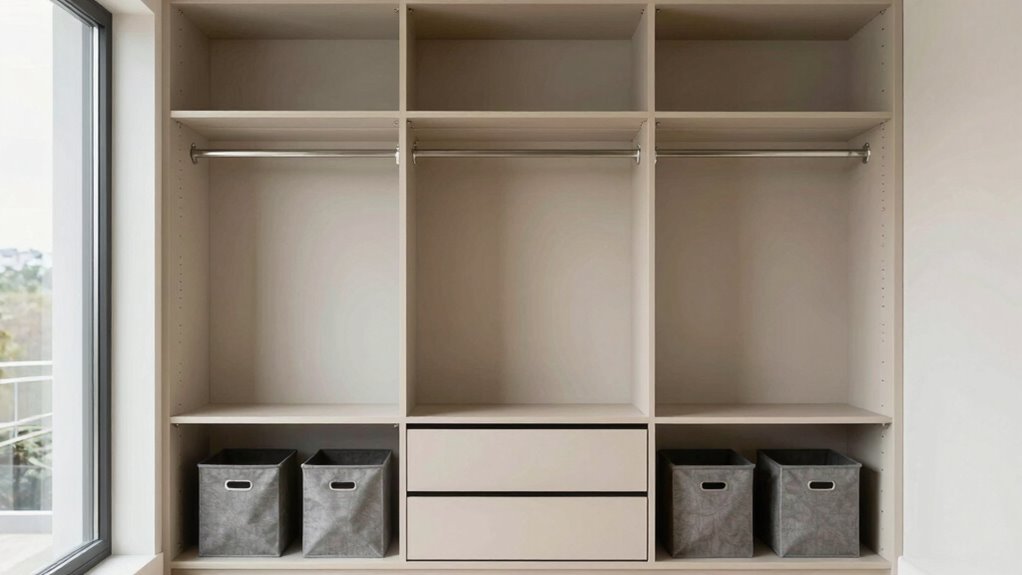
Accurate measurements are the foundation of a functional closet because they guarantee that every component fits perfectly and maximizes space. When you measure correctly, you ensure that your clothing organization system works efficiently, making it easier to find and access your items. Proper measurements help you avoid overcrowding or wasted space, which can lead to clutter and frustration. By knowing the exact dimensions of your closet, you can plan for ideal wardrobe organization, choosing storage solutions that fit perfectly and enhance accessibility. This precision allows you to tailor your closet to your needs, making it easier to maintain order. Additionally, integrating energy-efficient planning ensures your closet remains sustainable and cost-effective over time. Ultimately, accurate measurements empower you to create a streamlined, practical closet that keeps your wardrobe organized and maximizes every inch of available space.
How to Measure Your Closet Space Accurately
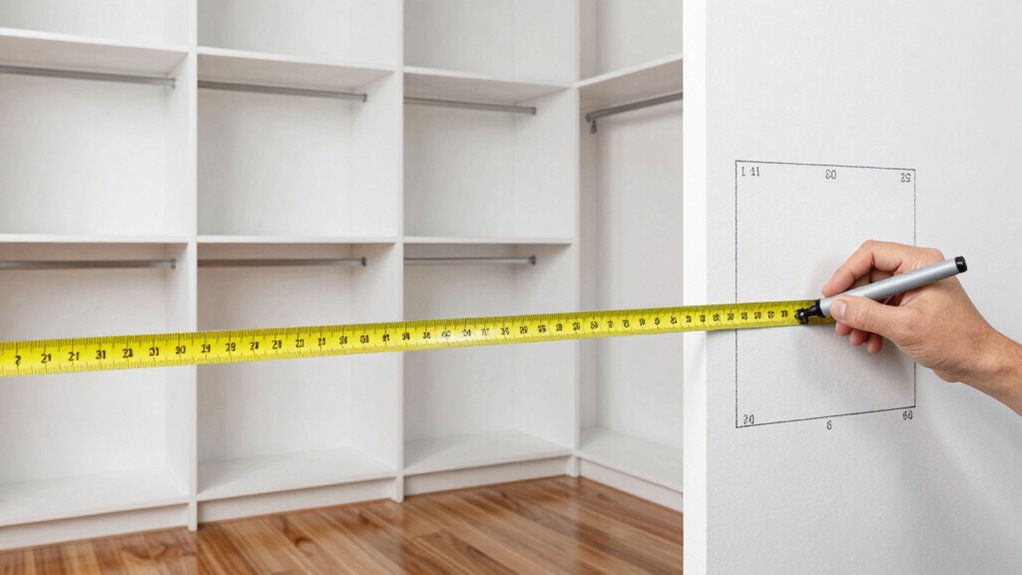
Start by gathering the tools you’ll need, like a tape measure and a notebook. Then, measure the key dimensions such as width, depth, and height of your closet space. Finally, record your measurements carefully and double-check to confirm accuracy before moving forward.
Gather Necessary Tools
Before you begin measuring your closet space, gather the essential tools you’ll need to guarantee accurate results. Having the right measuring tools and organizational accessories ensures you won’t miss any details. First, get a sturdy tape measure, preferably one that’s at least 25 feet long, for precise measurements. Second, pick up a pencil and a notepad or a measuring app to record your findings clearly. Third, consider using a level or a square to check for any uneven surfaces or corners. These measuring tools help you gather exact dimensions and avoid errors. Additionally, understanding home theater projectors can guide you in planning optimal space utilization for a better viewing experience. To ensure accuracy, double-check measurements and consider space planning techniques to maximize your closet’s efficiency. Using spatial awareness during your measurements can help you anticipate how different storage solutions will fit within your space. Recognizing measurement accuracy as a key factor in successful closet design can prevent costly mistakes later. Organizational accessories like small containers or clips can keep your tools and notes organized and easily accessible during your process. Being prepared with these items streamlines your measuring and planning.
Measure Key Dimensions
How can you guarantee your closet measurements are reliable? Start by measuring every dimension carefully—height, width, and depth—using a tape measure. For clothing organization, note the space needed for long garments, shelves, and drawers. Don’t forget to check for uneven walls or floors, which can affect your planning. Keep measurements consistent by recording them in inches or centimeters. Consider closet lighting to ensure visibility when measuring, especially in darker corners. Accurate measurements help you avoid dead space and maximize every inch of your closet. Double-check your numbers before moving forward. Precise data ensures your closet system fits perfectly, making organization easier and more efficient. Taking the time to measure correctly saves you from costly mistakes later.
Record and Confirm Data
To guarantee your closet measurements are accurate, it’s essential to record each dimension carefully and systematically. Double-check every measurement, noting the height, width, and depth of each section. Confirm your measurements by rechecking key points, especially where lighting considerations or color coordination may influence storage choices. Use a clear, organized method to document data, such as a spreadsheet or a dedicated notebook. Incorporating accurate measurements from trusted sources can further enhance your planning process. Additionally, consider integrating smart home devices like laser distance sensors or digital measuring tools to improve precision. Implementing measuring techniques rooted in reliable methods can help prevent errors. Using connected equipment like digital tools can streamline this process and increase accuracy. 1. Measure and record lighting angles that could affect visibility or item placement. 2. Note color coordination zones to optimize aesthetic flow and organization. 3. Revisit measurements after initial recording to ensure consistency.
Accurate data ensures your closet system fits perfectly and minimizes dead space, making your storage both functional and visually pleasing.
Assess Your Storage Needs and Design Preferences
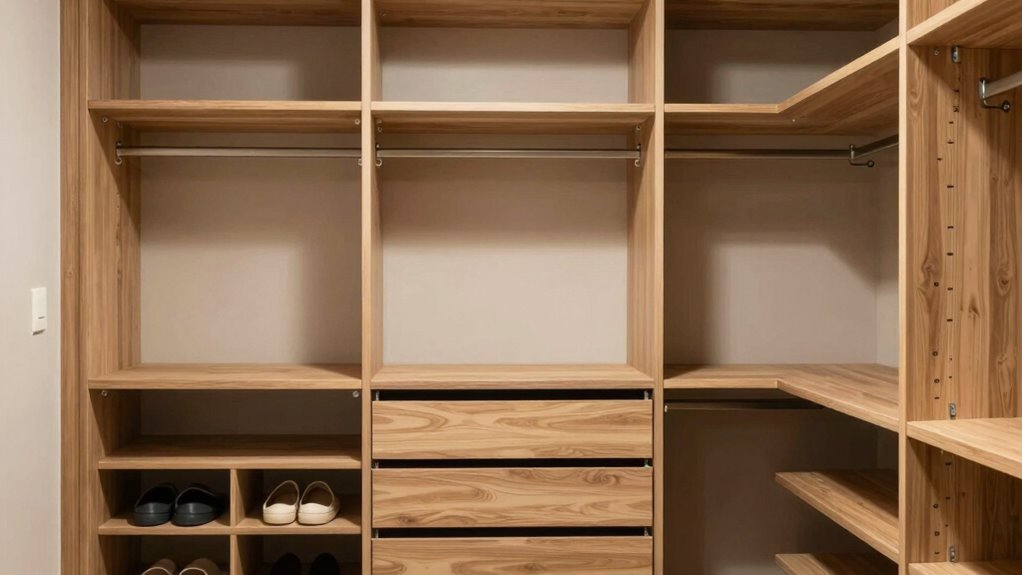
Assessing your storage needs and design preferences is the essential first step in creating a functional closet system. Think about what you store most—shoes, clothing, accessories—and consider how you want it organized. Do you prefer open shelves or drawers? Would custom shelving maximize space? Lighting options also influence your design; good lighting makes it easier to find items and highlights your closet’s features. Use this table to clarify your priorities:
| Storage Needs | Design Preferences | Lighting Preferences |
|---|---|---|
| Shoes and accessories | Open shelving vs. drawers | LED strip lights or spotlights |
| Hanging space | Minimalist vs. detailed | Under-shelf lighting |
| Drawer storage | Custom shelving | Adjustable lighting |
| Seasonal storage | Color-coded organization | Brightness level |
| Accessibility | Style and color scheme | Natural vs. artificial |
This helps tailor your closet to your unique needs. Incorporating storage organization techniques can further optimize your space and ensure everything is easily accessible. Additionally, understanding ventilation considerations can prevent moisture buildup and preserve your clothing and accessories over time. Proper ventilation is crucial for maintaining a fresh environment and extending the longevity of your stored items. Incorporating airflow management can enhance these benefits and help maintain optimal conditions.
How to Spot and Eliminate Dead Space in Your Closet
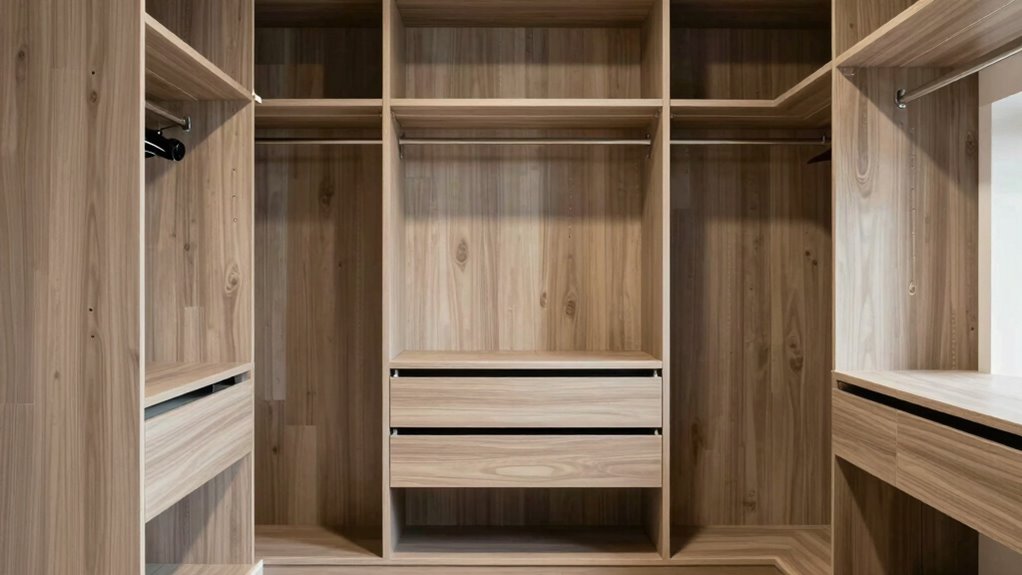
Identifying dead space in your closet begins with a careful assessment of its layout and storage patterns. Look for areas where items aren’t easily accessible or where space feels underused. To eliminate dead space:
- Check your shelf placement—ensure shelves are adjusted to fit your clothing lengths and avoid gaps.
- Optimize vertical space by stacking items or adding extra shelves where possible.
- Use color coordination to group similar items, making it easier to spot unused areas and reorganize efficiently.
- Incorporate cultural symbols for strength to promote a clear mindset during your closet evaluation, ensuring you can make strategic decisions about space utilization.
- Remember that understanding your space utilization helps you identify inefficient areas and create a more functional closet. Additionally, using essential oils for mental clarity during the process can enhance focus and decision-making. Recognizing organizational strategies from proven techniques can further streamline your closet makeover.
Choosing the Best Closet System for Your Space

Choosing the right closet system is essential for maximizing space and organization, especially since not all systems suit every room. To find the best fit, explore various custom closet styles that match your storage needs and aesthetic preferences. Consider material options like wood, laminate, wire, or metal, which influence durability, appearance, and cost. If you prefer a sleek, modern look, metal or laminate might work best. For a warm, traditional vibe, wood options are ideal. Keep in mind your closet’s size and shape when selecting a style—closet systems should fit seamlessly without overcrowding or creating dead space. By evaluating your storage priorities and material choices, you’ll ensure your closet system enhances functionality while complementing your space.
Sketching and Visualizing Your Closet Layout: Tips and Tools

Visualizing your closet layout begins with sketching out ideas and experimenting with different configurations. Use paper or digital tools to map your space, considering how color schemes and lighting options influence the overall feel. This helps you see how different elements come together before committing.
Here are some tips to get started:
- Experiment with various color schemes to determine what makes the space feel open or cozy.
- Incorporate lighting options, like LED strips or spotlights, to highlight specific areas or add ambiance.
- Use visualization tools or apps to create 3D models, giving you a clearer picture of your closet’s final look.
These steps help you refine your design, avoid dead space, and ensure your closet is both functional and visually appealing.
Common Closet Planning Mistakes and How to Avoid Them
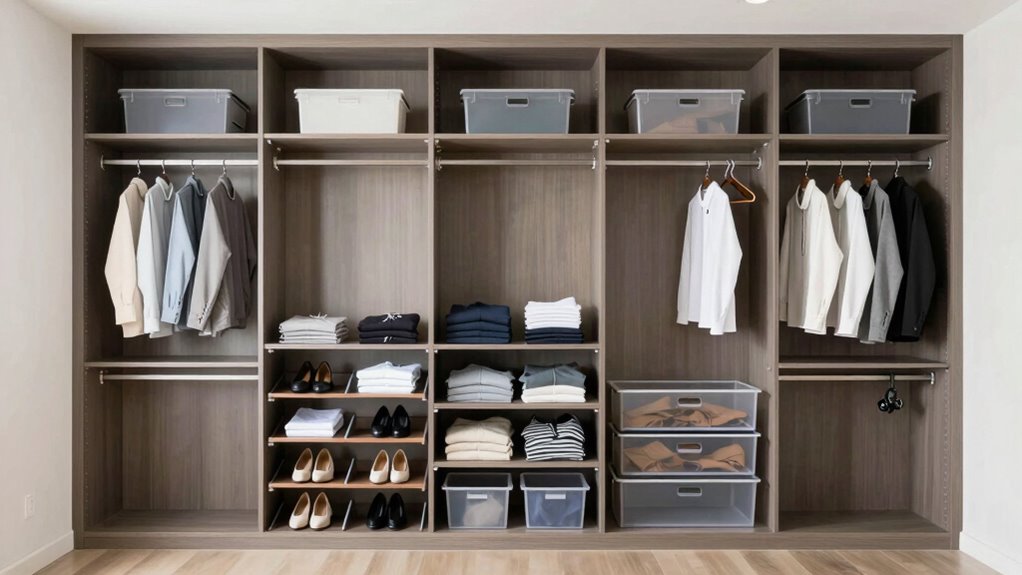
One common mistake is designing your closet without taking precise measurements, which can lead to fit issues later. Ignoring your future needs also causes you to miss out on essential storage options as your wardrobe evolves. To avoid these pitfalls, always measure carefully and plan for growth and changing storage requirements. Incorporating proper planning tools can help ensure your closet layout remains functional and adaptable over time. Additionally, understanding quality assessment principles can guide you in selecting durable and versatile storage solutions that stand the test of time. Being aware of essential oils for space aromatherapy can also create a calming environment during your planning process, making the experience more enjoyable. Incorporating space optimization techniques can further enhance your closet’s efficiency and organization. Paying attention to best gelato flavors can inspire a fun theme for your closet or refresh your mood during the design process.
Design Without Precise Measurements
Failing to take precise measurements before designing your closet can lead to costly mistakes and frustration. Without accurate data, you risk poor furniture placement and mismatched color coordination that clash or leave dead space. To avoid this, keep these tips in mind:
- Measure every dimension—height, width, and depth—of your closet space and existing furniture.
- Sketch a detailed plan that accounts for door swings, hanging rods, and shelving distances.
- Use measurements to select appropriate furniture and color schemes that fit perfectly and create a cohesive look.
Ignoring Future Needs
Even if your current closet setup works well now, it’s crucial to plan for future needs to avoid costly redesigns later. Ignoring future flexibility can limit your storage expansion options and lead to clutter. Think ahead by considering potential wardrobe changes, new hobbies, or additional accessories. Proper planning ensures your closet adapts seamlessly over time. Use adjustable shelving, extra hanging space, or modular units to maintain flexibility. Here’s a quick guide:
| Future Needs | Storage Solution |
|---|---|
| More shoes | Adjustable shoe racks |
| Seasonal clothing | Extra shelving or bins |
| New accessories | Dedicated compartments |
| Wardrobe expansion | Modular, expandable systems |
Planning now saves time and money, keeping your closet functional long-term.
Final Tips and Next Steps for a Seamless Closet Makeover
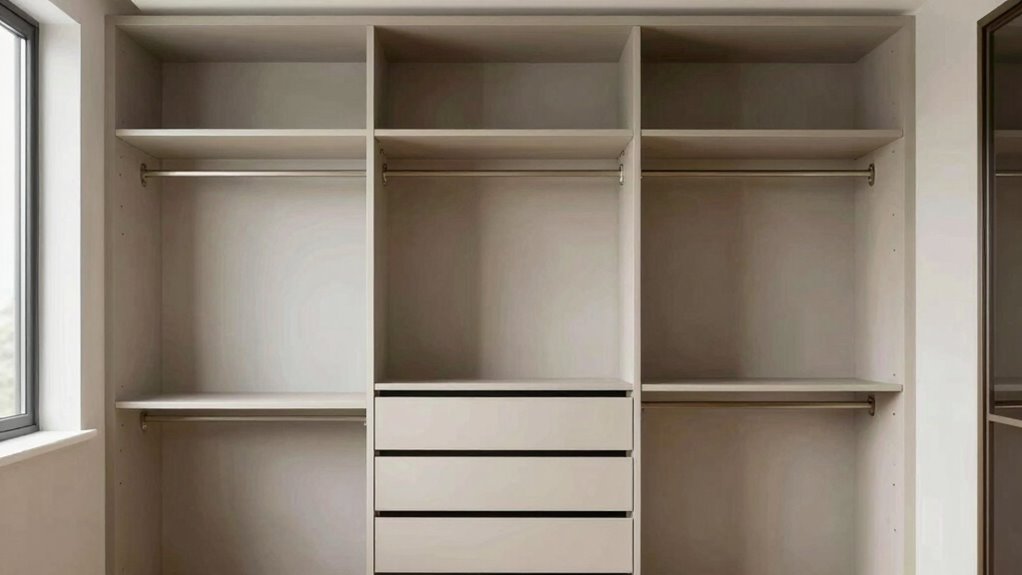
As you approach the final stages of your closet makeover, it is vital to focus on completing the details and guaranteeing everything functions smoothly. Prioritize storage optimization by arranging items logically and making use of vertical space. Think about aesthetic considerations to create a cohesive look that reflects your style. To wrap up effectively, consider these steps:
- Double-check measurements to prevent dead space and maximize storage.
- Organize items by category, making access easier and more efficient.
- Test everything—closet doors, drawers, and shelves—to ensure smooth operation and a polished final result.
These tips help you achieve a seamless transformation, blending functionality with visual appeal for a closet that’s both practical and attractive.
Frequently Asked Questions
How Often Should I Reassess My Closet Measurements?
You should reassess your closet measurements seasonally or whenever your wardrobe changes greatly. Regular adjustments help with storage optimization and guarantee your closet fits your current needs. If you notice clutter or difficulty accessing items, it’s time to measure again. These periodic checks prevent dead space, maximize space utilization, and keep your closet organized. Staying proactive ensures your closet remains functional and tailored to your evolving storage needs.
Can I Modify My Closet System After Installation?
Yes, you can modify your closet system after installation. Many closet systems offer customization options that allow for future modifications, so you can easily adjust shelves, hanging space, or add accessories as your needs change. It’s a smart idea to choose a flexible design initially, ensuring you can make tweaks later without hassle. This way, your closet remains functional and tailored to your evolving storage needs over time.
What Tools Are Best for Precise Measurements?
You should use a tape measure or a laser distance finder for precise measurements. These measurement tools provide accuracy and ease of use. When applying measuring techniques, always measure at multiple points to account for irregularities, and double-check your measurements before cutting or installing. This guarantees your closet system fits perfectly, avoiding dead space and costly adjustments later. Accurate measurement tools and techniques are essential for a seamless closet installation.
How Do I Handle Irregular or Awkward Closet Layouts?
When dealing with irregular or awkward closet layouts, you should focus on custom shelving to maximize space. Measure carefully and identify the unique angles or corners, then design custom solutions that fit perfectly. Use adjustable components for flexibility, ensuring ideal space optimization. Don’t be afraid to get creative—corner shelves, sliding drawers, or hanging rods can make even the quirkiest spaces functional and organized, giving you a tailored, efficient closet.
What Budget Considerations Should I Keep in Mind?
When planning your closet system, consider your budget constraints and material costs upfront. You should prioritize essential features and choose cost-effective materials that fit within your budget. Opt for versatile solutions that can be expanded later, and avoid over-customization that drives up expenses. Comparing prices from different suppliers and DIY options can help you stay on track financially, ensuring you get the best value without sacrificing functionality.
Conclusion
Think of your closet like a well-tended garden—measure once, plan carefully, and you’ll avoid weeds of wasted space. When you map out your layout thoughtfully, you create a lush, efficient space where everything has its place. With attention to detail now, you’ll enjoy a clutter-free haven that blossoms with organization. Start your planning today, and watch your closet flourish into a beautiful, functional retreat forever free of dead space.