
To keep your keepsakes safe, store physical memorabilia in acid-free, archival-quality containers and keep them flat in a stable environment away from heat, humidity, or sunlight. Digitize your items with high-quality scans and save backups across multiple locations like cloud and external drives. Organize your collections with clear labels and folders, and regularly update backups and review storage conditions. To learn more about safeguarding your treasures effectively, explore additional tips here.
Key Takeaways
- Use acid-free, archival-quality materials and store items flat to prevent damage and deterioration.
- Digitize photographs and memorabilia for backup and easy access, updating files regularly.
- Organize physical items with clear labels, dates, and descriptions for efficient retrieval.
- Store physical keepsakes in a stable environment, away from humidity, heat, and direct sunlight.
- Maintain organized digital and physical collections, regularly reviewing and updating storage practices.

Storing your photos and memorabilia properly guarantees they stay in good condition for years to come. To achieve this, you need a solid plan for digital preservation and effective display techniques. Digital preservation is essential because it allows you to create high-quality digital copies of your physical items, safeguarding them against damage, loss, or deterioration. Start by scanning photographs, postcards, and documents with a good scanner that captures accurate colors and details. Save these digital files in multiple locations—such as an external hard drive, cloud storage, or dedicated backup services—to prevent data loss. Regularly updating your backups and maintaining organized folders ensures quick access and reduces the risk of accidental deletion or corruption.
In addition, pay attention to display techniques that help you enjoy your memorabilia without risking their damage. When displaying physical photos or keepsakes, use acid-free, archival-quality materials, like mats and frames, to prevent deterioration over time. Avoid direct sunlight, as UV rays can fade colors and weaken paper or fabric. Instead, choose well-lit, shaded areas or use UV-protective glass in your frames. When arranging items, keep them away from high humidity, heat sources, or fluctuating temperatures, which can accelerate aging. Proper display not only protects your memorabilia but also makes it easier to appreciate and share with family and friends.
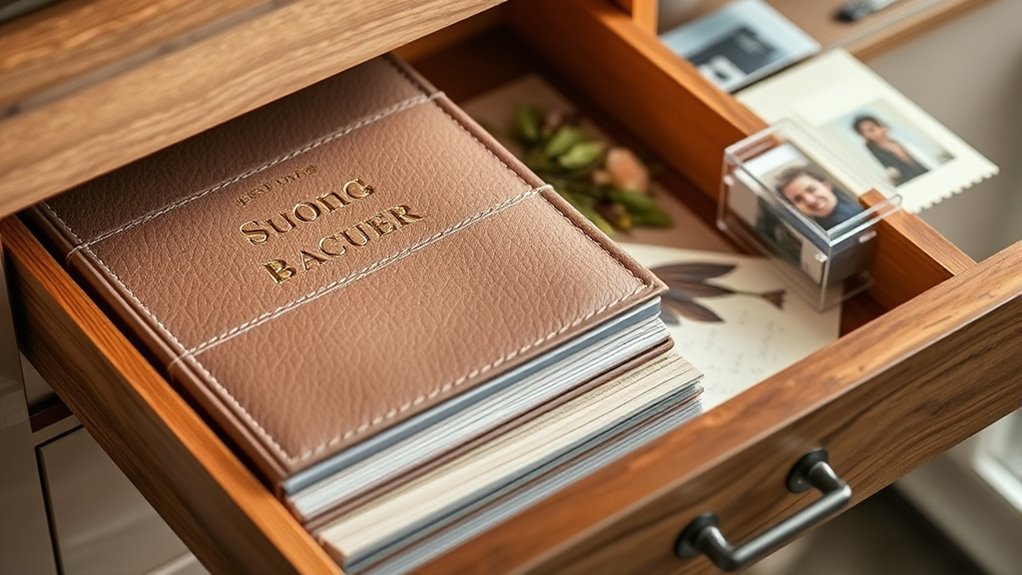
Incorporating digital preservation into your storage routine doesn’t mean you should abandon physical items. Instead, think of it as a complementary approach; digital copies serve as backups, while well-preserved physical items retain their original value. When storing physically, use acid-free boxes, folders, or sleeves designed specifically for photographs and documents. Keep items flat and organized, avoiding overcrowding that could cause tears or bends. Label everything clearly with dates and descriptions to stay organized, especially if you have a large collection. Additionally, consider using AI-powered tools to help organize and tag your digital files, making retrieval even easier in the future.
Frequently Asked Questions
How Can I Repair Damaged or Torn Photographs?
If your photos are torn or damaged, start with gentle tear repairs by using photo restoration techniques. Carefully align the torn edges and apply archival-quality, acid-free adhesive or repair tissue designed for photos. Avoid using regular tape, as it can cause further damage. For complex damage, consider professional photo restoration services. This guarantees your cherished memories are preserved and protected for years to come.
What Are Eco-Friendly Storage Options for Memorabilia?
You can choose eco-friendly storage options for your memorabilia by opting for recyclable materials like paper, cardboard, and glass. Biodegradable containers made from plant-based plastics or bamboo are excellent choices that break down naturally. Avoid plastic that isn’t labeled recyclable. Store your keepsakes in these sustainable containers to protect your memories while reducing environmental impact. This way, you preserve your memorabilia responsibly and contribute to a healthier planet.
How Do I Digitize Fragile or Vintage Items Safely?
Safely digitize fragile or vintage items by using gentle handling and specialized scanning techniques. You’ll want to stabilize the item with acid-free supports and avoid direct contact, then scan at high resolution for digital preservation. Use a flatbed scanner with a glass surface to prevent damage, and consider professional services for irreplaceable or delicate pieces. This approach guarantees your memorabilia is preserved digitally without risking harm to the original artifact.
What Are the Best Ways to Organize Large Memorabilia Collections?
You should start by sorting your memorabilia into categories, then use labeled photo albums for easy access. Store items in acid-free boxes and attach memorabilia labels to identify each piece. Keep your collection in a cool, dry place to prevent damage. Consider digital backups of important items for extra security. Regularly review and reorganize to maintain order and ensure your memorabilia remain well-preserved.
How Can I Prevent Pest Damage to My Keepsakes?
Think of your keepsakes as treasures in a dragon’s lair; you wouldn’t leave them unprotected. To prevent pest damage, practice pest prevention by sealing your items in sturdy storage containers. Use airtight containers for added defense, and keep your collection in a cool, dry place. Regularly inspect your storage to catch any signs of pests early. This way, your memorabilia stays safe from unwanted invaders, preserving their story for years to come.
Conclusion
Now, imagine your treasured photos and memorabilia nestled safely in acid-free boxes, their colors vivid and stories intact. Each item becomes a timeless keepsake, waiting quietly for your next visit, ready to evoke memories with every glance. By storing them carefully, you protect these precious moments from fading or damage. Your collection isn’t just storage; it’s a gateway to cherished memories, preserved beautifully, so they can be enjoyed for generations to come.