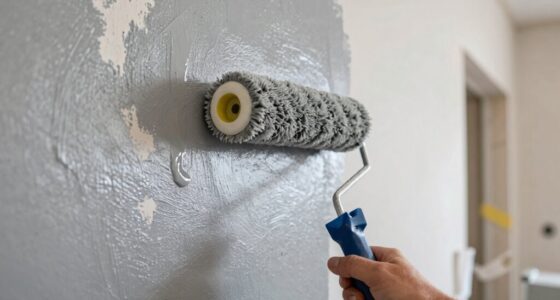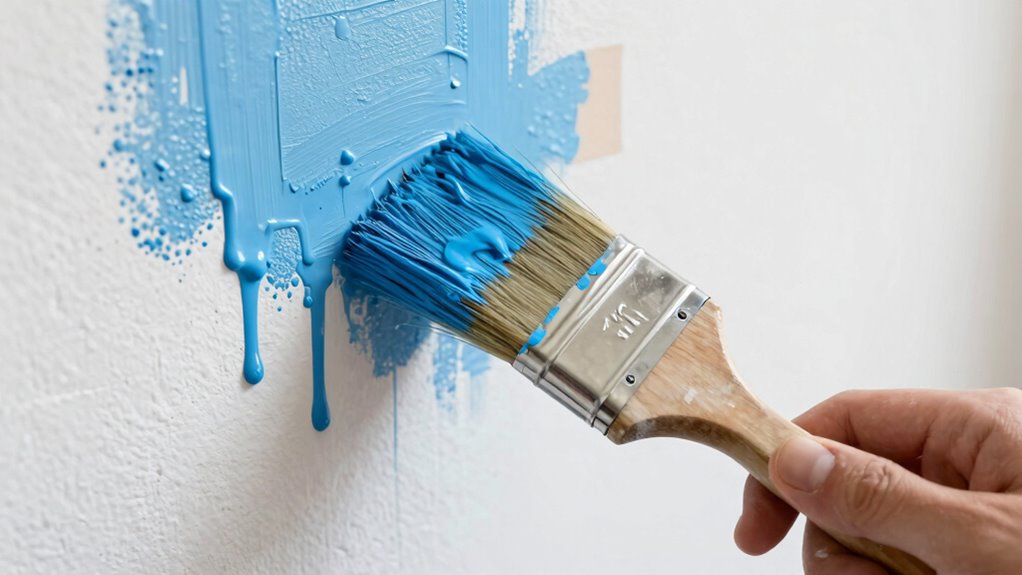

Using the wrong tools or skipping proper preparation can turn a simple paint job into more work overall. For example, choosing stiff brushes for smooth walls or small brushes for large areas slows you down and causes uneven strokes. Neglecting to mix or thin paint properly leads to drips or poor coverage, forcing you to redo coats. Investing in the right tools and prep saves time and effort in the long run—stick around to find out how to avoid these common mistakes.

Get furniture and decor delivered free with Prime
- Fast, free delivery on millions of items
- Prime Video, Amazon Music and more included
- Member-only deals all year
Key Takeaways
- Choosing overly stiff brushes for smooth surfaces causes uneven strokes and difficult fixes.
- Using small brushes for large areas increases work and reduces efficiency.
- Selecting the wrong tool for the surface type leads to uneven coverage and rework.
- Skipping proper paint mixing or thinning results in splatters, drips, and more coats.
- Failing to prepare tools and paint properly causes streaks, uneven finishes, and additional sanding.
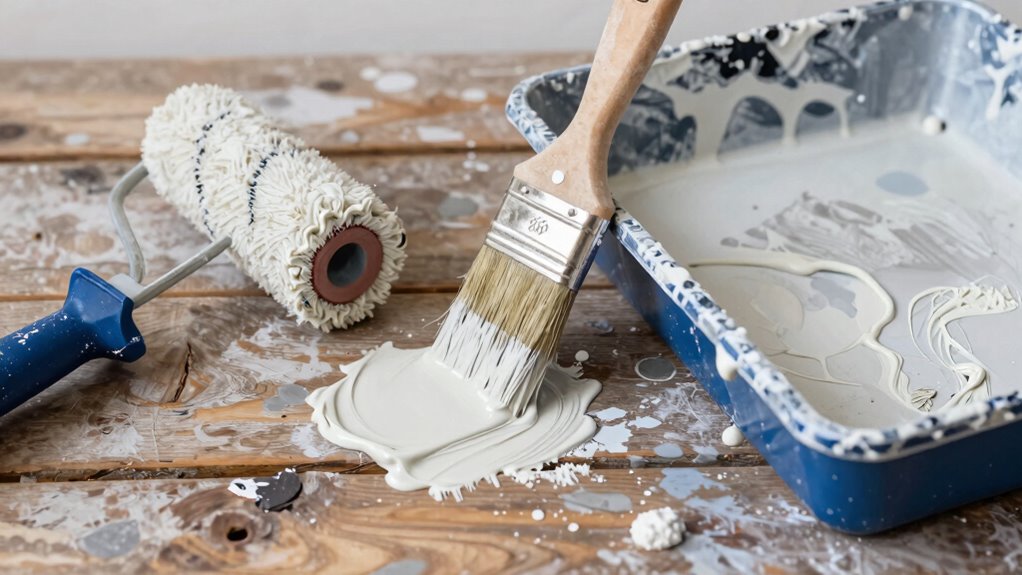
When tackling a DIY paint project, one common mistake is choosing the wrong tools or using them improperly, which can lead to uneven coverage or a rough finish. This mistake often starts with brush selection. You might grab a brush that’s too stiff for smooth walls or a tiny one that’s better suited for detail work when you’re covering large surfaces. Using an inappropriate brush means you’ll struggle to get even strokes, resulting in streaks, missed spots, or brush marks that are tough to fix later. It’s essential to pick a brush that matches the surface and the paint type, ensuring you can apply paint smoothly and efficiently.
Choosing the right brush is key for smooth, even paint coverage and a professional finish.
Another crucial aspect tied to this mistake is paint consistency. Many DIYers overlook this, thinking that simply opening the can and starting to paint will suffice. But if the paint is too thick or too runny, it complicates your job. Thick paint can cause brush or roller splatters, uneven coats, and brush marks, forcing you to redo sections. On the other hand, paint that’s too thin can drip, run, and fail to provide adequate coverage. You need to achieve the right paint consistency—usually a smooth, fluid texture that flows easily off the brush without dripping or clumping. Properly mixing or thinning your paint ensures a more uniform application and reduces the need for multiple coats, saving you time and effort.
Using the wrong tools and neglecting paint consistency often results in more work than you initially planned. You might think you’re saving time by rushing through the process, but uneven coverage will require sanding, patching, or additional coats later. These rework steps can double or triple your workload, turning a simple project into a prolonged ordeal. Additionally, knowing how to properly prepare your paint can help you avoid common pitfalls and achieve better results on the first try. Taking the time to select the right tools can also make your project go more smoothly and efficiently. Investing time in proper surface preparation can also make a significant difference in the quality of your finish. Instead, investing a little time beforehand to select the right brush and prepare your paint properly can make a significant difference. It helps you achieve a professional-looking finish with fewer coats and less frustration.
Additionally, understanding paint properties can help you select the most suitable tools and techniques for your project, leading to better results. Ultimately, the key to avoiding this DIY paint tool mistake is understanding the importance of brush selection and maintaining the correct paint consistency. When you match your tools to the task and prepare your paint correctly, you’ll find your work goes faster, easier, and results in a much more polished look. It’s a small step that pays off big in the quality of your finished project, saving you time and unnecessary rework down the line.
best paint brushes for smooth walls
As an affiliate, we earn on qualifying purchases.
As an affiliate, we earn on qualifying purchases.
Frequently Asked Questions
How Do I Choose the Right Paint Tool for My Project?
To choose the right paint tool, consider your project’s surface and the type of finish you want. Start with proper surface preparation to guarantee smooth application. For detailed work or small areas, use brushes; for large surfaces, rollers work best. If you’re aiming for a sleek look, select tools that match your desired texture and paint consistency. Proper color selection also helps achieve your desired outcome efficiently.
What Are Common Signs My DIY Paint Tool Is Malfunctioning?
You’ll notice your DIY paint tool is malfunctioning if it’s uneven, dripping, or spattering paint unexpectedly, which can compromise your paint job. These are signs of issues with paint tool safety, like clogged nozzles or worn-out parts. Follow DIY painting tips to regularly inspect and maintain your tools, ensuring smooth operation. Address problems early to avoid additional work and achieve professional-looking results with less hassle.
Can Using the Wrong Paint Tool Ruin My Paint Job?
Using the wrong paint tool, like an unsuitable paint roller or brush selection, can definitely ruin your paint job. A poor choice may cause streaks, uneven coverage, or paint drips, making your finish look unprofessional. Always match your paint roller or brush to the surface and type of paint you’re using. Proper tool selection guarantees smooth application, even coats, and a polished result, saving you time and effort in the long run.
How Do I Maintain My Paint Tools for Longevity?
Proper paint tool preservation promises prolonged performance. You should carefully clean tools after each use, avoiding abrasive abrasions, and guarantee they’re thoroughly dried to prevent rust. Store your tools in a safe, sealed space—using proper paint storage methods—so brushes and rollers stay supple and sharp. Regularly inspect and maintain your tools, replacing worn bristles or rollers. This proactive approach guarantees longevity, preserves quality, and makes your painting projects smoother and more satisfying.
Are There Eco-Friendly Paint Tool Options Available?
Yes, eco-friendly paint tool options are available. You can choose sustainable brushes made from natural or recycled materials to reduce environmental impact. When selecting paints, opt for eco-friendly paints that emit fewer volatile organic compounds (VOCs). These options help protect your health and the planet. Using sustainable brushes and eco-friendly paints guarantees your DIY projects stay green, making your efforts both effective and environmentally responsible.
Conclusion
Next time you reach for that DIY paint tool, remember this mistake. It’s funny how a simple oversight can turn into double the work, almost like fate reminding us to pause and think. Sometimes, what feels like a shortcut only leads to more trouble. So, trust your instincts, double-check your tools, and maybe, just maybe, avoid that extra hassle. After all, the smallest mistake can surprisingly save you the most time in the end.
Columbus Day / Indigenous Peoples' Day Picks
long weekend sales
As an affiliate, we earn on qualifying purchases.