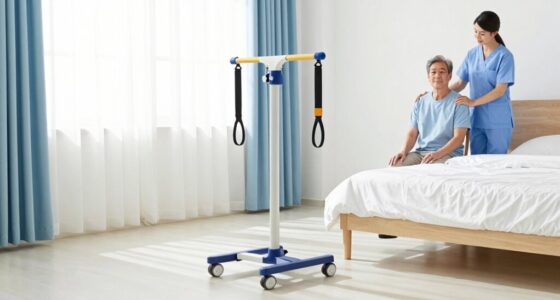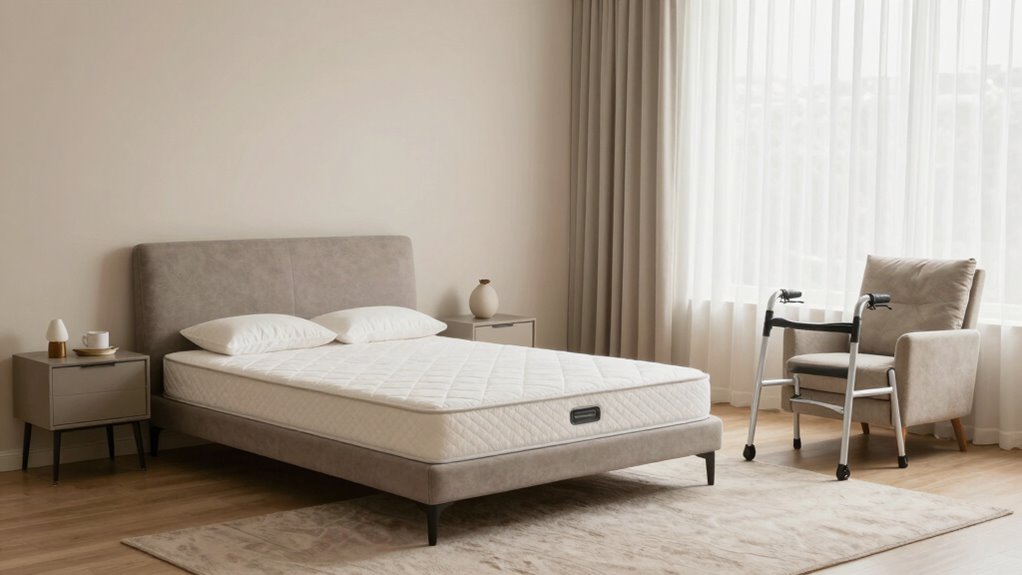
To create guest spaces that support aging relatives, prioritize safety and accessibility by keeping pathways clear, installing grab bars, and using slip-resistant flooring. Design the space with good lighting, easy-to-reach essentials, and comfortable furniture with non-slip pads. Make certain privacy with private bathrooms, window coverings, and personal touches. Incorporate safety features like nightlights and emergency systems while fostering independence. Keep an open dialogue about needs and be ready to make small adjustments to guarantee comfort and security—there’s more to take into account for a perfect balance.

Get furniture and decor delivered free — and shop member deals
- Fast, free delivery on millions of items
- Access to Prime Big Deal Days deals on October 6–7
- Prime Video, Amazon Music and more included
Key Takeaways
- Incorporate safety features like grab bars, slip-resistant flooring, and good lighting for easy navigation.
- Use accessible furniture with non-slip pads and ensure pathways are clear and free of clutter.
- Provide privacy options such as private bathrooms, locks, and window coverings for comfort and independence.
- Personalize the space with familiar items and involve relatives in decorating to foster comfort and a sense of belonging.
- Balance safety and independence by including simple safety adjustments and maintaining open communication about needs.
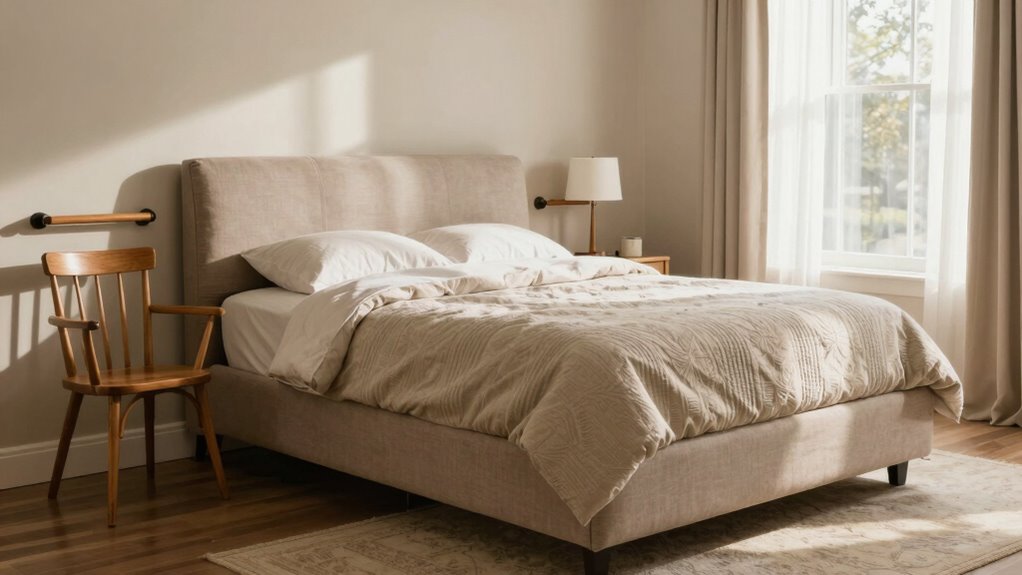
As your aging relatives consider moving in or visiting more often, creating a comfortable and accessible guest space becomes essential. You want this area to feel welcoming while guaranteeing their safety and independence. Start by designing the space with home safety in mind. Clear pathways free of clutter are vital, so they can move around easily without tripping hazards. Install grab bars in the bathroom and guarantee the flooring is slip-resistant. Good lighting is crucial—bright, natural light during the day and soft, accessible lighting at night help prevent falls and make the space more inviting. Keep essential items within easy reach; avoid high shelves or deep cabinets that might require bending or stretching. Consider furniture that’s sturdy and comfortable, with non-slip pads underneath to prevent sliding. These small adjustments can greatly reduce risks and foster a sense of security. Additionally, incorporating home safety features such as motion-activated lighting or emergency alert systems can further enhance their safety. Incorporating accessible design principles can also make the space more functional and welcoming for aging relatives. Implementing universal design principles ensures the space remains adaptable as their needs change over time, especially as mobility or other abilities may evolve.
Privacy considerations are equally important to make your relatives feel respected and autonomous. Design the guest space to provide a sense of personal territory. If possible, include a door with a lock or privacy latch so they can enjoy solitude when needed. Adding window coverings that offer both privacy and light control is helpful, especially if they prefer to sleep during the day or need quiet time. Keep their belongings separate from your own to reinforce their independence and avoid any unintended intrusion. Providing a small, private bathroom nearby also enhances privacy, making their stay more comfortable. If space allows, include personal touches—familiar photos, favorite bedding, or personal items—that help create a homely atmosphere. Respect their routines and preferences, and involve them in decorating decisions to guarantee the space feels truly theirs. Ensuring the environment promotes personal independence can significantly improve their overall experience.
Balancing safety and privacy may seem challenging, but it’s achievable with thoughtful planning. Remember, an accessible and secure environment encourages your loved ones to maintain their independence while feeling cared for. Keep communication open about their needs and preferences, and be willing to adapt the space over time. Simple adjustments, like adding a nightlight or installing a raised seat in the bathroom, show that you’re attentive to their evolving needs. Creating a safe and comfortable environment is vital for their well-being and peace of mind. Ultimately, a well-designed guest space that prioritizes both home safety and privacy considerations makes your aging relatives feel valued, comfortable, and secure during their visits or extended stays.
As an affiliate, we earn on qualifying purchases.
Frequently Asked Questions
What Legal Considerations Are Involved in Creating Guest Spaces for Relatives?
You should guarantee all legal documentation is in place, like rental agreements or house rules, to clarify responsibilities and expectations. It’s also wise to check local zoning laws and building codes for guest space regulations. Additionally, consider liability insurance to protect against potential accidents or damages. Consulting with a legal professional can help you navigate these considerations, ensuring your guest space complies with legal requirements and provides safety for your aging relatives.
How Can I Incorporate Assistive Technology Into the Guest Space?
You can incorporate assistive technology into your guest space by installing smart home technology like voice-activated lights, emergency alert systems, and door sensors. Adding assistive devices such as grab bars, motion sensors, and adjustable beds can also increase safety and comfort. These features make the space more accessible for aging relatives, giving them independence while ensuring your peace of mind. Prioritize user-friendly options to maximize ease of use.
What Are Cost-Effective Ways to Modify Existing Guest Rooms?
You can make your guest room more accessible with budget-friendly renovations using DIY modification tips. Start by installing grab bars in the bathroom, which are inexpensive and easy to add. Consider replacing traditional doorknobs with lever handles for easier grip. Raise bed heights slightly for easier transfers, and use non-slip rugs to prevent falls. These simple, cost-effective changes help support aging relatives without breaking the bank.
How Do I Ensure Privacy for Both Guests and Aging Relatives?
Coincidence often brings unexpected privacy needs, so you should prioritize privacy protection and respect personal boundaries. Install soundproofing or use curtains and room dividers to create distinct zones. Consider locking doors for added privacy, and set clear expectations with both guests and relatives about personal space. Regularly check in to make certain everyone feels comfortable, fostering trust and respect while accommodating their individual needs in shared spaces.
What Safety Features Are Essential in These Multi-Purpose Spaces?
You should include safety features like furniture arranged to prevent trip hazards and sturdy, slip-resistant flooring. Add grab bars near beds and seating, and guarantee good lighting throughout the space. Incorporate decorative accents that double as functional features, like wall-mounted art with built-in shelves or cushioned window seats. These elements enhance safety while maintaining a welcoming atmosphere, making the space comfortable and secure for both guests and aging relatives.
Conclusion
By designing guest spaces that cater to aging relatives, you create a welcoming environment that balances comfort and accessibility. Think of a cozy guest room with a no-step entry, adjustable bed, and easy-to-reach essentials—it’s like giving your loved ones a home away from home. Some might worry about space, but even a small corner with thoughtful modifications can make a big difference. Your effort guarantees they feel safe, comfortable, and truly cared for.
Fall Picks
fall essentials
As an affiliate, we earn on qualifying purchases.