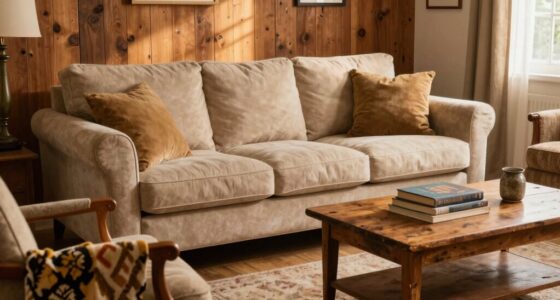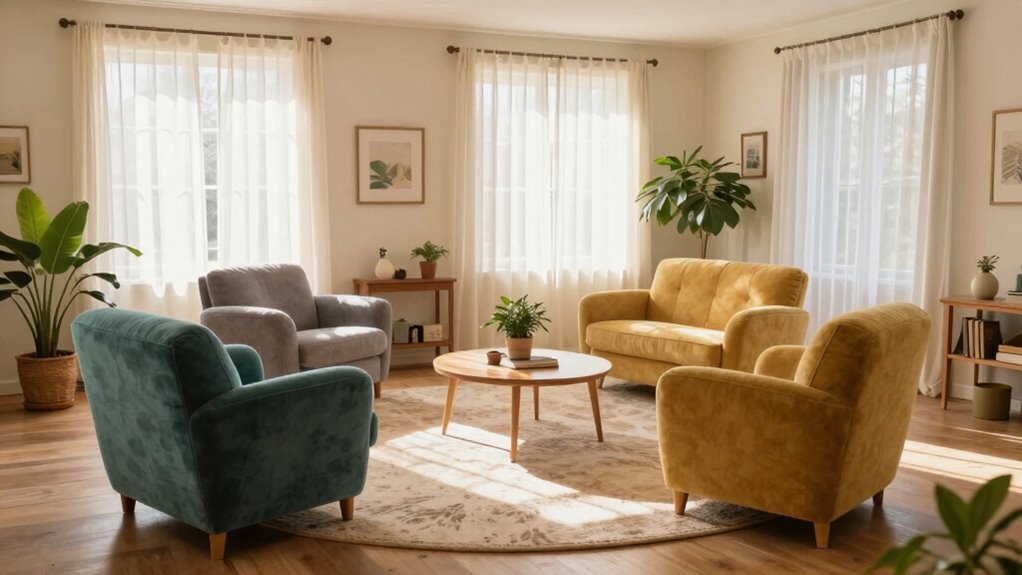

Arranging your space thoughtfully can boost your energy, lift your mood, and make daily tasks easier. Proper lighting near windows and soft bulbs keeps you alert and comfortable, while good ventilation guarantees fresh air and better health. Clear pathways and furniture placed within reach reduce accidents and promote independence. Creating a logical flow helps you move easily, making your environment feel both safe and inviting. If you explore these tips, you’ll discover practical ideas to transform your space into a supportive haven.

Get furniture and decor delivered free with Prime
- Fast, free delivery on millions of items
- Prime Video, Amazon Music and more included
- Member-only deals all year
Key Takeaways
- Adequate natural and soft lighting boosts mood and reduces fatigue in seniors.
- Proper ventilation and good air quality enhance comfort and overall well-being.
- Clear, accessible furniture arrangement promotes independence and minimizes physical strain.
- Well-placed essential items and clutter-free pathways improve ease of movement and safety.
- Thoughtful room layout fosters a calming environment, supporting positive mood and confidence.
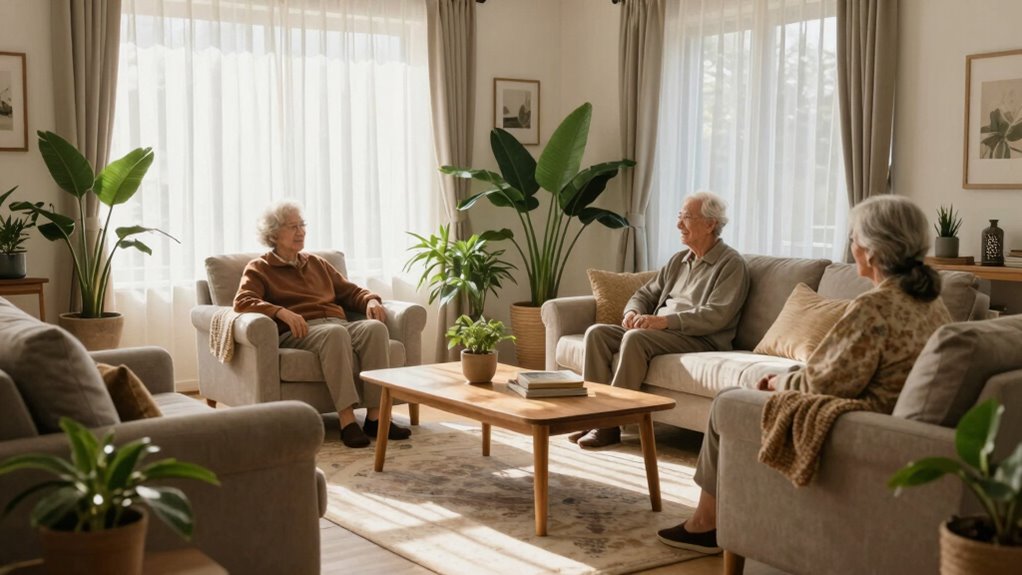
The way a room is arranged can considerably influence a senior’s energy levels, mood, and overall ease of movement. When you consider lighting placement, you’re not just thinking about brightness—you’re shaping how comfortable and alert someone feels throughout the day. Natural light is best, so position seating areas near windows to maximize daylight, which can boost mood and reduce feelings of fatigue. During darker hours, guarantee that lighting is evenly distributed with soft, warm bulbs that minimize glare and harsh shadows. Avoid overly bright or flickering lights, as they can cause discomfort or disorientation. Proper lighting placement helps seniors see clearly, prevents falls, and creates a welcoming atmosphere that encourages engagement rather than withdrawal. Additionally, lighting placement can influence a senior’s sleep patterns and overall circadian rhythm, further supporting their well-being. Ensuring the room has good ventilation is also essential for maintaining fresh air and reducing indoor pollutants, which can impact comfort and health. Proper ventilation can also help regulate temperature and humidity, making the environment more comfortable and conducive to well-being. Incorporating effective air quality solutions can further enhance indoor air freshness, reducing allergens and irritants that may affect seniors’ health.
Furnishing your space thoughtfully also plays an essential role. When arranging furniture, prioritize clear pathways to reduce tripping hazards and make mobility easier. Keep frequently used items within arm’s reach to promote independence, and select furniture that’s sturdy and supportive—think firm chairs with armrests that assist with standing and sitting. Avoid overcrowding the room with unnecessary pieces, which can make navigation cumbersome and create a sense of chaos. Instead, aim for a layout that feels open yet cozy, fostering a calm environment that encourages movement without feeling overwhelming. Place seating in spots that maximize natural light and views, making the space inviting and stimulating. When arranging furniture, also consider the placement of essential items like remote controls, phones, or reading glasses, so they’re easily accessible without straining or searching. Incorporating ergonomic design principles into the room layout can further improve comfort and safety for seniors.
You want the room to promote both safety and comfort. To do this, focus on creating a logical flow that guides movement naturally from one area to another. For example, position the bed close to the bathroom or closet for convenience but ensure there’s enough space to move freely. Keep walkways free of clutter and switch out rugs that might slip. Adjust furniture placement to reduce the need for twisting or stretching, which can cause discomfort or injury. When lighting and furniture are thoughtfully arranged, you’re not just improving aesthetics; you’re actively enhancing a senior’s ability to move confidently, feel secure, and maintain a positive outlook. Every detail, from where the light hits to how furniture is grouped, works together to create a space that supports independence, boosts mood, and fosters a sense of well-being. Paying attention to room layout and organization can significantly contribute to a safer and more comfortable environment for seniors.
Products Worth Considering

Blueair Blue Pure 211i Max Air Purifier

Levoit Vital 200S-P Smart Air Purifier for Large Rooms

Levoit Core 600S-P Smart Air Purifier for Large Rooms
As an affiliate, we earn on qualifying purchases.
Frequently Asked Questions
How Often Should Room Layouts Be Reassessed for Seniors?
You should reassess room layouts for seniors every six to twelve months, or sooner if their needs change. By adjusting furniture arrangements and personalizing space layouts, you can improve comfort and safety. Regular check-ins help spot hazards or areas needing modification, ensuring the space remains functional and supportive. Staying proactive in adjusting furniture and personalizing layouts enhances their well-being, mood, and independence.
What Colors Are Best for Senior-Friendly Room Setups?
You should choose calming, warm colors for senior-friendly room setups based on color psychology, which promotes relaxation and comfort. Soft blues, gentle greens, and warm neutrals help reduce stress and create a welcoming atmosphere. When considering color selection, avoid overly bright or harsh shades that can cause visual fatigue. Opt for muted, soothing tones to enhance mood, ease mobility, and foster a peaceful environment for seniors.
How Can Lighting Be Optimized for Senior Comfort?
You can’t expect seniors to thrive in dim caves, so optimize lighting with natural sources and adjustable fixtures. Let the sunshine pour in, brightening moods and reducing eyestrain. Add dimmable lamps for cozy evenings, because nothing says “I’m ready for bed” like a perfectly adjustable glow. This balance keeps energy high, eyes comfortable, and spirits lifted—without resorting to harsh fluorescents that make everyone look like they’re about to audition for a horror film.
Are There Specific Furniture Materials Recommended for Seniors?
You should choose ergonomic furniture with supportive cushions and easy-to-grasp armrests to enhance comfort and safety. Opt for non-slip flooring to prevent falls and provide stability. Materials like soft fabrics, sturdy wood, or lightweight metal work well, making furniture easier to move and reducing strain. Prioritizing these materials helps seniors feel secure, reduces accident risks, and promotes independence in their living spaces.
How Does Room Acoustics Impact Senior Well-Being?
You might think noise is just background chatter, but poor acoustics can really wear on seniors’ well-being. Soundproofing techniques help reduce disruptive sounds, creating a calmer environment. Acoustic panel benefits include absorbing echoes and muffling loud noises, making conversations clearer and reducing stress. Proper room acoustics boost comfort and safety, helping seniors feel more relaxed and confident in their space. Ironically, quiet environments often promote more lively, engaged days.
Conclusion
By thoughtfully arranging your space, you create a sanctuary that boosts energy and mood, making daily tasks easier and more enjoyable. It’s like turning a chaotic room into a calm oasis, where comfort and accessibility meet. When you prioritize clarity and ease, you foster independence and happiness. In the end, a well-designed room isn’t just about aesthetics; it’s about empowering you to thrive, transforming everyday routines from burdensome to beautiful.