
TL;DR

Get furniture and decor delivered free — and shop member deals
- Fast, free delivery on millions of items
- Access to Prime Big Deal Days deals on October 6–7
- Prime Video, Amazon Music and more included
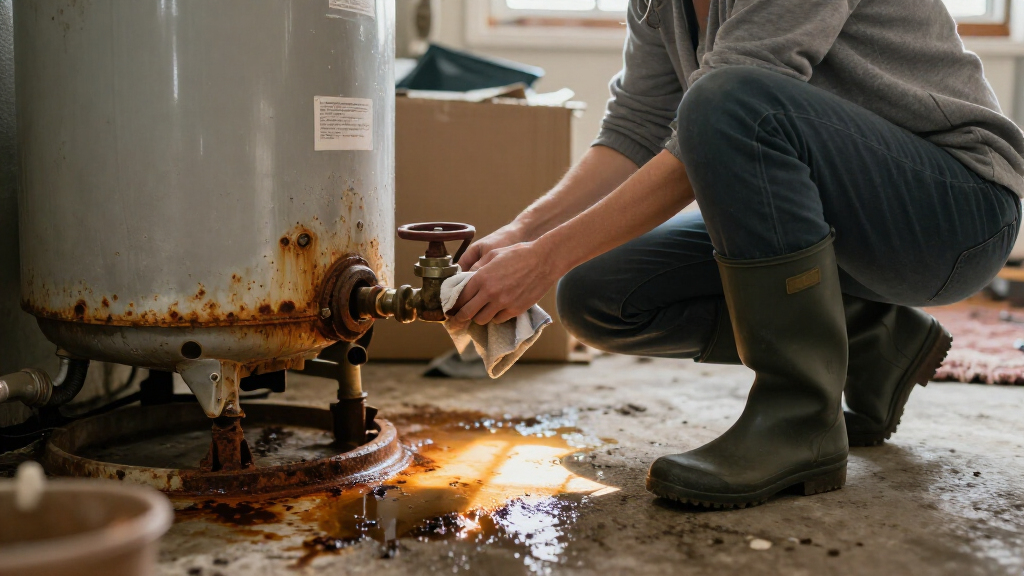
A homeowner identified in a Family Handyman report discovered his 21-year-old water heater had rusted through, flooding his utility closet floor. Plumbers reviewing the case said the tank was past its expected lifespan, praised his emergency shutoff response, and flagged a missed safety step: cutting power or gas before working.
A Minnesota homeowner named Ethan discovered a rusted-out water heater tank had flooded his utility closet floor last month after the bathtub filled for his daughter ran cold, according to a Family Handyman case study. The 21-year-old tank was well past the typical 10-to-15-year lifespan for gas and propane water heaters, and the situation worsened when the supply line valve failed to close, forcing a whole-house water shutoff before he installed a replacement unit himself.
According to the report, Ethan’s first move was closing the supply line valve to stop the tank from refilling, then draining the remaining water through a hose attached to the tank’s bottom spigot before heading to a home improvement store. When he returned, water was still flowing — meaning the supply valve wasn’t sealing. He then shut off the main water supply to the house, the step plumbers said was the only correct option.
The next morning he installed the new heater himself, then enlisted his father-in-law to carry the old unit, which weighed more than 120 pounds, up the stairs — a messy job complicated by leaking water. “If there’s a silver lining here, it’s that we were home when this happened,” Ethan told Family Handyman.
Plumbers reviewing the case identified one safety step Ethan skipped: shutting off the gas or electricity to the water heater before touching anything. The experts also said his Minnesota location likely compounded the failure, since cold climates make water heaters work harder, and noted that faulty supply valves are common on units older than ten years.
Why Aging Tanks and Stuck Valves Matter
The case illustrates a common and expensive failure mode for homeowners: tanks that corrode quietly for years before failing suddenly. Plumber Kolby Barnes told Family Handyman that Ethan was fortunate his 1940s bungalow’s main shutoff — likely an older gate valve prone to buildup, unlike a ball valve — actually closed. If it hadn’t, the flooding could have continued unchecked.
The financial stakes are high. The report puts a DIY water heater replacement at roughly $700, versus $1,500 to $3,500 for a professional installation. Unattended leaks can drive flood damage and mold remediation costs into the thousands to tens of thousands of dollars. Barnes also recommended smart leak-detection devices that can shut off water automatically, calling it “a mistake not to consider installing one” now that homeowners know they exist.
How Water Heaters Reach the End
Both gas and propane water heaters typically last 10 to 15 years before corrosion ends their service life, according to the plumbers cited in the report. At 21 years, Ethan’s tank exceeded that range, and he told Family Handyman he wasn’t surprised it failed. Replacing the internal anode rod, a corrosion-prevention component, every few years can extend tank life; that costs $20 to $50 as a DIY job or $150 to $600 professionally. Faulty shutoff valves are typically caused by rotted gaskets or buildup preventing a proper seal, per plumber Travis Hargrave.
“That’s your only move, and hesitating even 10 minutes can mean hundreds of gallons on the floor.”
— Brendan Tonks, plumber
Where the Experts Disagree
The plumbers did not fully agree on whether homeowners should attempt this repair themselves. Tonks said he does not recommend a DIY fix because water heaters involve gas and electrical components that can be dangerous if mishandled. Ethan, a confident DIYer, disagreed, calling it relatively easy — particularly with shark bite fittings — provided a helper is available. The report’s own four-point difficulty scale places this job in professional-assistance territory depending on the homeowner’s confidence level. The exact cost of the resulting cleanup in Ethan’s case was not disclosed.
Prevention Steps Homeowners Can Take
The report recommends a prevention checklist: replace the anode rod every few years to slow corrosion; proactively replace water heaters approaching the end of the 10-to-15-year lifespan rather than waiting for failure; and consider a smart leak-detection shutoff device. For any active incident, the guidance is to cut gas or electricity to the unit first to prevent electrocution, fire, or — in rare cases — explosion of an empty tank that keeps heating, then shut off the main water supply and drain the tank. Homeowners uncomfortable with gas or electrical connections should hire a licensed plumber, and local code and permit requirements may apply to water heater replacement.
Key Questions
How long do water heaters typically last?
Gas and propane water heaters typically last 10 to 15 years before corrosion ends their service life, according to the plumbers cited by Family Handyman. Ethan’s 21-year-old tank exceeded that range considerably.
What should I do first if my water heater is leaking?
Turn off the gas or electricity to the unit first to prevent electrocution, fire, or possible explosion of an empty heating tank, then shut off the water supply. If the supply valve won’t close, shut off the home’s main water line.
How much does water heater replacement cost?
According to the report, a DIY replacement runs about $700, while professional installation costs $1,500 to $3,500. Untreated leaks can add thousands more in water damage and mold remediation.
Why wouldn’t the supply valve close?
Plumber Travis Hargrave said faulty valves are usually caused by rotted gaskets or buildup in the line that prevents sealing, and are common on water heaters older than ten years.
Can I extend my water heater’s life?
Yes — replacing the internal anode rod, which helps prevent corrosion, every few years can extend tank life. It costs $20 to $50 as a DIY job or $150 to $600 professionally.
Source: rss
Fall Picks
fall essentials
As an affiliate, we earn on qualifying purchases.