
TL;DR

Get furniture and decor delivered free — and shop member deals
- Fast, free delivery on millions of items
- Access to Prime Big Deal Days deals on October 6–7
- Prime Video, Amazon Music and more included
Livingetc reports that Capiz shell lighting is reappearing in interior design projects and retail, more than 60 years after Verner Panton’s Fun series brought a related look to wider attention. Designers quoted by the publication say the shells diffuse light and add a natural, pearlescent finish; how widespread the renewed interest is remains unclear.
Capiz shell lighting is reappearing in interior design projects and lighting collections, according to Livingetc, as designers look to the translucent shells for a pearlescent finish and softer light. The renewed interest recalls the cascading-disc look of Verner Panton’s 1960s Fun series, while drawing on a material with a much longer history in Southeast Asia.
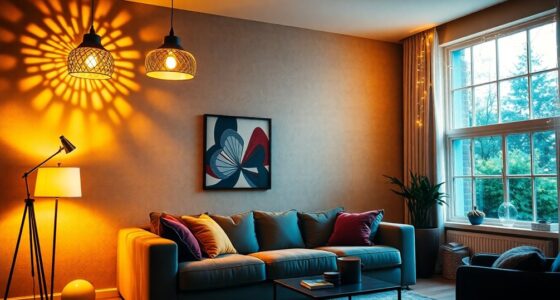
Livingetc describes the fixtures as appearing in homes and hotels and in projects by designers. Their appeal, the report says, lies partly in the way thin shell pieces catch and diffuse light. Rather than producing the clearer, more direct glow associated with transparent glass, Capiz can create a gentler illumination while giving a fixture a reflective, sculptural presence.
Australian designer Greg Natale told Livingetc that Capiz has organic, translucent and pearlescent qualities. He cited a dressing room and walk-in wardrobe in a London project, where a fixture’s shimmer played across floral wallpaper, a Norwegian Rose marble countertop and patterned carpet. Natale also described the material as lightweight and fluid in appearance.
Kanika Khurana, an interior designer who works with natural materials, told the publication that some people are responding to materials that appear less polished and more handmade after years of sleek, minimalist fixtures. Alex Bucklin, founder of Bucklin Design Co., said the shells soften light and can make an illuminated fixture appear to glow. Those are designers’ observations, not measured findings about consumer demand or lighting performance.
A Softer Alternative to Clear Glass
The trend offers homeowners and designers a way to use a statement light without relying on a hard, direct glare. Capiz’s partially translucent surface can spread light more gently, while its changing sheen adds texture and movement to a room. That combination may suit spaces where a fixture is expected to provide both illumination and a visible design feature.
The material also gives interiors an alternative to the earthy palettes and wood finishes that have featured prominently in recent design, as characterized by Livingetc. Its natural origins and aquatic appearance bring a different kind of organic detail. Whether the look appeals will depend on the room, the fixture’s scale and the surrounding finishes; the trend report does not establish that Capiz is replacing other lighting styles.
As an affiliate, we earn on qualifying purchases.
From Southeast Asian Shells to Panton
Capiz refers to the shell of Placuna placenta, also known as the windowpane oyster. Livingetc says the mollusc is found along Southeast Asian coasts and is especially associated with the Philippines, where the shells have been harvested and used for thousands of years. Their translucent quality made them a lower-cost alternative to glass in some windowpanes, including those in homes and churches.
The report links the modern lighting reference point to Danish designer Verner Panton, whose Fun series was designed in 1964. Its cascading shiny discs created a shimmering effect. While Panton’s work helped popularize a related style of fixture, the use of Capiz itself predates that design by centuries. The current iteration puts particular emphasis on the shell’s interaction with light.
““The shells are translucent rather than transparent, so they soften and diffuse the light instead of giving you the harder, more direct glow you can get through clear glass.””
— Alex Bucklin, founder of Bucklin Design Co., quoted by Livingetc
How Broad Is the Renewed Interest?
The report identifies Capiz lighting in selected design projects and says similar fixtures are available from multiple retailers, but it provides no sales figures, market data or survey results to show how widely consumers are adopting the look. Its description of a return is a design-industry assessment, not a quantified measure of popularity.
Livingetc predicts that the material will appear more often in the coming year, but the supplied report gives no forecast methodology or specific timeline. It also does not provide detailed sourcing information for the shell products currently on the market, or compare their cost, durability and environmental impact with other lighting materials.
Watch for More Project Examples
Livingetc expects Capiz lighting to feature in more projects in the coming year. Readers can look for further examples in design coverage and product collections, while treating broad trend predictions as forecasts rather than confirmed outcomes. No specific product launch, retailer announcement or industry data release is identified in the report.
For anyone considering a fixture, the practical next step is to compare its dimensions, light output, materials and care instructions with the needs of the room. The source describes the shells’ visual effect but does not provide technical specifications for particular products.
Key Questions
What is Capiz shell lighting?
It is lighting made with pieces of Capiz shell, from the windowpane oyster. The shells are translucent and pearlescent, giving fixtures a shimmering appearance.
Why are designers using Capiz in light fixtures?
Designers quoted by Livingetc say the shells can diffuse light more softly than clear glass and add a natural, sculptural finish. These comments reflect their design experience, not a measured comparison of all fixtures.
Is Capiz lighting only for coastal interiors?
No. Livingetc says the material is often associated with coastal design but can also be used in other settings, including modern rooms where its sheen contrasts with more restrained finishes.
Is the trend supported by sales data?
The supplied Livingetc report does not include sales figures or consumer research. It describes renewed visibility in projects and retail, but the scale of adoption is not established.
Source: rss
Halloween Picks
halloween
As an affiliate, we earn on qualifying purchases.