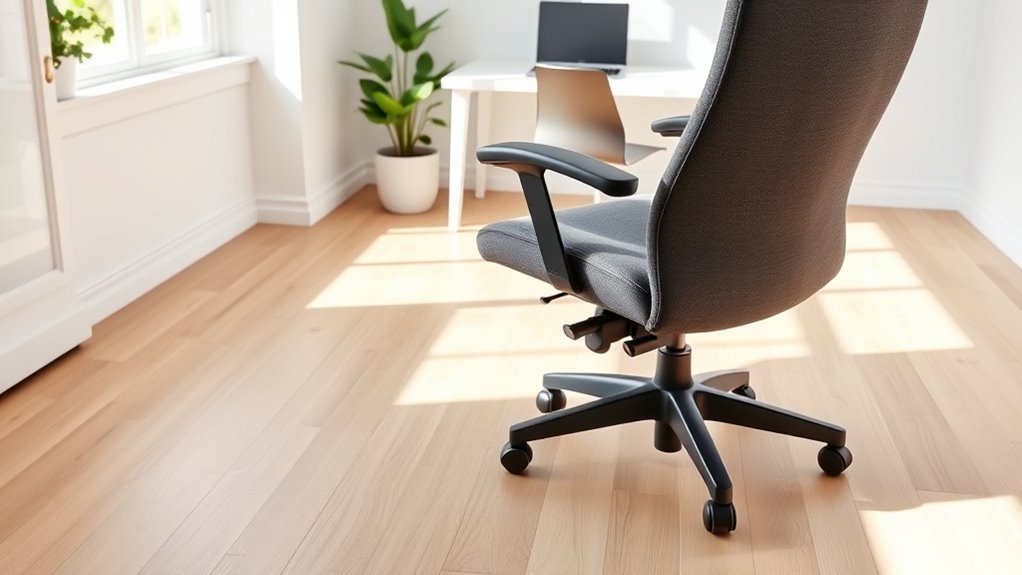

To select chair-friendly flooring for your home office, focus on comfort, support, and easy maintenance. Hard surfaces like wood, tile, or laminate can feel unforgiving over time, so consider adding ergonomic mats to reduce joint stress. Soft carpets or rugs can increase warmth and help absorb noise, creating a cozy environment. Balancing these options ensures your workspace stays both comfortable and functional—if you want to discover more tips, there’s plenty to explore.
Key Takeaways
- Opt for hard flooring like wood, laminate, or tile for easy chair movement and durability.
- Use ergonomic mats to cushion and protect joints during prolonged sitting or standing.
- Choose carpets or rugs with low pile for comfort, noise absorption, and ease of chair maneuvering.
- Combine ergonomic mats and carpets to balance support, comfort, and workspace aesthetics.
- Consider maintenance, style, and comfort to select flooring that enhances productivity and well-being.
Are you considering new flooring for your home or office? If you spend a lot of time sitting at a desk, comfort and support should be top priorities. Choosing the right flooring can make a significant difference in your daily comfort and overall productivity. One popular option is to incorporate ergonomic mats, which provide cushioning that reduces pressure on your joints and minimizes fatigue during long hours of work. These mats are especially beneficial if your office space has hard flooring like wood, tile, or laminate, which can feel unforgiving over extended periods. By adding ergonomic mats, you’re creating a more comfortable workspace, helping to prevent aches and discomfort that often come with hard surfaces.
Ergonomic mats enhance comfort and reduce fatigue on hard flooring surfaces.
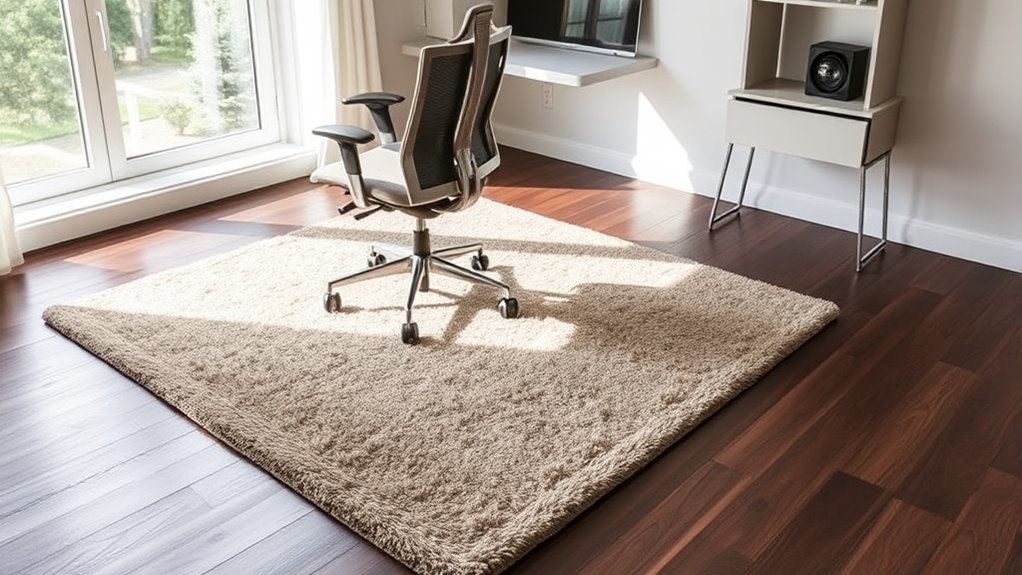
In addition to ergonomic mats, considering the right carpet styles can also enhance your home office environment. Carpets and rugs add warmth and softness underfoot, making standing or walking around more pleasant. When choosing carpet styles, look for options that are durable yet plush enough to cushion your steps. Low-pile carpets are often preferred for office spaces because they’re easier to clean and move around on, while still offering some comfort. If you want to add a touch of personality to your space, patterned or textured carpets can break up a monotonous look and add visual interest. Keep in mind, though, that high-pile carpets may trap dust and allergens more easily, so if allergies are a concern, stick with low-pile options.
Balancing ergonomic mats and carpet styles allows you to create a workspace that supports both comfort and aesthetics. For example, you might place ergonomic mats in areas where you’ll be standing for long stretches, such as at a standing desk or workbench. Meanwhile, a stylish carpet or rug can define your seating area, making it feel cozy and inviting. The combination also helps to absorb sound, reducing noise levels—a bonus if you work in a shared space or apartment. When selecting carpets, choose materials like wool or synthetic fibers that are both durable and easy to maintain, ensuring your office remains clean and inviting over time. Additionally, understanding Bike maintenance, such as proper tire inflation or gear shifting, can help maintain a clean and functional workspace if you incorporate a bike storage or exercise area.
Ultimately, the key is finding a harmonious blend of ergonomic mats and carpet styles that suit your specific needs. Prioritize comfort, ease of maintenance, and style to craft a home office that feels welcoming and promotes productivity. With the right flooring choices, you’ll notice a difference in how you feel each day—more comfortable, less fatigued, and ready to tackle your tasks with renewed energy.
Frequently Asked Questions
How Does Chair Wheel Type Affect Flooring Choice?
Your chair wheel type greatly impacts your flooring choice because different wheels affect chair wheel compatibility and how they interact with various flooring surface types. Hard plastic wheels can damage delicate surfaces like hardwood or laminate, while softer rubber wheels are gentler and reduce wear. Consider your chair’s wheel material and the flooring surface types you prefer to guarantee smooth movement and protect your floors, making your workspace both functional and durable.
Are There Eco-Friendly Flooring Options for Home Offices?
Imagine your home office as a garden of sustainability, where eco-friendly flooring options bloom. You can choose sustainable materials like bamboo or cork, which grow quickly and renew naturally, or opt for eco-friendly finishes that protect the environment. These choices help reduce your carbon footprint while maintaining style and durability. By selecting eco-conscious flooring, you nurture both your workspace and the planet, creating a harmonious balance of function and responsibility.
What Is the Maintenance Cost of Different Flooring Types?
When comparing maintenance costs, you’ll find that hardwood flooring needs regular cleaning tips like sweeping and occasional refinishing, which can be costly over time. Vinyl and laminate are more budget-friendly, requiring simple cleaning and minimal upkeep. Carpet may seem cheap initially but can cost more in cleaning and replacement. Do a cost comparison, considering cleaning tips, to choose the flooring that fits your budget and lifestyle best.
How Long Does Chair-Friendly Flooring Typically Last?
You’ll find that chair-friendly flooring generally lasts between 10 to 30 years, depending on the material. Carpet durability varies, often lasting around 5 to 15 years with regular use. Hardwood lifespan can extend up to 25-100 years if properly maintained. Regular care and choosing high-quality options help maximize your flooring’s lifespan, ensuring your home office stays comfortable and functional for years to come.
Can I Install New Flooring Over Existing Surfaces?
Ever wonder if you can install new flooring over existing surfaces? The answer is yes, but you need to ensure safety precautions and proper installation methods. Before starting, assess your current floor’s condition and choose compatible materials. Some surfaces require leveling or removal of old layers. Following correct procedures ensures a secure, long-lasting upgrade without risking damage or safety hazards. Always consult professional guidance to make your upgrade smooth and effective.
Conclusion
Now that you know what to look for, imagine transforming your home office with the perfect chair-friendly flooring. But here’s the twist—there’s one option that might just surprise you, offering both comfort and style. Are you ready to discover it and elevate your workspace to the next level? Keep exploring, because the best choice could be closer than you think. Your ideal home office flooring is waiting—are you prepared to find out what it is?