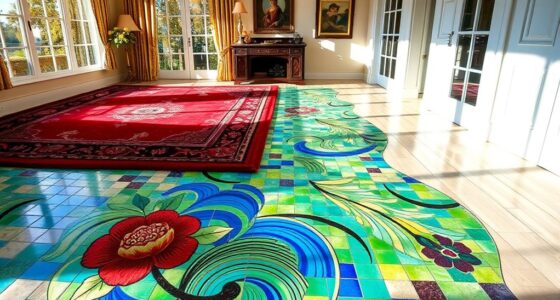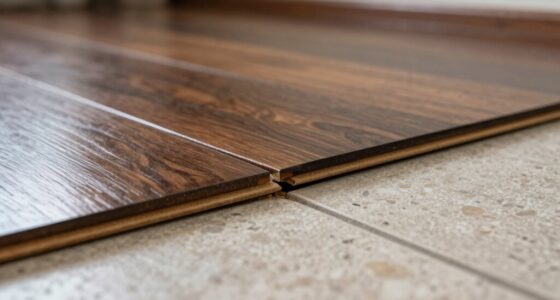
When choosing outdoor flooring for your patio, consider your budget, maintenance preferences, and style. Decks, especially pressure-treated wood or composite, tend to be more affordable upfront, while stone and tile can cost more but offer durability and elegance. Think about how much upkeep you’re willing to do—composite and tile are low-maintenance, but natural stone and wood need regular care. To find the best fit for your space and lifestyle, explore your options in detail.
Key Takeaways
- Consider your budget upfront costs and long-term maintenance expenses for each material type.
- Match the aesthetic style—natural, elegant, or customizable—to your outdoor space and personal preference.
- Evaluate climate conditions to choose durable materials that withstand weather and environmental factors.
- Prioritize low-maintenance options like composite or tile if ease of upkeep is important.
- Ensure proper installation to prevent issues like cracking, warping, or slipping, enhancing longevity.
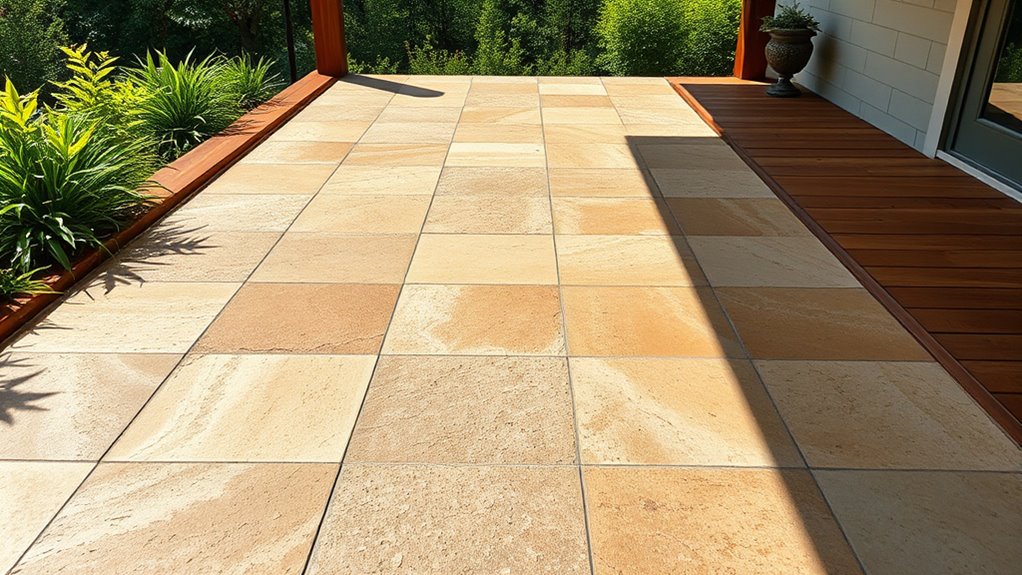
Choosing the right outdoor flooring can transform your outdoor space into a functional and attractive area. When deciding between options like a deck, stone, or tile, it’s essential to weigh factors such as cost, durability, aesthetics, and upkeep. A clear understanding of these elements helps you make an informed choice that fits your budget and lifestyle.
Start with the cost comparison. A deck, especially made from pressure-treated wood or composite materials, tends to be more affordable upfront. Wood decking is generally cheaper, but it may require regular maintenance and eventual replacement, which can add to your long-term expenses. Composite decking, although more costly initially, offers increased durability and less upkeep, potentially saving you money over time. Stone options, such as natural flagstone or slate, usually come with higher installation costs due to the labor-intensive process, but they provide a long-lasting, elegant look. Tile, particularly porcelain or ceramic designed for outdoor use, falls somewhere in the middle in terms of price. It’s often less expensive than natural stone but can vary depending on the style and quality.
Decks are usually more affordable initially, but maintenance costs can add up over time.
Maintenance tips are essential to consider because some materials demand more attention than others. Wooden decks need regular cleaning, sealing, and inspections for rot or insect damage. Composite decks, on the other hand, require minimal maintenance—just occasional cleaning with soap and water. Natural stone surfaces are durable but may need sealing to prevent staining and weed growth between joints. Tile surfaces can be easy to maintain if installed properly; regular sweeping and occasional cleaning keep them looking their best. However, outdoor tiles can crack under heavy impact or temperature fluctuations, so choosing the right type and ensuring proper installation is important. Additionally, understanding the artistic significance of materials can inspire design choices that reflect your personal style and cultural appreciation.
Durability and aesthetics also matter. Decks offer a warm, natural look that’s perfect for lounging and entertaining, and they can be built to match your home’s style. Stone provides a sophisticated, timeless appearance, blending seamlessly with natural surroundings but can be slippery when wet. Tile offers a versatile range of designs, colors, and patterns, allowing for creative customization. Keep in mind that your climate influences your choice; for example, wood may warp in humid areas, while stone can withstand harsh weather better.
Ultimately, selecting between a deck, stone, or tile depends on your budget, preferred maintenance level, and desired look. Carefully compare the initial costs and ongoing maintenance requirements to find the best fit. With thoughtful planning, you’ll create an outdoor space that’s both beautiful and practical, ready for years of enjoyment.
As an affiliate, we earn on qualifying purchases.
Frequently Asked Questions
Which Outdoor Flooring Is Most Eco-Friendly?
When choosing outdoor flooring, you wanna pick eco-friendly options. Recycled materials are a great choice because they repurpose waste and reduce landfill impact. Look for flooring made from sustainable sourcing, like bamboo or cork, which renew quickly and have minimal environmental impact. By prioritizing these options, you help protect the environment while creating a beautiful, durable outdoor space that aligns with your eco-conscious values.
How Does Climate Affect Material Choice?
Climate plays a big role in your material choice because it affects durability and aesthetic appeal. If you live in a rainy or snowy area, opt for materials like stone or concrete that resist moisture and freeze-thaw cycles. In hot, sunny climates, choose materials that won’t fade or crack, ensuring your patio stays both sturdy and attractive. Considering climate helps you select outdoor flooring that lasts and keeps your space beautiful year-round.
What Maintenance Is Required for Each Option?
Did you know that proper maintenance can extend outdoor flooring lifespan by up to 30%? For each option, you’ll need regular cleaning routines—sweeping or washing to remove dirt and debris. Weather resistance matters too; some materials require sealing or protective coatings. For example, stone needs sealing annually, while tile might need grout maintenance. By staying consistent, you’ll keep your patio looking great and durable year-round.
Which Flooring Options Are Slip-Resistant?
When choosing outdoor flooring, slip resistance is vital for safety, especially in wet conditions. Look for options with built-in safety features like textured surfaces, non-slip coatings, or rubberized materials. These features help prevent slips and falls, making your patio safer for everyone. Always consider the level of slip resistance in your flooring choice to guarantee your outdoor space remains both beautiful and secure.
How Do Installation Costs Vary Among Materials?
When comparing installation costs, you’ll notice significant differences based on material choice. The cost comparison depends on installation complexity; simpler methods like concrete or composite decking tend to be more affordable and quicker to install. More complex materials, such as natural stone or intricate tiles, often require specialized labor, increasing costs. Consider your budget and skill level, as these factors directly impact the overall expenses and time needed for a successful outdoor flooring project.
Conclusion
Choosing the right outdoor flooring might seem tricky, but sometimes, it’s just about finding what feels right under your feet. Whether you opt for the timeless charm of stone, the versatility of tile, or the classic appeal of deck, your perfect patio is within reach. Remember, the best choice often appears when you least expect it—like spotting that one tile that just clicks or a deck board that catches your eye. Trust your instincts; they’ll lead you home.