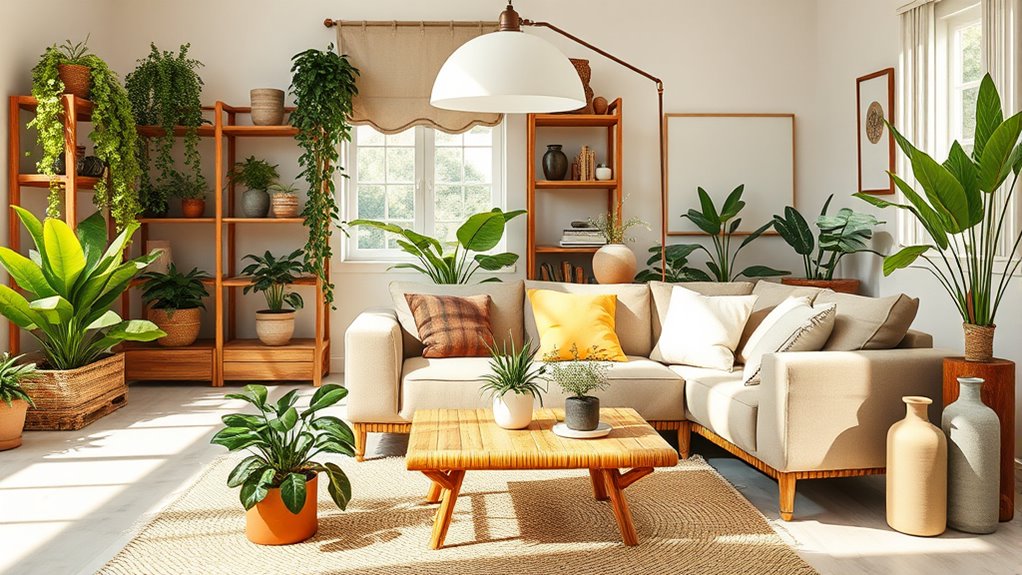

To make your home more sustainable, incorporate recycled materials like reclaimed wood, recycled metal, and repurposed glass for furniture and accents. Use eco-friendly finishes such as low-VOC paints, natural oils, or plant-based varnishes to improve indoor air quality. Choosing energy-efficient lighting and sustainable products with certifications further supports eco-friendly living. Small changes in each room can markedly reduce your environmental footprint—exploring these options reveals how simple adjustments make a big impact.
Key Takeaways
- Incorporate reclaimed wood, recycled metal, and glass to add character and reduce waste in your space.
- Use eco friendly, low or zero VOC paints and natural finishes to improve indoor air quality.
- Choose sustainable flooring, fixtures, and decor made from recycled or renewable materials for durability and style.
- Look for products with environmental certifications to ensure eco-conscious choices in every room.
- Opt for energy-efficient lighting and appliances to lower your carbon footprint and promote overall sustainability.
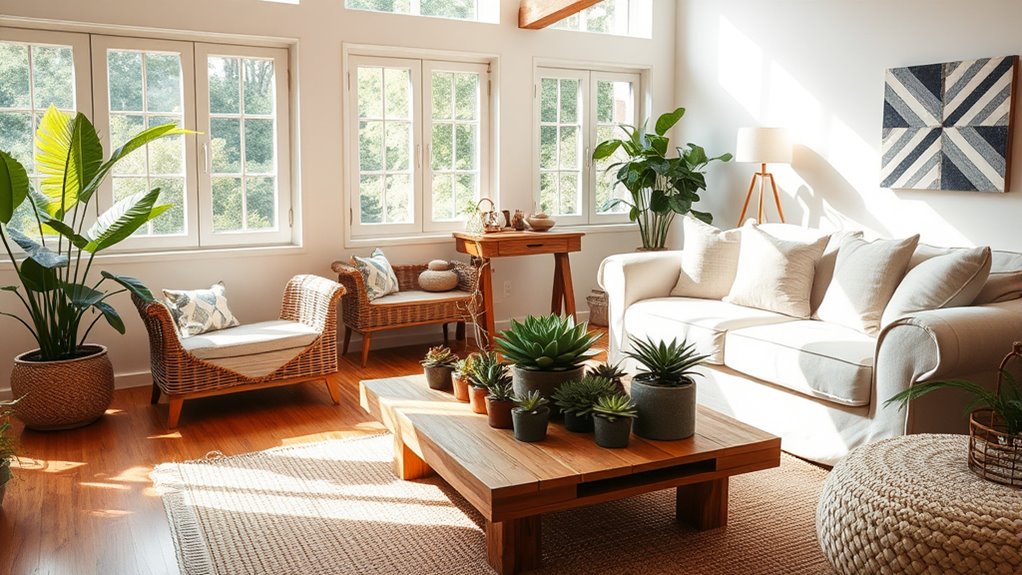
Have you ever wondered how your interior choices can positively impact the environment? Making small adjustments in your home design can contribute considerably to sustainability, starting with the materials and finishes you choose. One effective way to go green is by incorporating recycled materials into your decor. These materials, such as reclaimed wood, repurposed metal, or recycled glass, reduce waste and lessen the demand for virgin resources. Using recycled wood for furniture or shelving not only adds character but also keeps usable materials out of landfills. Similarly, recycled glass can be transformed into beautiful countertops or decorative accents, giving new life to what might have been discarded. These choices help lower your home’s carbon footprint and support the circular economy.
Alongside recycled materials, opting for eco friendly finishes can make a substantial difference. Conventional paints, stains, and sealants often contain volatile organic compounds (VOCs), which can be harmful to both your health and the environment. Eco friendly finishes, on the other hand, are formulated without toxic chemicals and emit fewer pollutants. When you select paints with low or zero VOC content, you improve indoor air quality while reducing environmental impact. Natural oils, water-based stains, and plant-based varnishes are also excellent options that provide a durable finish without compromising sustainability. Additionally, using high quality projectors with optimal contrast ratios and color accuracy can enhance your entertainment space while maintaining eco-conscious standards, as energy-efficient models consume less power and have longer lifespans. By choosing these finishes for your walls, furniture, and flooring, you create a healthier living space that aligns with eco-conscious values.
Transitioning to eco friendly finishes and recycled materials doesn’t mean sacrificing style or quality. Many manufacturers now produce trendy, durable options that fit various design aesthetics. You can find reclaimed wood flooring that brings warmth and character to your space, or eco friendly paints in a wide array of colors and finishes to match your decor. These choices also often come with certifications or labels indicating their environmental benefits, making it easier for you to select responsible products. Additionally, integrating recycled materials and eco friendly finishes often encourages a more thoughtful approach to interior design, prompting you to consider longevity and versatility rather than fleeting trends.

Coaster Home Furnishings – Harper – 3-Door Solid Reclaimed Wood Accent Cabinet with Drawers, Shelves – Farmhouse Style – Living Room, Entryway & Home Kitchen – 60-Inch – Brown – 950367
- Includes: One cabinet
- Size: 60-inch width for ample storage
- Storage: Three doors with two shelves
As an affiliate, we earn on qualifying purchases.
As an affiliate, we earn on qualifying purchases.
Frequently Asked Questions
How Can I Assess My Home’s Current Sustainability Level?
To assess your home’s sustainability level, start with a home energy auditing to identify energy inefficiencies. Check your current water usage and implement water conservation measures like low-flow fixtures. Review your insulation, windows, and appliances for energy efficiency. Consider your waste management habits and recycling efforts. This evaluation helps you pinpoint areas for improvement, making it easier to adopt eco-friendly practices that lower your environmental impact and boost your home’s sustainability.
What Are Cost-Effective Sustainable Materials for Renovation?
Imagine your home as a blank canvas — you want eco-friendly paints and brushes. For renovation, consider recycled materials like reclaimed wood or metal, which save resources and add character. Bamboo flooring is a cost-effective choice, offering durability and rapid renewability. These sustainable options not only cut costs but also reduce your environmental footprint, turning your renovation into a vibrant act of ecological creativity.
How Do I Maintain Indoor Air Quality With Eco-Friendly Choices?
To maintain indoor air quality with eco-friendly choices, you should regularly use an air purifier with a HEPA filter to remove pollutants. Additionally, promote natural ventilation by opening windows when weather permits, allowing fresh air in and stale air out. Avoid synthetic fragrances and choose low-VOC paints and materials to reduce indoor toxins. These simple steps help guarantee cleaner, healthier indoor air while supporting your green living goals.
Are There Eco-Friendly Alternatives to Traditional Furniture Finishes?
You can find eco-friendly alternatives to traditional furniture finishes like natural varnishes and water-based stains. These options reduce harmful chemicals and VOC emissions, helping you create a healthier indoor environment. Natural varnishes provide a durable, non-toxic finish, while water-based stains offer vibrant color without the strong odors of solvent-based products. Switching to these sustainable finishes helps you maintain an eco-conscious home without sacrificing style or quality.
What Are the Latest Trends in Sustainable Interior Design?
You might think you’ve seen it all, but the latest trends in sustainable interior design are surprising. Recyclable fabrics are gaining popularity, offering eco-friendly alternatives without sacrificing style. Pair them with energy-efficient lighting, and you’re making a bold statement for the planet. These trends aren’t just fleeting—they’re shaping the future of eco-conscious living, transforming your space into a stylish, sustainable sanctuary that’s as innovative as it is responsible.
Conclusion
By embracing sustainable interior design, you’re planting seeds for a greener future in every room. Think of your space as a canvas where eco-friendly choices bloom into beauty and purpose. Small changes, like choosing natural materials or reducing waste, can ripple outward, creating a garden of positive impact. Remember, your home isn’t just a reflection of your style but a declaration to your commitment to the planet—your personal oasis in a world that needs more green.