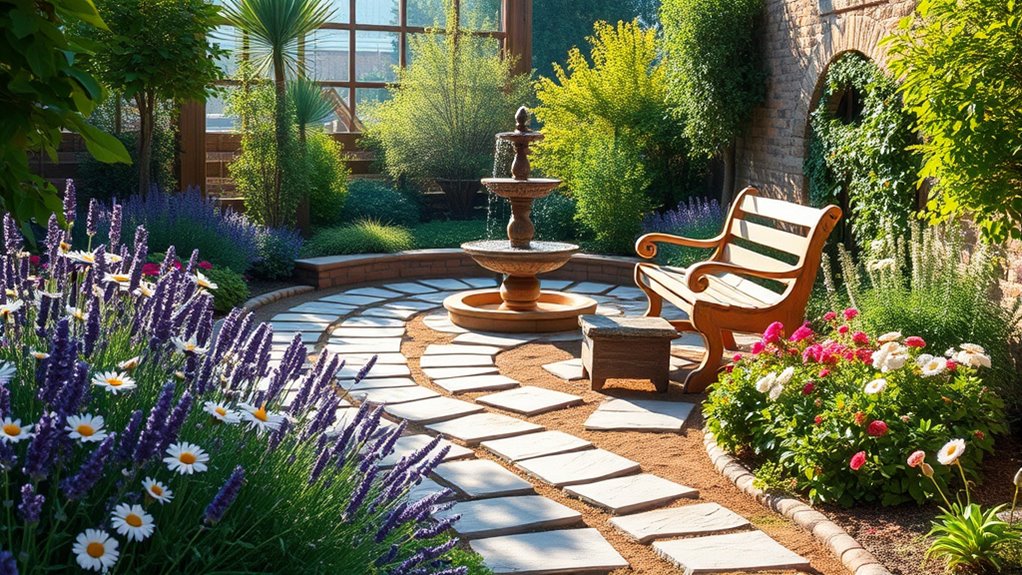

To design a calming garden for dementia care, choose fragrant herbs like lavender and rosemary, colorful flowers, and textured plants to stimulate senses gently. Guarantee pathways are wide, smooth, and slip-resistant, with gentle slopes and support handrails. Incorporate sensory elements like textured stones or water features, paired with soft lighting and clear signage to guide visitors safely. Combining thoughtful plant choices with accessible features creates a peaceful, engaging space that promotes comfort and confidence—explore further to learn how to optimize your garden for healing.
Key Takeaways
- Incorporate fragrant, colorful, and textured plants to stimulate senses without overwhelming residents.
- Design wide, smooth, non-slip pathways with gentle slopes for safe, wheelchair-accessible navigation.
- Add tactile, sensory-rich features like engraved stones or textured surfaces to promote exploration.
- Use soft, even lighting and clear signage to enhance safety and orientation during low light.
- Include seating areas near focal points to encourage relaxation and social interaction in a calming environment.

Have you ever wondered how a simple garden can promote healing and well-being? When designing a therapeutic garden for dementia care, every detail matters, starting with plant selection and accessibility features. Your goal is to create a space that calms the mind, stimulates the senses, and is easy for everyone to navigate. Choosing the right plants helps facilitate this, so focus on selecting varieties that appeal to the senses without overwhelming. Opt for fragrant herbs like lavender or rosemary, colorful flowers such as marigolds or pansies, and textured foliage like hostas or succulents. These plants provide soothing scents, vibrant visuals, and tactile interest, encouraging residents to engage without confusion or frustration. Avoid plants with sharp thorns or toxic properties to guarantee safety and comfort.
Select fragrant, colorful, and textured plants to create a calming, engaging, and safe therapeutic garden.
Accessibility features are equally essential in designing a garden that truly serves its purpose. You want residents and caregivers to move freely and confidently, so think about pathways and entry points. Use wide, smooth, and non-slip surfaces that accommodate wheelchairs, walkers, and those with limited mobility. Incorporate gentle slopes instead of stairs, and ensure that pathways are clearly defined and free of obstacles. Seating areas should be strategically placed near focal points, like a water feature or interesting plant display, with sturdy, comfortable chairs that are easy to get in and out of. Raised beds can be included for easier planting and maintenance, allowing residents to participate actively without bending or reaching excessively. Handrails along pathways and around seating areas provide additional support, promoting independence and safety. Including sensory-rich elements can further enhance the calming effect of the garden by engaging multiple senses.
Lighting also plays a fundamental role in accessibility and safety. Install soft, even lighting along walkways to prevent trips and falls, especially during dusk or cloudy days. Solar-powered lights are energy-efficient and low maintenance, making the garden more user-friendly. Signage with large, clear labels and simple symbols can help residents recognize different plants or zones, reducing confusion and encouraging exploration. Incorporate tactile elements, such as textured pathways or engraved stones, to stimulate sensory interaction and aid orientation.
Ultimately, your goal is to craft a space that’s inviting, easy to navigate, and sensory-rich. Thoughtful plant selection combined with well-designed accessibility features creates a garden that not only soothes the mind but also empowers residents to explore and connect with their surroundings confidently. Every element, from the choice of fragrant herbs to the placement of pathways, contributes to a calming environment where healing can happen naturally and comfortably.
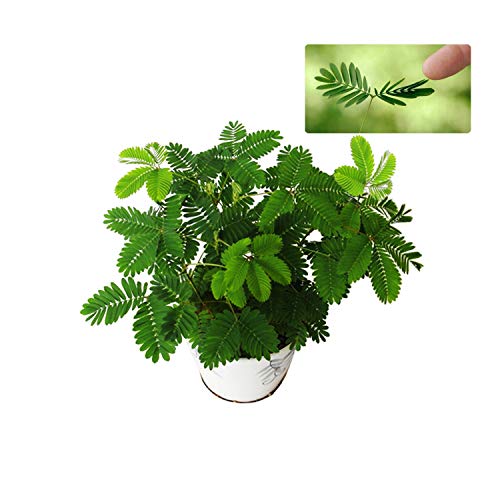
200 Sensitive Plant Seeds(Mimosa Pudica) for Indoor/Balcony Planting, Non-GMO Perennial Potted Flower Seeds
As an affiliate, we earn on qualifying purchases.
As an affiliate, we earn on qualifying purchases.
Frequently Asked Questions
How Do Therapeutic Gardens Benefit Dementia Patients?
Therapeutic gardens benefit dementia patients by providing sensory stimulation that helps trigger memories and reduce confusion. You can see how these gardens encourage social interaction, offering a safe space for residents to connect with others and nature. The calming environment promotes relaxation and engagement, which can improve mood and cognitive function. By creating a soothing outdoor setting, you support their overall well-being and quality of life.
What Plants Are Best for Calming Effects?
You should select plants that offer sensory stimulation to create a calming effect. Consider lavender and chamomile for their soothing scents, along with soft-leaved plants like hostas for tactile comfort. Incorporate gentle colors and fragrant herbs to promote relaxation. Proper plant selection enhances sensory experience, helping dementia patients feel more calm and engaged. Focus on plants that provide visual, olfactory, and tactile stimulation for the most calming environment.
How Can Safety Be Ensured in Garden Design?
Think of your garden as a gentle cradle that protects fragile lives. To guarantee garden safety and risk mitigation, you should install secure fencing, eliminate trip hazards, and use non-slip surfaces. Keep pathways wide and clear, and add shaded areas for comfort. Regularly inspect plants and structures for damage. By proactively addressing potential dangers, you create a safe haven where dementia patients can explore confidently and peacefully.
What Maintenance Is Required for Therapeutic Gardens?
You need to regularly inspect garden equipment to guarantee safety and functionality. Keep the soil well-prepared with proper aeration and drainage, which promotes healthy plants and reduces hazards. Regularly clean pathways and remove debris to prevent trips. Replenish mulch, prune plants, and check for pests. Consistent maintenance keeps the garden safe, inviting, and therapeutic, ensuring it remains a calming space for dementia care.
How to Involve Dementia Patients in Garden Activities?
Ever wondered how to make garden activities meaningful for dementia patients? You can involve them by offering simple tasks that promote sensory stimulation, like planting fragrant herbs or feeling textured leaves. Encourage social interaction through group gardening or shared watering. By tailoring activities to their abilities and interests, you create a calming environment that fosters engagement and joy, helping them connect with nature and others effortlessly.
Conclusion
Imagine walking into a garden where every bloom and gentle path whispers calm. When you design a therapeutic garden for dementia care, you’re creating a sanctuary that nurtures peace and connection. Just like a lighthouse guides ships safely home, these gardens help patients find their way back to comfort and familiarity. By embracing nature’s healing power, you turn a simple space into a beacon of hope, transforming lives one blossom at a time.