Creating a dementia-friendly home with effective visual cues helps your loved one navigate safely and confidently. Use consistent layouts and simple signs to support routines, and apply contrasting colors to highlight key areas like doors and pathways. Place familiar objects in visible spots and minimize clutter to reduce confusion and overstimulation. Regularly check and update cues to suit changing needs. To learn more about optimizing your home, discover practical tips for maintaining a safe environment.
Key Takeaways
- Use consistent layouts and simple arrangements to support spatial orientation and reduce disorientation.
- Incorporate high-contrast, vibrant colors for doors, pathways, and key items to aid recognition.
- Place clear signage with symbols or words at eye level to reinforce routines and safety cues.
- Minimize clutter and maintain proper lighting to prevent visual overload and confusion.
- Regularly update and maintain visual cues, replacing faded or damaged signs for ongoing clarity.

Connie's Color Cues: Familiar Things: A Dementia & Alzheimer's Friendly Coloring Book with Visual Color Cues to Encourage More Independent Coloring
As an affiliate, we earn on qualifying purchases.
As an affiliate, we earn on qualifying purchases.
Why Visual Cues Are Essential in a Dementia-Friendly Home
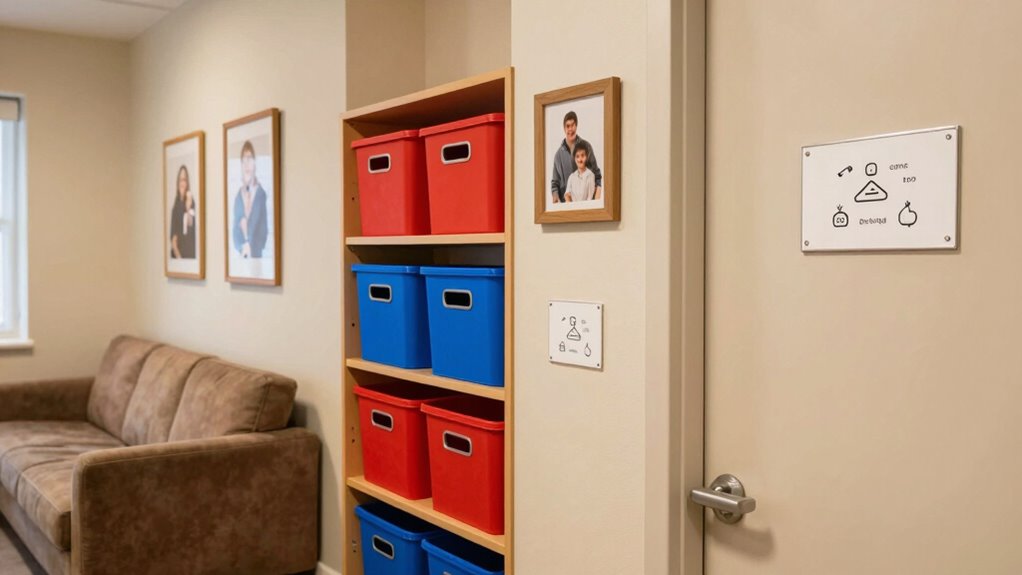
Have you ever wondered how someone with dementia can navigate their environment more safely? Visual cues like color coding and tactile markers play a vital role. Color coding helps distinguish different areas, making it easier to identify rooms or important features quickly. For example, using a specific color for the bathroom or kitchen creates visual landmarks that reduce confusion. Tactile markers, such as textured strips or raised symbols, provide sensory cues that can be felt underfoot or on surfaces. These cues assist your loved one in recognizing boundaries, doorways, or hazards without relying solely on memory or verbal instructions. Incorporating Free Floating elements like decorative yet functional markers can further enhance the environment’s intuitiveness. Understanding contrast ratio can also improve the visibility of these cues, making them more effective. Additionally, ensuring consistent placement of cues helps reinforce their meaning over time. The use of color contrast is crucial in making visual cues stand out clearly against backgrounds, enhancing recognition. Together, color coding and tactile markers create a safer, more intuitive environment, helping your loved one move around with confidence and reducing the risk of accidents.
How to Choose the Right Visual Cues for Your Loved One’s Needs
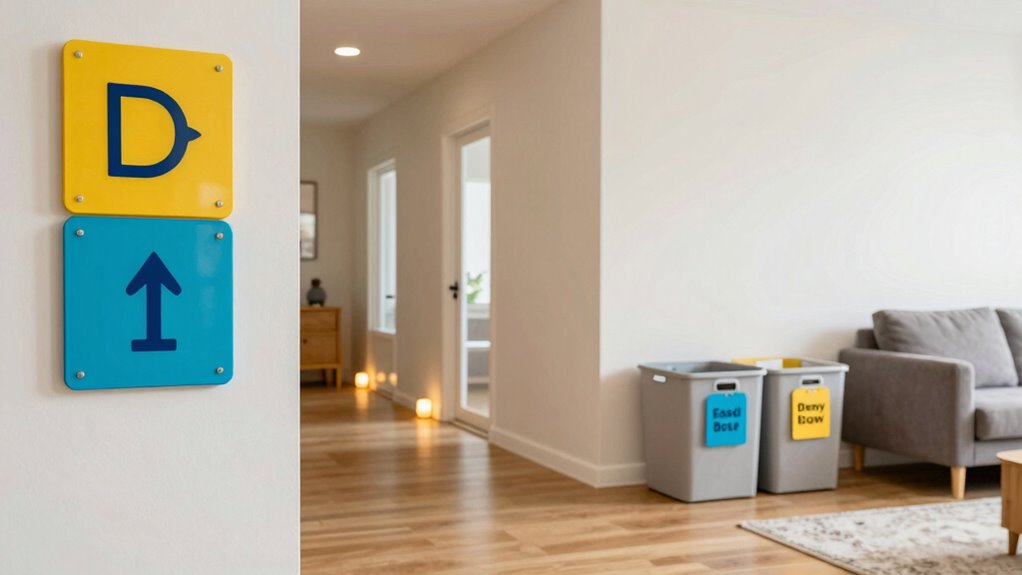
Selecting the right visual cues depends on your loved one’s specific needs and abilities. Focus on color contrast to make important items stand out—bright, contrasting colors can help distinguish doors, appliances, or pathways. For example, a red rug at the entrance or contrasting colors on bathroom fixtures can guide their attention. Proper object placement is equally important; place frequently used items where they’re easy to see and reach, reducing confusion. Keep clutter minimal to avoid overwhelming visual signals. Observe your loved one’s reactions and adjust cues accordingly, ensuring they’re noticeable without being distracting. Consistent use of high-contrast colors and logical object placement creates a clear visual environment that fosters independence and reduces anxiety. Additionally, understanding the importance of environmental cues can help tailor the setup to better support safety and navigation.
Guide Daily Routines With Clear Signage
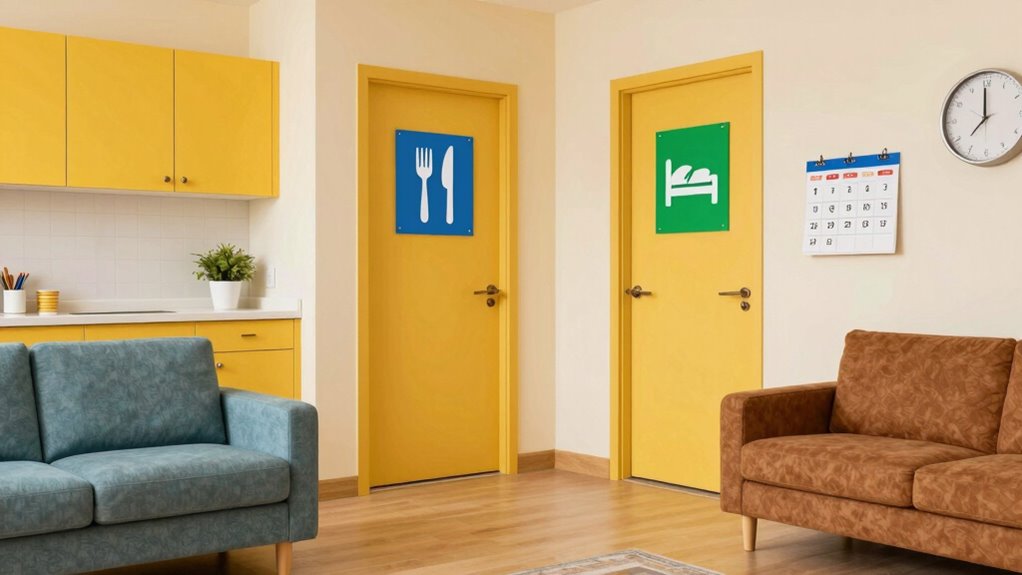
Clear signage is essential for guiding your loved one through daily routines and promoting independence. Well-placed signs serve as memory aids, reducing confusion and frustration. To make routines smoother, consider these steps:
- Use simple, clear words or symbols for essential tasks like brushing teeth, taking medication, or preparing meals.
- Place signs at eye level in visible areas to reinforce familiarity and ease navigation.
- Incorporate consistent imagery or icons to provide emotional support, making cues more intuitive.
- Employ visual cues that are backed by research to enhance recognition and reduce cognitive load. Using modern kitchen technology such as smart labels or digital reminders can further support these visual cues. Incorporating evidence-based signage strategies can optimize their effectiveness in daily routines. Additionally, integrating research-supported visual cues can improve recognition and streamline daily tasks more effectively.
These visual cues help your loved one recognize daily activities effortlessly, easing anxiety and fostering confidence. By guiding routines with clear signage, you create a supportive environment that encourages independence while offering reassurance and emotional stability.
Use Distinctive Colors for Key Areas
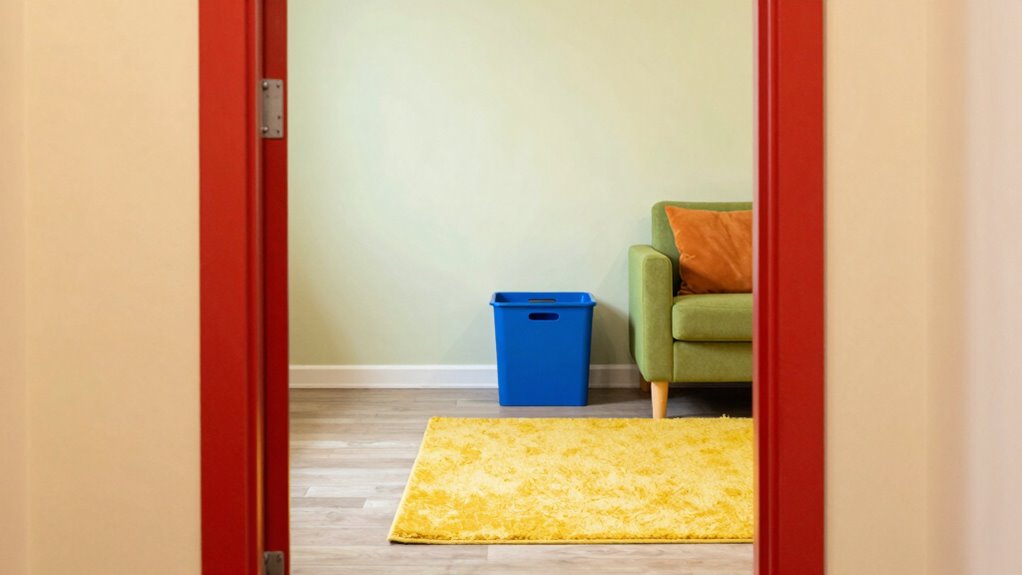
Using distinctive colors for key areas can considerably enhance navigation and independence in a dementia-friendly home. By applying strong color contrast, you help create clear visual cues that make it easier to identify different spaces. For example, painting the bathroom door a bold color or using contrasting shades on the kitchen and living room entrances improves visual recognition. This allows you to quickly locate essential areas without confusion. Consistent use of specific colors for particular zones reinforces familiarity and reduces anxiety. Avoid subtle shades that blend into surroundings; instead, choose vibrant, contrasting hues to stand out. These visual cues guide recognition and foster confidence, making daily routines smoother and safer. Proper use of color contrast directly supports independence and reduces frustration in your loved one’s environment.
Place Familiar Objects to Reduce Confusion
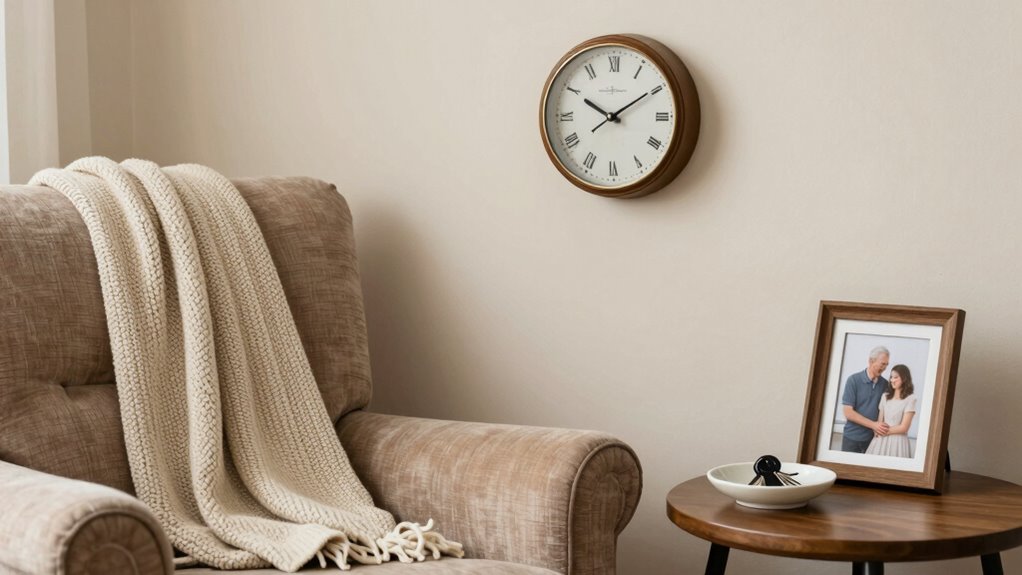
You can help reduce confusion by placing recognizable objects in key areas of your home. Keep these items consistent so your loved one always knows where to find familiar things. Using familiar objects makes daily routines easier and creates a sense of comfort. Incorporating adaptive lighting can further support recognition and reduce disorientation during different times of the day. Additionally, visual cues such as color coding or clear signage can enhance wayfinding and independence within the home. Implementing simple organizational systems tailored to the individual’s needs can also promote a calmer, more manageable environment. Employing environmental modifications, like labeled storage containers, can further assist with orientation and reduce frustration. Consistent placement of objects is a key environmental cue that reinforces familiarity and reduces confusion.
Use Recognizable Items
Placing familiar objects in key areas of the home can substantially reduce confusion for someone with dementia. Using recognizable icons and familiar symbols helps create a sense of comfort and familiarity. To maximize effectiveness, consider these strategies:
- Display a favorite mug or dish near the sink to signal the kitchen.
- Use a specific, recognizable icon like a picture of a bed to mark the bedroom.
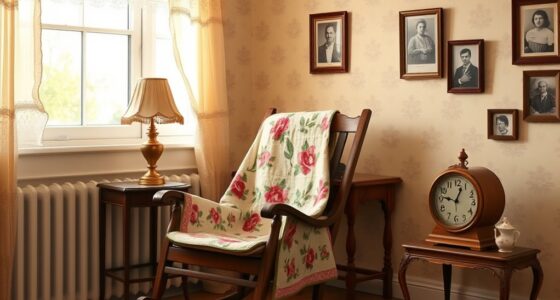
- Place a familiar keepsake or photo in common areas to serve as visual anchors.
- Incorporate visual cues that are consistent and meaningful to reinforce routines and aid navigation.
- Incorporating environmental modifications can further enhance safety and independence for your loved one. Recognizable symbols and cues should also be consistent and meaningful, helping to build a reliable environment that minimizes confusion. Consistency in the placement of these cues is crucial for establishing familiarity and reducing anxiety.
These items act as visual cues that guide your loved one and reduce anxiety. Recognizable icons and familiar symbols, such as a doorbell or clock, make navigation easier. Keep in mind that these cues should be simple, meaningful, and consistently placed to foster independence.
Keep Items Consistent
Maintaining consistency with familiar objects throughout the home helps reduce confusion and supports your loved one’s independence. Keep items like dishes, keys, and clothing in the same spot, so they become easy to find. Consistent furniture arrangements and lighting design also help create a predictable environment, minimizing disorientation. For example, position furniture in familiar patterns, avoiding frequent rearrangements that could cause confusion. Use lighting to highlight specific areas, making it easier to navigate safely and recognize important spots like the bathroom or kitchen. By establishing a stable layout and keeping objects in predictable places, you help your loved one feel more secure and confident in their surroundings, reducing frustration and potential accidents.
Design Consistent Layouts for Better Navigation
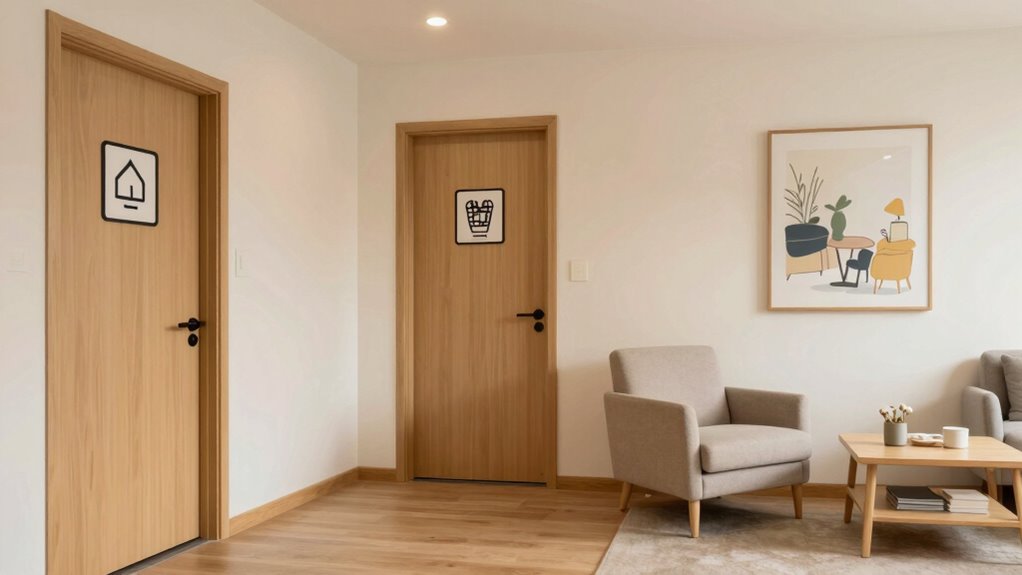
To help individuals with dementia navigate their homes more easily, designing consistent layouts is essential. A predictable environment reduces confusion and enhances independence. Focus on these key elements:
- Maintain uniform placement of furniture and fixtures to support spatial orientation.
- Use color contrast strategically to distinguish pathways, doorways, and important areas.
- Keep room arrangements simple and logical, avoiding clutter that can disorient.
Add Visual Reminders to Support Tasks and Safety
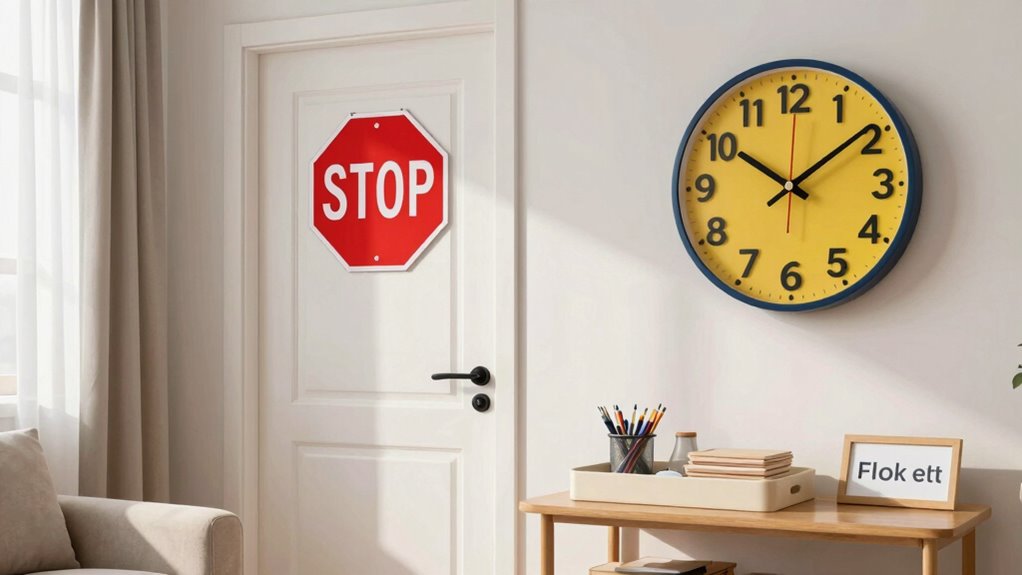
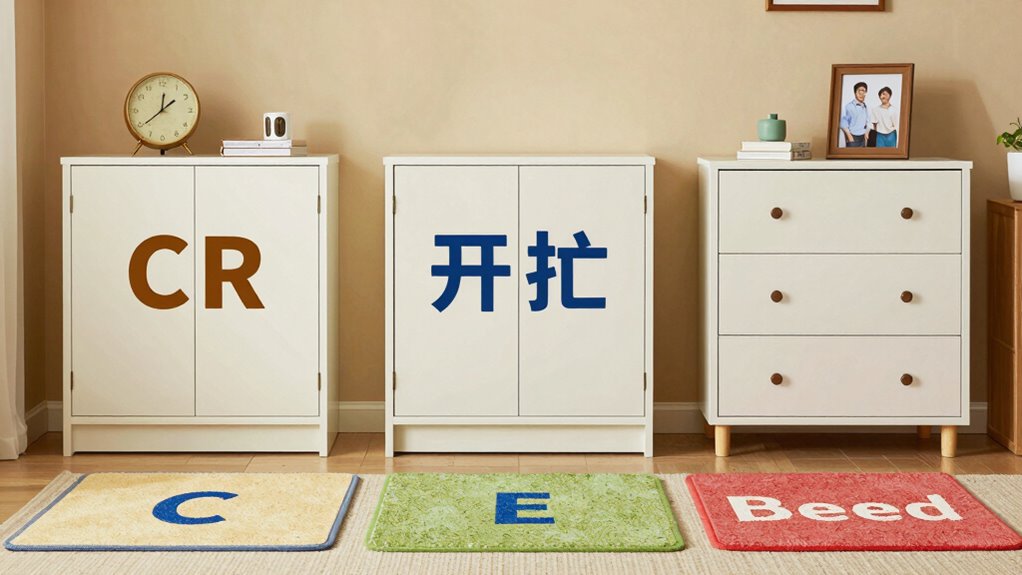
Adding visual reminders throughout your home can considerably support daily tasks and enhance safety for individuals with dementia. Use color coding to differentiate areas, such as green for the kitchen or red for the bathroom, making it easier to identify spaces quickly. Object placement is also vital; place frequently used items, like keys or medications, in consistent, visible spots to promote independence. Labels with clear words or symbols can guide them through routines, reducing confusion. For example, a bright-colored mat at the entrance signals leaving or entering. color coding can be especially effective in creating a dementia-friendly environment. Keep reminders simple, consistent, and strategically positioned to maximize their effectiveness. Incorporating visual cues and environmental modifications into your home setup can significantly improve orientation and reduce anxiety.
Minimize Visual Clutter to Reduce Overstimulation
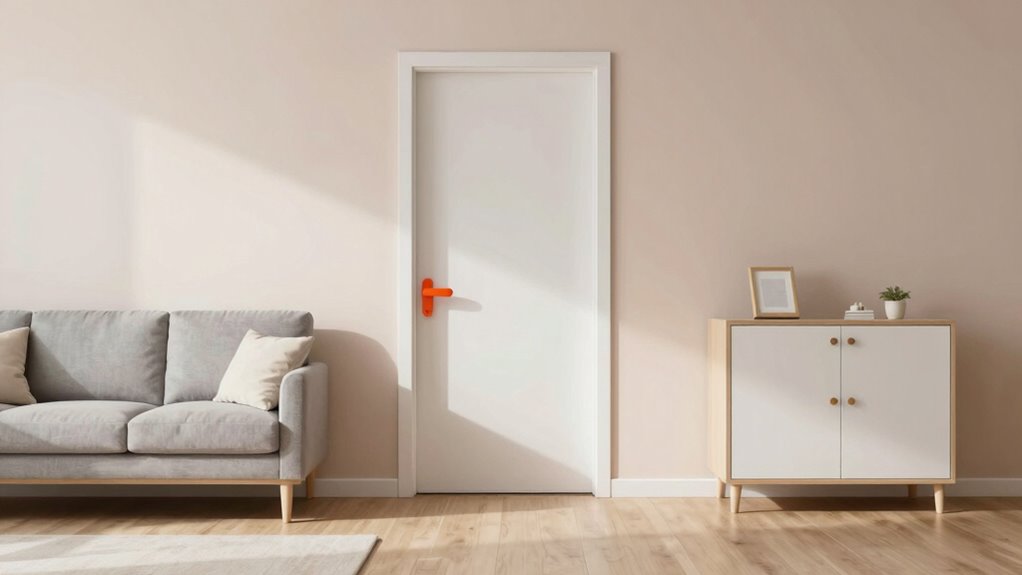
Reducing visual clutter in your home can substantially lessen overstimulation for someone with dementia. Excess visual noise can lead to sensory overload, making it harder for them to focus or feel calm. To create a more soothing environment, consider these steps:
- Clear countertops and surfaces regularly, removing unnecessary items.
- Limit decorative objects and keep only essential or meaningful decor.
- Organize storage to prevent clutter from accumulating in plain sight.
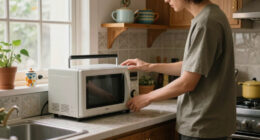
- Incorporate home electrical safety knowledge to ensure that any necessary electronic devices are kept simple and free of distracting displays or unnecessary indicators. This can help minimize unnecessary visual cues that might cause confusion or overstimulation.
- Additionally, maintaining consistent lighting and visual cues can help reduce confusion and promote a sense of familiarity.
Common Mistakes to Avoid When Using Visual Cues
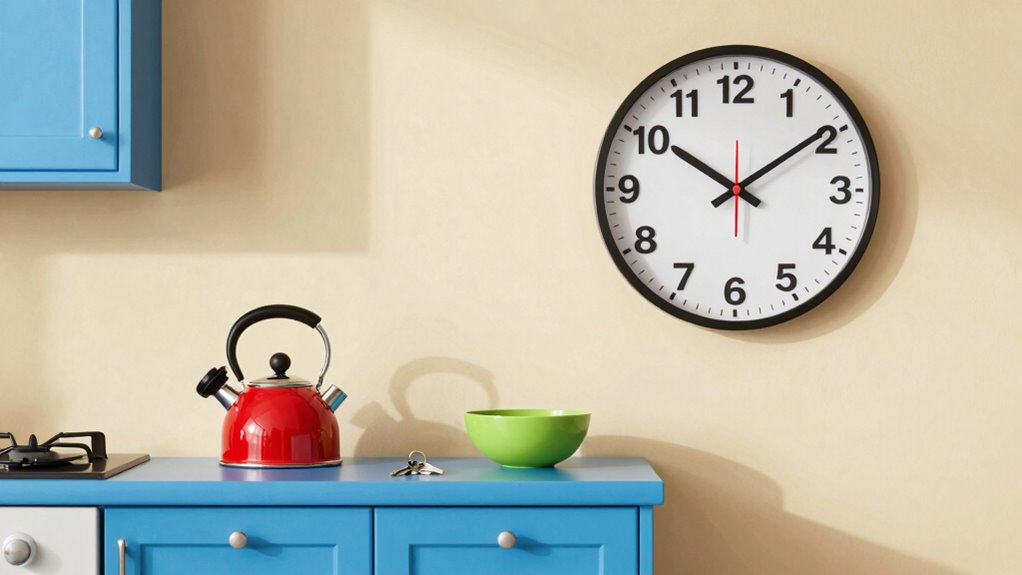
Using visual cues can greatly assist someone with dementia in orienting themselves within their home, but it’s important to recognize common pitfalls. One mistake is neglecting lighting considerations; poor lighting can cause confusion or shadows that distort cues. Make certain rooms are well-lit with consistent, glare-free lighting. Another misstep is improper furniture arrangements—cluttered or constantly changing layouts can create confusion rather than clarity. Keep furniture in familiar, stable positions to reinforce orientation. Avoid using overly bright or harsh lighting that may cause discomfort. Also, don’t overload spaces with too many visual cues, which can be overwhelming. Instead, focus on clear, simple cues that stand out. Being mindful of lighting and furniture arrangements helps guarantee visual cues are effective and supportive.
Tips for Maintaining and Updating Visual Cues Over Time
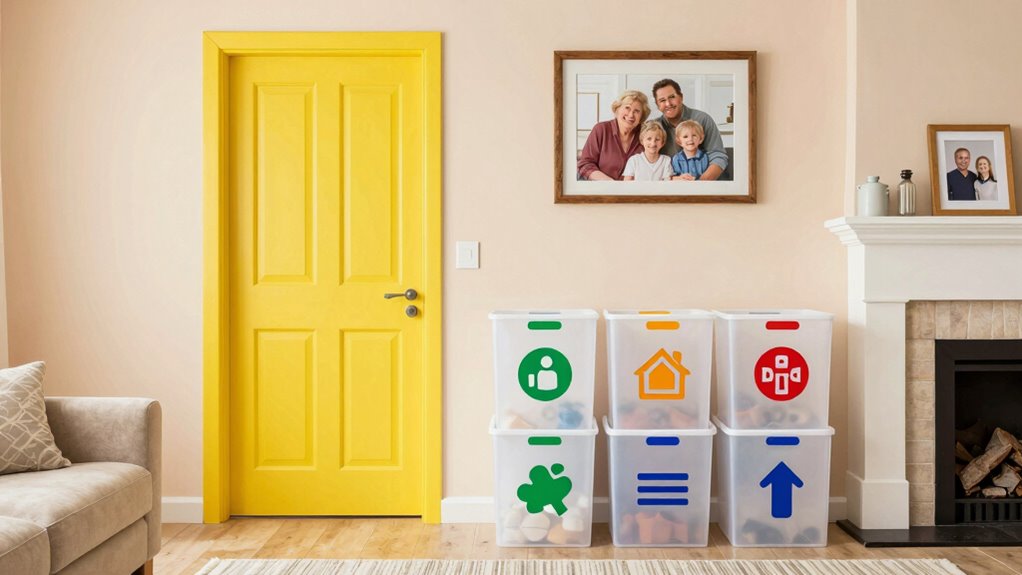
Regularly check your visual cues to guarantee they remain clear and effective. As needs change, be ready to adjust signs and labels to stay helpful. Using consistent signage helps your loved one recognize and understand cues more easily over time.
Regular Visual Cue Checks
To guarantee your visual cues remain effective, it’s important to periodically check and update them as needed. Over time, changes in lighting, wear, or the resident’s needs can diminish their clarity. Regular inspections help ensure cues stay visible and functional. Focus on:
- Color contrast: Confirm that the colors remain distinct and easily noticeable. Adjust or replace cues that have faded or become less contrasting.
- Object placement: Ensure cues are positioned where they’re consistently visible and accessible. Move or reattach any that have shifted or become obscured.
- Condition and clarity: Clean or repair cues that have become dirty, damaged, or less legible to maintain their effectiveness.
Consistent checks help sustain a dementia-friendly environment that minimizes confusion.
Adjustments for Changing Needs
As your loved one’s needs evolve, so should their visual cues. Regularly assess whether existing cues still serve their purpose. Enhance visibility by updating color contrast, making signs and markings stand out more clearly. Over time, it might be helpful to add tactile markers, such as textured strips or raised symbols, to help your loved one recognize important areas without relying solely on sight. As their mobility or cognitive function changes, adjust cues accordingly—what worked initially may need more contrast or tactile feedback later on. Keep cues simple and intuitive, avoiding clutter. Consistently updating these visual cues ensures your loved one remains safe and confident maneuvering their home, helping them adapt comfortably to their changing needs.
Use Consistent Signage
Maintaining consistent signage throughout your loved one’s home helps prevent confusion and promotes independence. To achieve this, focus on three key strategies:
- Use consistent color coding for similar areas or objects, so your loved one can quickly associate colors with specific functions.
- Incorporate familiar icons for common actions or locations, like a bed for the bedroom or a fork and knife for the dining area.
- Regularly review and update signage to reflect changes in your loved one’s needs, ensuring clarity and familiarity over time.
Frequently Asked Questions
How Can I Adapt Visual Cues as Dementia Progresses?
As dementia progresses, you can adapt visual cues by updating outdoor signage with clearer, larger labels and using contrasting colors for better visibility. Incorporate simple tech gadgets like reminder alarms or digital photo frames to reinforce familiar routines. Regularly reassess and modify cues to match changing needs, ensuring they stay effective. This approach helps maintain independence and reduces confusion, making daily life easier for your loved one.
Are There Specific Colors Best Suited for Different Dementia Stages?
You should use bold, high-contrast colors like blue and yellow for different dementia stages to enhance visibility and distinguish areas easily. During early stages, softer hues with good contrast work well, while in later stages, vivid, contrasting colors improve signage clarity and help reduce confusion. Consistently applying these color contrasts across your home creates an intuitive environment, aiding navigation and making it safer as dementia progresses.
How Can I Involve My Loved One in Choosing Visual Cues?
Think of your loved one as an artist, and their home as the canvas. You can involve them by turning decision making into a collaborative masterpiece. Invite their input during the process, asking which colors or signs feel most familiar or comforting. Family involvement is key; it empowers your loved one and guarantees the visual cues truly reflect their preferences, making their environment a welcoming and less confusing sanctuary.
What Are Cost-Effective Ways to Create Visual Cues at Home?
You can create budget-friendly options for visual cues by repurposing household items and making DIY visual cues. Use brightly colored tape or stickers to mark doorways, stairs, or important areas. Label cabinets with large, clear signs or pictures. You might also paint edges or handles in contrasting colors. These simple, cost-effective solutions can substantially reduce confusion and help your loved one navigate more confidently around the house.
How Often Should I Update or Change Visual Cues?
Like a garden needing seasonal pruning, your visual cues require regular attention. You should assess cue maintenance and replacement frequency every few months, or when you notice confusion or fading details. Keep cues clear, consistent, and relevant—if they become less effective, update or substitute them promptly. Regular checks help ensure your home remains a calming, navigable space, reducing confusion and supporting independence for your loved one.
Conclusion
So, congratulations—you’re now a visual cue expert! Just remember, a cluttered, colorless nightmare isn’t going to help your loved one feel safe or independent. Keep those signs clear, colors bold, and objects familiar. Because nothing says “welcome” like a confusing maze of mismatched visuals. With these tips, you’ll turn your home into a dementia-friendly haven—without requiring a PhD in confusing design. Who knew being a good host was this visually stimulating?