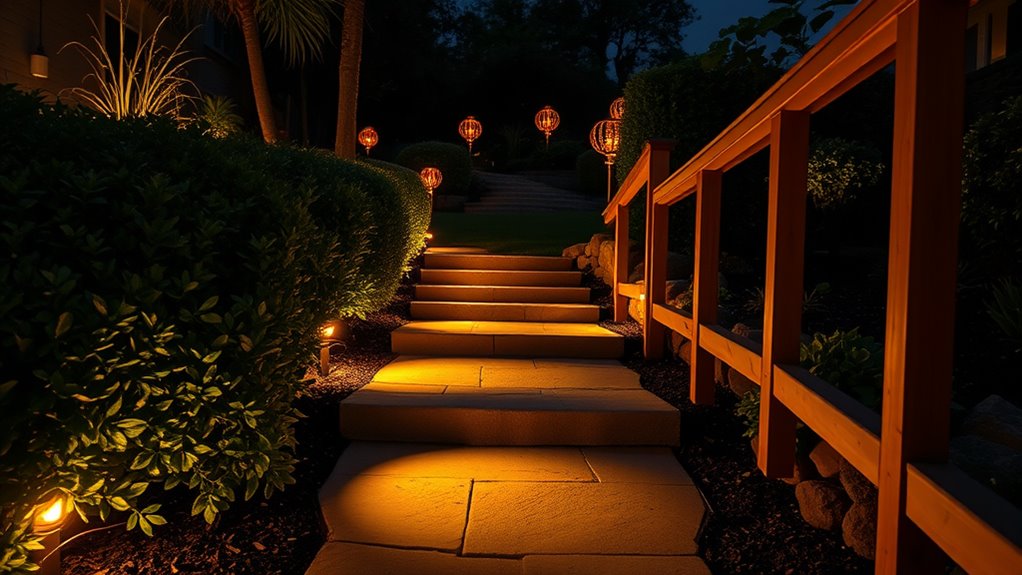

To prevent falls at night, you should use path lights to illuminate walkways, steps, and driveways, reducing trip hazards and guiding your way safely. Installing motion sensor lights near entry points quickly enhances safety by automatically lighting your surroundings when you approach. Indoor night lights in hallways, bathrooms, and bedrooms help you avoid bumps and falls without disturbing sleep. Continuing with the right lighting setups can create a safer, more confident nighttime environment around your home.
Key Takeaways
- Install well-placed outdoor path lights to illuminate walkways, reducing trip hazards at night.
- Use motion sensor lights to provide instant illumination when approaching outdoor or indoor areas.
- Incorporate night lights in hallways, bathrooms, and bedrooms to prevent falls in dark spaces.
- Regularly maintain and clean lighting fixtures to ensure consistent brightness and safety.
- Trim foliage and remove obstructions around lights to optimize visibility and prevent accidents.

Have you ever wondered how to stay safe when the sun goes down? One effective way is to guarantee your outdoor spaces are well-lit, especially around pathways and entry points. Motion sensors are a game-changer in this area. They automatically turn on outdoor illumination when they detect movement, providing instant light as you approach. This feature not only saves energy but also eliminates the need to fumble for switches in the dark. When you install motion sensors on your porch or along walkways, you create a responsive lighting system that activates precisely when needed, discouraging potential intruders and helping you see where you’re going. These sensors are easy to set up and can be adjusted for sensitivity, guaranteeing they respond to genuine movement without triggering unnecessary lightings during wind or passing animals.
Beyond motion sensors, outdoor illumination itself plays an essential role in nighttime safety. Path lights, for example, are specifically designed to illuminate walkways, steps, and driveways, reducing the risk of trips and falls. When placed strategically, they cast a soft, consistent glow that guides you safely from one spot to another. Using a combination of low-voltage landscape lighting and brighter overhead fixtures can create a layered lighting effect, making your property both safer and more inviting at night. It’s important to keep these lights maintained and clean so they shine at full brightness and don’t become dim over time.
Path lights ensure safe, soft guidance along walkways and driveways, enhancing nighttime safety and curb appeal.
Night lights inside your home also contribute greatly to nighttime safety. They prevent you from stumbling in the dark when getting up during the night. Plug-in night lights in hallways, bathrooms, and bedrooms provide gentle illumination that’s enough to see obstacles, but not so bright that they disturb your sleep. This way, you avoid accidental falls or bumping into furniture when moving around in low light conditions.
Combining motion sensors with outdoor illumination offers an all-encompassing approach to nighttime safety. For instance, outdoor lights equipped with motion sensors can illuminate your yard, driveway, or backyard when movement is detected, deterring intruders and helping you navigate unfamiliar terrain. It’s a smart, energy-efficient method that guarantees your property is both secure and well-lit without wasting electricity. Remember to position lights at strategic points—near entrances, along pathways, and around dark corners—to maximize their effectiveness. Regularly check and replace bulbs, and trim any overgrown foliage that might block the light. Additionally, incorporating asset division principles, such as planning for future needs and evaluating contributions, can help ensure your outdoor spaces are well-maintained and prepared for any situation. When you embrace these lighting solutions, you create a safer environment that makes nighttime navigation effortless and secure, giving you peace of mind as you enjoy your outdoor spaces after sunset.

ELECLINK Solar Pathway Lights Outdoor with Motion Sensor, 6 Pack Security Solar Garden Lights, 400LM Bright LEDs, Larger Glass Panel, 3 Modes Waterproof Path Lights for Yard Patio Walkway Driveway
- Adjustable Brightness: 20-400 lumens with motion activation
- Large Solar Panel: 3X larger glass panel for fast charging
- High-Capacity Battery: 1200mAh for 12-15 hours illumination
As an affiliate, we earn on qualifying purchases.
As an affiliate, we earn on qualifying purchases.
Frequently Asked Questions
Are Solar-Powered Path Lights Effective in All Weather Conditions?
Solar-powered path lights are generally effective in many weather conditions, thanks to their improved weather resistance. However, their efficiency can vary based on weather, as heavy rain, snow, or cloudy days may reduce solar panel performance and battery storage. To maintain ideal lighting, choose high-quality, weather-resistant lights and ensure they receive ample sunlight. Regular maintenance helps maximize their solar-powered efficiency regardless of seasonal changes.
How Often Should Night Lights Be Replaced for Optimal Safety?
You should replace your night lights every 6 to 12 months to guarantee ideal safety, considering the typical bulb lifespan. Regularly checking their brightness helps you determine if they’re still effective. A consistent replacement schedule prevents dimming or failures that could compromise safety. Investigate whether your specific lights have longer-lasting bulbs or require more frequent changes, and always follow manufacturer recommendations for maintenance to keep your pathway well-lit and secure.
Can Smart Lighting Systems Improve Nighttime Safety?
Smart lighting systems can considerably improve your nighttime safety by including features like motion sensors and remote control. Motion sensors automatically turn on lights when you enter a room or walk nearby, reducing the risk of falls. Remote controls allow you to adjust lighting conveniently from anywhere in your home, ensuring the path is always well-lit. These features make your environment safer and more accessible during nighttime, preventing accidents effectively.
Are There Specific Colors of Night Lights That Enhance Visibility?
Yes, certain night light colors enhance visibility through better color contrast and ideal light intensity. Warm white or amber lights reduce glare and help your eyes adjust, making it easier to see obstacles clearly. Bright, well-placed lights with adjustable intensity provide the right level of illumination without disturbing your sleep. Choosing the right color and brightness improves safety, so you can navigate safely at night without straining your eyes.
What Are the Best Locations to Install Path Lights for Maximum Safety?
You should install path lights along walkways, driveway edges, and steps to maximize safety. Focus on strategic lighting placement within your landscape design to illuminate potential hazards clearly. Place lights at regular intervals to guarantee consistent visibility, especially near uneven terrain or changeovers between different surfaces. Properly positioned path lights guide your way, reduce fall risks, and enhance overall safety, making nighttime navigation safer and more comfortable for everyone.
Conclusion
By illuminating your path with gentle lights, you turn your nightly journey into a safe, shimmering trail through the dark. These lights act like guiding stars, leading you away from hidden dangers and toward peaceful sleep. When you brighten your steps, you create a sanctuary where safety blossoms like flowers in the night. So, let your path glow, transforming shadows into a dance of light and security—making every step a confident stride into tomorrow.