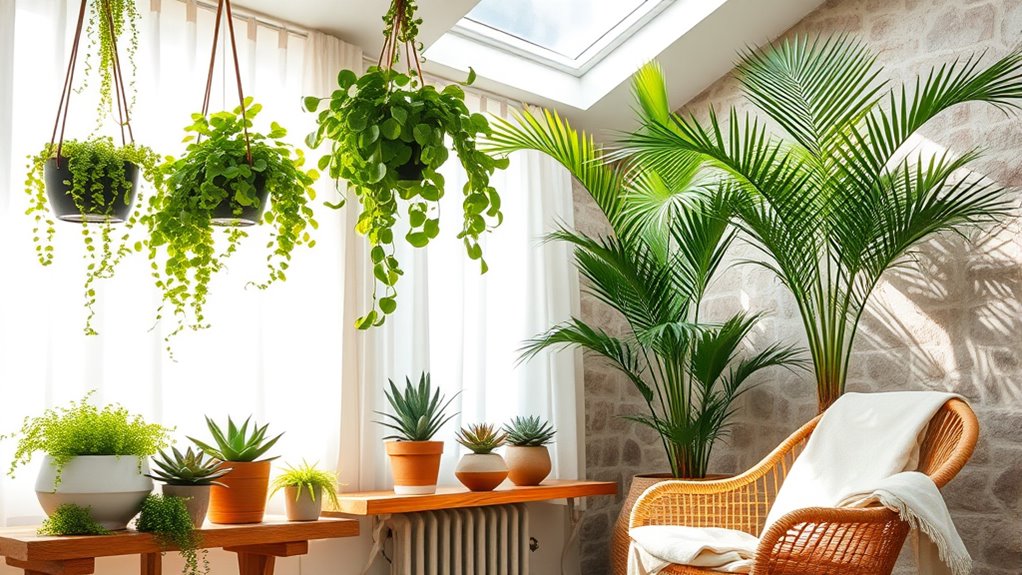

Bringing nature indoors with biophilic design involves using natural elements like indoor plants and maximizing sunlight to create a calming, vibrant space. Place plants near windows or in well-lit corners, and use diffused light to protect their health. Natural light not only highlights your greenery but also boosts your mood, improves air quality, and supports your well-being. Continue exploring these simple strategies to transform your environment into a healthful haven.
Key Takeaways
- Incorporate indoor plants to add greenery, improve air quality, and foster a calming environment.
- Maximize natural light through strategic placement near windows and well-lit areas.
- Use sheer curtains or blinds to diffuse sunlight and protect plants from harsh rays.
- Select plant varieties suited to your lighting conditions for optimal growth and visual appeal.
- Combine natural lighting and greenery to create vibrant, healthful indoor spaces that promote well-being.
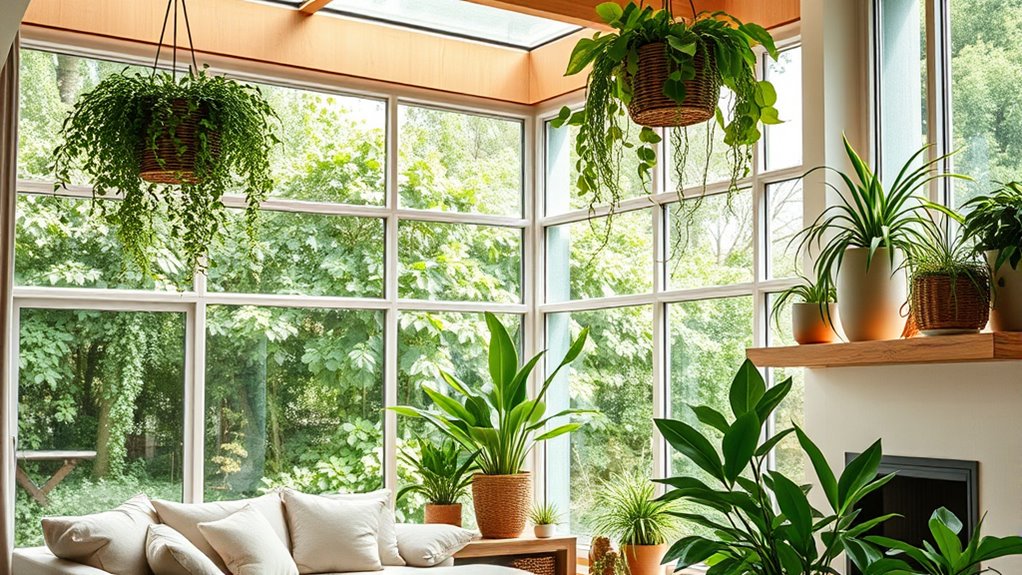
Have you ever wondered how bringing nature indoors can transform a space? It’s more than just adding a few decorative touches; it’s about creating an environment that nurtures your well-being, boosts your mood, and makes your home or office feel alive. One of the simplest and most effective ways to achieve this is by incorporating indoor plants. They not only add a splash of greenery but also improve air quality and foster a sense of calm. When you place indoor plants strategically, you connect with nature without leaving your space, making your environment more vibrant and inviting.
Natural lighting plays a vital role in biophilic design. By maximizing natural light, you enhance the beauty of your indoor plants and create a warm, welcoming atmosphere. Think about positioning your plants near windows or in well-lit corners, where sunlight can reach them throughout the day. Natural light also helps your space feel more open and airy, reducing the need for artificial lighting and energy consumption. When you let sunlight flood your rooms, you’re not just illuminating your space—you’re cultivating an environment that mimics the outdoors, which is key to biophilic principles.
Position your plants near windows to enhance natural light and create an inviting, airy atmosphere.
Integrating indoor plants with natural lighting isn’t just about aesthetics; it’s about creating a harmonious balance that benefits your health and mental clarity. As sunlight filters through your windows, your plants thrive, and in turn, they purify the air, releasing oxygen and absorbing toxins. This cycle elevates your overall well-being and makes your space feel more alive. To optimize this setup, consider using sheer curtains or blinds that can diffuse harsh sunlight while still letting in enough light for your plants to flourish. You can also experiment with different plant varieties that suit the lighting conditions in various parts of your home or office. Additionally, understanding how changing gears on a gravel bike requires anticipating terrain changes can be related metaphorically to adjusting your indoor lighting and plant placement for optimal growth.
Beyond the visual appeal, this combination of indoor plants and natural lighting influences your circadian rhythms, helping you feel more energized during the day and relaxed at night. It encourages you to spend more time in natural light, which is linked to improved mood and productivity. Whether you’re working, relaxing, or entertaining, this approach fosters a connection with the natural world that’s often missing in modern indoor spaces. By thoughtfully placing plants where they can soak up sunlight, you’re creating a sanctuary that naturally supports your physical and emotional health. In essence, harnessing natural lighting with indoor plants is a simple yet powerful way to bring the outdoors inside, transforming your space into a vibrant, healthful haven.

Aokrean Plant Grow Light, 48 LEDs Full Spectrum Grow Lights for Indoor Plants, Height Adjustable Small Halo Grow Light with Base, 3 Optional Spectrums, Auto Timer 3/9/12Hrs, 10 Brightness, 3 Pack
- Stand Stability Note: Requires pot pressure for stability
- Installation Method: Insert in soil or use stand
- Lighting Modes: 3 modes with 10 brightness levels
As an affiliate, we earn on qualifying purchases.
As an affiliate, we earn on qualifying purchases.
Frequently Asked Questions
How Does Biophilic Design Impact Mental Health?
Biophilic design boosts your mental health by reducing stress and enhancing cognition. When you incorporate natural elements like plants, natural light, and earthy materials, you create a calming environment that helps lower anxiety levels. This connection to nature also stimulates your brain, improving focus and cognitive function. As a result, you feel more relaxed, alert, and mentally sharp, making your space not just beautiful but also beneficial for your well-being.
Can Biophilic Elements Be Integrated Into Small Spaces?
Yes, you can integrate biophilic elements into compact spaces using creative solutions. Focus on vertical gardens, small potted plants, and natural textures like wood or stone to maximize greenery without clutter. Use mirrors to reflect natural light and create a sense of openness. Incorporate nature-inspired artwork or patterns to bring the outdoors inside. These strategies help you enjoy biophilic benefits while making the most of limited space.
What Are Cost-Effective Ways to Incorporate Nature Indoors?
You can incorporate nature indoors cost-effectively by trying DIY projects, such as making your own plant holders or wall gardens. Opt for budget-friendly plants like pothos, succulents, or snake plants—they’re easy to care for and affordable. You might also use natural materials like wood or stone accents to bring in organic textures without spending much. These simple steps help create a calming, natural atmosphere without breaking the bank.
How Does Lighting Influence Biophilic Interior Environments?
Lighting acts as the sun’s gentle touch inside your space, transforming your environment into a vibrant oasis. Natural illumination brightens your mood and highlights biophilic elements, making plants and textures pop with life. It influences how you feel, encouraging relaxation and focus. By harnessing daylight and thoughtful lighting design, you create a harmonious atmosphere that seamlessly connects you with nature, elevating your indoor experience to a soothing sanctuary.
Are There Specific Plants Best Suited for Indoor Biophilic Design?
You should choose indoor plant selection that includes low maintenance greenery like snake plants, pothos, or ZZ plants. These are ideal because they thrive with minimal care, making them perfect for creating a calming, natural vibe indoors. By selecting these resilient plants, you enhance your space’s biophilic design, boost your mood, and enjoy the benefits of nature without the hassle of high-maintenance greenery.
Conclusion
By embracing biophilic design, you bring nature’s soothing touch into your home, transforming it into a sanctuary where life and tranquility thrive. Think of your space as a living canvas, painted with lush greenery and natural textures that breathe fresh energy into every corner. When you connect with nature indoors, you create a harmony that nurtures your well-being, making your home not just a place to live, but a vibrant retreat where nature and comfort dance together.