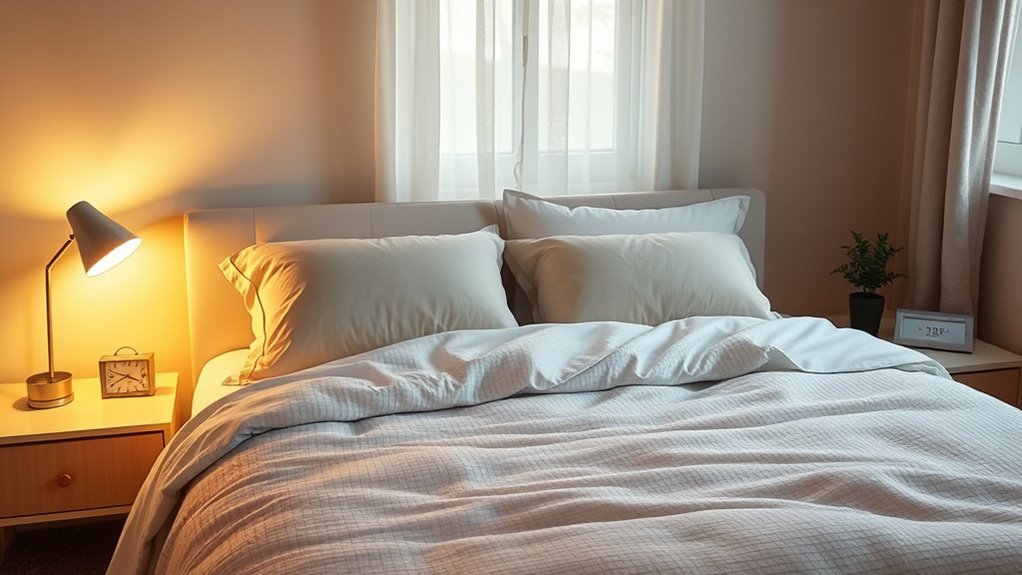

To help seniors sleep well, focus on creating a safe and calming bedroom environment. Use adjustable or dimmable lighting and add nightlights to prevent falls and promote relaxation. Keep clutter to a minimum and arrange furniture for easy movement, especially around the bed. Incorporate motion-activated lights for added safety during nighttime visits. These simple steps can make a big difference, and exploring more tips can help you design the perfect restful space.
Key Takeaways
- Install dimmable or smart lighting to create a calming, adjustable environment that promotes relaxation before sleep.
- Clear clutter and arrange furniture to ensure safe, unobstructed pathways, reducing fall risk and enhancing comfort.
- Use nightlights and motion-activated lighting to safely navigate the room during nighttime hours.
- Position essential items like water, medications, and phones within easy reach to prevent unnecessary movement.
- Maintain a tidy, well-lit space that fosters relaxation, safety, and confidence for restful sleep.

Creating a safe and comfortable bedroom is vital for seniors to enjoy restful sleep and maintain independence. One of the simplest yet most effective ways to achieve this is by paying attention to lighting adjustments. As you age, your eyes become more sensitive to light, making it harder to see clearly and increasing the risk of falls or accidents. Installing adjustable lighting options, such as dimmable lamps or smart bulbs, allows you to control brightness levels easily. Nightlights placed along hallways or near the bathroom can provide gentle illumination, easing navigation during nighttime awakenings. Proper lighting not only helps you see better but also creates a calming environment that promotes relaxation before sleep.
Adjust your lighting for safety and comfort, helping you see clearly and relax better at night.
Along with lighting, clutter reduction plays a vital role in establishing a safe bedroom environment. Excess furniture, scattered objects, or tangled cords can create obstacles that increase the likelihood of trips and falls. Clearing clutter from pathways and keeping the floor space open ensures you can move around safely, especially if you experience mobility issues or use assistive devices like walkers or canes. Organize belongings in accessible storage solutions—like shelves or drawers within easy reach—so you don’t have to stretch or strain to retrieve items. Keeping the room tidy and uncluttered also reduces stress, helping you relax more easily when it’s time to rest.
Additionally, consider the placement of furniture and essential items. Position your bed so that you can easily get in and out without having to navigate around obstacles. Keep night essentials—such as a glass of water, medication, or a phone—within arm’s reach, so you don’t have to get up multiple times during the night. Ensuring pathways are clear and well-lit minimizes hazards and makes nighttime routines smoother. Incorporating appropriate lighting technology, like motion-activated lights, can further enhance safety during nighttime movements.
Combining lighting adjustments with clutter reduction creates a bedroom environment that’s safer, more comfortable, and conducive to good sleep. Well-lit spaces with minimal obstacles help you move confidently and reduce anxiety about falling or injury. An organized, clutter-free setting fosters a sense of calm, making it easier to unwind and fall asleep. These small changes can profoundly improve your quality of sleep and overall well-being, allowing you to enjoy your independence while feeling secure in your space. Remember, creating a safe bedroom isn’t just about comfort—it’s about supporting your health and ensuring you wake up refreshed and ready for the day.
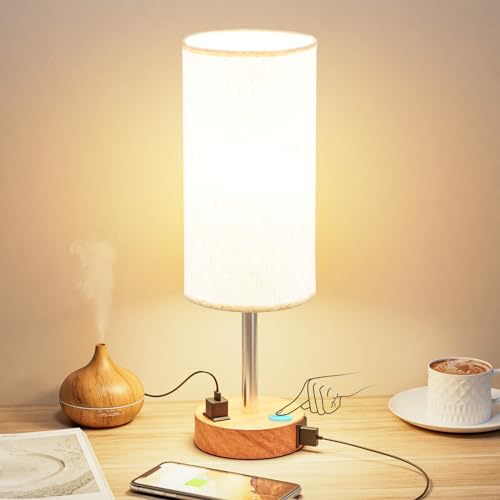
Fenmzee Bedside Table Lamp for Bedroom – 3 Way Dimmable Touch Lamp USB C Charging Ports and AC Outlet, Small Lamp Wood Base Round Flaxen Fabric Shade for Living Room, Desk, LED Bulb Included
Touch Control Bedside Lamp – This smooth dimmable touch control table lamp featured with touch-sensitive sensor, to make…
As an affiliate, we earn on qualifying purchases.
As an affiliate, we earn on qualifying purchases.
Frequently Asked Questions
How Can Seniors Reduce Nighttime Awakenings?
To reduce nighttime awakenings, you should improve your sleep hygiene by sticking to a consistent sleep schedule and avoiding caffeine late in the day. Keep a dream journal to identify patterns or triggers disrupting your sleep. Create a calming bedtime routine, and make certain your bedroom is comfortable and dark. These steps help your body relax, making it easier to stay asleep throughout the night.
Are There Specific Mattress Types Recommended for Seniors?
You should choose a mattress with moderate firmness that offers ergonomic support, which helps reduce pressure points and keeps your spine aligned. Memory foam or latex mattresses are excellent options because they contour to your body and provide personalized comfort. Avoid overly soft or firm mattresses, as they can cause discomfort or exacerbate aches. Prioritize a mattress that promotes proper posture and relieves stress on joints for a better night’s sleep.
What Are Natural Remedies for Sleep Difficulties in Seniors?
You can try natural remedies like sipping herbal teas such as chamomile or valerian root before bed to promote relaxation. Using aromatherapy diffusers with calming essential oils like lavender can also help ease sleep difficulties. These gentle options create a soothing environment, helping seniors unwind and fall asleep more easily. Remember to consult a healthcare provider before starting any new remedies to guarantee they’re safe and appropriate for your needs.
How Does Sleep Affect Seniors’ Overall Health?
Sleep markedly impacts your overall health, affecting your mood, memory, and immune function. Good sleep hygiene, like maintaining a consistent sleep schedule and creating a comfortable environment, is essential. If you struggle, cognitive behavioral therapy for insomnia can help retrain your mind for better rest. Prioritizing quality sleep boosts your energy, sharpens your thinking, and reduces health risks, helping you stay active and engaged every day.
Can Adjusting Bedroom Temperature Improve Senior Sleep Quality?
Yes, adjusting your bedroom temperature can improve your sleep quality. Using a smart thermostat helps you maintain a comfortable sleep environment by automatically regulating the temperature, ensuring it stays cool and consistent. A cooler room promotes better sleep by reducing discomfort and helping you fall asleep faster. With a smart thermostat, you can customize your sleep environment easily, leading to more restful nights and waking up feeling refreshed.
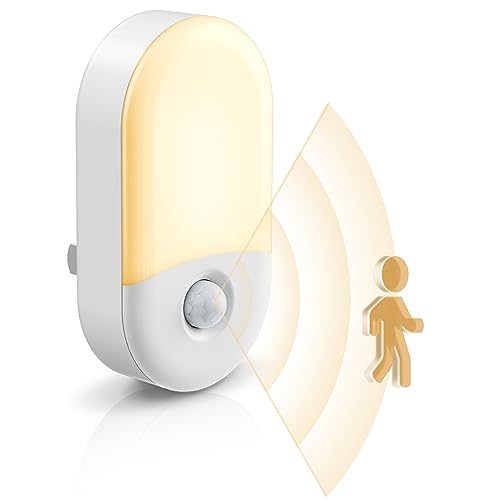
L LOHAS LED Motion Sensor Night Light, 2Pack, Motion Activated Night Light, Night Lights Plug into Wall Motion Sensor, 3000K Warm White, Adjustable Brightness 30/60LM, for Kids Adults Bathroom Bedroom
2 BRIGHTNESS LEVELS: The motion sensor night light comes with 2 different levels(30LM/60LM) of brightness control settings. You…
As an affiliate, we earn on qualifying purchases.
As an affiliate, we earn on qualifying purchases.
Conclusion
By making these simple bedroom tweaks, you’ll create a haven where restful sleep flows as smoothly as a gentle river. Remember, a cozy, clutter-free space with the right support can transform your nights from restless to peaceful. Think of your bedroom as your personal oasis—your sanctuary for rejuvenation. When you prioritize comfort and safety, you’ll find that peaceful slumber becomes your new best friend, helping you wake up refreshed and ready to embrace each day.

Lilithye Bedside Caddy Storage Organizer with Fixed Straps and Water Bottle Holder for Home, College, Dorm, Bunk/Hospital/Crib Bed Rails, White
【Strong Bearing Capacity】In addition to the metal hook, the bedside caddy also added adjustable straps on both sides…
As an affiliate, we earn on qualifying purchases.
As an affiliate, we earn on qualifying purchases.

FRIDEKO HOME Floor Lamp, 9W 800LM Color Changing Smart Lamp with Music Sync, App & Remote Control, Adjustable Brightness & Color Temperature Standing Light for Living Room Bedroom Gaming, Beige Shade
【Dynamic RGB Mode】To use this RGB floor lamp, start by turning it on with the foot switch. After…
As an affiliate, we earn on qualifying purchases.
As an affiliate, we earn on qualifying purchases.