Using vintage items in your loved one’s environment can create a comforting space that sparks fond memories and provides reassurance. Familiar objects like old photographs, retro furniture, and antique ornaments help evoke a sense of identity and belonging. By incorporating nostalgic decor, you foster a calming atmosphere that reduces confusion and boosts emotional well-being. To discover more about creating a soothing environment with vintage touches, continue exploring ways to support their comfort and happiness.
Key Takeaways
- Incorporate vintage objects like old photographs and memorabilia to evoke familiar memories and foster a sense of identity.
- Use nostalgic decor such as antique furniture and vintage ornaments to create a comforting, familiar environment.
- Display vintage items strategically to stimulate recognition and conversation, reducing confusion and agitation.
- Combine nostalgic decor with sensory elements like fragrant plants or textured surfaces for multisensory engagement.
- Personalize spaces with familiar vintage items to enhance emotional well-being and promote a sense of belonging.
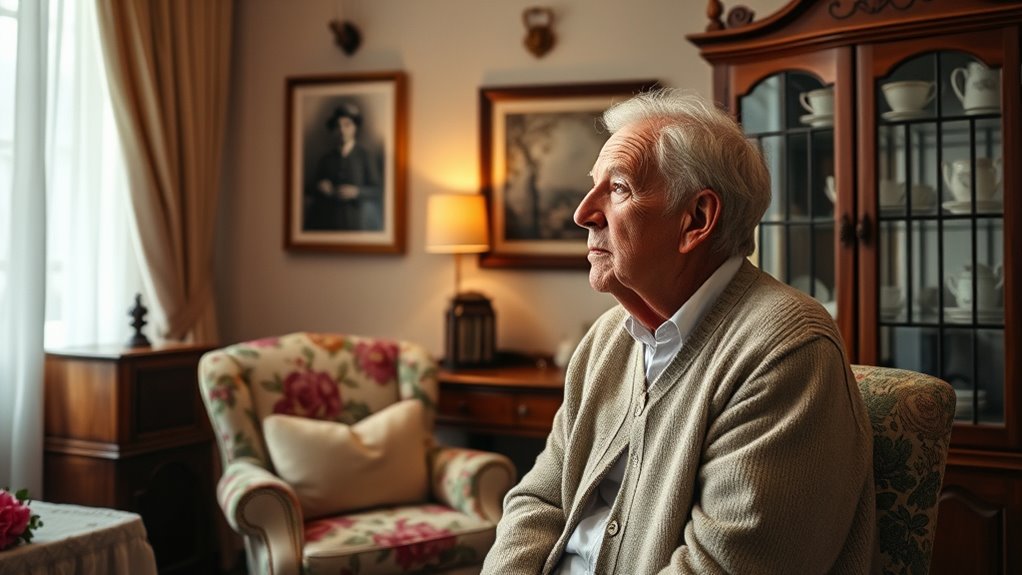
Creating a familiar and comforting environment is essential for seniors with dementia, and nostalgic decor can play a powerful role in achieving that. When you incorporate vintage items and familiar objects into their surroundings, you help evoke memories that bring comfort and reduce confusion. One effective way to enhance this environment is through music therapy, which taps into memories stored in the brain’s emotional centers. Playing familiar songs from their past or tunes they loved in their youth can immediately lift their spirits and stimulate mental engagement. You might consider setting up a dedicated space where they can listen to these tunes regularly, creating a calming atmosphere that encourages reminiscing and emotional connection.
In addition to music therapy, sensory gardens can profoundly enrich the environment for seniors with dementia. These gardens are thoughtfully designed outdoor spaces filled with fragrant plants, textured surfaces, and visually stimulating elements that appeal to the senses. The sights, smells, and tactile experiences of a sensory garden can trigger positive memories and provide soothing stimuli that help reduce agitation. When you incorporate vintage garden ornaments, old-fashioned stepping stones, or even antique garden tools, you create a nostalgic atmosphere that resonates with their past. Walking through or sitting in such a garden allows them to reconnect with familiar sights and smells, reinforcing a sense of continuity and safety. Incorporating exterior design elements like vintage planters or weathered benches can further enhance this nostalgic environment.
Blending nostalgic decor with sensory gardens and music therapy isn’t just about aesthetics; it’s about creating a multisensory environment that actively engages seniors and stimulates their memories. When you choose vintage decor—like old photographs, vintage furniture, or familiar memorabilia—you provide visual cues that can evoke stories and feelings from their earlier years. Coupling these with the sounds of favorite music or the sensory stimulation from a garden enriches their daily experience, making it more meaningful. You’ll notice that they become more alert, relaxed, and connected when their surroundings reflect their life stories and personal history. Ultimately, these thoughtful touches help foster a sense of identity and belonging, which is crucial for their well-being and quality of life.
vintage photo frames for seniors
As an affiliate, we earn on qualifying purchases.
As an affiliate, we earn on qualifying purchases.
Frequently Asked Questions
How Do You Select Appropriate Vintage Items for Individual Seniors?
When selecting vintage items for seniors, consider their personal preferences and cultural significance. You should observe their past experiences, hobbies, and favorite eras to choose meaningful pieces. Ask family members for insights, ensuring the items evoke positive memories. Focus on items that are safe, clean, and appropriate for their mobility. This thoughtful approach helps create a comforting environment that resonates with their individual history and enhances their well-being.
Are There Safety Concerns With Using Vintage Decor Around Seniors?
You should consider safety concerns when using vintage decor around seniors. Always check for fire hazards, such as frayed wiring or flammable materials, to prevent fires. Also, watch for choking risks, like small, loose parts that could be swallowed. Regularly inspect items for damage or deterioration, and choose vintage pieces made from safe, durable materials. By taking these precautions, you can create a comforting environment without compromising safety.
How Can Nostalgia Support Emotional Well-Being in Dementia Care?
Imagine walking into a cozy room filled with familiar smells and sounds, where memories softly echo. By using nostalgia, you can spark memory triggers that reconnect seniors with their past, offering emotional comfort. This emotional support helps reduce anxiety and agitation, fostering a sense of security. When you incorporate familiar objects and stories, you create a nurturing environment that boosts their well-being and strengthens their sense of identity.
What Are Affordable Ways to Incorporate Vintage Decor Into Homes?
To incorporate vintage decor affordably, you can craft with vintage materials or repurpose old items into retro furniture. Visit thrift stores for unique finds, or browse online marketplaces for vintage crafts and furniture at lower prices. You might also host DIY sessions to create nostalgic decor, making the space more comforting without overspending. These efforts help foster a warm, familiar environment that supports emotional well-being.
How Do You Update Nostalgic Decor as Seniors’ Preferences Change?
You can update nostalgic decor by blending modern design with vintage elements, ensuring it stays fresh and relevant. Incorporate technology integration, like digital photo frames or smart lighting, to enhance comfort and engagement. Regularly assess seniors’ changing preferences, swapping out certain items or updating layouts. This approach keeps the space both familiar and functional, helping seniors feel comfortable while embracing contemporary comforts and innovations.
Conclusion
You might worry that vintage decor is outdated or hard to maintain, but it creates a warm, familiar environment that truly comforts seniors with dementia. By surrounding them with nostalgic items, you help spark memories and reduce anxiety. Don’t overlook the power of familiar objects—your thoughtful decor can make a meaningful difference in their daily lives. Embrace the charm of vintage decor, and watch your loved ones feel more at home and at peace.