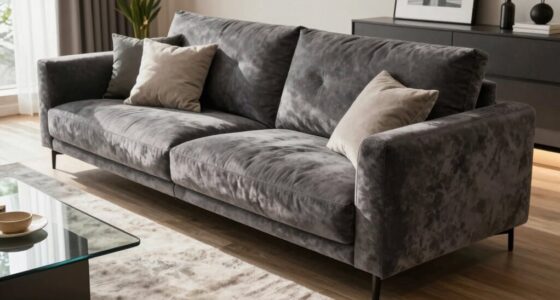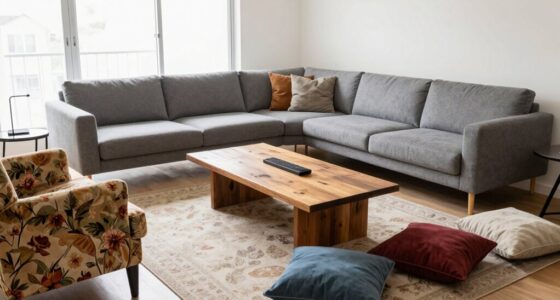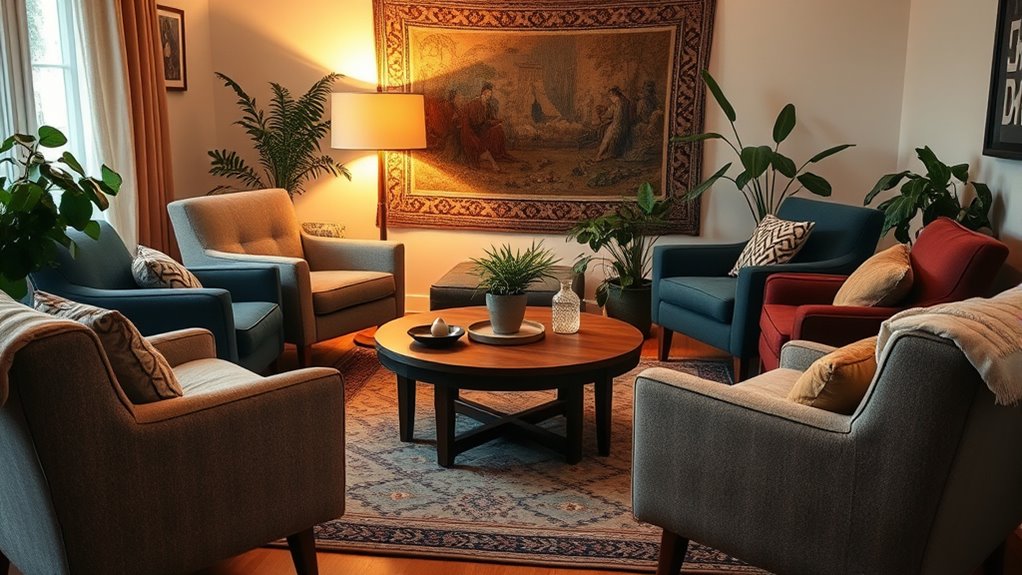

To arrange furniture for great conversations, create a circular or semi-circular layout that allows everyone to see and easily connect with each other. Use comfortable chairs or cushions to promote relaxation and engagement. Avoid straight-line or hierarchical setups, and make sure there’s enough space for movement and clear sightlines. Be mindful of cultural norms regarding personal space and proximity. For more tips on fostering inclusive and open dialogue, keep exploring how the right setup can shape your group dynamic.
Key Takeaways
- Use circular or semi-circular layouts to promote eye contact and inclusivity.
- Arrange furniture to allow easy movement and unobstructed sightlines for all participants.
- Consider cultural norms to ensure seating respects personal space and comfort preferences.
- Minimize hierarchy by avoiding straight-line or hierarchical arrangements.
- Use comfortable chairs or cushions to enhance relaxation and open communication.
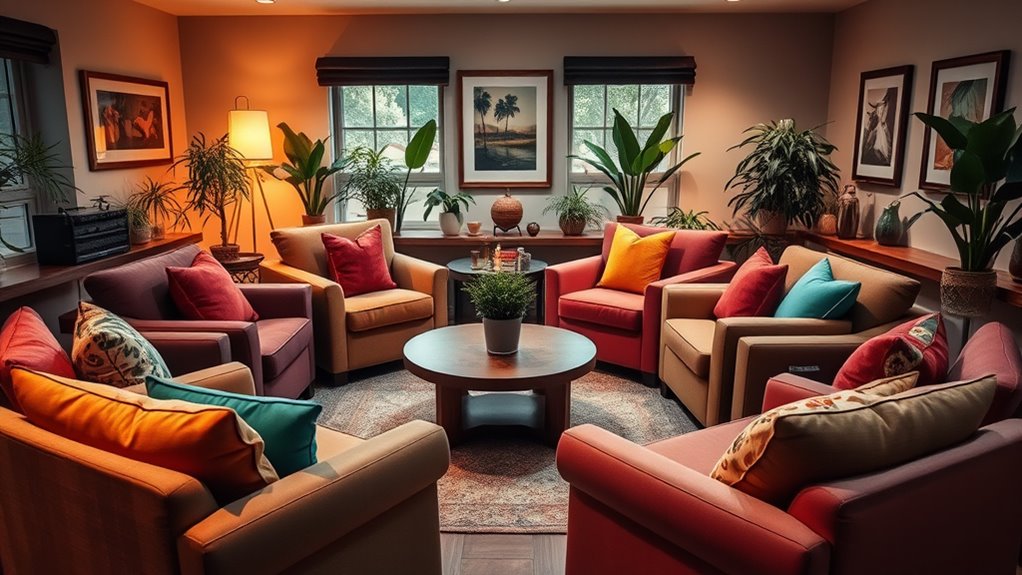
Have you ever wondered how to foster meaningful communication in a group setting? One of the most effective ways is by thoughtfully arranging the furniture to create an inviting and inclusive atmosphere. When planning a conversation circle, it’s important to consider cultural differences, as they can influence how people perceive personal space and social interactions. For some cultures, sitting close together signals warmth and engagement, while others may prefer a bit more distance to feel comfortable. By being aware of these differences, you can choose seating arrangements that respect everyone’s comfort levels. For example, a circular layout often works well because it minimizes hierarchy, allowing everyone to face each other directly. This physical setup encourages eye contact, active listening, and a sense of equality, which are vital for meaningful dialogue.
Seating arrangements aren’t just about aesthetics—they shape the dynamic of the conversation. If chairs are placed in a straight line or in a hierarchical fashion with a head of the table, it can unintentionally create barriers or imply a power imbalance. Instead, opt for a circle or semi-circle to promote openness and ease of interaction. When everyone can see each other equally, it becomes easier to share ideas and respond authentically. You might also consider the size of the group; too many people in a circle can make it difficult for everyone to participate, so adjusting the number of seats ensures that each voice is heard. If space allows, adding comfortable chairs or cushions can help participants relax, making the conversation more natural and spontaneous.
Another key factor is positioning furniture to facilitate movement and eye contact. Avoid cluttered arrangements or furniture that blocks sightlines. If someone is speaking, others should be able to easily glance at them without obstruction. This fosters attentiveness and empathy. Remember that physical comfort directly impacts engagement—if people feel physically at ease, they’re more likely to open up and contribute. Also, consider cultural nuances around gestures and proximity; some cultures emphasize close physical proximity during conversations, while others prefer more personal space. Adapting your seating setup accordingly shows respect and helps create a safe environment for sharing.
Additionally, understanding Louisiana alimony laws can inform how you arrange discussions about financial planning or legal considerations, ensuring that conversations remain respectful and accurate. Ultimately, arranging furniture for a conversation circle is about more than just the physical layout. It’s about creating a space where everyone feels valued, heard, and comfortable. By thoughtfully considering cultural differences and choosing seating arrangements that promote equality and ease, you set the stage for honest, meaningful communication that benefits everyone involved.

LEVELEVE Patio Conversation Set 5 Piece, Balcony Furniture Outdoor PE Rattan Wicker Lounge Chairs with Soft Cushions, 2 Ottomans & Glass Table for Porch Lawn, Brown (Khaki Cushions
- Color Options: Khaki with removable, washable cushions
- Durable Material: All-weather PE wicker, waterproof and UV-proof
- Versatile Use: Suitable for outdoor terrace, porch, garden, and more
As an affiliate, we earn on qualifying purchases.
As an affiliate, we earn on qualifying purchases.
Frequently Asked Questions
How Do I Choose the Right Size for My Conversation Circle?
To select the right size for your conversation circle, consider scale considerations and space planning. You want enough room for everyone to sit comfortably without feeling cramped. Measure your space first, then choose furniture that fits well without overwhelming the area. Aim for a circle diameter of about 8-12 feet, depending on your space. This ensures intimate conversations while maintaining flow and comfort for all participants.
What Furniture Materials Work Best for Comfort and Durability?
You should choose outdoor furniture materials that balance comfort and durability, like synthetic wicker, teak, or aluminum with weather-resistant cushions. Eco-friendly options like recycled plastic or sustainably sourced wood are great choices, offering both durability and environmental benefits. These materials withstand outdoor elements and provide a cozy feel, ensuring your conversation circle stays inviting and functional over time. Prioritize quality and sustainability for the best outdoor seating experience.
How Can I Arrange Furniture for Different Group Sizes?
To adapt your furniture for different group sizes, start by creating flexible arrangements. Use modular outdoor furniture that you can easily move or reconfigure. Incorporate ambient lighting to set the mood, whether for small chats or larger gatherings. For bigger groups, arrange seating in a circle or semi-circle to promote conversation, and for smaller groups, create intimate nooks. This adaptability ensures everyone feels comfortable and engaged.
What Lighting Options Enhance Conversation in a Circle?
Oh, because nothing says “let’s chat” like blinding fluorescent lights, right? To truly elevate your conversation circle, opt for ambient lighting that creates warmth and intimacy. Adjustable fixtures are your best friends—they let you tweak brightness to suit the mood, making everyone feel cozy and willing to share. Skip harsh lights and embrace softer, adaptable illumination for a truly inviting atmosphere. Your guests will thank you.
How Do I Incorporate Technology Without Disrupting the Flow?
To incorporate technology without disrupting the flow, you should focus on seamless tech integration and strategic furniture placement. Use discreet devices like built-in speakers or charging stations that blend into the space. Position furniture to keep tech within reach but out of the main conversation path, ensuring it doesn’t become a distraction. This way, you maintain a natural flow, fostering engaging conversations while enjoying the benefits of modern tech.
Conclusion
By arranging your furniture into a cozy conversation circle, you create a space where connections flow effortlessly, like a gentle stream. When everyone faces each other, conversations feel more natural and inviting. It’s simple to transform any room into a welcoming hub for sharing ideas and laughter. So, take a moment to rearrange your furniture—because a well-designed circle turns a ordinary space into a warm gathering spot, just like a crackling fire draws everyone close.