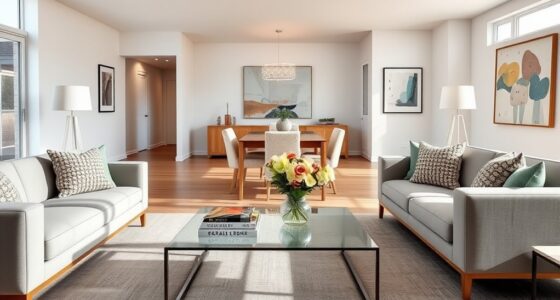
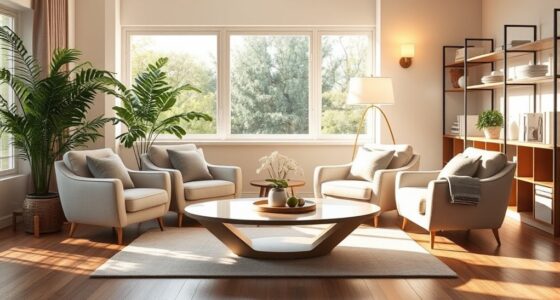
To choose a palette for your home, consider how colors affect mood and atmosphere—soft blues for relaxation or vibrant reds for energy. Stay current by incorporating trending earthy tones like terracotta or muted sage in accents, and match your choices to natural lighting and existing decor for harmony. Think about your lifestyle needs, such as stain-resistant finishes for pets or quiet hues for workspaces. Exploring these factors helps create a balanced, stylish space—if you keep exploring, you’ll discover even more ways to craft your perfect color scheme.
Key Takeaways
- Consider the mood and atmosphere you want to create in each space, using color psychology as a guide.
- Assess natural lighting and existing decor to select colors that enhance or complement current elements.
- Incorporate trending hues subtly through accessories to keep your home stylish and contemporary.
- Choose practical, stain-resistant paints for high-traffic areas or households with kids and pets.
- Balance personal style with aesthetic preferences and trends to craft a cohesive, inviting home environment.
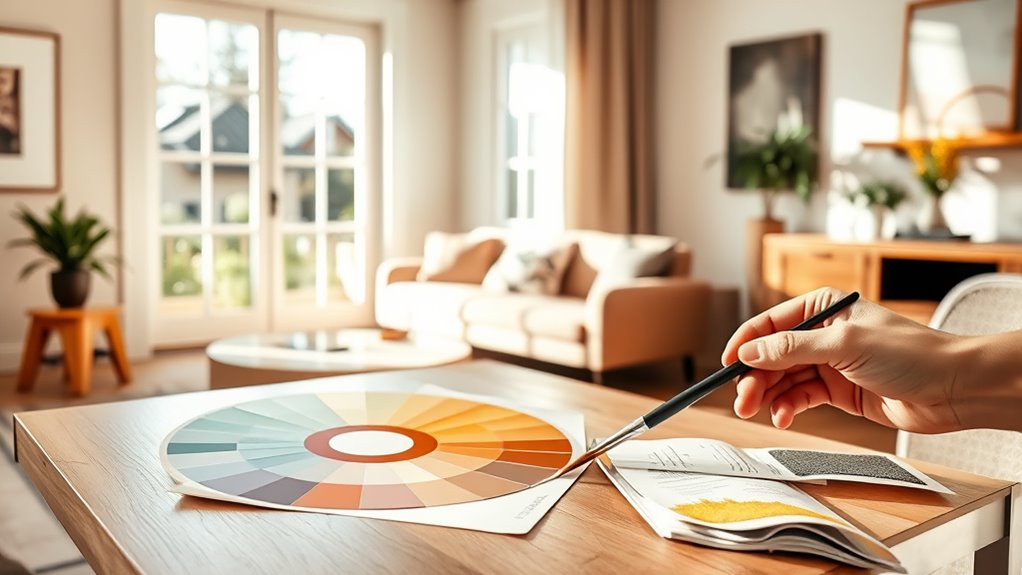
Selecting the right colors for your home can dramatically influence its mood and style. When you choose your palette, you’re not just picking shades—you’re setting the tone and atmosphere that will define each space. Understanding color psychology helps you make intentional decisions. For instance, if you want a calming environment in your bedroom, soft blues and gentle greens can promote relaxation. Conversely, vibrant reds or oranges in a dining area can energize and stimulate conversation. It’s about aligning your color choices with the feelings you want each room to evoke.
Choosing colors that influence mood helps create a harmonious and inviting home environment.
Staying current with color trending can also guide your selections. Trends often reflect broader cultural shifts and can add a contemporary touch to your home. For example, recent color trending shows a move toward earthy tones like terracotta, warm beige, and muted sage, which create a cozy, welcoming vibe. Incorporating trending colors doesn’t mean you have to overhaul your entire space; even small accents like pillows, artwork, or accessories can tap into these popular hues. This approach ensures your home feels stylish and up-to-date without sacrificing personality.
When you’re selecting your palette, consider the natural lighting in each room. Bright spaces can handle bolder, darker shades without feeling overwhelming, while smaller or dimly lit rooms benefit from lighter, reflective colors that make the space feel larger and airier. Think about how your chosen colors will interact with your existing furniture and decor—complementary shades can enhance the overall harmony, while contrasting colors can add vibrancy and interest.
It’s also smart to think about your lifestyle and how you use each room. If you have kids or pets, you might prefer washable, stain-resistant paints in colors that don’t show dirt easily. In a home office, you might choose colors that promote focus and productivity, like soft blues or cool grays. Remember, your personality should shine through your color choices—don’t feel pressured to follow trends if they don’t resonate with you. Instead, select colors that truly reflect your style and make you feel comfortable.
Ultimately, choosing colors for your home involves balancing your aesthetic preferences with practical considerations and current trends. Be bold, trust your instincts, and don’t be afraid to experiment. A well-chosen palette can transform your space into a sanctuary that feels inviting, inspiring, and uniquely yours. By understanding the impact of color psychology and staying aware of color trending, you can craft a home that’s both beautiful and emotionally resonant. Recognizing that creativity can be cultivated by anyone can inspire you to try new approaches and develop your personal style in decorating.

Zinsser 02774 PERMA-WHITE Mold & Mildew Proof Interior Paint, Quart, Eggshell White
- Self-Priming Formula: No sanding required
- Mold & Mildew Proof: Guaranteed 5-year protection
- Resists Dirt & Moisture: On the paint film
As an affiliate, we earn on qualifying purchases.
As an affiliate, we earn on qualifying purchases.
Frequently Asked Questions
How Do I Choose Colors That Match My Existing Furniture?
To match your existing furniture, start with the color wheel basics to identify complementary color schemes that enhance your pieces. Choose wall colors that contrast or complement your furniture, creating harmony without clashing. For example, if your furniture has warm tones, consider cool wall colors from the opposite side of the wheel. This approach helps you create a balanced, cohesive look that highlights your furniture beautifully.
What Colors Are Best for Small or Dark Rooms?
Think of small or dark rooms as a canvas waiting for light-enhancing shades. Whites, soft pastels, and light neutrals reflect natural light, making the space feel bigger and brighter. Space-optimizing hues like pale blue or warm beige create an inviting atmosphere without overwhelming. I once painted a tiny, gloomy den in light mint, and it instantly felt larger and more welcoming. These colors breathe life into confined spaces.
How Can I Incorporate Trending Colors Without Overhauling?
You can incorporate trending colors without a full overhaul by using accessories and accents. Choose items like throw pillows, artwork, or rugs in seasonal color trends that align with your space. Understanding color psychology helps you pick hues that evoke the right mood, making small updates impactful. This approach keeps your home fresh and modern while allowing flexibility to change colors as trends evolve.
What Color Combinations Create a Calming Atmosphere?
Calming atmospheres often come from soft, muted hues that balance warmth and coolness. You should focus on color psychology, choosing shades like gentle blues, cool greens, and warm neutrals. Using the color wheel navigation, pick complementary or analogous colors to guarantee harmony. These combinations soothe the mind, reduce stress, and promote relaxation, creating a tranquil space where you feel comfortable and at peace.
How Do I Select Colors That Reflect My Personal Style?
You should start by identifying your personal color preferences—what colors make you feel happy and comfortable. Consider cultural color meanings that resonate with you or evoke positive feelings. Mix and match shades that reflect your personality, whether bold or subtle. Trust your instincts, and don’t be afraid to experiment. Ultimately, choose colors that truly represent who you are, turning your space into a reflection of your unique style.
Conclusion
Now that you’ve mastered the art of selecting your perfect palette, your home becomes a canvas waiting to come alive. Think of each color as a brushstroke, painting a cozy, vibrant sanctuary that reflects your personality. Embrace the harmony of shades, and watch your space transform into a masterpiece crafted by your own hands. With your chosen colors, your home will sing a symphony of warmth and style, inviting everyone in to bask in its beauty.