To create a low-allergen home, avoid dust traps like thick carpets, heavy drapes, and plush furniture, which easily trap dust and allergens. Instead, opt for easy-to-clean materials such as hardwood, metal, glass, or sealed wood furniture with smooth surfaces and removable covers. Keep surfaces clutter-free and dust with damp cloths regularly. Incorporating air purifiers and allergen-reducing plants also helps improve air quality. Keep exploring for more tips on creating a healthier, dust-resistant space.

Get furniture and decor delivered free — and shop member deals
- Fast, free delivery on millions of items
- Access to Prime Big Deal Days deals on October 6–7
- Prime Video, Amazon Music and more included
Key Takeaways
- Avoid thick carpets and heavy drapes; opt for washable, smooth-surface flooring and minimalist window coverings.
- Choose furniture with sleek, non-porous finishes like sealed wood, metal, or glass to reduce dust accumulation.
- Use furniture with removable, washable covers and easy-to-clean surfaces to facilitate regular dust removal.
- Incorporate air purifiers and allergen-reducing plants near high-traffic areas for improved air quality.
- Regularly dust with damp cloths, vacuum with HEPA filters, and wash bedding to minimize dust and allergens effectively.
As an affiliate, we earn on qualifying purchases.
What Household Items Trap Dust and Allergens?

Many common household items can trap dust and allergens, making them hidden sources of indoor pollution. Items like carpets, curtains, and upholstered furniture tend to collect dust over time. To reduce airborne allergens, using air purifiers can be highly effective, as they filter out particles before you breathe them in. Additionally, allergen proof covers on pillows, mattresses, and comforters create barriers that prevent dust mites and pet dander from settling into your bedding. Regularly cleaning or replacing these covers keeps allergens at bay. You should also consider placing washable throw rugs instead of wall-to-wall carpeting, which traps dust even more. Being mindful of dust accumulation and choosing easier-to-clean surfaces can significantly improve indoor air quality and create a healthier living environment. Incorporating air filtration technology can further enhance your efforts to maintain a dust-free space. Implementing preventive cleaning practices can help minimize dust buildup and maintain a cleaner home environment.
How to Choose Dust-Resistant Decor and Furniture?

When choosing dust-resistant decor and furniture, material matters most. Opt for surfaces that are easy to wipe clean and resist dust buildup, like hardwood or metal. Avoid dense fabrics that trap allergens, and focus on items that simplify maintenance and reduce dust collection. Incorporating items made from easy-to-clean materials can further minimize dust accumulation and improve overall air quality. Selecting dust-resistant materials such as sealed wood or coated metals can help maintain a cleaner living space over time. Additionally, choosing furniture with smooth, non-porous surfaces can significantly reduce dust adherence and make cleaning more efficient.
Material Matters Most
Choosing the right materials is essential if you want dust-resistant decor and furniture that minimizes allergens in your space. The material’s durability guarantees it won’t easily trap dust or require frequent replacement, while aesthetic appeal keeps your home stylish. To make smart choices, consider these factors:
- Opt for smooth, hard surfaces like metal, glass, or sealed wood that resist dust accumulation.
- Avoid fabrics or plush materials, which trap dust and allergens more easily.
- Select finishes with low porosity for easier cleaning and maintenance.
- Prioritize furniture with sleek lines and minimal crevices to reduce dust traps and improve hygiene.
Easy-to-Clean Surfaces
Selecting surfaces that are easy to clean is essential for maintaining a low-allergen environment. Opt for furniture with smooth, non-porous finishes like metal, glass, or sealed wood, which resist dust buildup and wipe clean easily. Incorporate air purifiers to help trap airborne allergens, reducing dust that settles on surfaces. When curtains are part of your decor, choose allergen-proof options made from tightly woven fabrics that are simple to vacuum or wash regularly. Avoid heavy or textured surfaces that trap dust and allergens, making cleaning more difficult. Regularly wiping down surfaces with a damp cloth minimizes dust accumulation, while air purifiers help keep airborne particles in check. Using dust-resistant materials in your decor can further reduce allergen buildup and simplify cleaning routines. Additionally, selecting smooth surfaces over textured ones can significantly decrease dust retention. These strategies make maintaining a low-allergen space more manageable and effective.
Avoid Dense Fabrics
Dense fabrics tend to trap dust, allergens, and pet dander, making them less ideal for a low-allergen environment. When selecting decor and furniture, opt for lighter, washable materials. Avoid textile patterns that are tightly woven or plush, as they’re harder to clean. Instead, choose smooth, easy-to-maintain surfaces. For wall coverings, stick to paint or vinyl instead of heavy fabric drapes or textured textiles. Here are some tips to help you select low-allergen options:
- Use washable slipcovers on furniture for easy cleaning.
- Choose smooth textiles over plush or heavily patterned fabrics.
- Avoid wall coverings with fabric or textured materials.
- Opt for light-colored, non-porous surfaces that resist dust buildup.
Additionally, selecting easy-to-clean surfaces can significantly reduce allergen accumulation and improve indoor air quality. Incorporating dust-resistant materials in your decor choices can further minimize allergen retention and maintenance efforts. To further enhance allergen control, consider air purification systems that help remove airborne particles and allergens from your indoor environment.
To enhance allergen control, prioritize a holistic approach that combines cleanable decor with proper ventilation and regular dusting.
Easy Cleaning Tips to Reduce Dust and Allergens

Regularly cleaning your home is essential for minimizing dust and allergens, especially if you’re aiming for a low-allergen environment. Use a high-quality air purifier to capture airborne particles and improve air quality—benefits include fewer allergy symptoms and better comfort. Wash allergen-proof bedding weekly to prevent dust mites from accumulating. Dust surfaces with a damp cloth to trap dust rather than spreading it around. Vacuum carpets and upholstery with a HEPA filter vacuum regularly. Keep clutter to a minimum to reduce dust traps. Additionally, understanding media literacy can help you identify and reduce sources of misinformation that may contribute to indoor allergen concerns. Proper maintenance of indoor air quality devices, like filters and ventilators, ensures consistent allergen reduction over time. Regularly checking and replacing filters helps maintain optimal air purity and reduces indoor pollutants, contributing to a healthier living space. Maintaining specialized cleaning tools can also enhance dust removal efforts. Being aware of environmental considerations like fire safety and water conservation can help you create a safer and more sustainable home environment. Below is a quick reference:
| Tip | Why it helps |
|---|---|
| Use an air purifier | Removes airborne allergens |
| Wash allergen-proof bedding | Eliminates dust mites and skin flakes |
| Dust with a damp cloth | Prevents dust from becoming airborne |
| Vacuum with HEPA filter | Captures fine dust and allergens |
Design Strategies for a Dust-Free, Allergy-Friendly Home
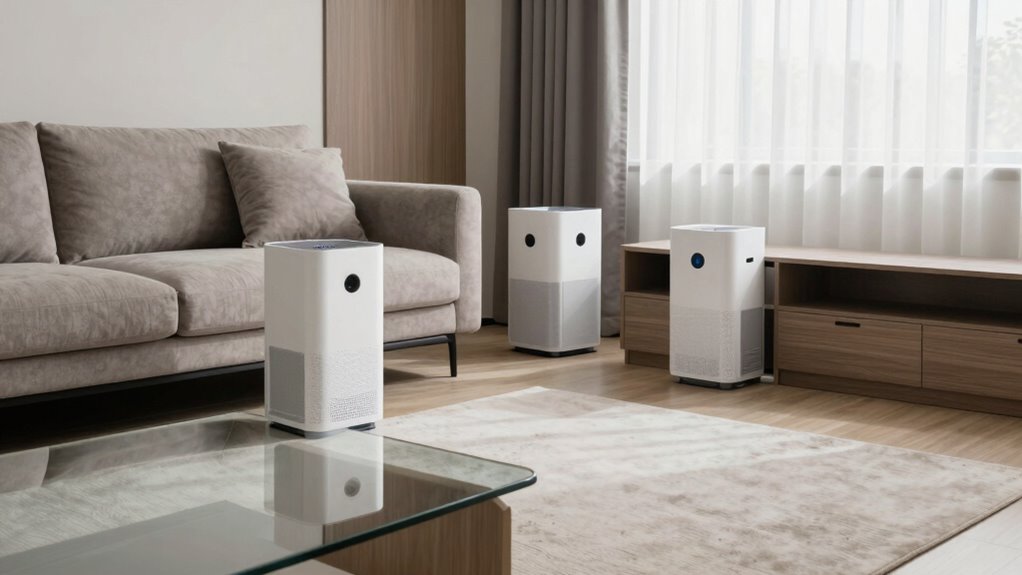
Creating a dust-free, allergy-friendly home involves thoughtful design choices that minimize allergen buildup and promote cleaner air. Proper air purifier placement guarantees maximum effectiveness—position units in high-traffic areas or bedrooms for ideal air circulation. Incorporate hypoallergenic plants, like snake plants or pothos, to naturally filter airborne allergens without triggering reactions. Here are four key strategies:
Creating a dust-free, allergy-friendly home involves strategic placement of air purifiers and adding hypoallergenic plants for cleaner air.
- Use smooth, hard surfaces on furniture and floors to prevent dust traps.
- Opt for minimalistic decor to reduce clutter and dust accumulation.
- Choose furniture with removable, washable covers.
- Keep windows closed during high pollen seasons to limit outdoor allergens.
Additionally, selecting dust-resistant materials for home furnishings can further reduce allergen buildup. Implementing these strategies helps create a healthier living environment, making it easier to breathe and reducing allergen exposure daily.
Stylish Decor Ideas That Minimize Dust Buildup
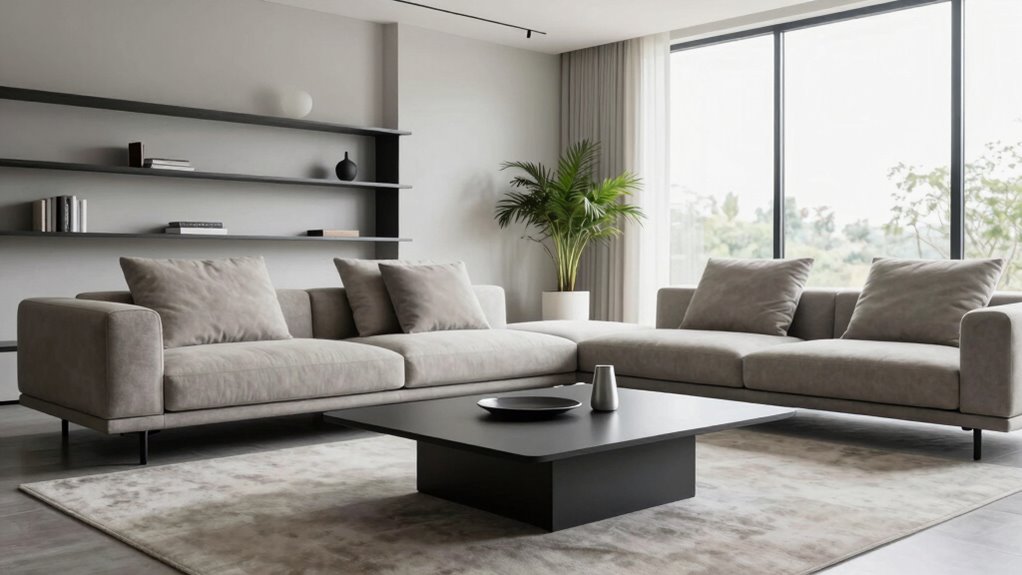
To keep your home stylish and free of excessive dust, choose decor that combines aesthetic appeal with practicality. Place your air purifier strategically, such as near high-traffic areas or bedrooms, to ensure maximum dust filtration without disrupting your decor. Incorporate allergen-reducing plants like spider plants or snake plants, which not only enhance your space’s look but also help clean the air naturally. Opt for smooth-surfaced furniture and accessories that are easy to wipe down, avoiding intricate designs that trap dust. Minimalist decor with sleek lines reduces dust collection points. Additionally, selecting dust-resistant materials for your furnishings can further minimize dust buildup over time. Using easy-to-maintain surfaces makes regular cleaning more effective and less burdensome. Choosing furniture with non-porous finishes can help prevent dust from settling and make cleaning even simpler. Incorporating air purification devices into your decor not only improves air quality but also complements modern design styles. By combining smart air purifier placement with attractive, low-maintenance plants, you create a space that’s both stylish and less prone to dust buildup, making your home healthier and more inviting. Regularly updating your decor with innovative cleaning solutions can also help maintain a dust-free environment more effortlessly.
Top Tips for Maintaining an Allergy-Resistant Living Space
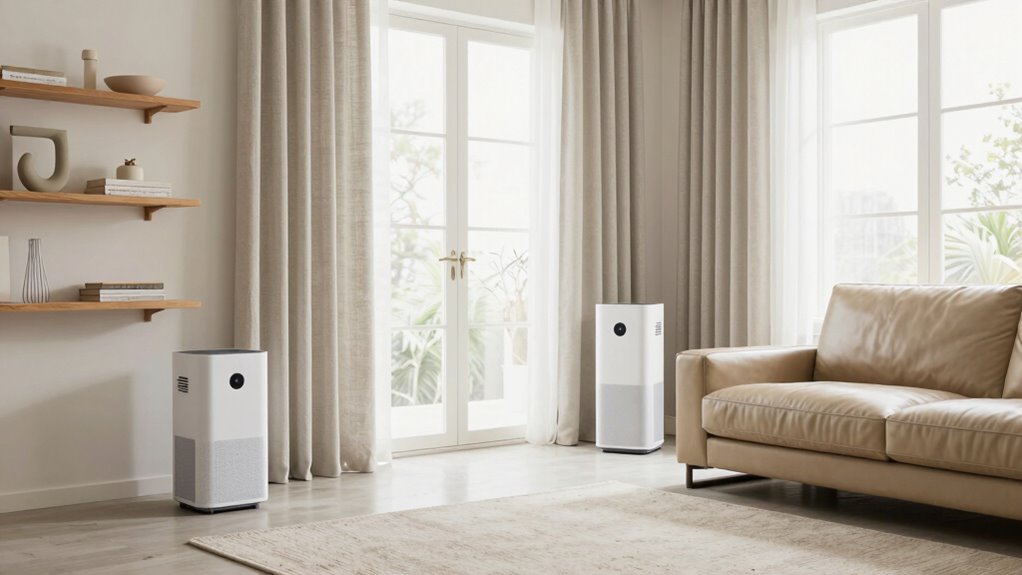
Maintaining an allergy-resistant living space requires consistent effort and strategic choices. To reduce allergens effectively, consider these tips:
Creating an allergy-friendly home involves consistent, strategic steps to reduce airborne allergens effectively.
- Use an air purifier with HEPA filters to maximize air purifier benefits, capturing airborne dust and pollen.
- Incorporate allergy proof plants like snake plants or pothos, which naturally purify the air without trapping dust.
- Regularly dust surfaces with damp cloths to prevent dust resettling.
- Vacuum often with a HEPA-filter vacuum cleaner, especially in carpets and upholstery.
Frequently Asked Questions
Are There Eco-Friendly Dust-Resistant Materials for Home Decor?
Yes, you can find eco-friendly fabrics like organic cotton, hemp, and bamboo that resist dust and are sustainable. These materials are naturally less prone to trapping dust, making them ideal for allergy-friendly decor. When choosing furniture or textiles, look for products made from sustainable materials that are also easy to clean and maintain. Switching to eco-friendly fabrics helps reduce allergens and supports environmentally conscious choices in your home.
How Often Should I Replace Dust-Trapping Household Items?
You should replace dust-trapping household items every 3 to 6 months to prevent excessive dust accumulation. Regular replacement guarantees they remain effective at capturing dust and allergens, reducing indoor airborne particles. Keep an eye on signs of wear or when cleaning becomes less effective. By maintaining a consistent replacement frequency, you’ll improve your home’s air quality and minimize allergen buildup, creating a healthier living environment.
Do Air Purifiers Help Reduce Dust on Decor Surfaces?
Sure, air purifiers do help reduce dust on decor surfaces—if you believe in magic. Their effectiveness depends on the unit’s quality and size, but generally, they remove dust particles from the air, making surfaces less dusty. Think of an air purifier as a diligent guard, constantly catching airborne dust before it settles. While not a miracle worker, they definitely contribute to a cleaner space, reducing dust buildup on your decor.
Can Specific Plants Improve Indoor Air Quality and Reduce Allergens?
Yes, certain plants can improve indoor air quality and help with allergen reduction. Plants like snake plants, peace lilies, and spider plants naturally filter toxins and increase humidity, which can reduce airborne allergens. While air purifiers are highly effective, incorporating these plants provides a natural boost. Together, they create a healthier environment by minimizing dust and allergens, making your space more comfortable and breathable.
What Are the Best Cleaning Tools for Hard-To-Reach Dust Spots?
You should use a vacuum attachment with a slim nozzle to reach tight spots like corners and vents effectively. An extendable duster is also ideal for high or awkward areas, allowing you to clean without straining. Both tools help remove dust thoroughly, minimizing allergens. Keep these on hand, and you’ll stay ahead of dust buildup in those tricky spots, keeping your indoor air cleaner and healthier.
Conclusion
By choosing dust-resistant decor and staying on top of regular cleaning, you can turn your home into a fortress against allergens. Think of it as tending a garden—regular care keeps unwanted weeds at bay, letting your space breathe freely. With these simple tips, you’ll create a cozy, stylish haven that invites fresh air in and keeps dust and allergens out, making every breath you take feel as light as a feather.
Fall Picks
fall essentials
As an affiliate, we earn on qualifying purchases.