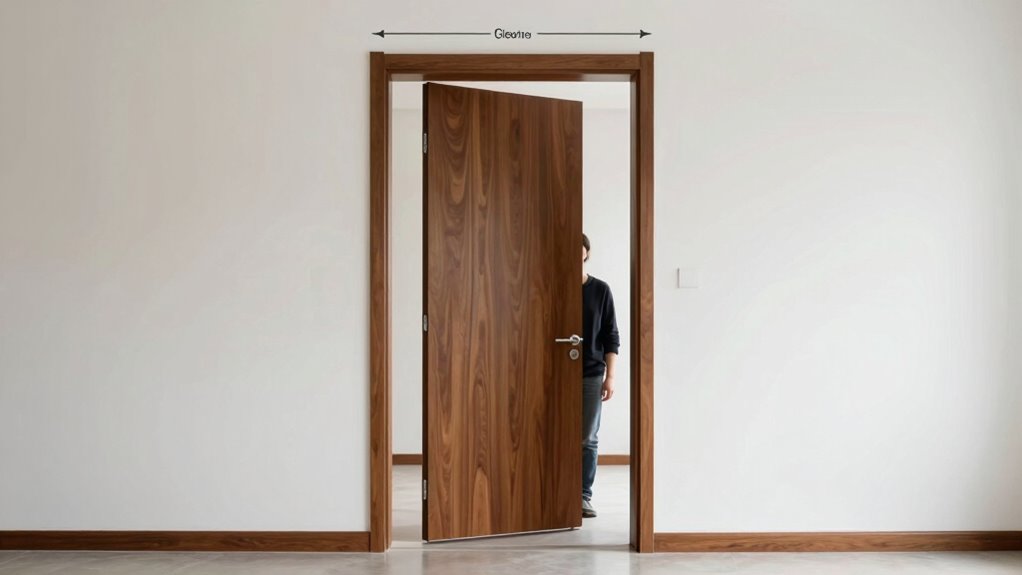

To stop struggling with doorways, understand that the clear-width rule requires a minimum opening of 32 inches when the door is fully open. Many homes get this wrong by mismeasuring or overlooking hardware, hinges, and wall space. Precise measurements and small adjustments, like repositioning stops or using offset hinges, can make a big difference. Keep in mind your home’s style and safety needs—if you want to learn how to get it right every time, keep going.
Key Takeaways
- Many homes incorrectly measure door openings, often missing the space needed for hardware and hardware protrusions.
- The standard clear-width rule requires at least 32 inches when the door is fully open at 90 degrees.
- Common mistakes include focusing only on doorjambs and neglecting trim, hardware, and hinge clearance.
- Proper measurement involves checking at multiple points and accounting for wall clearance and hardware space.
- Small adjustments like removing stops or using wider hinges can significantly improve doorway accessibility.
What Is the Clear-Width Rule for Doorways and Why It Matters
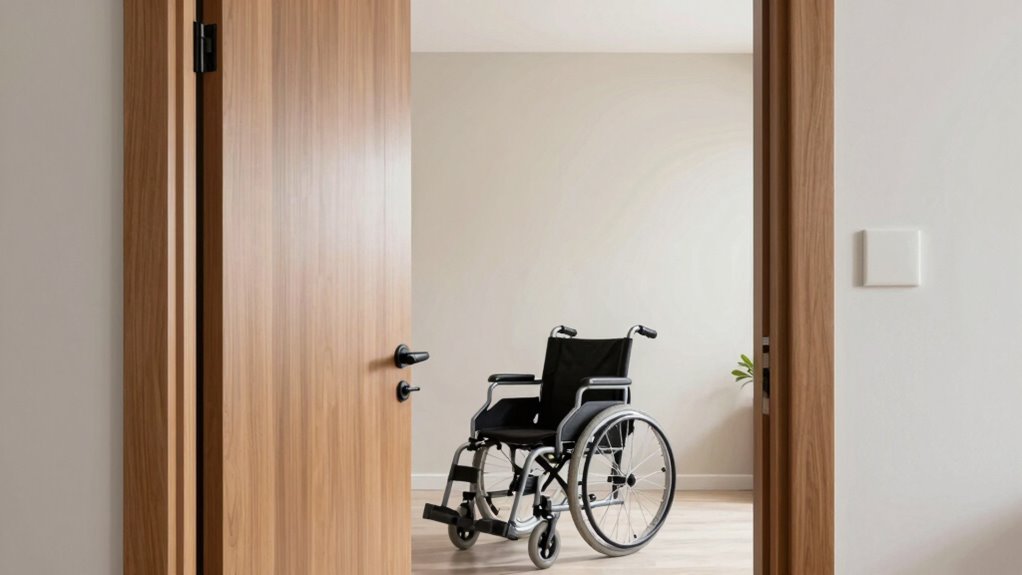
Have you ever wondered why doorway widths are so carefully regulated? It’s because the clear-width rule guarantees doorways are accessible and functional. This rule states that the minimum clear opening should be at least 32 inches when the door is open 90 degrees, providing enough space for people, furniture, and mobility aids. But it’s not just about function; doorway aesthetics also play a role. Properly measured doorways contribute to the overall harmony of your interior design, making spaces look balanced and inviting. When you follow the clear-width rule, you create a seamless flow throughout your home, avoiding awkward or cramped doorways. Understanding doorway measurements and applying precise measurements can help ensure your doorways meet accessibility standards while enhancing your home’s aesthetic appeal. Additionally, considering natural lighting can further improve the visual appeal and openness of your space. Paying attention to space planning helps optimize how each room functions and feels welcoming. This balance between practicality and style is what makes understanding the rule so important for any thoughtful interior design.
Common Mistakes When Measuring Doorways
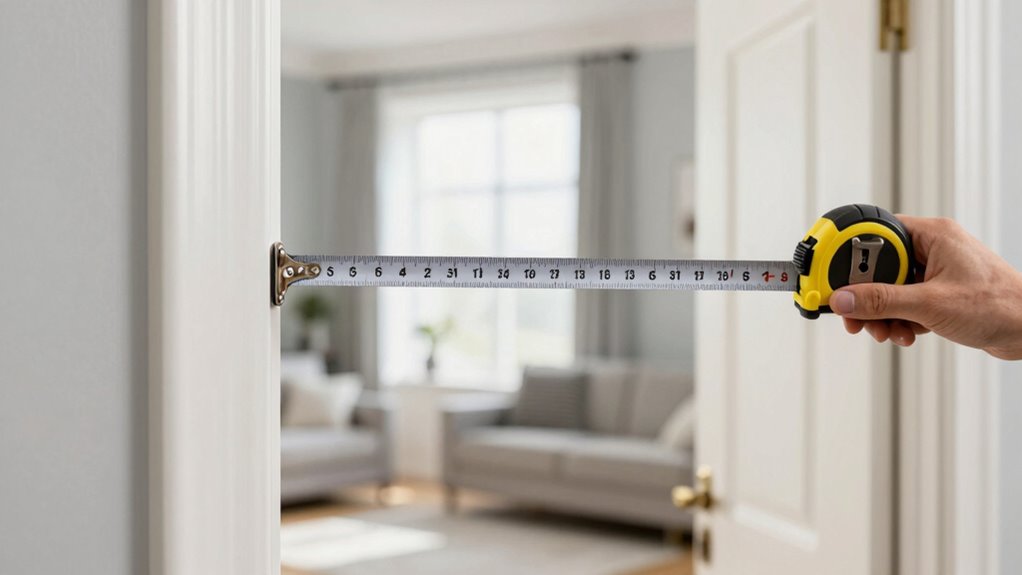
Many people make mistakes when measuring doorways that can lead to problems later. You might misread the clear-width measurement, forget to account for door hardware, or overlook wall clearance needs. Recognizing these common errors helps guarantee accurate measurements and proper door fitting. Additionally, understanding proper measurement techniques ensures that all factors, such as hardware and clearance space, are correctly considered before installation. Paying attention to door clearance needs is crucial for smooth operation and avoiding the need for costly adjustments later. Implementing local automation strategies can assist in monitoring and maintaining optimal door clearance and operation, preventing issues before they arise. Properly measuring for systematic planning can help prevent these issues from the start, especially when considering tool calibration and consistent measurement practices.
Misreading Clear-Width Measurements
Misreading clear-width measurements is a common mistake that can lead to costly errors. When measuring, you might focus only on the space between doorjambs without considering the entire doorway opening, including any doorframe materials that can affect width. For example, thick doorframes or decorative molding can make the opening seem wider or narrower than it actually is, impacting doorway aesthetics. Failing to measure from the correct points or ignoring the presence of door hardware can result in inaccurate dimensions. These misreadings can cause issues when selecting new doors or planning renovations, leading to awkward fittings or compromised accessibility. Always double-check measurements from multiple points and account for doorframe materials to ensure your measurements are precise and your doorway remains functional and visually appealing. Additionally, understanding doorway clearances can help prevent installation problems and improve overall home accessibility, especially when incorporating modern technology and sustainable materials into your home design. Being aware of precise measurement techniques is essential for achieving accurate results and avoiding unnecessary expenses, and consulting professional guidance can further ensure proper measurements and installation. Moreover, employing proper measuring tools can significantly enhance measurement accuracy and save time during renovations.
Omitting Door Hardware Space
Did you remember to account for space needed for door hardware? Overlooking this can lead to doorways that are too narrow once the hardware is installed. Door hardware, including handles, locks, and hinges, requires additional space—especially hinge clearance—that must be factored into your measurements. Failing to do so can cause doors to snag, not close properly, or block passage entirely. Always add extra width to accommodate hinge clearance and hardware protrusions. This ensures smooth operation and prevents damage to walls or frames. Measure carefully, considering the full extent of the hardware when the door is open, closed, and during installation. Omitting this step often results in costly adjustments later, so double-check your measurements before cutting or ordering doors. Incorporating accurate measurements into your planning process ensures you account for all necessary clearances and avoid surprises during installation.
Ignoring Wall Clearance
Overlooking wall clearance can cause significant issues when measuring doorways. If you ignore the space needed for wall clearance, your doorway measurements won’t account for door hardware or wall protrusions, leading to cramped fits or swinging problems. Properly measuring involves considering the distance between the door frame and nearby walls or obstructions. Here’s a quick overview:
| Wall Clearance Aspect | Typical Space Needed | Impact of Ignoring |
|---|---|---|
| Door Hardware | 1-2 inches | Hardware may hit walls or impede opening |
| Wall Protrusions | Varies (up to 3 inches) | Obstructed door swing or damaged walls |
| Adjacent Walls | 1-2 inches | Tight fit, difficulty maneuvering |
Additionally, taking into account the doorway measurements can help prevent installation issues. Ensuring proper space planning during measurement can save time and costs later. Recognizing the importance of wall clearance factors is essential for accurate measurements and successful door installation. Always leave enough wall clearance to accommodate hardware and prevent door swing issues. Additionally, understanding affiliate disclosure and privacy policies can help you make informed decisions when purchasing related tools or measuring equipment. Paying attention to measurement accuracy can further reduce errors and improve overall results.
How to Measure Your Doorway Correctly for Accessibility
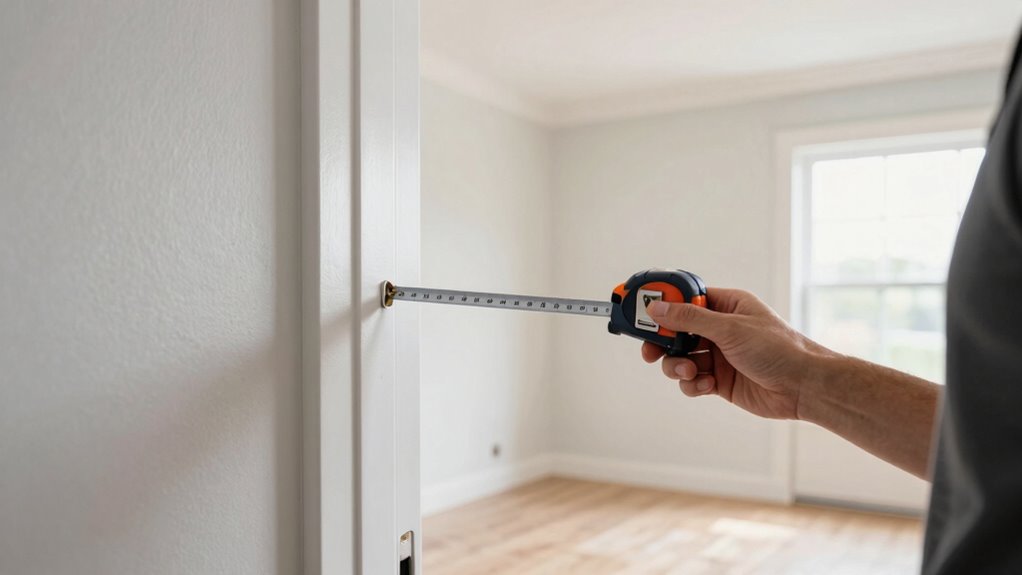
To verify your doorway meets accessibility standards, you need to measure its clear width accurately. Start by removing any door or hardware that might obstruct the measurement. Use a tape measure to determine the space between the inside edges of the doorway frame, not including molding or trim, to get the true clear width. Ensure the measurement is taken at multiple points—top, middle, and bottom—to account for any irregularities. Remember, while doorways can enhance historical architecture, their aesthetics shouldn’t compromise accessibility. Precise measurement guarantees you maintain the balance between preserving the charm of your home and meeting modern standards. Properly measuring your doorway guarantees it’s functional and compliant, making your space more accessible and welcoming for everyone.
Factors That Influence the Ideal Doorway Width for Your Home
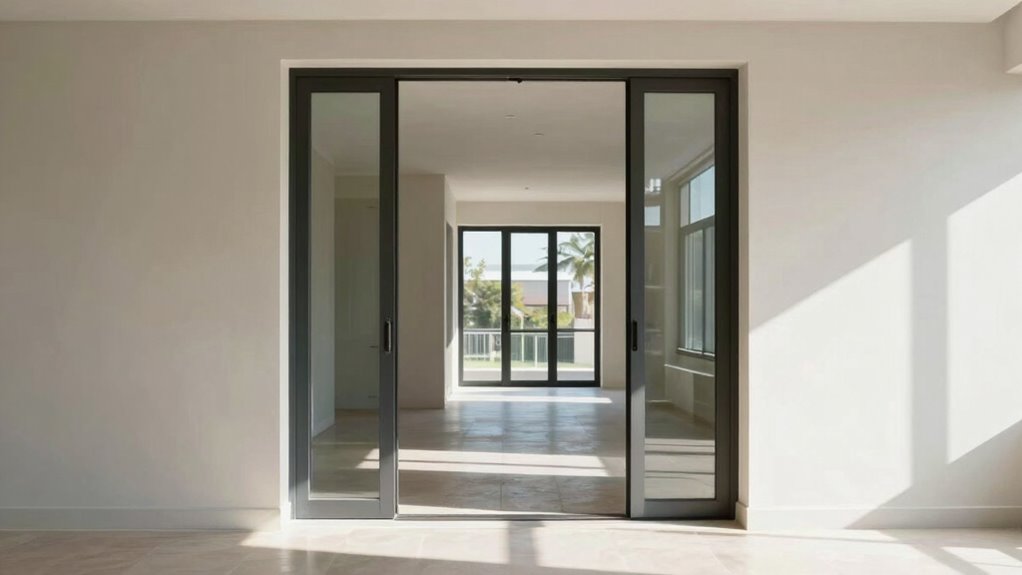
When choosing the ideal doorway width, you need to take into account how much space is necessary for mobility and ease of movement. You also want the doorway style to match your home’s overall architectural design. These factors help ensure your doorways are both functional and visually cohesive. Considering natural ingredients in your home’s design elements can also contribute to a healthier living environment. Additionally, understanding building codes related to door dimensions can help you make compliant and safe choices.
Space for Mobility
Have you ever considered how the size of your doorways impacts mobility within your home? The threshold depth plays a key role in ensuring smooth passage, especially for those with mobility aids. A deeper threshold can create a barrier, making it harder to navigate comfortably. Additionally, your door swing influences available space; a wider swing can encroach on the room, reducing clear passage width. To optimize mobility, consider doors that swing smoothly without obstructing walkways or requiring excessive space. If you or someone in your household uses mobility devices like wheelchairs or walkers, wider doorways and minimal threshold depths are essential. These adjustments help create a safer, more accessible environment, reducing the risk of accidents and making everyday movement seamless.
Architectural Style Compatibility
Architectural style considerably influences the ideal doorway width for your home. Maintaining architectural harmony and stylistic coherence guarantees your spaces look seamless and well-balanced. For example, Victorian homes often feature wider doorways to match ornate details, while modern designs favor cleaner lines with narrower openings. Here’s a quick guide:
| Style | Typical Doorway Width | Key Consideration |
|---|---|---|
| Victorian | 36-42 inches | Emphasizes grandeur and ornate details |
| Colonial | 30-36 inches | Balances formality and function |
| Contemporary | 28-32 inches | Focuses on sleek, minimalist look |
| Rustic/Country | 32-36 inches | Complements natural materials |
Matching your doorway width with your home’s style preserves the overall aesthetic and enhances stylistic coherence.
DIY Tips to Adjust Doorways Without Major Renovations

Adjusting doorways to meet the doorway clear-width rule doesn’t require tearing down walls or extensive renovations. Instead, you can make simple DIY adjustments that improve accessibility while maintaining your doorway aesthetics and interior design. For example, removing or repositioning door stops can create extra space. Installing wider door hinges, like offset hinges, can increase width without replacing the entire door. You might also consider shimming or trimming door frames slightly to gain more clearance. These small changes are cost-effective and straightforward, allowing you to customize your space without major disruption. Keep in mind that preserving the overall look and feel of your home is essential, so choose adjustments that complement your interior design style while ensuring functional doorway widths.
Why Understanding Doorway Widths Prevents Frustration and Improves Accessibility
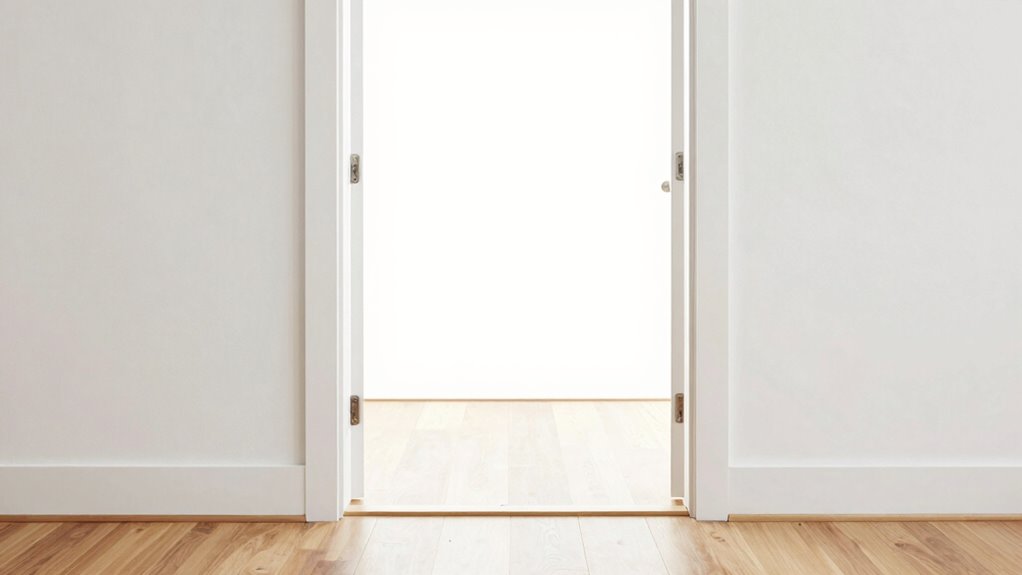
Knowing the proper doorway widths can save you from future headaches and make your home more accessible. When doorways are correctly measured, furniture placement becomes easier, preventing awkward fits or blockages. It also helps balance aesthetic considerations, so your space remains inviting without sacrificing function.
| Benefit | How It Helps | Practical Tip |
|---|---|---|
| Prevents frustration | Avoids furniture misfits | Measure before buying large pieces |
| Enhances accessibility | Easier for everyone | Allow extra width for mobility |
| Improves flow | Smooth traffic movement | Keep pathways clear |
| Maintains aesthetics | Seamless look and feel | Choose proportionate door sizes |
| Reduces future repairs | Less rework or adjustments | Plan doorway widths early |
Frequently Asked Questions
How Do I Determine if My Doorway Meets Accessibility Standards?
Think of your doorway as a portal like those in classic stories—must be wide enough to welcome all. To check if it meets accessibility standards, measure the clear width from the door’s edge to the frame, ensuring at least 32 inches when the door is open 90 degrees. This aligns with historical doorway standards while maintaining a functional, aesthetic appeal. Use a tape measure for accuracy and consider any obstructions.
Are There Legal Requirements for Doorway Widths in New Homes?
Yes, there are legal requirements for doorway widths in new homes. Building codes and safety regulations typically mandate a minimum clear width—usually around 32 inches—to guarantee accessibility for all users, including those with mobility devices. You should check local regulations, as requirements can vary by region. Making sure your doorways meet these standards not only keeps you compliant but also enhances safety and ease of access in your home.
Can Narrow Doorways Be Widened Without Extensive Remodeling?
Yes, you can widen narrow doorways without extensive remodeling, especially if you value doorway aesthetics and want to preserve historical architecture. You might opt for a simple, partial wall removal or add a new frame, which often requires minimal work. This approach helps improve accessibility and flow while maintaining the charm of your home’s original design. Always check local codes and consult professionals to guarantee a safe, compliant upgrade.
What Tools Are Best for Measuring Doorway Clear Widths Accurately?
You should use a measuring tape or a laser distance meter for accurate doorway clear width measurements. A measuring tape is simple and reliable, especially for quick checks, while a laser distance meter offers precision over longer distances and in tight spaces. Both tools aid in confirming you get the exact width, which is essential for making informed decisions about widening doorways without unnecessary guesswork or errors.
How Do Doorway Widths Affect Furniture Placement and Interior Design?
Think of doorway widths as the heartbeat of your space. They directly influence doorway flow and determine how easily furniture fits through. Narrow doorways can create bottlenecks, limiting your furniture options and disrupting the room’s harmony. You need to measure carefully to make certain your furniture fits comfortably, allowing for smooth movement and a balanced interior design. Proper doorway widths are vital for a functional, welcoming home where everything flows naturally.
Conclusion
Think of your doorway as a welcoming gate in a garden. When it’s just the right width, it invites everyone in effortlessly, no obstacles in the way. But if it’s too narrow, it’s like a tangled vine blocking the path. By understanding and measuring your doorways correctly, you create an open, accessible space that everyone can enjoy. It’s your key to transforming a simple entry into a smooth, inviting passage for all.