To see better in the dark and keep your home safer, focus on strategic lighting both inside and outside. Install motion-activated fixtures near entryways, pathways, and dark corners to automatically light your way. Use bright, daylight bulbs for clarity and layer different light sources to eliminate shadows. Guarantee your lighting setup combines security with aesthetics, making every spot safe and easy to navigate. Keep exploring for more tips to brighten your home and boost safety.

Get furniture and decor delivered free — and shop member deals
- Fast, free delivery on millions of items
- Access to Prime Big Deal Days deals on October 6–7
- Prime Video, Amazon Music and more included
Key Takeaways
- Install outdoor motion-sensor lights around entry points, pathways, and dark corners to automatically illuminate and improve visibility.
- Use bright, high-visibility indoor bulbs like daylight or cool white in hallways, bathrooms, and closets for safer navigation.
- Layer different lighting sources outdoors and indoors to eliminate shadows and ensure comprehensive coverage.
- Incorporate smart lighting systems that can be controlled remotely and scheduled for optimal safety and energy efficiency.
- Focus on strategic fixture placement to enhance overall illumination and reduce dark spots, minimizing trip hazards.
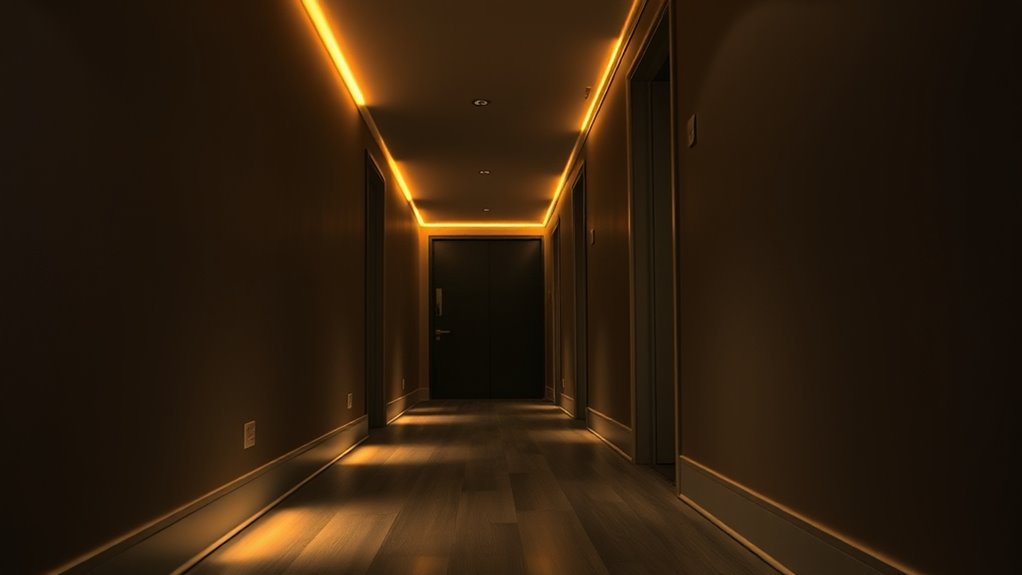
Good lighting is vital for a safe home, as it helps you see hazards clearly and prevents accidents. Well-placed lighting can illuminate dark corners, staircases, and walkways, making navigation safer, especially at night. One effective way to enhance outdoor safety is by installing outdoor fixtures equipped with motion sensors. These fixtures automatically turn on when they detect movement, providing instant illumination without you having to fumble for switches. They are particularly useful near entryways, driveways, and pathways where sudden darkness can cause trips or falls. Motion-sensor outdoor fixtures also serve as a deterrent to intruders, as the sudden light can startle anyone approaching your home unexpectedly. This added layer of security gives you peace of mind and discourages unwanted visitors.
When planning your lighting setup, focus on layering light sources to eliminate shadows and dark spots. For example, bright overhead lights combined with softer pathway lighting create a balanced environment that’s both functional and inviting. Use outdoor fixtures strategically to cover all key areas, such as around your porch, garage, and backyard. Installing motion sensors on these fixtures ensures that areas remain illuminated only when needed, conserving energy and reducing unnecessary light pollution. This setup also means you won’t have to remember to turn lights on or off; the sensors handle that for you automatically, making your home more energy-efficient. Incorporating smart lighting technology can further optimize your home’s safety and energy use.
Inside your home, consider adding motion-activated lights in hallways, bathrooms, and closets. These lights turn on instantly when you enter, so you don’t have to search for switches in the dark. It’s especially helpful during late-night trips to the bathroom or kitchen, reducing the risk of bumps and falls. For added safety, combine these with regular lighting to ensure consistent illumination. Also, opt for bulbs with high visibility, such as daylight or cool white, which help you see clearly and identify hazards quickly. Remember, the goal is to create a well-lit environment that allows you to move confidently and safely through your space.
Incorporating outdoor fixtures with motion sensors is a simple but powerful step toward making your home safer and more navigable. They offer automatic lighting when you need it most, improve security, and reduce energy costs. Inside, motion-activated lights serve the same purpose, making nighttime routines smoother and safer. When you pay attention to placement and use a combination of different lighting types, you’ll find your home becomes much easier and safer to navigate, day or night. Good lighting isn’t just about aesthetics; it’s an indispensable part of maintaining a secure and accessible living space.
As an affiliate, we earn on qualifying purchases.
Frequently Asked Questions
How Can I Prevent Glare From Indoor Lighting Fixtures?
To prevent glare from indoor lighting fixtures, focus on glare control by choosing fixtures with diffusers or shades that soften the light. Proper fixture placement is key—install lights at appropriate heights and angles to minimize direct glare into your eyes. Using dimmers also helps adjust brightness levels, reducing harsh reflections. Combining these strategies creates a more comfortable, well-lit space without the discomfort of unwanted glare.
What Are the Best Energy-Efficient Bulbs for Safety?
Oh, sure, because nothing says safety like flickering bulbs, right? Instead, go for LED bulbs—they’re energy-efficient and give bright, reliable light. Pair them with motion sensors to automatically light your way, reducing accidents and saving energy. These smart combos guarantee you won’t stumble in the dark or waste power, making your home both safer and greener. Who knew safety could be so clever and eco-friendly?
How Should I Light Outdoor Pathways Effectively?
To effectively light outdoor pathways, focus on landscape lighting that highlights your pathway illumination. Use solar-powered or low-voltage LED lights along the edges for consistent visibility and safety. Place fixtures at intervals to reduce shadows and guarantee even lighting. Make certain the lights are weather-resistant, and position them to prevent glare. Properly illuminated pathways not only enhance safety but also add to your home’s aesthetic appeal.
Can Smart Lighting Improve Home Safety?
Smart lighting considerably boosts your home’s safety by providing proactive, personalized illumination. With motion sensors, your lights automatically activate when you move, preventing potential accidents. Adjust the color temperature to create a cozy or clear environment, enhancing visibility and reducing risks. Smart lighting simplifies safety, so you stay secure and see clearly in every space. This seamless, smart setup keeps your home safer, smarter, and more suited to your lifestyle.
What Lighting Solutions Help Elderly or Disabled Individuals?
You can improve safety for elderly or disabled individuals by using adaptive technology and personalized lighting solutions. Install motion-activated lights to ease navigation, especially at night. Use dimmable or adjustable lights to suit their needs and preferences. Smart lighting systems can be controlled remotely or automatically, providing consistent illumination. These solutions help reduce falls and increase independence, making their daily routines safer and more comfortable.
Conclusion
Don’t let darkness hold you back—proper lighting makes your home safer and easier to navigate. Some worry that adding more lights will increase costs or clutter, but smart choices like motion sensors or LED bulbs keep things efficient and tidy. With just a few simple tweaks, you’ll enjoy a brighter, more secure space that welcomes you home every day. Brighten your home today—you deserve a safer, more comfortable living environment.
Fall Picks
fall essentials
As an affiliate, we earn on qualifying purchases.