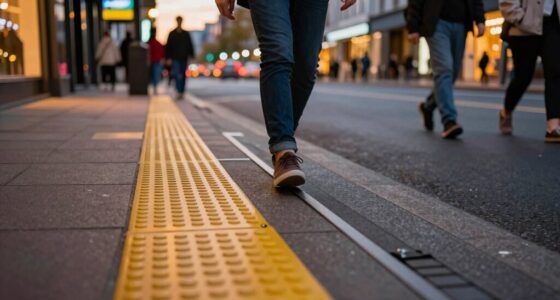
To make your patio wheelchair-accessible and safe, design a well-planned layout with level, crack-free surfaces and wide pathways at least 36 inches wide. Install lighting along walkways to improve visibility and highlight hazards like steps or uneven patches. Use contrasting colors and tactile cues to help with navigation, and position furniture for easy movement. Incorporating these features guarantees your outdoor space is both comfortable and secure—discover more ways to create an inclusive patio.
Key Takeaways
- Design a level, unobstructed layout with wide pathways (at least 36 inches) for easy wheelchair navigation.
- Use smooth, crack-free surfaces and seamless transitions between indoor and outdoor areas.
- Install adequate lighting along pathways and near features to enhance safety and visibility.
- Incorporate tactile cues and contrasting colors to assist with orientation and hazard detection.
- Arrange furniture and features within reachable zones to promote accessibility and ease of use.

Creating an accessible and safe patio is essential for everyone to enjoy outdoor spaces comfortably. When designing your patio, consider how garden design can promote ease of movement and confirm that all features are within reach. A well-planned layout helps prevent obstacles that could pose hazards for wheelchair users or those with limited mobility. Incorporate smooth, level surfaces free of cracks or uneven patches to allow for a seamless transition from indoor to outdoor spaces. Opt for wide pathways—at least 36 inches—to provide enough room for wheelchairs to navigate comfortably. Keep furniture arrangements minimal and strategic, ensuring clear pathways and easy access to key areas like seating zones, dining spaces, or garden features.
Outdoor lighting plays a vital role in safety and usability, especially as daylight diminishes. Proper lighting not only enhances the visual appeal of your patio but also prevents accidents caused by poor visibility. Install pathway lights along the edges of walkways, ensuring they are bright enough to illuminate the entire path without creating glare. Use solar-powered or low-voltage fixtures for energy efficiency and safety. Consider adding motion-activated lights near entrances and around seating areas so you can easily see your surroundings at night. Good lighting also helps highlight potential hazards such as steps, uneven surfaces, or low-hanging branches, making sure you’re aware of any obstacles that could impede movement.
In your garden design, think about integrating tactile and visual cues to assist those with visual impairments. Contrasting colors on steps or edges of pathways can help distinguish different zones and alert you to changes in elevation. Incorporate raised garden beds or container gardens at accessible heights so everyone can enjoy tending to plants without strain. When planning your outdoor lighting, position fixtures to avoid creating shadows that obscure potential hazards, and aim for uniform light distribution to eliminate dark corners.
Frequently Asked Questions
How Do I Prevent Outdoor Wheelchair Tire Punctures?
To prevent outdoor wheelchair tire punctures, focus on regular tire maintenance and puncture prevention. Check your tires often for embedded debris, cracks, or wear, and keep them properly inflated to avoid damage. Use puncture-resistant tires or liners for added protection. Clear your path of sharp objects like glass or thorns, and avoid rough terrains when possible. These steps help extend your tires’ lifespan and keep your outdoor adventures safe and smooth.
What Are the Best Materials for Slip-Resistant Patio Surfaces?
When choosing slip-resistant patio surfaces, consider textured finishes like stamped concrete or textured tiles for better grip. Deck sealing can help maintain these surfaces, preventing slipperiness caused by moisture or algae. You might also explore rubberized coatings or outdoor mats designed for traction. These materials work together to provide a safe, stable surface, allowing you to enjoy your outdoor space confidently without worrying about slips or falls.
How Can I Improve Lighting for Safer Nighttime Outdoor Use?
To improve lighting for safer nighttime outdoor use, focus on enhancing landscape lighting and pathway illumination. Install solar-powered or low-voltage lights along walkways and around key areas to reduce tripping hazards. Use bright, warm LED fixtures for clear visibility and consider motion sensors for added safety. Regularly check and maintain your lighting to guarantee it stays functional, creating a well-lit space that’s safe and inviting after dark.
Are There Eco-Friendly Options for Accessible Patio Upgrades?
You can choose eco-friendly landscaping options like native plants and sustainable materials for your patio upgrades. Opt for recycled or biodegradable furniture and use solar-powered lighting to reduce energy consumption. Incorporate permeable paving to improve drainage and support eco-conscious practices. These sustainable choices create an accessible, environmentally friendly outdoor space, making your patio both safer and more sustainable for everyone to enjoy.
How Do I Maintain and Clean Outdoor Accessible Features Efficiently?
You might wonder if outdoor accessible features are tough to maintain, but they aren’t. Regularly use outdoor cleaning tools like a hose, scrub brush, and mild soap to keep surfaces spotless. For patio furniture maintenance, wipe down with a damp cloth and check for rust or damage. Consistent cleaning guarantees safety and longevity, making your accessible patio inviting and easy to enjoy. Just stay on top of it, and it’ll serve you well.
Conclusion
So, after all this effort to make your patio accessible and safe, who knew that the biggest challenge would be convincing your friends that you don’t need their help to enjoy it? Ironically, making your outdoor space inclusive might just remind you that the best part is soaking up the sunshine independently — with or without a wheelchair. Because in the end, the real goal is simple: to relax and enjoy, no matter how you get there.