
Voice-controlled smart homes empower you by making daily tasks easier and more accessible. With voice commands, you can control lights, thermostats, security, and appliances without needing physical movement or sight. This technology supports independence, especially if you have mobility or visual impairments, by allowing you to manage your environment easily and safely. If you want to discover more about how these innovations can enhance your living experience, keep exploring how smart homes can transform your independence and comfort.
Key Takeaways
- Voice-controlled technology enables effortless management of home devices, supporting independence for people with disabilities.
- Smart homes with voice assistants facilitate access and control for users with mobility or visual impairments.
- Emergency features allow quick contact and safety alerts through simple voice commands.
- Customized voice commands adapt to individual needs, enhancing autonomy and personalized living experiences.
- Integration of assistive features fosters an inclusive environment, improving safety, well-being, and daily independence.
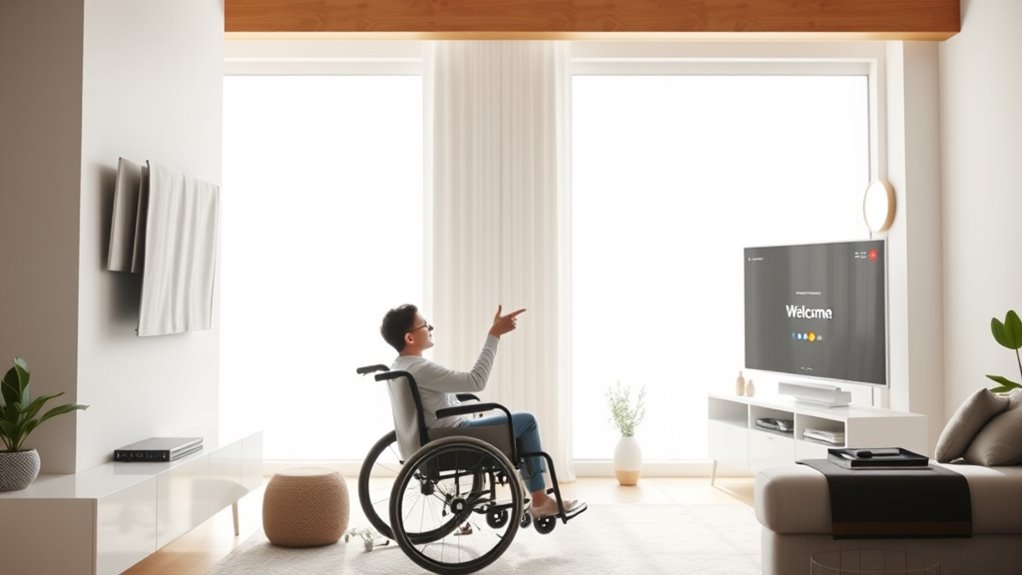
Voice-controlled living has rapidly become a reality, transforming the way you interact with your home. With the advent of smart technology, you can now control lights, thermostats, appliances, and even security systems using just your voice. This shift toward assistive technology isn’t just about convenience; it’s about empowering you to lead a more independent life. When you don’t have to rely on physical switches or remote controls, your home becomes a more accessible environment tailored to your needs. The integration of voice assistants like Alexa, Google Assistant, or Siri into your daily routine means you can perform tasks that once required assistance or complex manual effort. This innovation markedly enhances your independence by reducing reliance on others for routine activities, giving you greater control over your surroundings.
Voice-controlled technology empowers independence by simplifying daily tasks and creating accessible, personalized living environments.
Imagine waking up and effortlessly adjusting your bedroom lights or setting the perfect temperature without moving from your bed. You don’t need to reach for switches or struggle with complicated interfaces. Instead, you simply speak your command, and the smart home responds instantly. This seamless interaction with your environment is made possible by cutting-edge assistive technology that recognizes your voice, understands your commands, and executes them efficiently. The convenience extends to managing entertainment systems, locking doors, or even ordering groceries, all through simple voice prompts. These capabilities help you stay autonomous, fostering a sense of confidence and control over your daily life.
Furthermore, voice-controlled systems are designed to accommodate various disabilities, ensuring inclusivity. If mobility is limited, voice commands eliminate the need for physical movement, making everyday tasks more manageable. For individuals with visual impairments, voice navigation provides an alternative way to operate devices and access information. The customization options available with these systems mean you can tailor commands to fit your specific needs, creating a more personalized, accessible living space. As a result, your home becomes an extension of your independence, built to support your lifestyle and preferences.
In addition to enhancing independence, voice-controlled living can improve safety. Emergency alerts, reminders for medication, or contacting emergency services can be triggered instantly through voice commands, providing reassurance in critical moments. The ongoing advancements in assistive technology continue to make smart homes more intuitive and responsive, reinforcing your ability to manage your environment effectively. Moreover, incorporating versatile home gardening tools can further enhance your living space by creating a calming and personalized environment that promotes well-being. Ultimately, embracing voice-controlled living means transforming your home into a supportive, accessible space that empowers you to maintain autonomy, comfort, and peace of mind every day.
Frequently Asked Questions
How Secure Are Voice-Controlled Smart Home Systems From Hacking?
You might wonder about the security of voice-controlled smart home systems, and it’s a valid concern. While they offer convenience, cybersecurity risks exist if hackers exploit vulnerabilities. However, many systems use data encryption to protect your personal information. To stay safe, keep software updated and use strong, unique passwords. Although no system is entirely foolproof, these measures markedly reduce hacking risks and help keep your smart home secure.
Can Voice Assistants Understand Multiple Languages or Accents?
Did you know that over 75% of voice assistant users want multilingual support? You’ll be pleased to learn that many voice assistants now feature advanced accent recognition, allowing them to understand multiple languages and diverse accents effortlessly. This technology empowers you to communicate naturally, no matter your language background or speech style. With ongoing improvements, you can expect even better accuracy, making your smart home experience more inclusive and accessible.
What Is the Cost of Implementing Voice-Controlled Technology in Homes?
When you consider implementing voice-controlled technology, you should do a thorough cost analysis. Installation expenses vary depending on the system’s complexity and the number of devices you want to connect. Basic setups might be affordable, but advanced integrations could increase costs. Keep in mind that investing in these systems can enhance convenience and accessibility, especially for those with disabilities, making the expense worthwhile in the long run.
How Do Voice Assistants Handle Privacy Concerns?
You might wonder how voice assistants handle privacy concerns. They store voice data to improve service, but they also follow strict user privacy policies. These policies specify how your voice data is collected, stored, and used, giving you control over your information. Always review privacy settings and permissions to guarantee your voice data storage remains secure, helping you enjoy the benefits of smart technology with confidence.
Are Voice-Controlled Systems Compatible With Existing Home Appliances?
Imagine walking into your kitchen, where your voice-controlled system seamlessly talks to your appliances. Many systems now support appliance interoperability, making it easy to control lights, thermostats, and even your coffee maker with a simple command. You can customize devices to fit your needs, creating a personalized smart home experience. Most modern systems are compatible with existing appliances, so upgrading doesn’t mean starting from scratch—it’s about enhancing what you already have.
Conclusion
Voice-controlled living transforms your home into a sanctuary of independence, empowering you like never before. With just your voice, you can control lights, appliances, and more, turning ordinary spaces into extraordinary havens of accessibility. This technology doesn’t just make life easier — it’s a revolution that can redefine what’s possible for you. Embrace these smart innovations and open a world where your capabilities are limitless, proving that with the right tools, you can conquer anything.