
Creating a wheelchair-friendly home goes beyond just adding a ramp. You can maximize space with an open layout, choose adaptable furniture, and use bright, contrasting colors for better visibility. Incorporate smart technology for easier control of lights and devices, install safety features in the bathroom, and organize storage efficiently. Design smooth, obstacle-free outdoor pathways for safe navigation. If you continue exploring, you’ll discover more tips to make your home truly accessible and comfortable.
Key Takeaways
- Optimize interior layout with open spaces, clear pathways, and contrasting colors for better navigation and visual clarity.
- Choose adaptable, low-profile furniture with ergonomic handles for easier transfers and adjustments.
- Incorporate smart home technology like voice control and remote monitoring for increased safety and independence.
- Install safety fixtures in the bathroom, such as grab bars, non-slip flooring, and motion-activated lighting.
- Ensure outdoor pathways are level, obstacle-free, well-lit, and bordered with inviting plants to promote accessibility and comfort.
Optimizing Interior Layout for Ease of Navigation

To make your home more accessible, start by creating a clear and open interior layout that allows for easy navigation. Remove unnecessary furniture and clutter to maximize space, making pathways wide enough for a wheelchair. Use decorative accents strategically to add personality without crowding the room. Proper lighting arrangements are essential; well-lit areas reduce obstacles and improve visibility. Consider installing wall-mounted lights or adjustable lamps to eliminate shadows and highlight key pathways. Keep switches and controls within reach, and avoid tight corners or narrow doorways. An open layout not only enhances safety but also boosts confidence in moving around independently. Additionally, understanding how contrast ratio impacts visual clarity can help you choose lighting and color schemes that improve overall visibility. Incorporating smart home technology can further enhance accessibility by automating lighting and other controls, making the environment even more user-friendly. Paying attention to visual cues can help individuals with limited vision navigate your space more confidently. Using contrasting colors for walls, floors, and furniture is particularly effective in enhancing visual differentiation in your home. This attention to detail in interior design can significantly improve navigation and comfort for wheelchair users. By thoughtfully combining decorative accents with functional lighting, you create an inviting, accessible environment that promotes ease and comfort throughout your home.
Selecting Accessible and Adaptable Furniture
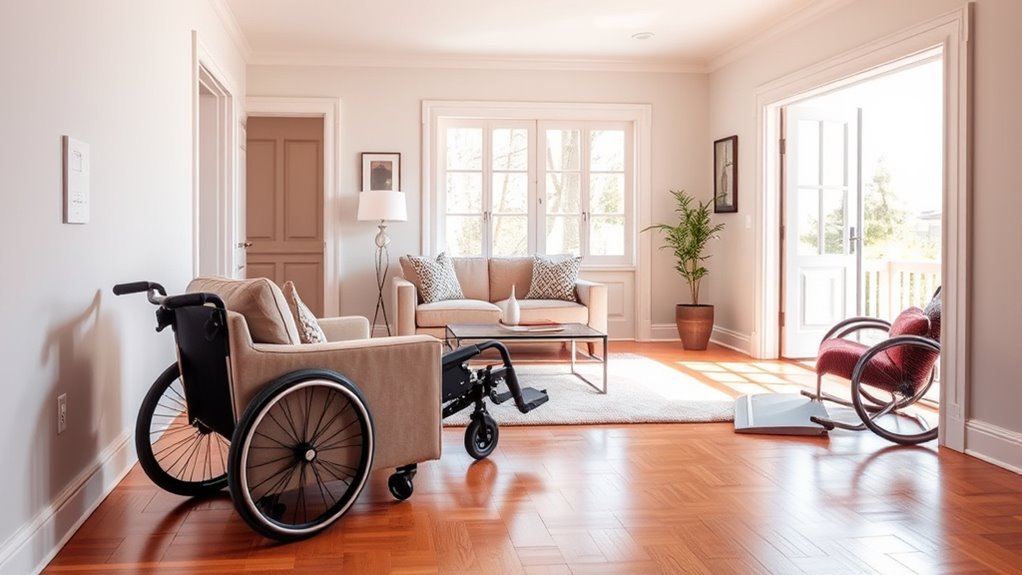
When choosing furniture, focus on adaptable designs that can be easily modified to fit your needs. Look for pieces with easy-to-use features, like lever handles or adjustable heights, to increase independence. Prioritizing these aspects guarantees your space remains comfortable and functional. Incorporating innovative solutions can further optimize your home for accessibility and ease of use. Additionally, selecting furniture made from durable materials ensures longevity and safety in a wheelchair-friendly environment. Considering ergonomic design can also enhance comfort and reduce strain during daily activities. Being aware of emotional support strategies for adjusting to new living arrangements can help create a more positive environment for all family members. Understanding regulations and compliance related to accessible home modifications can ensure your space meets safety standards and legal requirements.
Choosing Adaptable Furniture Designs
Choosing adaptable furniture designs is essential for creating a wheelchair-friendly home that offers both comfort and independence. Mobile furniture allows you to easily reposition pieces to suit your needs, making daily tasks more manageable. Look for modular seating options that can be reconfigured for different spaces or activities, providing flexibility as your needs change. These designs help eliminate obstacles and create open pathways, ensuring ease of movement. Opt for furniture with low profiles or adjustable features to make transfers smoother. Prioritize pieces that combine style with functionality, so your home remains inviting while accommodating mobility requirements. Incorporating ergonomic features into your furniture choices can further enhance comfort and support for users. Additionally, selecting furniture made from lightweight materials can facilitate easier rearrangement and cleaning. Integrating energy-efficient models, such as those with adjustable shelves and versatile configurations, can maximize both comfort and practicality in your adaptable home. To further enhance accessibility, consider furniture with universal design principles that promote ease of use for everyone. Incorporating durable, easy-to-clean surfaces can also help maintain a hygienic environment with minimal effort. By selecting adaptable furniture, you create a more inclusive environment that promotes autonomy and enhances your comfort every day.
Prioritizing Easy-to-Use Features
Selecting furniture with easy-to-use features is essential for creating an accessible and functional home environment. Look for pieces with ergonomic handles that require minimal effort to operate, reducing strain. Incorporate home automation options, such as voice-activated lighting or adjustable beds, to enhance independence. Choose furniture that’s adjustable or has clear, simple controls, making daily tasks easier. Consider smooth-operating drawers and doors, and avoid heavy or complicated mechanisms. Prioritize designs that allow for easy reaching and maneuvering from a wheelchair. By focusing on user-friendly features, you’ll create a space that promotes safety, comfort, and independence. These thoughtful choices help ensure your home adapts seamlessly to your needs, making everyday living more manageable and less stressful. Additionally, selecting furniture with cost behavior analysis in mind can help manage your home modifications within budget constraints. Being aware of product durability ensures long-term usability and safety. Conducting regular assessments of adaptability features can help you plan future modifications effectively. For example, choosing versatile furniture that can be easily adjusted or reconfigured allows for ongoing customization as needs evolve. For additional guidance, support hours can be useful when planning home modifications or seeking expert advice.
Incorporating Smart Home Technologies for Independence
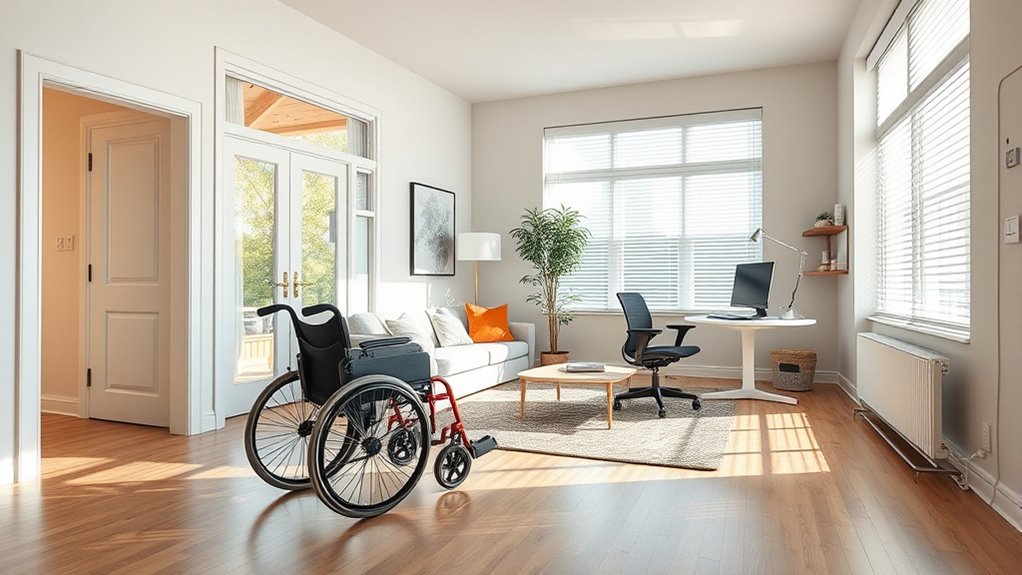
Incorporating smart home technologies into your wheelchair-friendly home can markedly enhance your independence and daily convenience. Voice control allows you to operate lighting, thermostats, and other devices hands-free, giving you greater autonomy. With simple voice commands, you can adjust settings without needing to reach or get out of your wheelchair. Remote monitoring offers peace of mind by enabling caregivers or family members to check in on your home and well-being from anywhere. You can receive notifications about door activity, emergencies, or even environmental changes, helping you respond quickly. These technologies make your environment more accessible and responsive, reducing reliance on others. By integrating voice control systems and remote monitoring, you create a safer, more adaptable living space that supports your independence every day. Incorporating smart home integrations ensures seamless control and enhances overall safety and comfort.
Enhancing Bathroom Accessibility and Safety
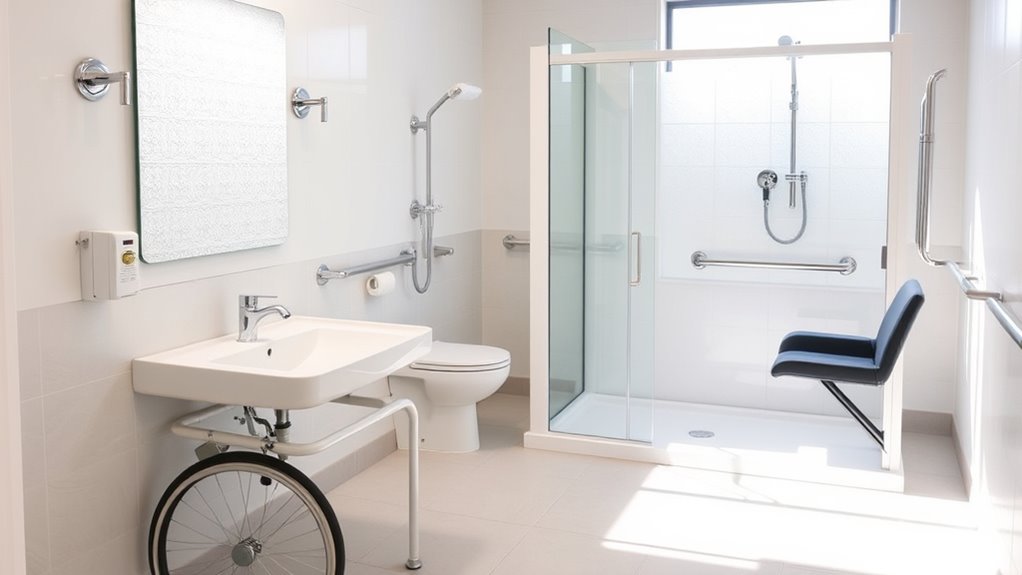
To make your bathroom safer and more accessible, focus on installing features that accommodate your mobility needs and reduce fall risks. Good bathroom lighting is essential; verify the space is well-lit with bright, glare-free fixtures to prevent accidents. Consider adding motion-activated lights for convenience. Non-slip flooring is equally important—opt for textured tiles or rubber mats to provide traction and minimize slipping hazards. Install grab bars near the toilet and in the shower area for stability, and use a shower seat if needed. Keep pathways clear of clutter to avoid tripping. Additionally, selecting moisture-resistant fixtures and materials ensures durability and safety over time. Incorporating safety features such as performance upgrades can also enhance the overall safety and reliability of your bathroom fixtures and systems. Staying informed about advancements in safety technology can help you choose the most effective solutions. These adjustments create a safer environment, giving you confidence and independence while maintaining comfort in your daily routines.
Designing Accessible Storage Solutions
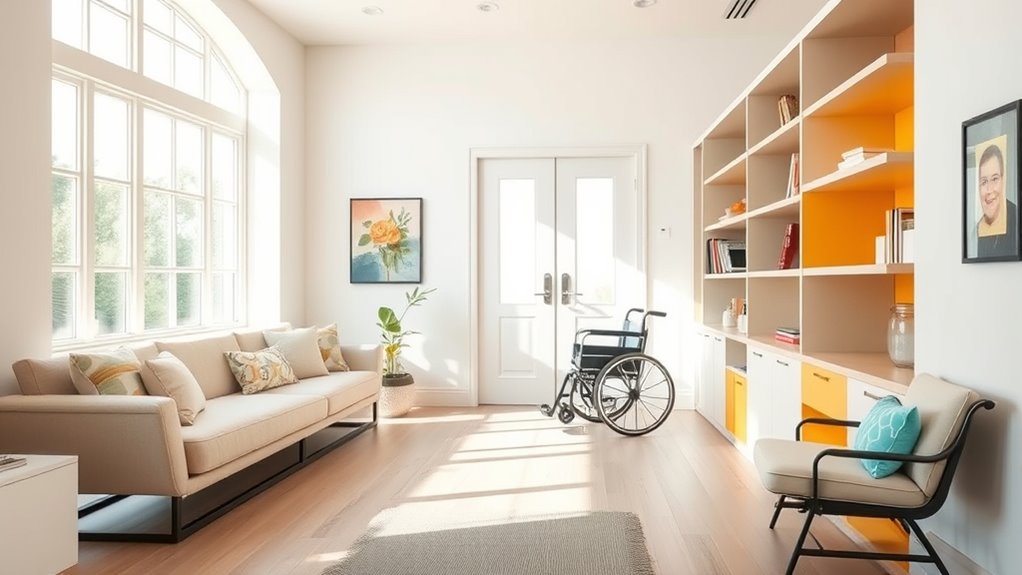
To make your home more accessible, consider low-profile shelving that’s easy to reach from a wheelchair. Keeping storage organized with clear pathways guarantees you can move freely without obstacles. These simple changes can greatly improve your daily convenience and safety.
Low-Profile Shelving Options
Low-profile shelving options are essential for creating accessible storage solutions in a wheelchair-friendly home. By choosing low-profile shelves, you guarantee easy reach and better storage organization without cluttering your space. These shelves can be installed at adjustable heights to suit your needs, making it simple to access items without bending or stretching. Incorporate decorative accents into your shelving designs to add personality and style, transforming functional storage into a visual focal point. Keep in mind that simplicity in design not only improves accessibility but also maintains a clean, open feel in your home. Whether you opt for floating shelves or shallow cabinets, low-profile options help maximize your space while ensuring everything remains within easy reach, promoting independence and comfort.
Clear Pathway Organization
Creating an accessible home begins with designing clear pathways that facilitate easy movement and prevent obstacles. Organize storage solutions to keep walkways free, especially in areas like the garden for maintenance tasks. Use low-profile shelving that doesn’t protrude into pathways and ensures easy reach from a wheelchair. Keep frequently used items, like gardening tools or door hardware, within arm’s reach to minimize unnecessary navigation. Install lever-style door hardware for easier access and avoid clutter near entry points. Regularly check for obstacles, such as loose cords or clutter, that could impede movement. Clear pathways not only enhance safety but also promote independence, making daily activities smoother and less stressful. Proper organization is essential for creating a truly wheelchair-friendly, accessible home.
Improving Outdoor Accessibility and Pathways
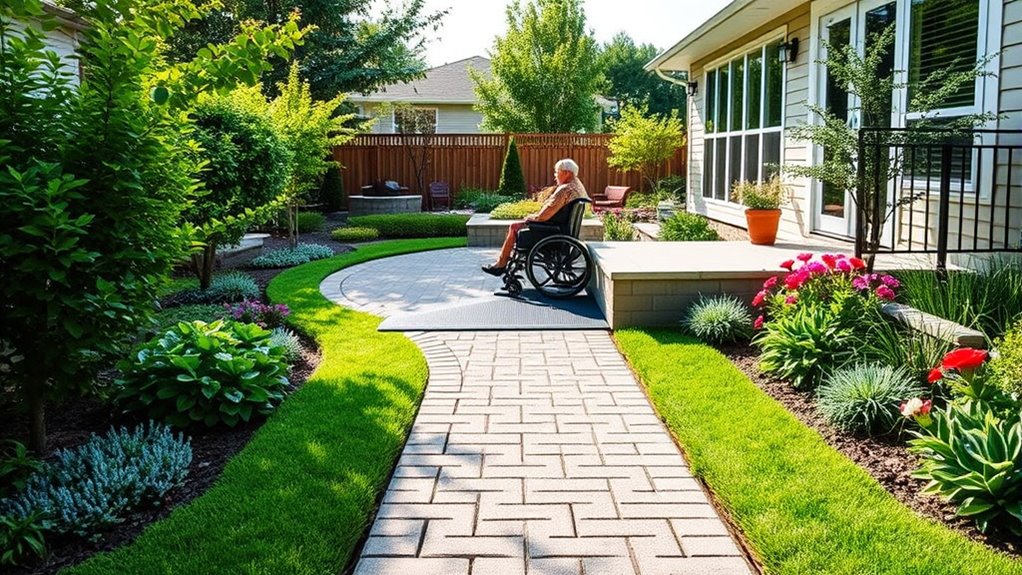
Enhancing outdoor accessibility begins with designing smooth, firm, and level pathways that accommodate wheelchair users. Well-planned routes improve mobility and invite you to enjoy your garden aesthetics fully. Incorporate outdoor lighting to guarantee safety during evening strolls, creating a warm and inviting atmosphere. To evoke emotion, consider these tips:
- Create winding paths that inspire exploration and wonder
- Use natural materials that blend seamlessly with your landscape
- Install soft, ambient outdoor lighting for safety and ambiance
- Add lush plants and flowers along the way to evoke joy and tranquility
These improvements transform your outdoor space into a welcoming retreat, encouraging independence and connection with nature. Thoughtful pathways not only enhance accessibility but also enrich your outdoor experience, making every visit memorable.
Frequently Asked Questions
How Can I Ensure Long-Term Affordability of Wheelchair-Friendly Home Modifications?
To guarantee long-term affordability of your wheelchair-friendly home modifications, you should explore insurance coverage options and government grants. These resources can help offset costs and make upgrades sustainable. Keep documentation organized, verify your insurance policies, and regularly check for new grants or assistance programs. By staying proactive and informed, you can maintain your home’s accessibility without financial strain, ensuring comfort and independence for years to come.
What Are the Best Materials for Durable, Wheelchair-Accessible Flooring?
Think of durable flooring like a sturdy bridge that supports your daily journey. For wheelchair materials, you want options like vinyl, laminate, and polished concrete—these are known for their resilience and smooth surfaces. I once helped a family choose flooring, and they loved how vinyl with a textured finish prevented slips. Prioritizing durable flooring guarantees safety and longevity, making your home truly wheelchair accessible.
How Do I Maintain Privacy While Implementing Accessibility Features?
When implementing accessibility features, consider privacy concerns and how to maintain visual privacy. You can install privacy screens or strategic window coverings like frosted glass or blinds to block unwanted views. Use furniture placement to create natural barriers, and consider adding curtains or room dividers where needed. These solutions help you balance accessibility with privacy, ensuring your home remains comfortable and secure while accommodating mobility needs.
Are There Eco-Friendly Options for Accessible Home Upgrades?
Your question about eco-friendly options for accessible home upgrades is a game-changer. You can choose sustainable materials like bamboo flooring, recycled glass countertops, and low-VOC paints for eco-friendly renovations. These choices not only support the environment but also create healthier living spaces. By prioritizing sustainable materials, you guarantee your home is both accessible and kind to the planet—proving that accessibility and eco-consciousness can go hand in hand.
How Can I Customize Home Design to Reflect Personal Style?
When customizing your home design to reflect your personal style, start by choosing interior decor that resonates with your personality. Incorporate colors, patterns, and textures you love, and select furniture that suits your taste and needs. Mix and match accessories, artwork, and textiles to create a unique space. Remember, your home should feel authentic and comfortable, so don’t be afraid to express your individuality through every design choice.
Conclusion
Creating a wheelchair-friendly home goes beyond just adding a ramp—you’re making daily life safer and more convenient. By optimizing your layout, choosing adaptable furniture, and incorporating smart tech, you foster greater independence. Did you know that 60% of mobility-related injuries occur indoors? Prioritizing accessibility can notably reduce this risk, empowering you to move freely and confidently within your space. Small changes can make a big difference in enhancing safety and quality of life.