
To organize your home with ease, start by decluttering regularly and sorting belongings to keep only what adds value. Use assistive devices like grab bars and reachers to improve safety and access. Create designated spots for essentials and use clear, labeled storage containers for easy identification. Incorporate furniture with built-in storage and keep frequently used items within reach. For added support, seek help from family or professionals, ensuring your space stays safe, functional, and comfortable. Learn how to implement these tips effectively.
Key Takeaways
- Incorporate assistive devices like grab bars and reachers to enhance safety and ease access to items.
- Declutter regularly by sorting belongings and creating designated spots for essentials.
- Establish daily routines for tidying and returning items to prevent clutter buildup.
- Use clear, labeled storage containers and furniture with built-in storage for easy organization.
- Seek support from family, friends, or professionals to help maintain a safe, organized living space.

Living alone as a senior can be both rewarding and challenging, especially when it comes to maintaining an organized home. As you age, daily tasks might become more difficult, and clutter can quickly accumulate, making your space feel cramped or unsafe. To stay independent and comfortable, it’s essential to implement effective home organization strategies. One of the best ways to do this is by utilizing assistive devices designed to make everyday activities easier. These tools can include grab bars, reachers, or ergonomic storage solutions that help you access items without strain or risk of falling. Incorporating assistive devices into your home not only promotes safety but also encourages you to keep things tidy, since reaching for misplaced objects becomes less of a challenge.
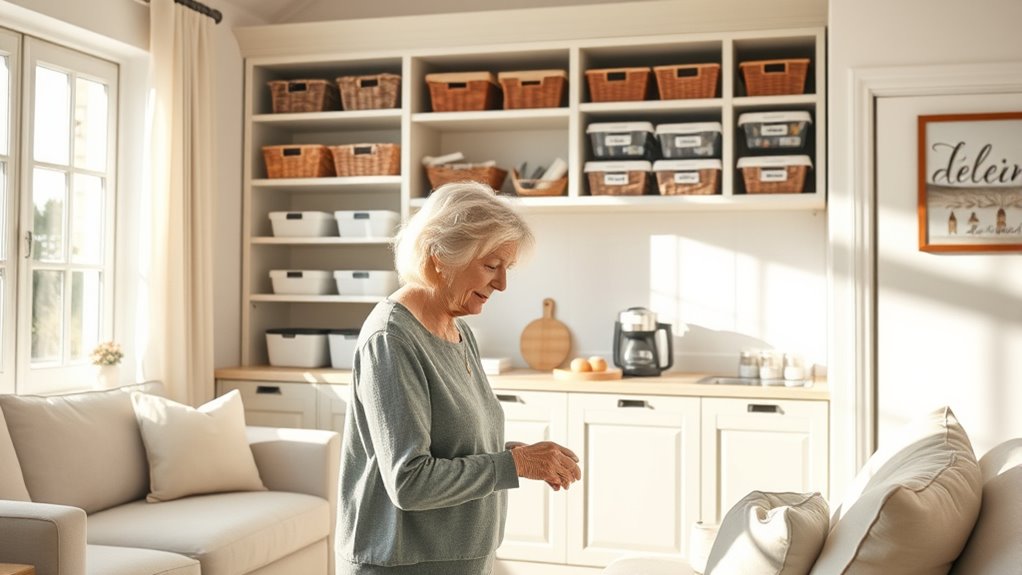
Decluttering strategies are also crucial for maintaining an organized space. Start by sorting through your belongings and setting aside items you no longer use or need. Be honest with yourself about what truly adds value or serves a purpose in your daily life. Once you’ve decluttered, create designated spots for your essentials, such as keys, glasses, or medications, so they’re always easy to find. Using clear storage containers or labeled bins can help you quickly locate things without digging through piles of clutter. Remember to keep frequently used items within arm’s reach, and store less-used items in higher or lower cabinets to maximize safety and efficiency. Additionally, appropriate storage solutions can make a significant difference in keeping your home organized and accessible.
Creating a routine for organizing your home can also make a big difference. Dedicate a few minutes each day to tidying up, putting things back in their designated spots, and evaluating what needs attention. This habit prevents clutter from building up over time and keeps your home manageable. Consider investing in furniture with built-in storage, like ottomans or beds with drawers, to maximize space without sacrificing accessibility. Additionally, small organizational tools like wall-mounted racks or hooks can help keep your entryway tidy and free of tripping hazards.
Finally, don’t be afraid to seek help when needed. Family members, friends, or professional organizers can provide valuable support and advice tailored to your specific needs. They can help you decide which assistive devices will work best or assist with decluttering tasks that seem overwhelming. Remember, staying organized isn’t just about appearances; it’s about creating a safe, functional environment that supports your independence and well-being. With the right strategies and tools, you can enjoy a clutter-free home that feels comfortable and secure, making your daily routines easier and more enjoyable.
Frequently Asked Questions
How Can Seniors Safely Organize Clutter Without Injury?
You can safely organize clutter by sorting items carefully, using sturdy storage solutions, and keeping frequently used things within easy reach. Always prioritize your safety by avoiding heavy lifting and using step stools when needed. Incorporate medication management and emergency preparedness into your organization routine to stay safe. Regularly check for hazards, and don’t hesitate to ask for help if necessary, ensuring your home remains secure without risking injury.
What Tools Help Seniors Maintain Organization Effortlessly?
You can effortlessly stay organized by using digital planners, which help you keep track of appointments and tasks digitally, reducing clutter. Labeling systems are also essential; they make locating items quick and easy, especially in cabinets or drawers. Combining these tools streamlines your organization process, promotes independence, and minimizes stress. With digital planners and clear labels, you’ll find maintaining an organized home simpler and more manageable every day.
How Often Should Seniors Review and Update Their Organization System?
Think of your organization system as a garden that needs regular tending. You should review and update it at least seasonally, like seasonal sorting of your tools and clothes. Regular digital decluttering keeps your virtual space fresh and manageable. This way, your system stays vibrant and easy to navigate, saving you time and stress. Staying proactive guarantees your home remains a peaceful haven, perfectly tailored to your changing needs.
Are There Specific Storage Solutions for Limited Space?
When you have limited space, you need creative storage solutions that maximize every inch. Multi-purpose furniture, like ottomans with hidden compartments or beds with built-in drawers, helps you store items without cluttering your home. Consider vertical storage options, such as wall-mounted shelves, to free up floor space. These solutions keep your belongings organized, accessible, and your home feeling open and comfortable.
How Can Family Members Assist With Organizing Remotely?
You can assist your loved one with organizing remotely by offering remote tech support to help them set up virtual organizing services. Schedule regular video calls to review their space and suggest decluttering strategies. Encourage them to use apps for inventory management or reminders. Your support makes it easier for them to stay organized, and virtual tools guarantee you stay connected and involved, even from afar.
Conclusion
Just as a well-tended garden flourishes with careful pruning, your home can become a sanctuary of ease and comfort. Embrace these tips, and you’ll create a space where everything has its place, allowing you to move confidently and peacefully through your days. Remember, maintaining organization is an ongoing journey—think of it as tending to your personal oasis, where every small effort blooms into lasting serenity and independence.