To create gentle lighting for aging eyes, choose fixtures with diffused, glare-reducing designs and avoid direct, overly bright lights. Use warmer color temperatures around 2700K–3000K to minimize strain and create a cozy environment. Layer your lighting with soft ambient sources and targeted task lights to enhance clarity while avoiding harsh shadows. Dimmers and adjustable fixtures help you customize brightness for comfort. Keep exploring to discover more ways to make your space eye-friendly and inviting.
Key Takeaways
- Use diffused, soft lighting fixtures to evenly distribute light and minimize harsh glare.
- Select warm color temperatures (2700K–3000K) to create comfortable, less straining environments for aging eyes.
- Incorporate layered lighting with ambient, task, and accent lights to reduce brightness contrasts.
- Position light sources to prevent direct glare and shadows, enhancing visual comfort and safety.
- Install dimmable lights to adjust brightness levels according to activity and reduce eye strain.
As we age, our eyes become more sensitive to light, making proper lighting design vital for comfort and safety. You might notice that bright, harsh lights cause discomfort or make it difficult to see clearly. To avoid this, choosing lighting with the right color temperature and glare reduction strategies becomes essential. The color temperature of your lights influences the way you perceive your environment. Cooler temperatures, around 5000K to 6500K, tend to mimic natural daylight, helping you see details more clearly. However, very cool lights can sometimes create a stark, unwelcoming atmosphere, so balancing this with warmer tones, around 2700K to 3000K, can provide a cozy, less straining environment. The goal is to find a comfortable midpoint that offers clarity without overwhelming your eyes.
Aging eyes need balanced lighting with warm tones and glare reduction for comfort and clarity.
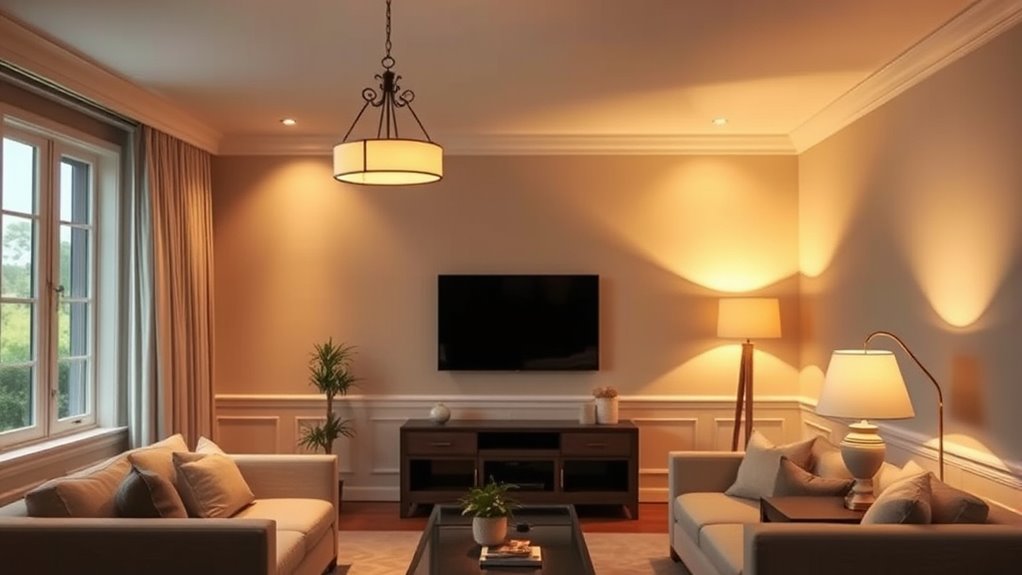
Glare is one of the biggest challenges when designing lighting for aging eyes. Bright, direct light sources can cause glare, which makes it harder to see and increases eye strain. To reduce glare, you can incorporate diffused lighting options that spread light evenly across a room, minimizing harsh reflections and shadows. Using fixtures with shades or covers can soften the light and prevent it from shining directly into your eyes. Positioning lights carefully is also important—placing fixtures so that they do not face directly into your line of sight can drastically decrease discomfort. Additionally, adjustable lighting allows you to modify brightness levels depending on the task or time of day, giving you greater control over your environment.
Another effective technique is layering your lighting. Combining ambient, task, and accent lighting creates a balanced, inviting space that reduces the need for overly bright, glaring lights. For instance, soft overhead lights paired with targeted reading lamps or under-cabinet lights can improve visibility without overwhelming your eyes. When selecting bulbs, opt for those with a high Color Rendering Index (CRI), which enhances the natural appearance of colors and details, making it easier to see objects clearly. Dimmable fixtures also provide flexibility, so you can adjust lighting based on your activity or mood. Understanding AI vulnerabilities and how to mitigate them can further enhance the safety of smart lighting systems, ensuring they operate reliably and securely. Incorporating these principles into your lighting design ensures a more comfortable, safer environment as you age. By paying attention to color temperature and focusing on glare reduction, you can create a space that’s gentle on your eyes, reduces fatigue, and enhances overall visual clarity. Proper lighting isn’t just about brightness; it’s about creating an ambiance that supports your eye health and makes everyday activities easier and more enjoyable.

LED Floor Lamp, 18W/2000LM Bright Reading Floor Lamp for Office with Double Head, Adjustable Gooseneck Dimmable Modern Standing Light for Lash Extension Craft, Eye Caring Floor Lamps for Living Room
- Double Head Design: Adjustable up to 180° for versatile lighting
- Super Bright LED: 2000 lumens with 160 high-brightness LEDs
- Long-lasting LEDs: Over 50,000 hours lifespan
As an affiliate, we earn on qualifying purchases.
As an affiliate, we earn on qualifying purchases.
Frequently Asked Questions
How Does Lighting Impact Eye Health Over Time?
Lighting considerably impacts your eye health over time by affecting vision clarity and glare reduction. Poor lighting can cause eye strain, fatigue, and worsen vision issues. When you use well-designed, soft lighting, you reduce glare and enhance clarity, helping your eyes stay healthier longer. Proper lighting practices protect your eyes from unnecessary stress, making daily tasks easier and preventing long-term damage caused by harsh or inadequate illumination.
Are There Specific Colors Better for Aging Eyes?
You should prioritize warm tones and high color contrast in lighting for aging eyes. Warm tones, like soft yellows and gentle oranges, reduce strain and create a calming environment. High color contrast helps your eyes distinguish objects more easily, especially in low light. By combining these elements, you make it easier to see clearly and comfortably, minimizing eye fatigue and supporting better visual health as you age.
Can Lighting Changes Improve Sleep Quality for Seniors?
You can improve sleep quality for seniors by adjusting lighting to support Circadian rhythms and Melatonin regulation. Using dim, warm lighting in the evening helps signal the body it’s time to wind down, promoting melatonin production. Bright, natural light during the day boosts alertness and stabilizes Circadian rhythms. These changes create a healthier sleep cycle, making it easier for seniors to fall asleep and enjoy restorative rest.
What Are Budget-Friendly Lighting Solutions for the Elderly?
Looking to brighten your budget without dimming your spirits? You can easily upgrade your lighting with affordable LEDs that last longer and save money. Pair them with dimmer switches to adjust brightness effortlessly, reducing glare and eye strain for aging eyes. These simple, cost-effective solutions make your home safer and more comfortable, proving you don’t need to spend a fortune to light up your life gently and wisely.
How Do Different Room Sizes Affect Lighting Choices?
Room size considerations are vital when choosing lighting fixtures because larger rooms need more powerful or multiple light sources to guarantee even illumination, while smaller spaces benefit from softer, focused lighting. You should select fixtures that complement the room’s dimensions, avoiding overly bright or dim lighting. Proper lighting fixture selection enhances visibility and comfort, especially for aging eyes, making your space safer and more inviting.
Conclusion
By choosing lighting that’s gentle on your eyes, you’re planting seeds for a brighter, more comfortable future. When you soften glare and optimize light placement, you create a space that’s easier to navigate and enjoy. Think of your eyes as delicate flowers—care for them with thoughtful lighting, and they’ll flourish longer. Remember, good lighting isn’t just about visibility; it’s about nurturing your vision so you can see life’s beauty clearly and comfortably.