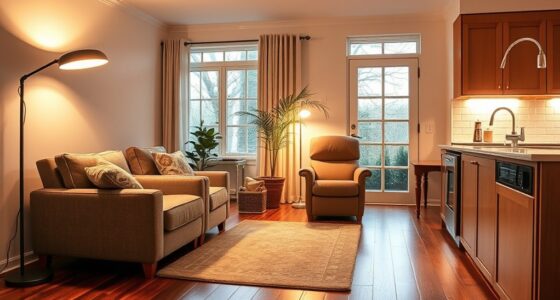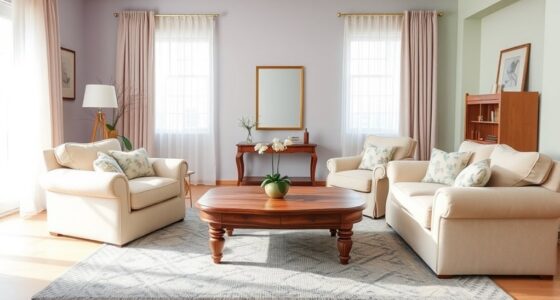

The sit-down test is a simple way to check if a room is age-friendly and safe for those with mobility challenges. To perform it, sit and stand from furniture at different heights,observe ease of movement, and check lighting and clear pathways. If you notice difficulty or hazards, it’s time to make adjustments or seek expert advice. Keep exploring for more tips on creating a safer, more accessible space for everyone.
Key Takeaways
- The sit-down test assesses ease of sitting and standing to determine room safety for seniors.
- It helps identify hazards like unstable furniture, poor lighting, or obstacles that compromise accessibility.
- Performing the test involves checking furniture height, support, and lighting to ensure safe mobility.
- Observing difficulty or hazards during the test indicates if modifications are needed for an age-friendly space.
- Regular sit-down tests support ongoing safety assessments and help maintain a secure, accessible environment.
What Is the Sit-Down Test and Why It Matters
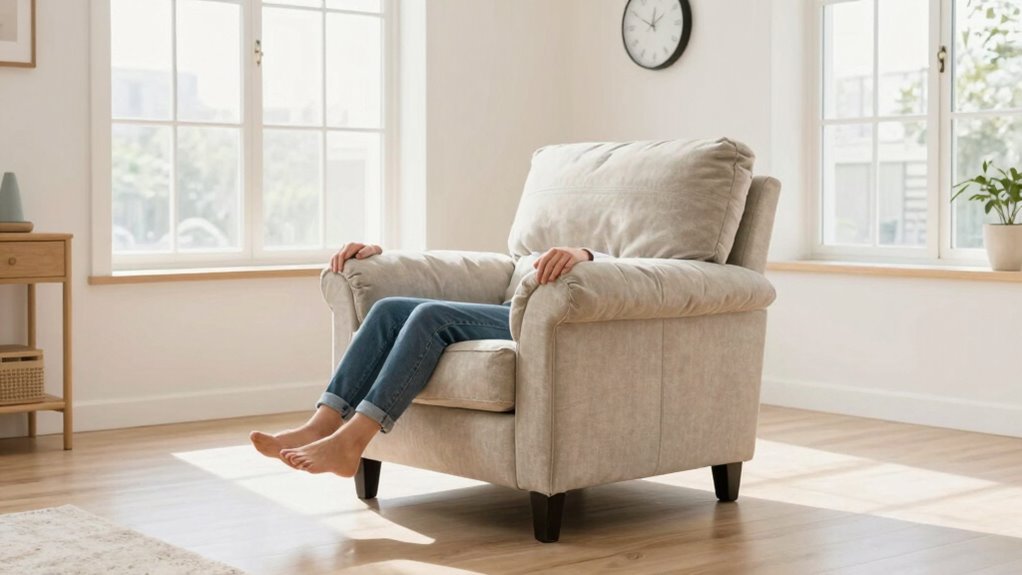
Have you ever wondered how employers quickly assess whether a job candidate can perform essential tasks? The sit-down test offers a simple way to evaluate this, especially in relation to elderly mobility. By asking someone to sit and stand from a chair, you can observe their ease of movement, balance, and strength. This test helps identify potential safety hazards in a space that may pose risks for seniors, such as unstable furniture or poor support. It’s a practical method to determine if a room is age-friendly and safe for elderly individuals. Conducting this test regularly can alert you to modifications needed, ensuring safety and comfort for older adults. Incorporating home safety assessments into your routine can further enhance overall safety for seniors. Additionally, understanding Free Floating principles can help in designing adaptable and accessible environments, especially when considering adjustable furniture and flexible space arrangements. Recognizing the importance of universal design features can also contribute to creating inclusive spaces that accommodate diverse mobility needs. Regularly performing the sit-down test can also help in validating the effectiveness of mobility aids and other assistive devices used by seniors.
How to Perform the Sit-Down Test in Any Space

Performing the sit-down test in any space is straightforward and requires minimal preparation. First, assess the furniture arrangement, ensuring chairs or seats are at a comfortable height and have stable, supportive backs. Sit down and observe how easily you can lower yourself and rise again, noting if the furniture feels secure and accessible. Next, check the lighting adjustments around the seating area; good lighting helps prevent falls and enhances visibility. Make sure the space is well-lit, especially near the seat, so you can see clearly when sitting or standing. Adjust lamps or overhead lights if needed to eliminate shadows or glare. By paying attention to furniture arrangement and lighting, you ensure the space is truly age-friendly and safe for everyday use. Additionally, consider room layout to ensure there is enough space to move comfortably and safely around the furniture. Incorporating ergonomic principles can further improve the overall safety and accessibility of the room. Also, evaluating lighting quality can help reduce the risk of accidents and improve comfort. Paying attention to floor safety can further prevent slips and trips in the space. Being mindful of floor surface types can also reduce tripping hazards and improve overall safety.
What Your Observations Reveal About Safety and Accessibility
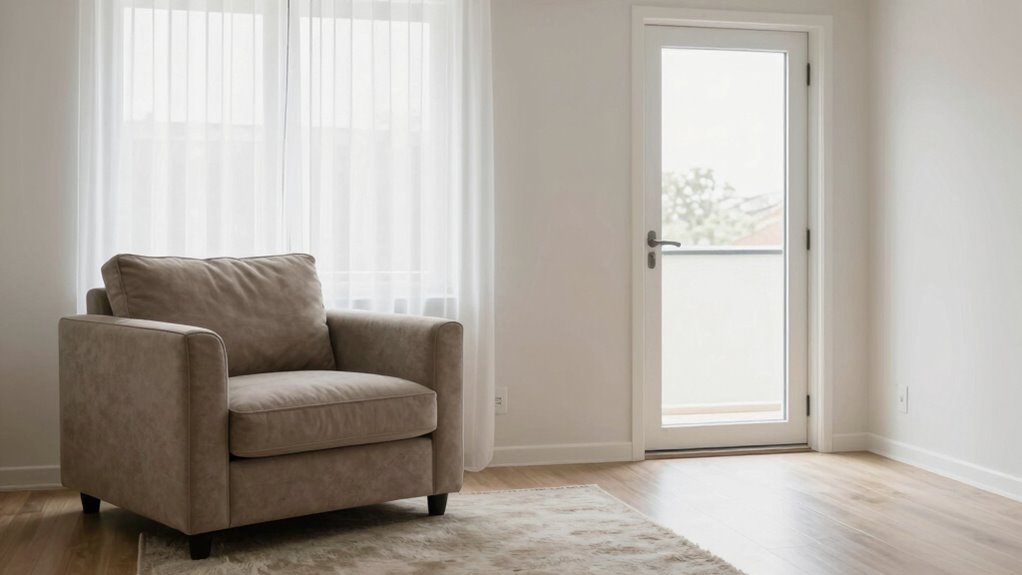
Your observations during the sit-down test can reveal crucial insights about the safety and accessibility of a space. Notice how easily you can sit and stand, which indicates fall prevention effectiveness. Look for these key signs:
- Clear pathways free of obstacles that could hinder mobility aids or pose tripping hazards.
- Stable, supportive seating that reduces fall risk.
- Adequate space around furniture for easy maneuvering with mobility aids.
- High-traffic areas that could cause accidents or block quick exits.
If you struggle to move comfortably or detect hazards, the environment may need adjustments. Proper fall prevention measures and accessible features are essential for safety. Your observations help identify areas to improve for a safer, more age-friendly space.
Easy Tips to Make Rooms Safer and More Comfortable

Making small adjustments to your space can considerably boost safety and comfort. Start by optimizing furniture arrangement: keep pathways clear and secure chairs at a comfortable height. Rearrange furniture to minimize tripping hazards and ensure easy access to essential items. Lighting adjustments also play a key role; add brighter bulbs or task lighting in darker areas and install switches within easy reach. Use this simple table to guide your improvements:
| Area | Easy Tip |
|---|---|
| Furniture | Arrange seats for easy standing and sitting |
| Lighting | Increase brightness and switch accessibility |
| Pathways | Clear clutter and add non-slip rugs |
| Handles | Install grab bars in key areas |
These simple steps can make your room safer, more inviting, and easier to navigate, enhancing everyday comfort. Being aware of everyday safety principles can help you identify potential hazards before they become risks. Incorporating universal design elements ensures your space remains accessible as needs change over time. Additionally, evaluating your space with a sit-down test can help you quickly identify areas that need improvement without extensive adjustments. Regularly reviewing your environment and making small modifications can maintain safety and comfort as circumstances evolve. Practicing these checks regularly allows you to stay proactive about home safety and adapt your space accordingly.
When to Seek Professional Help and Next Steps

Knowing when to call in a professional can prevent accidents and guarantee that safety measures are properly implemented. If you notice persistent hazards or difficulty making effective home modifications, it’s time to seek help. Consider these next steps:
- Consult a specialist for tailored home modifications that improve safety and accessibility.
- Engage a professional caregiver support service if daily tasks become challenging.
- Schedule an assessment from an occupational therapist to identify specific needs.
- Work with safety experts to implement long-term solutions, like grab bars or ramps.
Taking these steps ensures safety and independence. Don’t hesitate to reach out when in doubt—professional help can make a significant difference in maintaining an age-friendly environment.
Frequently Asked Questions
Can the Sit-Down Test Be Adapted for Outdoor or Irregularly Shaped Rooms?
Yes, you can adapt the sit-down test for outdoor spaces and irregular room layouts. For outdoor areas, choose stable, low surfaces like benches or sturdy chairs to sit and assess comfort and accessibility. In irregularly shaped rooms, identify flat, level spots that suit sitting and moving around safely. Consider outdoor terrain and uneven surfaces, modifying your testing method to ensure safety and practicality in these varied environments.
How Often Should I Perform the Sit-Down Test in My Home?
Think of it like checking your compass regularly; you should perform the sit-down test monthly to make certain your home remains safe and accessible. Follow frequency guidelines to catch potential hazards early. Prioritize safety considerations by monitoring how easily you can sit and stand, especially if your mobility changes. Regular checks help you adapt your environment, maintaining independence and reducing fall risks over time.
Does the Test Account for Mobility Aids Like Walkers or Wheelchairs?
Yes, the sit-down test considers mobility devices like walkers or wheelchairs. When you perform the test, guarantee there’s enough space for these mobility aids to maneuver comfortably, reflecting real room accessibility. You may need to adjust furniture or clear pathways to accurately assess how easily someone using mobility devices can access and move within the space, making sure the environment remains safe and age-friendly for all users.
Are There Any Age-Specific Adaptations for the Sit-Down Test?
Yes, there are age-specific modifications for the sit-down test. You should consider safety considerations like using sturdy chairs with armrests and ensuring enough space for mobility aids, such as walkers or wheelchairs. For older adults with limited mobility, you might need to lower the chair height or add support cushions. These adaptations help make the test safer and more accurate, reflecting the needs of different age groups.
What Are Common Mistakes to Avoid During the Sit-Down Test?
You should avoid overgeneralizing mistakes and neglecting safety during the sit-down test. Don’t assume all individuals have the same mobility levels, and avoid rushing or forcing the test, which can cause falls or injuries. Make sure the chair is stable, clear the area of hazards, and encourage slow, controlled movements. By prioritizing safety and customizing your approach, you guarantee an accurate assessment without risking harm.
Conclusion
By performing the sit-down test, you hold the key to unfastening a space’s true age-friendliness. It’s a simple yet powerful way to spot safety gaps and make adjustments that can turn any room into a welcoming haven. Think of it as your personal compass, guiding you toward safer, more accessible environments. With just a few mindful steps, you can transform your space into a sanctuary where everyone feels confident and comfortable—like a sturdy bridge between safety and comfort.