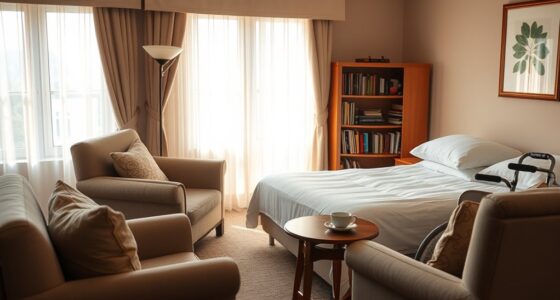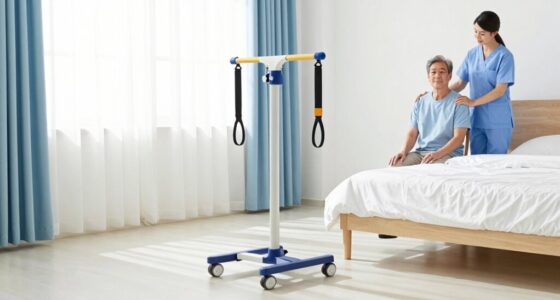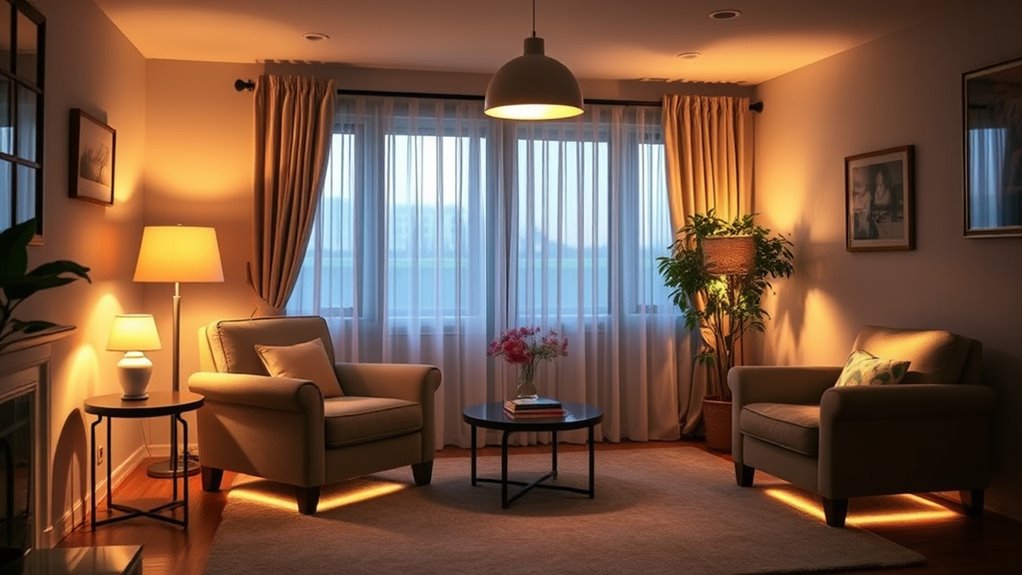

To improve lighting for care, focus on blending safety, comfort, and convenience. Use smart bulbs to easily adjust brightness and colors for different needs, controlling them via voice or apps. Place night lights in hallways and bathrooms, and install emergency lights with backup power for safety during outages. Dimming options and strategic fixture placement make nighttime routines easier. Keep in mind, thoughtful lighting setups can create a safer, more responsive environment—learn how to optimize these solutions further.
Key Takeaways
- Use smart bulbs to adjust brightness and color for optimal comfort and activity support throughout the day.
- Install night lights in hallways and bathrooms to prevent accidents and aid nighttime navigation.
- Incorporate emergency lighting with battery backup for safety during power outages and ensure quick activation.
- Strategically place lighting fixtures to enhance safety, such as in pathways, exits, and common areas.
- Customize lighting schedules and controls via apps or voice assistants to match daily routines and caregiver needs.

Proper lighting plays a essential role in caregiving environments, enhancing safety, comfort, and well-being for those in your care. When you consider how to illuminate your home effectively, it’s important to think beyond just brightness. Smart bulbs, for example, offer flexibility and control that can greatly improve daily routines. With smart bulbs, you can easily adjust brightness levels, change colors, or set schedules to match the needs of your loved one. For instance, softer, warmer lighting in bedrooms or bathrooms can promote relaxation and comfort, while brighter, cooler lights in common areas support activity and alertness. Plus, many smart bulbs integrate with voice assistants or smartphone apps, allowing you to modify lighting quickly and effortlessly, even if you’re not physically present.
Emergency lighting is another essential component of a safe caregiving environment. Power outages or unexpected situations can pose serious risks, especially for those who may have mobility issues or cognitive impairments. Emergency lighting guarantees that key pathways, exits, and essential areas remain illuminated during outages, reducing the risk of falls or confusion. Installing battery-backed emergency lights or integrating them with your home’s existing system guarantees that lighting is available when it’s most needed. These systems can be programmed to turn on automatically during power failures, offering peace of mind and a safer environment for everyone in your home.
In addition to emergency lighting, consider the placement of your lighting fixtures to maximize safety. Night lights, for example, are invaluable in hallways and bathrooms, providing enough illumination to navigate safely without disturbing sleep. Dimming options are equally important, allowing you to lower lights during nighttime routines or when your loved one prefers a softer environment. Combining smart bulbs with emergency lighting creates a comprehensive system that adapts to different situations, making caregiving more manageable. You can set the lighting to automatically switch to emergency mode if needed, ensuring continuous illumination without your having to intervene manually.
Ultimately, choosing the right lighting setup is about creating an environment that prioritizes safety, ease of use, and comfort. Smart bulbs give you control and customization, while emergency lighting adds a layer of security that’s essential during unexpected events. By thoughtfully integrating these elements, you make your caregiving space safer, more comfortable, and more responsive to your loved one’s needs. Proper lighting doesn’t just brighten a room; it improves quality of life and provides reassurance in everyday moments and emergencies alike.
Frequently Asked Questions
What Are the Best Energy-Efficient Lighting Options for Care Homes?
For care homes, you should consider energy-efficient lighting options like LED upgrades, which reduce energy use and last longer. Installing occupancy sensors helps automatically turn lights off when rooms are empty, saving even more energy. You’ll find these solutions convenient and cost-effective, ensuring the environment remains well-lit for both caregivers and patients while cutting down on electricity bills and maintenance efforts.
How Can Lighting Be Adjusted for Different Patient Needs?
Think of lighting as a chameleon, adapting seamlessly to each patient’s needs. By using adaptive lighting, you can tailor brightness, color, and direction to comfort or stimulate. Personalized illumination allows you to meet individual preferences, whether calming a distressed patient or aiding mobility. This flexibility guarantees safe, supportive environments, making your caregiving more effective and compassionate. Adjusting lighting like this creates harmony, empowering you to respond to diverse patient needs effortlessly.
Are There Specific Lighting Regulations for Healthcare Environments?
You should know that healthcare environments must follow strict regulatory standards to guarantee safety and effectiveness. Lighting compliance involves meeting these standards, which often specify brightness levels, color rendering, and energy efficiency. By adhering to these regulations, you create a safe, functional space that supports patient needs and caregiver convenience. Always stay updated on current regulations to maintain proper lighting standards and provide ideal care.
How Does Lighting Impact Patient Sleep and Circadian Rhythms?
Lighting considerably impacts your patient’s sleep and circadian regulation by influencing melatonin suppression. Bright, blue-enriched light during the day supports alertness, while dim, warmer light in the evening helps maintain natural circadian rhythms. Proper lighting minimizes disruptions to circadian regulation, promoting better sleep. You can improve your patient’s rest by adjusting lighting to align with natural day-night cycles, reducing melatonin suppression at night, and encouraging a healthy sleep-wake pattern.
What Safety Features Should Be Considered in Care Lighting Design?
When designing care lighting, you should prioritize safety features like emergency preparedness, ensuring lights automatically turn on during power outages. Glare reduction is also essential to prevent discomfort and accidents. You might consider installing motion sensors for easy navigation and low-level night lights to guide movement without disturbing sleep. Combining these features creates a safer environment, supporting both caregiver convenience and patient comfort while minimizing risks.
Conclusion
By blending brightness with balance, you create a caring, comfortable space that supports both caregiver convenience and patient comfort. Thoughtful lighting transforms your home into a haven of harmony, helping you handle daily duties with ease and ensuring your loved one feels safe and soothed. Remember, the right lighting isn’t just about illumination—it’s about inspiring intimacy, instilling safety, and sparking serenity in every corner of your caring space.