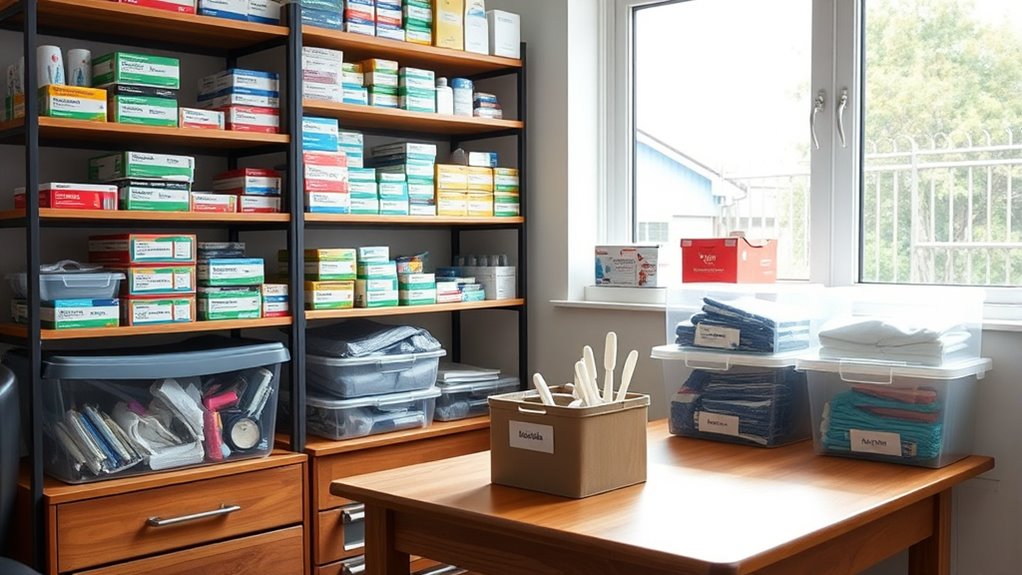

To organize medical supplies efficiently, create a dedicated, clearly labeled station with bins or shelves grouped by category, like medications and first aid. Use color-coding or numbering for easy identification, and keep vital supplies in accessible spots near your main living areas. Regularly check expiration dates and restock essentials. Keeping everything streamlined helps reduce clutter and speeds up access during emergencies. For detailed strategies to perfect your system, explore more tips below.
Key Takeaways
- Designate a central, accessible storage area with labeled bins for medications, first aid, and mobility aids.
- Use clear containers or pill organizers for daily medications, and update labels regularly.
- Implement color-coding or numbering systems to quickly identify and retrieve supplies.
- Conduct routine inspections to discard expired items and restock essentials promptly.
- Create a quick-reference guide with emergency contacts, medical info, and instructions for fast access.
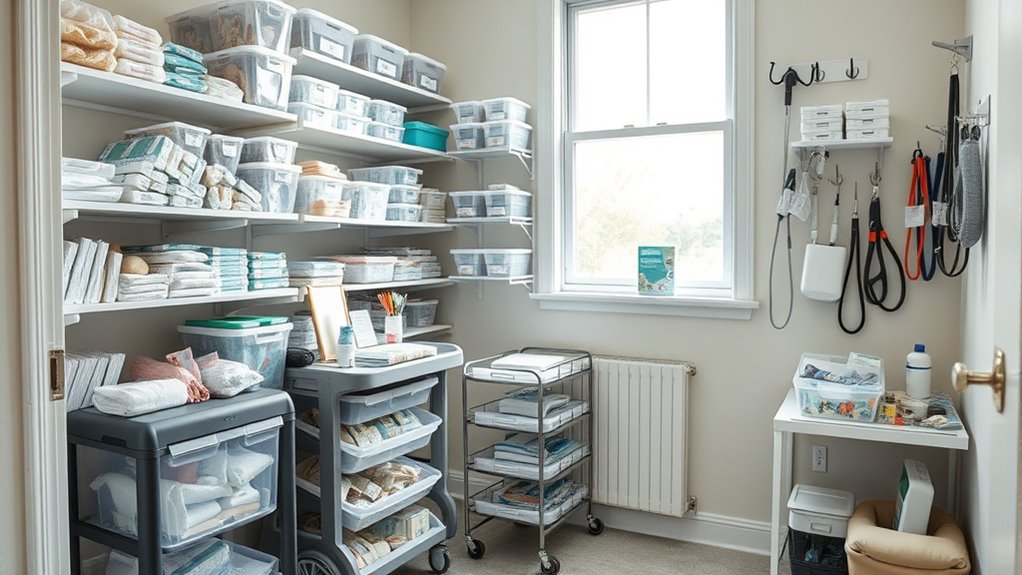
Have you ever struggled to find the right medical supplies when every second counts? If so, you’re not alone. When a loved one depends on you for their health and safety, disorganized supplies can cause delays and add unnecessary stress. To guarantee quick access and effective care, you need a system for organizing your caregiver’s home that prioritizes efficiency. Starting with medication management, create a designated medication station. Use clear labeled containers or pill organizers for daily doses, and keep all refills and prescriptions in one accessible spot. Regularly check expiration dates and discard expired medications to prevent confusion. Keep a list of medications, dosages, and schedules visible near the storage area for quick reference, especially during emergencies. A well-maintained medication management system minimizes errors and saves precious time when seconds matter. Incorporate medication organization tools to streamline your process even further.
Emergency preparedness is another essential aspect of organizing your supplies. Prepare a dedicated emergency kit that’s easy to grab in a crisis. Include essentials like bandages, antiseptics, gloves, and any specific medical devices your loved one needs. Store this kit in a visible, easily accessible location, preferably near the front door or in a central place. Regularly review and update the contents so you’re always ready for unexpected situations. To prevent chaos during emergencies, create a quick-reference guide listing crucial medical information, emergency contacts, and instructions. This should be stored alongside your supplies and shared with other caregivers or family members involved in care. Organize supplies in labeled bins or shelves, grouping items by type—first aid, medications, mobility aids—so you can locate what you need instantly. Consider color-coding or numbering systems to speed up retrieval even further.
In addition to these strategies, plan for redundancy. Keep backup supplies in separate locations or in portable containers so you’re prepared if your main storage gets compromised. Establish routines for restocking and inspecting supplies regularly, so everything stays current and ready to deploy. Remember, the goal is to eliminate clutter and create a streamlined setup that allows you to focus on providing care rather than hunting for supplies. With proper medication management and diligent emergency preparedness, you’ll be better equipped to respond swiftly and confidently in any situation. Your loved one’s safety depends on your organization skills, so take the time to implement these systems now. When supplies are organized effectively, you gain peace of mind, knowing you’re ready for anything that comes your way.
Frequently Asked Questions
How Often Should Medical Supplies Be Restocked?
You should restock your medical supplies regularly based on your inventory management and supply tracking. Check expiration dates and usage patterns weekly to identify when items are running low. Create a schedule or routine, such as monthly reviews, to make certain you always have essentials on hand. This proactive approach helps prevent shortages, keeps your home organized, and ensures you’re prepared for any situation.
What Safety Precautions Are Needed for Storing Hazardous Materials?
When storing hazardous materials, prioritize chemical safety by using secure, clearly labeled storage containers. Keep them out of reach of children and pets, ideally in a locked cabinet. Guarantee good ventilation and avoid storing chemicals near heat sources. Regularly check containers for leaks or damage. These precautions help prevent accidents, ensuring a safe environment for everyone in your home.
How Can I Prevent Cross-Contamination in Storage Areas?
Think of your storage areas as a well-tended garden—organized and thriving. To prevent cross-contamination, establish clear storage zones for different items and stick to strict cleaning routines. Regularly disinfect surfaces and containers, and always use separate tools for each zone. Label everything visibly, so you and others know where things belong. This way, your supplies stay pristine, and the risk of cross-contamination drops like leaves in autumn.
Are There Specific Labels Recommended for Different Supplies?
You should use clear, color-coded labels for different supplies to make categorization easy. Labels help you quickly identify items, reducing errors and saving time. Consider using waterproof labels for liquids and easy-to-read print for small supplies. By labeling each category—like wound care, medications, or daily essentials—you create an organized system that facilitates access and ensures safety in your caregiver home.
What Are the Best Practices for Disposing of Expired Supplies?
To dispose of expired supplies properly, you should follow safe disposal practices recommended for each item. First, identify supplies with proper labeling indicating expiration dates. Then, separate them from active supplies and follow local guidelines for disposal, such as taking sharps to designated containers or dropping off medications at approved facilities. Proper labeling guarantees you don’t confuse expired items with usable ones, making safe disposal easier and more efficient.
Conclusion
By organizing your medical supplies efficiently, you create a safer, more manageable home environment. Did you know that over 60% of caregivers report feeling overwhelmed by cluttered supplies? Taking the time to categorize, label, and store items properly can considerably reduce stress and improve care. With a little effort, you’ll streamline daily routines and ensure everything you need is right at your fingertips—making caregiving a little easier and more effective.