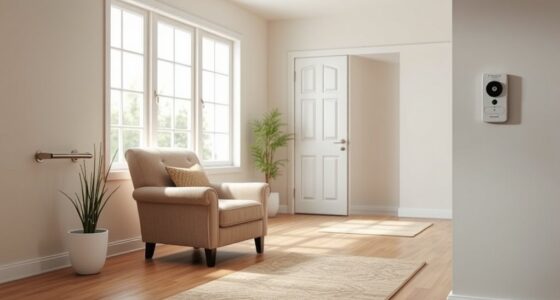
To create a welcoming room for a caregiver, arrange essential furniture for easy access and smooth routines, leaving enough space for movement. Place plants near windows with good natural light or opt for low-light tolerant varieties. Use adjustable lighting to adapt to changing needs, avoiding high-traffic areas for plants. Focus on a calm, inviting environment by balancing plant placement and furniture, ensuring comfort and accessibility. If you keep going, you’ll find more tips to make the space even more nurturing.
Key Takeaways
- Arrange essential furniture for easy access and smooth daily routines, ensuring ample space for movement.
- Place plants near windows with natural light or use low-light tolerant varieties for a calming atmosphere.
- Incorporate adjustable lighting options to adapt to different times of day and caregiver preferences.
- Avoid cluttering pathways or high-traffic areas with plants, maintaining a peaceful and accessible environment.
- Balance aesthetic appeal and functionality, creating a nurturing, inviting space that promotes comfort and well-being.
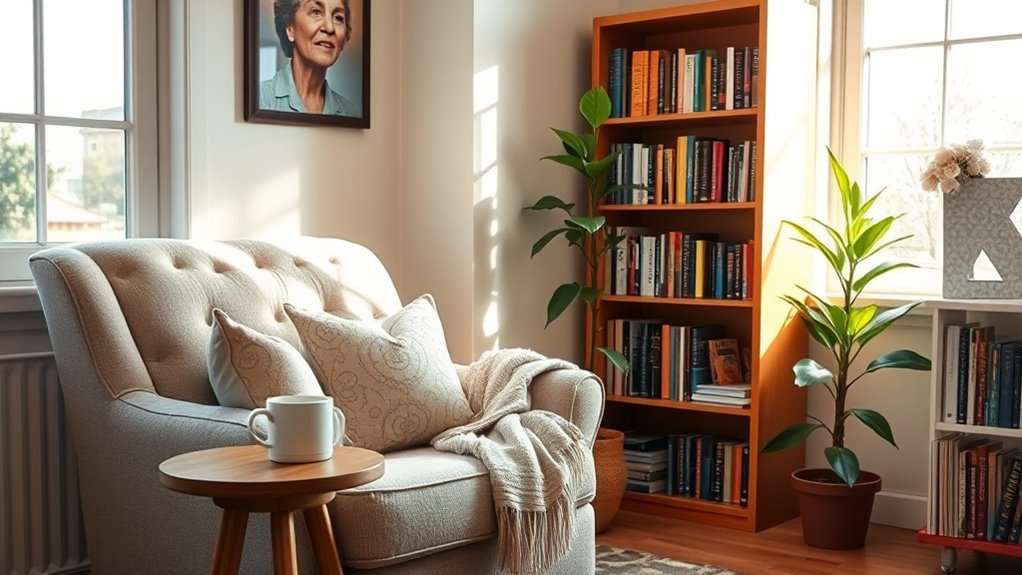
When welcoming a caregiver into your home, creating a comfortable and functional space is essential. One of the first things you’ll want to focus on is setting up their room in a way that feels welcoming and practical. Proper houseplant placement can brighten the space and boost mood, but it’s important to take into account lighting preferences to ensure your plants thrive without becoming a distraction or inconvenience. Think about which areas of the room receive the most natural light throughout the day. If the room gets plenty of sunlight, placing houseplants near windows can add a touch of nature and serenity. On the other hand, if the space has limited light, opt for low-light tolerant plants like pothos or snake plants, and place them where they’ll receive indirect sunlight or ambient light. Avoid cluttering windowsills with too many plants, as this can block light and make the room feel cramped.
Your caregiver’s comfort should be a top priority, so plan the room layout with their daily routines in mind. Position the bed and essential furniture for easy access, and leave enough space to move freely. When arranging the houseplants, think about how much attention they’ll need and whether they require direct sunlight or just ambient light. If you’re unsure about lighting preferences, observe the room’s natural light patterns or ask your caregiver about their preferences. Some people prefer a brighter environment, while others might favor softer, indirect light. Adjust your plant placement accordingly to ensure they’re healthy and add to the overall ambiance without overpowering the space. Considering plant care requirements can help you select the most suitable plants for the environment and reduce potential stress for your caregiver.
It’s also helpful to keep the room’s lighting flexible. Incorporate adjustable lamps, especially if natural light varies during the day or seasons. This way, your caregiver can easily modify the lighting to suit their needs or the plants’ needs. When it comes to houseplant placement, avoid placing plants in high-traffic areas where they might get knocked over or where they could block pathways. Instead, position them on sturdy shelves, side tables, or window ledges that don’t interfere with daily activities. Remember, the goal is to create a space that feels calm, inviting, and easy to maintain. Thoughtfully choosing where to place houseplants and considering lighting preferences helps establish a room that’s not only functional but also nurturing for both your caregiver and the environment.
Frequently Asked Questions
How Do I Personalize the Caregiver’s Space?
You can personalize the caregiver’s space by adding personalized decor, like framed photos or meaningful artwork, to make it feel welcoming. Use calming colors such as soft blues or greens to create a relaxing atmosphere. Consider incorporating comfort items like cozy blankets or a favorite chair. These touches help make the space feel unique to them, promoting comfort and a sense of ownership in their environment.
What Safety Features Are Essential in the Room?
Prioritize safety by ensuring clear emergency exits and functional fire alarms in the caregiver’s room. These features are essential for quick evacuation during emergencies, contrasting with the comfort-focused setup. Keep pathways unobstructed, and test fire alarms regularly. Installing smoke detectors and providing easy access to emergency contacts further enhances safety. This blend of safety and comfort creates a secure environment where caregivers feel protected and prepared for any situation.
How Can I Ensure Privacy for the Caregiver?
To guarantee privacy for the caregiver, you should incorporate privacy considerations like soundproofing and a lockable door. Use curtains or room dividers for visual privacy and designate a private space for personal needs. Comfort enhancements, such as a lockable closet or personal storage, help maintain boundaries. Regularly communicate with the caregiver to respect their privacy, making sure they feel comfortable and secure in their space.
What Are Cost-Effective Ways to Furnish the Room?
To furnish the room cost-effectively, choose budget furniture that balances quality and affordability, and add personality with DIY decor to make it inviting. Reuse or repurpose existing pieces, shop at thrift stores, and look for sales to save money. You can also create custom touches with simple crafts, giving the space warmth and comfort without overspending. This approach keeps your setup practical, stylish, and budget-friendly.
How Often Should the Room Be Cleaned and Maintained?
You should clean and maintain the room at least once a week to keep it comfortable and hygienic. Establish a regular cleaning schedule that includes dusting, vacuuming, and wiping surfaces. Follow simple maintenance tips like checking for wear and tear, replacing linens regularly, and ensuring proper ventilation. This routine helps prevent dirt buildup, keeps the space fresh, and guarantees your caregiver’s environment remains safe and welcoming.
Conclusion
Creating a cozy, well-organized space shows you genuinely care, boosting your caregiver’s comfort and morale. Remarkably, studies suggest that a welcoming environment can reduce stress and increase efficiency for caregivers. So, by investing a little effort into their space, you’re not just providing comfort—you’re also fostering a more positive and supportive atmosphere. Remember, a thoughtful setup can make a world of difference, turning a simple room into a sanctuary of peace and productivity.