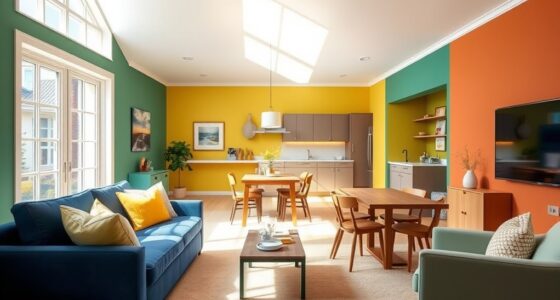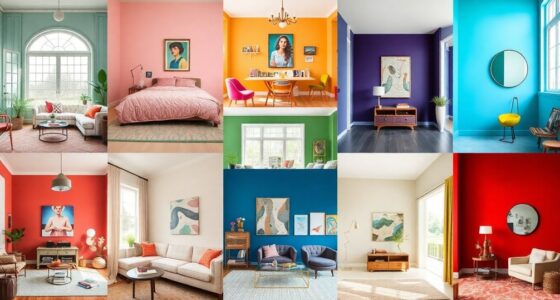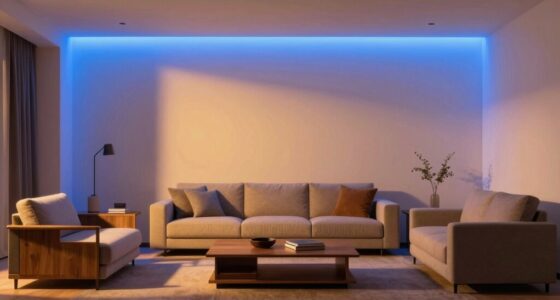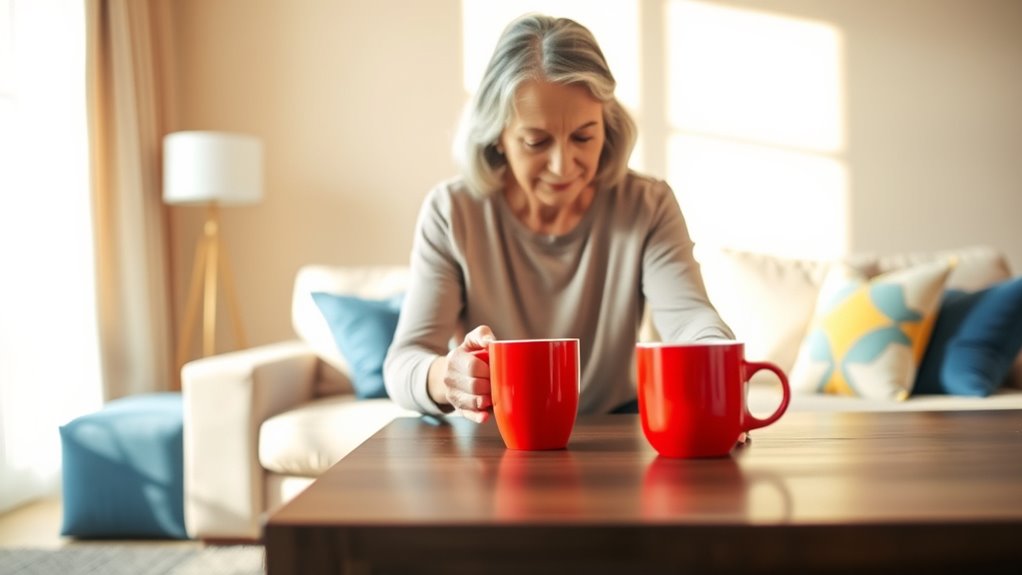

Using the right color contrasts at home can make a big difference for your aging eyes. By choosing contrasting colors—like dark items on light backgrounds or adding tape to steps—you’ll find it easier to see objects, navigate safely, and avoid accidents. Layering lighting and adjusting contrast settings on devices also boost clarity. These simple tweaks help you stay independent and comfortable. Keep exploring to discover more ways to improve your visibility and safety every day.
Key Takeaways
- Using contrasting colors for objects and backgrounds helps aging eyes distinguish items more easily.
- Dark-colored items on light surfaces improve visibility and reduce confusion.
- Applying contrasting tape on steps and edges enhances safety by highlighting potential hazards.
- Choosing high-contrast colors for electronic screens minimizes eye fatigue and improves readability.
- Incorporating contrast in home decor and lighting creates clearer distinctions and safer navigation.
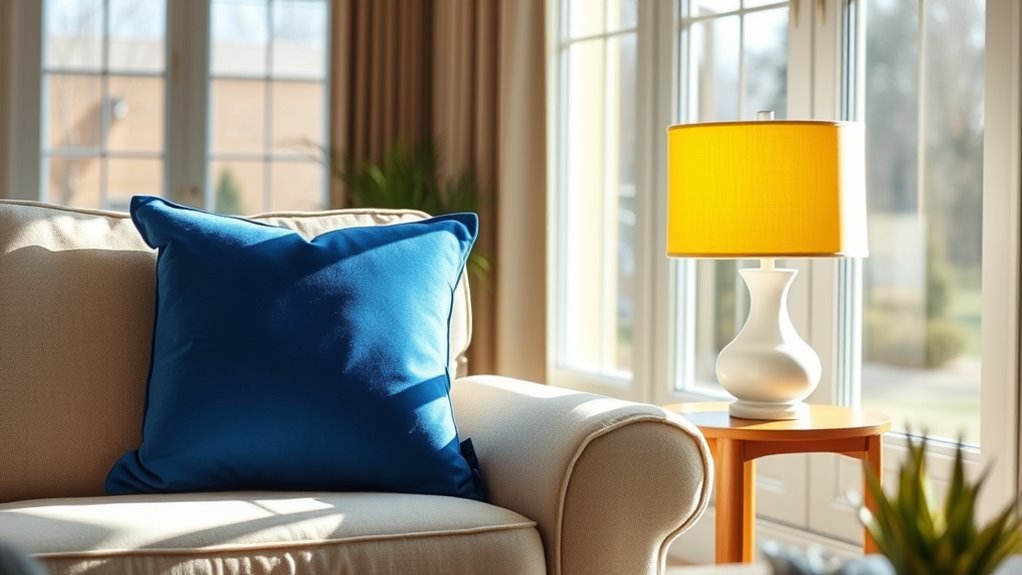
Have you ever wondered what it’s like to truly see the world with clarity? As you age, your eyes naturally change, making it harder to distinguish details, especially in low light or cluttered environments. But you can make a real difference at home by focusing on simple adjustments—particularly lighting adjustments and contrast enhancement—that can markedly improve your vision and independence. These tweaks don’t require complex equipment or major renovations; they’re about understanding how your eyes perceive the world better. Improving visual contrast sensitivity is a key step in enhancing overall clarity and safety. Lighting adjustments are one of the most effective ways to improve your vision. Bright, well-distributed lighting reduces shadows and minimizes glare, which can be especially problematic for aging eyes. Instead of relying on a single overhead light, consider layering your lighting with task lights, floor lamps, and accent lights to evenly illuminate your space. This helps your eyes focus more easily and reduces the strain caused by uneven brightness. When reading or working on detailed tasks, use directed, focused lighting that directly illuminates the object without creating harsh reflections. By adjusting the lighting to suit your needs, you’ll find it easier to see fine details, read labels, or navigate around your home safely. Contrast enhancement plays an essential role in helping your eyes distinguish objects more clearly. Over time, your visual contrast sensitivity diminishes, making it harder to tell apart similar shades or identify objects against backgrounds. You can improve this by choosing colors that stand out from each other and the surrounding environment. For example, opt for a dark-colored plate on a light table or use contrasting colors for your kitchen utensils and appliances. Simple changes like using contrasting tape on steps or handrails can also enhance safety by making edges more visible. Additionally, adjusting the contrast on electronic devices, such as increasing the contrast settings on your phone or computer, can make reading screens easier and reduce eye fatigue. Together, lighting adjustments and contrast enhancement create a more visually accessible environment that caters to the needs of aging eyes. These strategies help improve clarity, reduce eye strain, and foster confidence in everyday activities. They’re simple, cost-effective, and highly adaptable, allowing you to tailor your home environment to support your changing vision. By taking these steps, you’re not just making your space brighter—you’re making it safer, more functional, and more comfortable. Seeing clearly isn’t just about better eyesight; it’s about empowering yourself to enjoy your home and daily routines with greater ease and independence.
high contrast LED lighting for seniors
As an affiliate, we earn on qualifying purchases.
As an affiliate, we earn on qualifying purchases.
Frequently Asked Questions
How Does Contrast Affect Color Perception in Aging Eyes?
Contrast plays a pivotal role in how your aging eyes perceive color. As you age, your visual perception and color sensitivity decline, making it harder to distinguish objects. Higher contrast enhances your ability to differentiate colors and shapes, reducing confusion and improving safety. By increasing contrast in your environment, you help your eyes interpret colors more accurately, easing everyday tasks and maintaining independence despite age-related changes in vision.
Can Color Contrast Reduce the Risk of Falls at Home?
Imagine falling because you couldn’t see a tiny step—scary, right? Well, color contrast can seriously cut that risk. You should invest in lighting improvements and add tactile markers on stairs and door frames. Bright, contrasting colors make hazards pop out, guiding your eyes and preventing accidents. Don’t wait for a fall to happen—use these simple tricks to make your home safer and keep your independence.
Are There Specific Colors That Work Best for Contrast?
You’ll want to focus on effective color pairing for better visual differentiation. Bright, high-contrast colors like black and white or dark blue and yellow work best. These combinations make objects stand out clearly, reducing confusion and helping you navigate safely. Avoid low-contrast color pairings like beige and white, which can blend together. Using strong contrast enhances perception and minimizes fall risks, making your home safer and easier to see clearly.
How Often Should Contrast Settings Be Adjusted as Eyesight Changes?
Think of your eyesight as a garden that needs regular tending. You should revisit your contrast settings whenever you notice difficulty seeing details or after vision therapy sessions, as your eyes adapt. Regular lighting adjustments can also help. Keep a routine check, maybe every few months, to make sure your contrast remains effective; your eyes will thank you for staying vigilant and making necessary tweaks.
What Are Some Easy DIY Ways to Improve Contrast at Home?
To improve contrast at home easily, you can start with lighting improvements by adding brighter, focused lights in key areas. Use textured rugs or placemats to enhance surface differences, making objects stand out more clearly. Switch to high-contrast color schemes, such as dark handles on light cabinets, to make items more distinguishable. These simple DIY tips help your eyes see better, reducing strain and making daily tasks safer.
Conclusion
By paying attention to color contrast, you can make everyday tasks easier and safer as your eyes age. Simple adjustments can turn a blurry situation into crystal-clear clarity, helping you maintain your independence. Remember, it’s better to be safe than sorry—small changes can make a big difference in your quality of life. So, take the time to see clearly now; it’s worth every effort to keep your world sharp and vibrant.