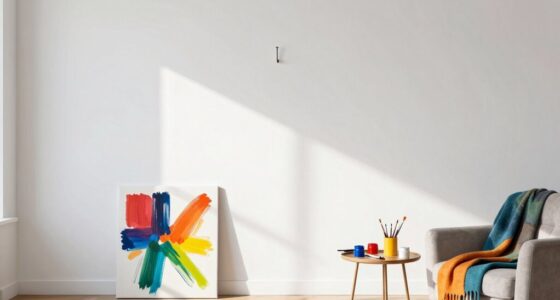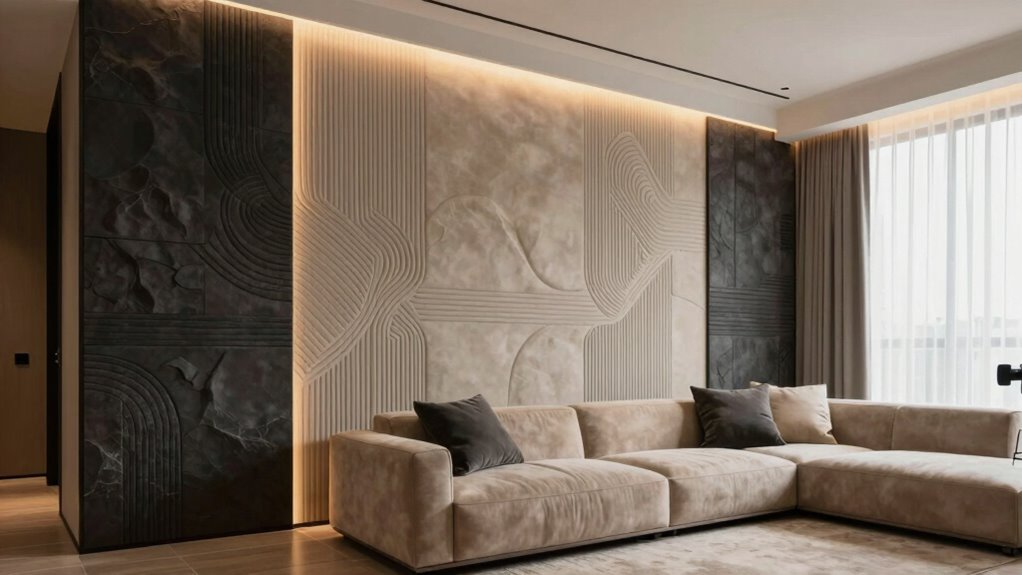

To make your room quieter, you can use wall treatments like acoustic panels, textured surfaces, or fabric wall coverings that absorb sound. Thick curtains and foam tiles also help block noise and reduce echoes. DIY options include fabric panels or tapestries, while professional solutions might involve layered drywall or specialized insulation. Proper installation and maintenance maximize effectiveness. Keep exploring for more ways to create a peaceful, noise-free space.
Key Takeaways
- Use acoustic wall panels or tiles to absorb sound and reduce echo in the room.
- Hang soundproof curtains or fabric-covered wall treatments to block and dampen noise.
- Install textured or fabric wall coverings to disrupt sound waves and prevent resonance.
- Add decorative foam panels or textured finishes that combine style with effective sound absorption.
- Consider professional soundproofing solutions like layered drywall or mass-loaded vinyl for maximum noise reduction.
How Walls Absorb and Block Sound
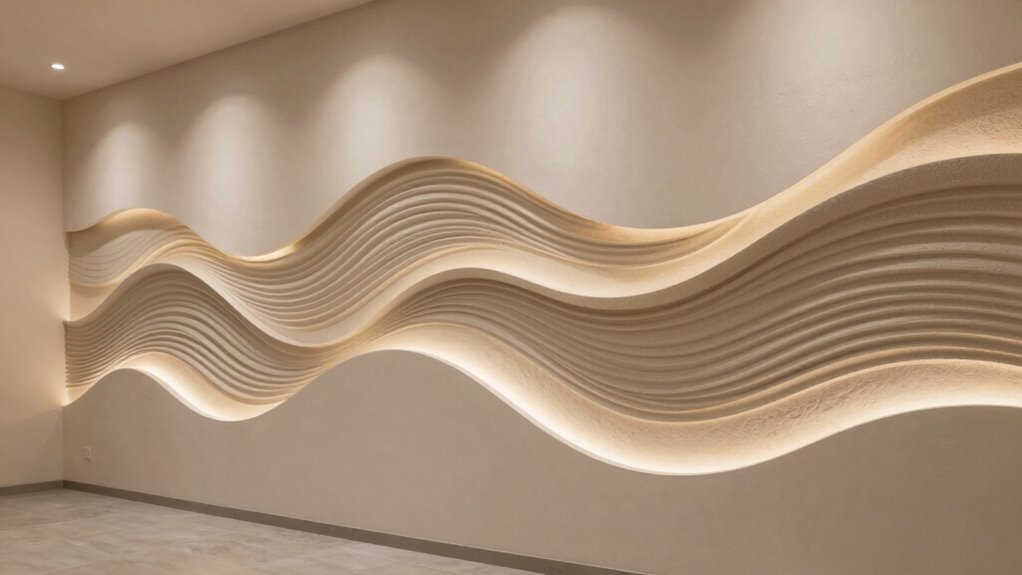
Walls play a crucial role in controlling sound within a space by both absorbing and blocking noise. When sound waves hit your walls, they can cause wall resonance, which amplifies certain sounds and makes noise more noticeable. To minimize this, your walls need to reduce sound transmission, preventing noise from passing through to other rooms. Dense materials and strategic construction help absorb sound energy, preventing it from bouncing around and creating echo. Properly designed walls break up sound waves, stopping them from resonating and spreading. Incorporating soundproofing techniques during construction or renovation can significantly enhance wall performance in noise reduction. Using sound absorption materials can further improve your walls’ ability to dampen sound. Understanding how walls influence sound, including the sound transmission path, enables you to select treatments that effectively block unwanted noise and reduce resonance, creating a quieter, more comfortable environment. Additionally, implementing acoustic design principles can optimize sound control tailored to your specific space needs. Exploring soundproofing methods early in your project can lead to more effective noise control outcomes.
Best Materials for Soundproofing Walls

Choosing the right materials can considerably enhance your walls’ ability to absorb and block sound. Decorative wall textures, like textured panels or fabric-covered surfaces, add both style and soundproofing by disrupting sound waves. These textures help reduce echo and muffling noise transmission. Soundproof curtains are another excellent option; when hung over walls or windows, they absorb sound and prevent it from bouncing around your space. Combining thick, dense materials such as mass-loaded vinyl or acoustic panels with decorative textures creates a more effective barrier. Foam tiles and fabric wall coverings also work well, especially when they’re layered or combined with other treatments. Incorporating sound absorption techniques into your wall design can significantly improve your space’s acoustics. To maximize effectiveness, consider layering different soundproofing materials for a more comprehensive sound barrier. Selecting the right materials allows you to customize your space for *ideal* sound absorption without sacrificing aesthetic appeal. Additionally, choosing appropriate wall treatments can help you achieve a quieter environment tailored to your specific needs. Using soundproofing principles can further optimize your wall setup for maximum noise reduction.
DIY Ways to Reduce Noise Through Wall Treatments
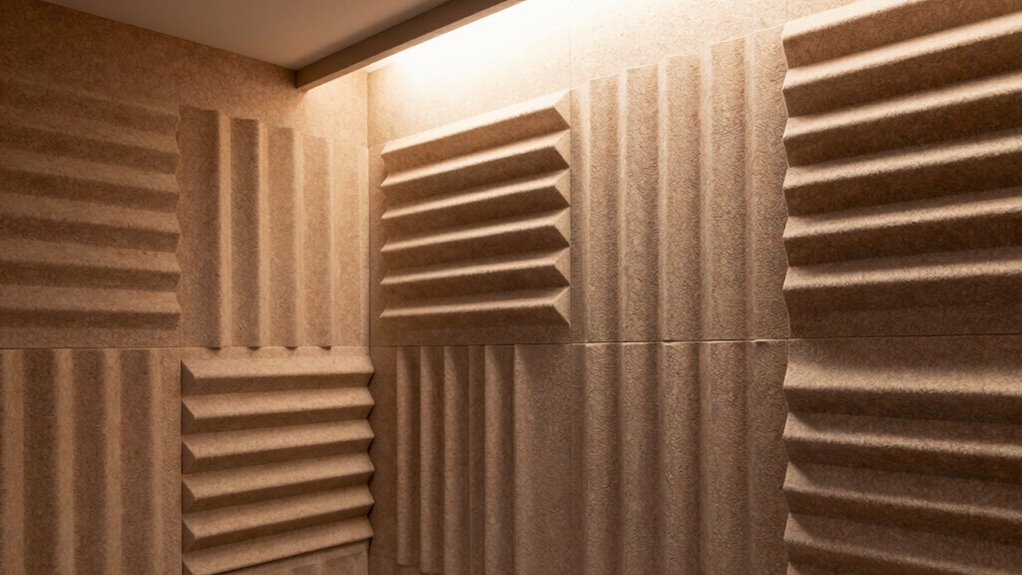
If you want to cut down on noise without professional help, there are several DIY wall treatments you can try. Adding decorative wall art made from sound-absorbing materials, like fabric panels or thick tapestries, can help dampen sound reflections. These pieces not only improve acoustics but also enhance your room’s style. Another effective approach is using window treatments such as heavy curtains or acoustic drapes; they block sound from entering or leaving, reducing overall noise levels. You can easily install these yourself with basic tools. Combining decorative wall art with strategic window treatments creates a layered effect that markedly absorbs sound. Incorporating sound-absorbing materials into your wall treatments can further improve sound absorption and create a more peaceful environment. Selecting appropriate wall treatments that suit your decor and needs ensures a more comfortable space. Additionally, choosing treatments that are easy to install makes the DIY process more accessible and satisfying. Exploring acoustic design principles can help you choose the best solutions for your specific space. These simple, cost-effective solutions let you customize your space while making it quieter without the need for professional installation.
Professional Solutions for Soundproof Walls
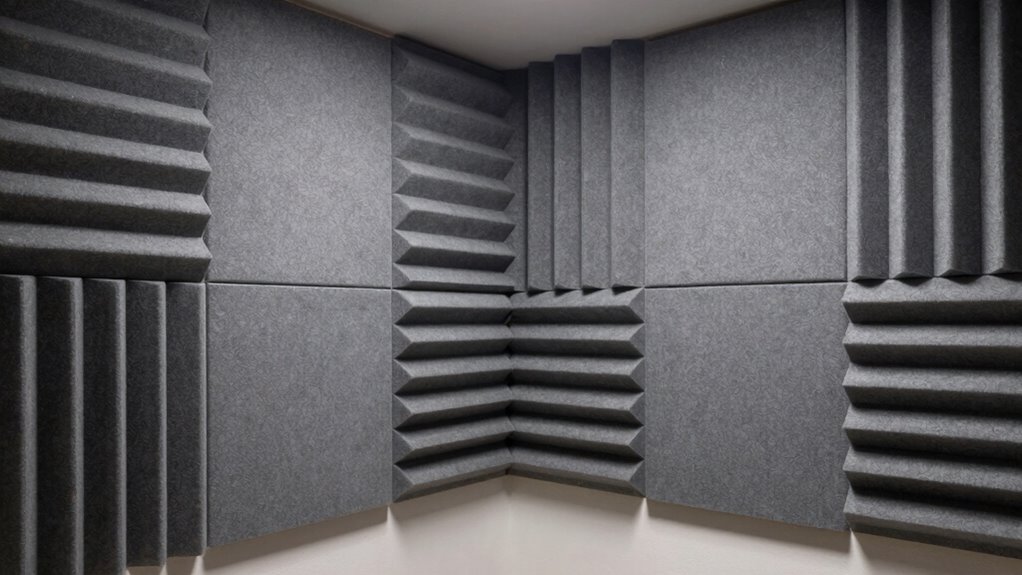
Professional solutions offer a range of acoustic wall panels that effectively block sound. When you choose expert installation, you guarantee ideal performance and long-lasting results. Custom soundproofing options can be tailored to your space, providing the best fit for your needs. Utilizing proper gear ensures that your soundproofing setup is both effective and durable over time. Additionally, understanding sound absorption principles can help in selecting the most suitable treatments for your environment. Incorporating building codes and standards can further optimize your noise reduction strategies. Knowing how soundproofing materials work can enhance your overall approach to creating a quieter room.
Acoustic Wall Panel Options
Are you seeking effective ways to enhance sound absorption in your space? Acoustic wall panel options provide a stylish and practical solution. You can choose decorative wall art that doubles as sound-absorbing panels, adding visual appeal while reducing noise. Acoustic wallpaper is another innovative option, offering a seamless look that blends into your interior design while dampening sound. These professional solutions are designed to absorb echoes and minimize noise transfer, creating a calmer environment. Whether you prefer fabric-covered panels, foam tiles, or decorative panels with textured finishes, there’s a variety of options to suit your aesthetic. Installing these acoustic wall panels is straightforward and highly effective, making them an excellent choice for achieving a quieter, more comfortable room. Advanced soundproofing techniques can further enhance acoustic performance in larger or more complex spaces, especially when combined with sound absorption materials and proper room design. Incorporating acoustic treatment methods can help optimize the overall sound quality and reduce unwanted noise more effectively. For optimal results, consulting with a soundproofing professional can ensure the best solutions tailored to your specific needs. Additionally, selecting panels with fire-resistant materials can improve safety while maintaining acoustic performance.
Professional Installation Benefits
Choosing professional installation for your soundproof walls guarantees that the job is done correctly and efficiently. Skilled installers ensure that acoustic wall panels and decorative wall accents are properly fitted, maximizing sound absorption. They also prevent gaps or misalignments that could compromise effectiveness. With expert help, you save time and avoid costly mistakes, achieving quieter spaces faster. Here’s a quick comparison:
| Benefit | Explanation |
|---|---|
| Precision | Ensures perfect placement of acoustic panels and accents |
| Durability | Proper installation extends lifespan of wall treatments |
| Aesthetics | Achieves a seamless, professional look |
| Time-saving | Faster process than DIY efforts |
Professional solutions provide peace of mind, enhancing both form and function for your soundproof walls. A professional installation also considers optimal placement based on room acoustics, further improving sound quality.
Custom Soundproofing Solutions
When it comes to creating effective soundproof walls, tailored solutions often deliver the best results. Professional soundproofing specialists can provide custom options that suit your space perfectly. These solutions may include advanced wall insulation techniques, specialized drywall, or decorative wall finishes that absorb sound. To visualize, consider:
- Installing soundproof drywall combined with acoustic panels
- Incorporating custom wall insulation tailored to your room’s noise levels
- Applying decorative wall finishes that also serve as sound absorbers
- Creating layered wall assemblies for enhanced soundproofing
These methods ensure peak noise reduction while maintaining your aesthetic preferences. Custom solutions are especially effective because they address specific sound issues, providing a quieter, more comfortable environment.
Do Soundproof Paints and Coatings Really Help?

Soundproof paints and coatings promise an easy way to reduce noise, but do they really work? You’ll want to understand how effective they are and whether proper application makes a difference. Let’s explore what these products can and can’t do, along with tips for applying and maintaining them.
Effectiveness of Soundproof Paints
While many brands claim that soundproof paints can considerably reduce noise, their actual effectiveness is often overstated. These paints are marketed as simple solutions to improve room acoustics, but they rarely block sound entirely. Instead, they offer mild noise reduction, making them suitable for decorative wall finishes or pairing with acoustic wallpaper. To understand their impact:
- They provide a thin layer of sound-absorbing material, which offers limited soundproofing.
- Their effectiveness depends on the paint’s thickness and formulation.
- They work better in combination with other treatments, like acoustic panels.
- They are best suited for reducing echo and improving sound clarity rather than complete noise blocking.
Application and Maintenance Tips
Applying soundproof paints properly can maximize their limited noise reduction benefits. To avoid soundproofing myths, remember these application and maintenance tips. Always clean surfaces thoroughly before painting, and follow manufacturer instructions for multiple coats. Regularly inspect the coating for cracks or peeling, reapplying as needed to maintain effectiveness. Proper installation enhances acoustic design tips by ensuring even coverage and adhesion. Keep in mind, paints alone rarely block loud noise but can improve room acoustics. Use this table as a quick reference:
| Tip | Why it matters |
|---|---|
| Clean surfaces before application | Ensures adhesion and effectiveness |
| Apply multiple coats | Boosts soundproofing potential |
| Avoid overpainting or uneven coats | Prevents gaps and weak spots |
| Regularly inspect for damage | Maintains ideal sound absorption |
| Combine with other treatments | Enhances overall soundproofing |
Installing and Maintaining Sound-Absorbing Wall Treatments
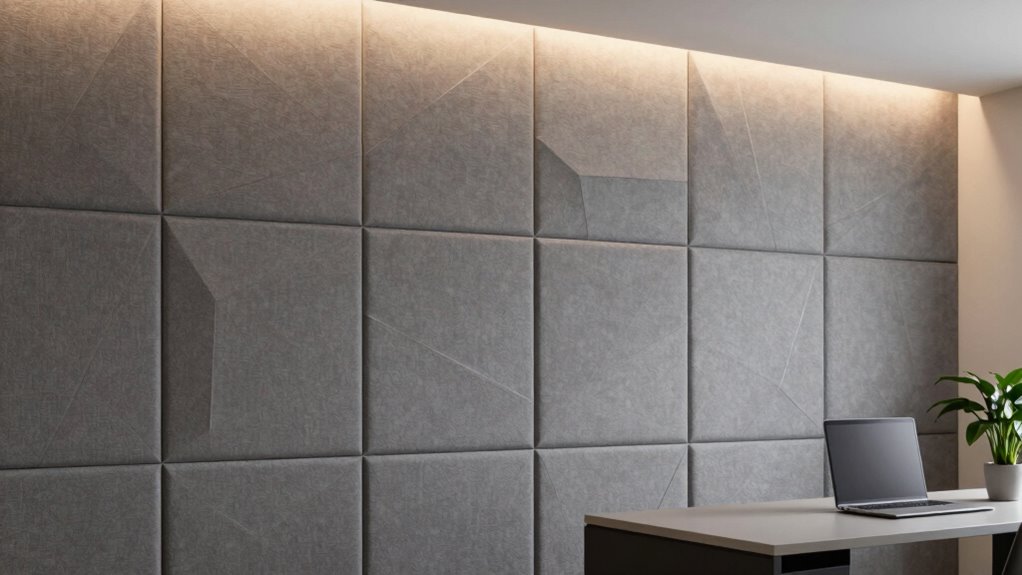
Proper installation and ongoing maintenance are essential to guaranteeing your sound-absorbing wall treatments perform effectively over time. When installing decorative wall coverings aimed at sound absorption, consider these key steps:
- Measure your wall carefully to ensure a precise fit for your chosen materials.
- Use appropriate adhesives or mounting hardware to secure your wall treatments firmly.
- Keep surfaces clean and dust-free to maintain ideal sound absorption.
- Regularly inspect for damage or detachment, repairing or replacing damaged sections promptly.
Frequently Asked Questions
How Much Do Soundproof Wall Treatments Typically Cost?
Soundproof wall treatments typically cost between $2 and $10 per square foot, depending on the material and installation. You can find budget options like foam panels or fabric-wrapped tiles that are affordable and easy to install. For a more extensive soundproofing solution, higher-end options like mass-loaded vinyl or specialized drywall may increase costs. Comparing prices helps you choose the best solution for your budget and sound absorption needs.
Can Wall Treatments Improve Sound Quality, Not Just Reduce Noise?
Imagine transforming your space from a dull echo chamber into a vibrant concert hall. Decorative wall panels and acoustic wall art not only absorb noise but also enhance sound quality. They reduce unwanted reverberations, clarify speech, and boost music clarity. By strategically placing these treatments, you create a balanced acoustic environment, making conversations clearer and music richer. So, yes, wall treatments can substantially improve both sound quality and comfort in your room.
Are There Eco-Friendly or Sustainable Soundproofing Options Available?
Yes, eco-friendly soundproofing options are available. You can choose wall treatments made from recycled materials like reclaimed wood or recycled textiles, which effectively absorb sound while reducing waste. Biodegradable options, such as cork or natural fiber panels, break down naturally and have minimal environmental impact. By selecting these sustainable materials, you create a quieter space that’s environmentally responsible, helping you reduce your carbon footprint without sacrificing sound quality.
How Long Do Sound-Absorbing Wall Treatments Usually Last?
You’ll find that sound-absorbing wall treatments typically last many years, offering a good durability lifespan with minimal maintenance. While their longevity depends on quality and usage, high-quality options can stay effective for over a decade. Regularly inspecting for wear and gently cleaning them helps maintain their performance. With proper care, these treatments continue to enhance your space’s acoustics, making your environment more peaceful and enjoyable for years to come.
Will Soundproofing Walls Affect Room Temperature or Humidity?
Soundproofing walls with insulation and acoustic panels generally won’t substantially affect your room’s temperature or humidity. These materials are designed to be durable and maintain their insulating properties over time. Proper installation ensures they don’t trap moisture or cause temperature fluctuations. Keep in mind, well-sealed soundproofing insulation helps control humidity, and durable acoustic panels resist wear, so your room stays comfortable and sound-optimized without major climate changes.
Conclusion
By choosing the right wall treatments, you can transform your space into a peaceful retreat, like a quiet lake amid a busy forest. Whether you opt for DIY solutions or professional help, there are plenty of ways to absorb and block sound effectively. With a little effort, your room will become a sanctuary of calm, making every moment spent there as soothing as a gentle breeze on a still day.