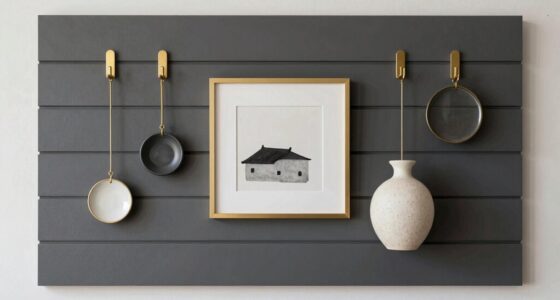

Hanging art too high can make your space feel unbalanced and diminish the artwork’s impact. The key trick is to position the center of the art at around 57-60 inches from the floor, which is at eye level for most viewers. Using a tape measure and painter’s tape helps guarantee perfect placement. Stick with this simple guide, and you’ll discover how a small adjustment can transform your room’s visual harmony. Keep going for more tips to hang like a pro.

Get furniture and decor delivered free — and shop member deals
- Fast, free delivery on millions of items
- Access to Prime Big Deal Days deals on October 6–7
- Prime Video, Amazon Music and more included
Key Takeaways
- Hang artwork so the center is approximately 57-60 inches from the floor for optimal eye-level viewing.
- Use a measuring tape to mark the ideal height before mounting to ensure consistency.
- Align multiple pieces at the same height to create a balanced and cohesive gallery wall.
- Avoid hanging art too high above furniture or eye level to prevent disrupting visual harmony.
- Use a level to ensure artwork is straight, maintaining a polished, professional look at eye level.
As an affiliate, we earn on qualifying purchases.
Why Proper Art Placement Makes a Difference
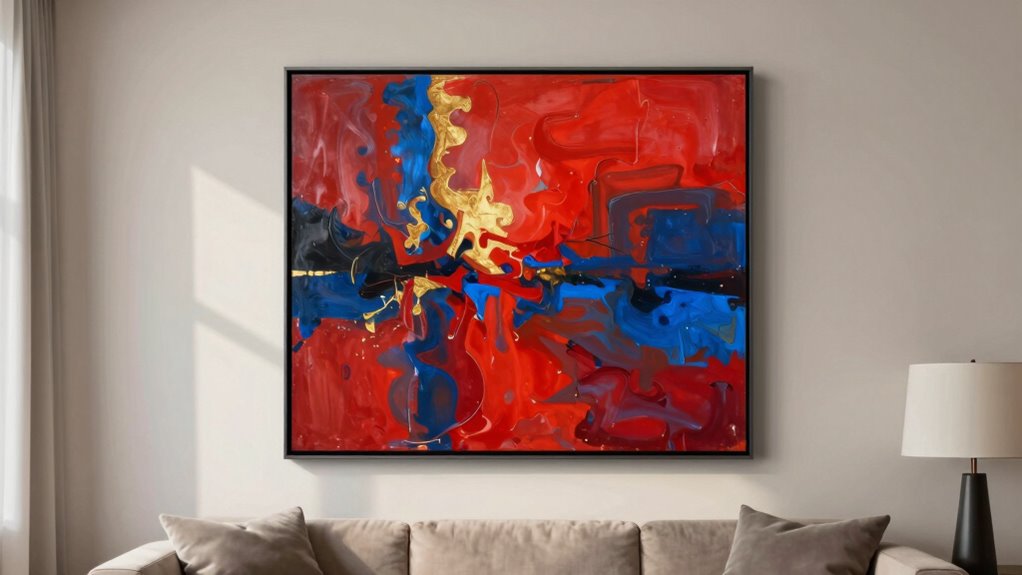
Proper art placement is essential because it directly impacts how you’ll experience and appreciate each piece. Thoughtful placement helps preserve your artwork by reducing exposure to damaging elements like sunlight, which is *crucial* for art preservation. Lighting considerations also play a *vital* role; proper lighting highlights details without causing fading or glare. When you hang art at the right height, it becomes more engaging and accessible, encouraging viewers to connect with the piece. Avoid placing art in direct sunlight or areas prone to temperature fluctuations, as these can accelerate deterioration. By paying attention to placement, you *ensure* your artwork remains vibrant and intact longer. Additionally, understanding art preservation principles can help you make more informed decisions about display location and care. For example, choosing the correct lighting conditions can significantly extend the lifespan of your artwork. Properly mounting and framing also contribute to the longevity and overall presentation of your pieces. Incorporating environmental factors into your display strategy can further protect your collection from damage and deterioration. Recognizing appropriate display height can enhance both the visual impact and safety of your artwork, preventing accidents or damage. Ultimately, strategic positioning enhances both the visual appeal and longevity of your art collection.
What’s the Best Height to Hang Art at Eye Level?
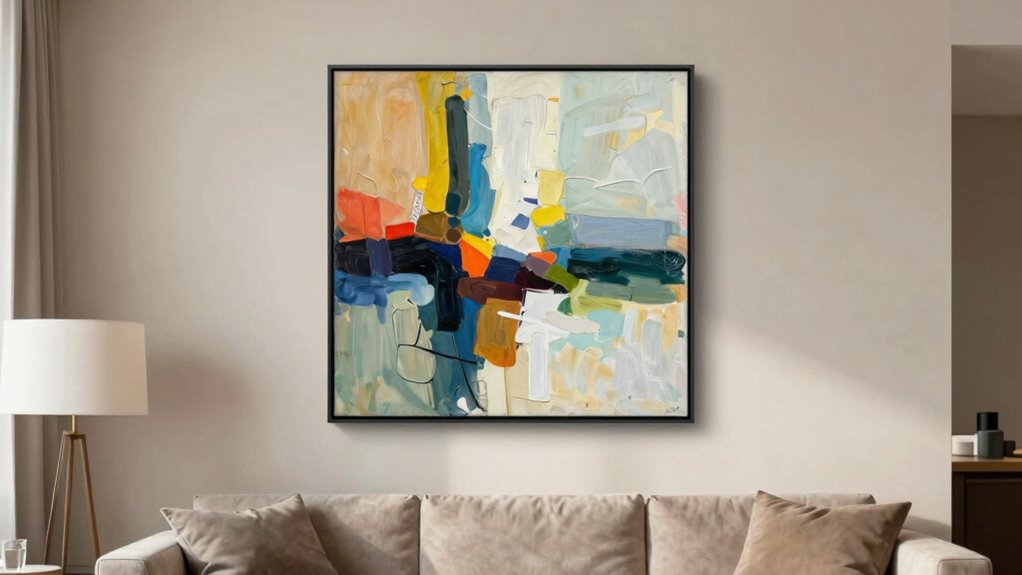
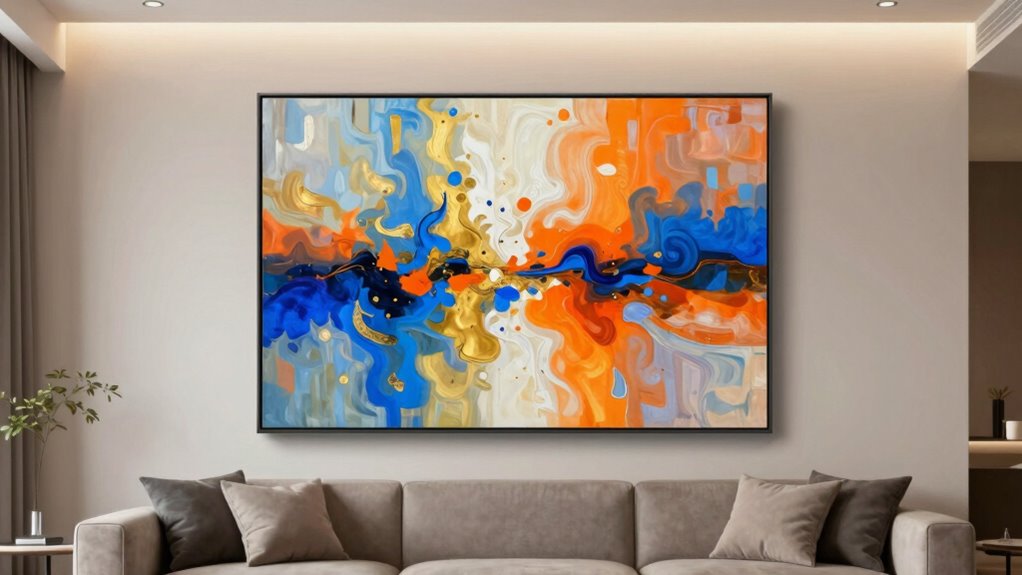
Hanging art at the right height guarantees it captures attention and creates a balanced visual experience. To achieve ideal art placement at eye level, consider these key points:
- Position the center of your artwork around 57-60 inches from the floor, aligning with average eye height.
- Adjust based on ceiling height and room proportions to maintain visual balance.
- For larger pieces, position the middle of the art slightly lower to anchor the space properly.
- When hanging multiple pieces, maintain consistent spacing and height to ensure cohesive visual flow.
- Incorporating visual balance principles can further enhance the overall harmony of your display. Additionally, understanding art placement techniques can help you refine your arrangement for maximum impact. Recognizing viewer perspective can also guide you in creating a more engaging art layout.
- Considering furniture placement can also influence how art interacts with other elements in the room, ensuring a unified design. This approach enhances visual balance, making your art feel intentional and harmonious within the room. Remember, the right height makes a significant difference in how your art is perceived and appreciated.
How to Measure and Hang Art Perfectly Every Time
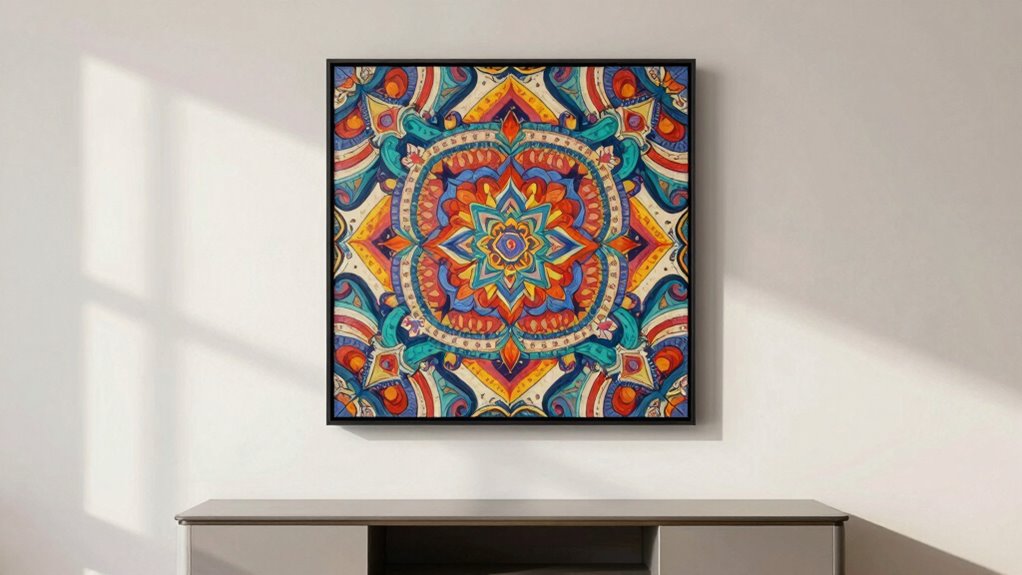
Measuring and hanging art precisely guarantees your pieces look great and stay secure. To achieve perfect art placement, start by considering the wall height and the size of your artwork. Use a tape measure to find the ideal height, typically positioning the center of the art about 57-60 inches from the floor, regardless of wall height. Mark the spot lightly with painter’s tape or a pencil. When hanging, use a level to ensure the art is perfectly straight. Keep in mind that taller walls can accommodate larger or higher placements, but maintaining the eye-level rule keeps art visually balanced. Always double-check measurements before hanging, so your art looks intentional and polished every time. Proper measurement techniques are essential for consistent, professional-looking results. Incorporating Suprem fabric into your home decor can also add a touch of modern elegance and durability to your textile choices, ensuring your space stays both stylish and sustainable.
Common Mistakes: Hanging Art Too High or Too Low
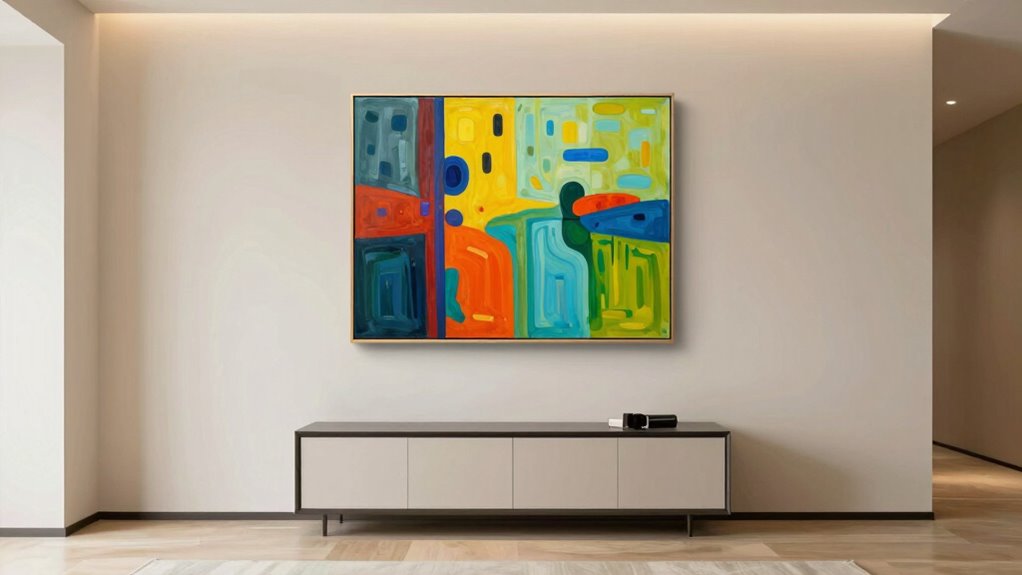
One of the most common mistakes homeowners make is hanging art either too high or too low, which can disrupt the balance and harmony of a space. Proper art placement is essential for achieving visual balance and ensuring your artwork complements your room. To avoid this mistake, consider these points:
- Aim for the artwork’s center to be at eye level for maximum impact.
- Keep consistent spacing between multiple pieces to create cohesion.
- Avoid placing art too close to the ceiling or floor, which can feel off-balance.
- Match the size of the art to the wall space to enhance overall harmony.
- Be mindful of art placement guidelines that help create a cohesive and balanced display. Incorporating smart home automation features can also assist in setting consistent and optimal placement for art displays, especially in multi-room environments. Using technological tools like digital measuring devices can further ensure precise positioning for perfect visual balance. Additionally, understanding visual weight can help you better assess how different pieces will impact the overall aesthetic of your space.
Adjusting Art for Different Wall Types and Spaces
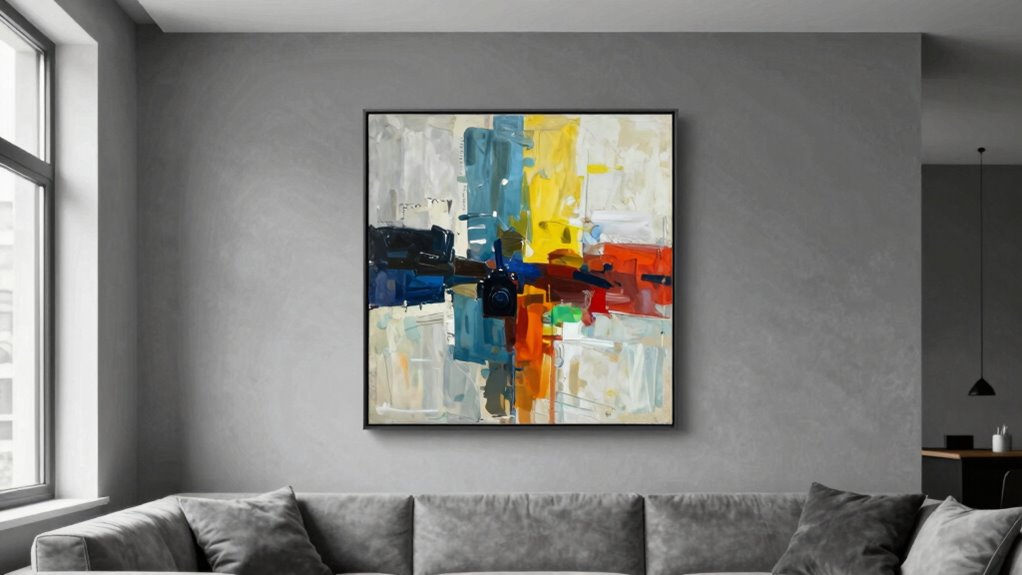
When hanging art, you need to ensure your wall’s texture, as rough or uneven surfaces may require different mounting techniques. The room’s purpose also influences placement; for example, in a high-ceiling space, you might adjust the height to maintain visual balance. Finally, ceiling height plays a role, so you may need to lower or raise artwork to ensure it looks perfect in your unique space. Additionally, considering at-home technology options such as adjustable picture hanging systems can help achieve precise placement with ease. To further refine your display, understanding wall material can ensure your mounting method is both secure and visually appealing, especially since wall construction type impacts the strength and durability of your wall anchors and hooks. Being aware of wall texture can help select the best hardware and techniques for a secure and polished look, and consulting professional advice can provide tailored solutions for challenging spaces.
Wall Texture Considerations
Wall textures can profoundly influence how art appears and feels in a space, so adjusting your display accordingly is essential. Different wall materials and textures create varying levels of texture contrast, which can enhance or diminish your artwork’s impact. To optimize your display:
- Use smoother frames and mats on textured walls to create contrast and make the art stand out.
- Consider the wall material—rough brick, smooth drywall, or textured plaster—to decide whether to mount art flush or with spacers.
- For highly textured surfaces, opt for larger art pieces to avoid visual clutter.
- Adjust hanging hardware to accommodate uneven or textured surfaces, ensuring stability and proper alignment.
- Be mindful of how wall texture contrast interacts with your artwork’s style to achieve a harmonious look.
Matching your art with wall texture ensures a cohesive and visually striking presentation.
Room Function Impact
The purpose of a space considerably influences how you should select and position artwork. In a living room, where socializing is key, hang art at eye level to create inviting focal points, considering lighting considerations to highlight colors and details. For a workspace, opt for artwork that inspires productivity, ensuring it doesn’t distract but complements the room’s color coordination. In bedrooms, choose calming pieces hung slightly lower to promote relaxation, while in dining areas, bold art can be positioned to energize the space. Remember, lighting plays a essential role—directional lights can enhance the artwork’s impact, so plan placements accordingly. Adjust your art’s height and style based on the room’s function to create harmony and visual balance that enhances the space’s purpose.
Ceiling Height Adjustments
Adjusting art for different ceiling heights guarantees your displays look balanced and intentional. When dealing with varying ceiling heights, consider these techniques to optimize your wall space:
- Lower the art slightly for rooms with high ceilings to create a cozy feel, ensuring it doesn’t get lost against the wall color. Incorporate visual balance to help your space feel harmonious and well-designed.
- Use proportionate frames that complement the wall color and ceiling height, maintaining harmony.
- Align the art’s center at eye level, adjusting based on ceiling height to keep it visually appealing.
- Incorporate wall color as a backdrop, choosing lighter shades for taller ceilings to brighten the space or darker hues for shorter ceilings to add warmth.
- Remember that art placement can influence the perception of room proportions, making your space feel more balanced and inviting.
These adjustments help your art feel grounded while emphasizing the unique ceiling height of each room.
Styling Tips: Creating Gallery Walls and Groupings

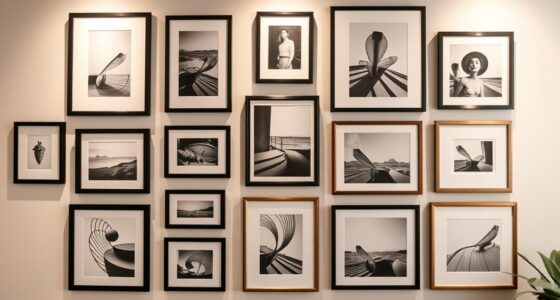
When creating gallery walls or groupings, focus on achieving balance and symmetry to make your display feel cohesive. Mix frame sizes to add visual interest while maintaining a sense of harmony. Keep these tips in mind to craft a stylish, eye-catching arrangement that feels intentional and polished. Incorporating electric bike features can also inspire innovative ways to present art and decor in a contemporary space.
Balance and Symmetry
Achieving balance and symmetry in your gallery wall creates a cohesive and polished look that naturally draws the eye. Proper art placement guarantees that each piece contributes to the overall visual harmony. To enhance this effect, consider these tips:
- Arrange artwork so that the central piece anchors the grouping, creating a focal point.
- Maintain consistent spacing between frames to foster symmetry.
- Use similar frame colors or styles to unify diverse pieces.
- Balance larger and smaller artworks evenly across the wall for equilibrium.
Varying Frame Sizes
Incorporating frames of different sizes adds visual interest and depth to your gallery wall. Varying frame size creates a dynamic display that keeps the eye moving and prevents the arrangement from looking monotonous. To achieve a balanced look, consider the proportion of your art pieces; larger frames should complement smaller ones without overwhelming the space. Mixing art proportions helps highlight focal pieces while supporting smaller works, creating a cohesive yet engaging arrangement. Pay attention to the overall flow—group similar frame sizes together or scatter them intentionally for contrast. This variation in frame size keeps your gallery wall lively and personalized, making your collection feel curated rather than random. Remember, balancing art proportion with frame size is key to a harmonious display.
Quick Tricks to Transform Your Space With Perfectly Hung Art
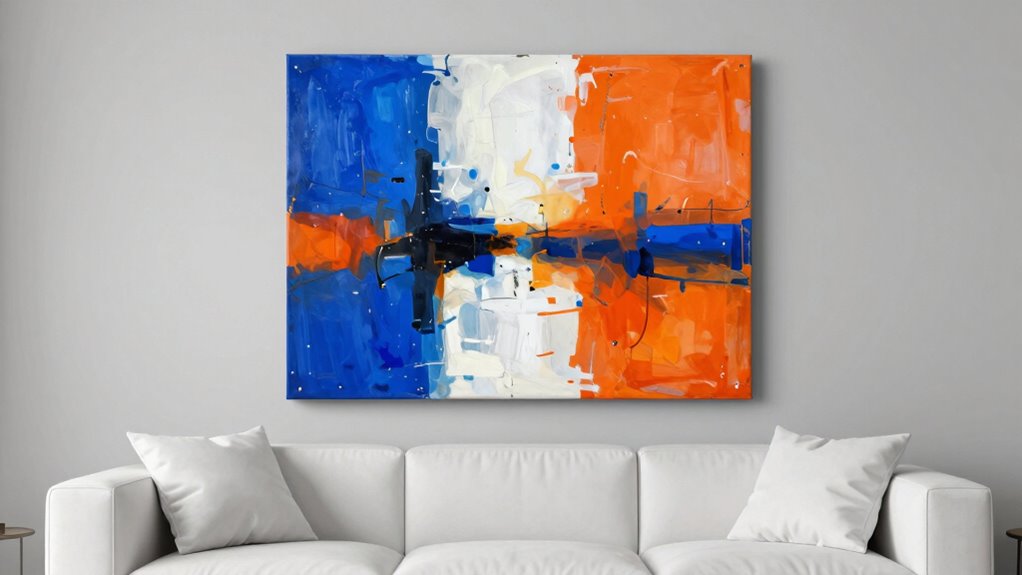
Hanging art at eye level instantly elevates your space by creating a balanced and inviting atmosphere. To achieve this, focus on simple, effective tricks that guarantee perfect art placement and enhance visual balance.
Consider these tips:
- Measure the center of your artwork and align it roughly 57-60 inches from the floor for ideal eye-level placement.
- Use painter’s tape or a template to mark the perfect hanging point before installing hooks.
- Group multiple pieces at the same height to maintain visual balance across your wall.
- Keep the art’s center aligned with your eye level, especially when displayed above furniture, to create cohesion.
Implementing these tricks transforms your space effortlessly and ensures your art makes a striking statement.
Frequently Asked Questions
How Do I Choose the Right Art Size for My Space?
To choose the right art size for your space, consider your wall height and the art scale. For standard walls, select pieces that are about 60-75% of the wall’s width for a balanced look. Larger walls can handle bigger artwork, while smaller spaces need more delicate pieces. Measure your wall carefully, and imagine the art’s size in relation to the space, ensuring it complements rather than overwhelms.
Can Lighting Affect How My Art Is Perceived?
Did you know that proper lighting can increase art appreciation by up to 50%? Lighting effects substantially influence how your art is perceived, highlighting details and colors that might otherwise go unnoticed. You should position lights to reduce glare and shadows, ensuring the artwork looks vibrant and true to life. Thoughtful lighting can transform your space, making your art more engaging and enhancing the overall ambiance.
What Tools Are Best for Precise Hanging?
You should use a level, measuring tape, and hanging hardware like hooks or gallery wall kits for precise hanging. A level guarantees your art stays straight, while a measuring tape helps you position pieces at the right height. For a gallery wall, consider grid or staggered layouts and use appropriate hanging hardware to support different weights. These tools make hanging art accurate and hassle-free, ensuring your display looks professional.
How Do I Hang Art on Textured or Uneven Walls?
To hang art on textured or uneven walls, you should use picture-hanging hooks with longer nails or wall anchors that grip well into wall textures. For gallery styles, consider using a level to keep your artwork straight and spacers for even spacing. You might also opt for mounting strips or adhesive hooks designed for textured surfaces. This guarantees your art stays secure and looks perfect, even on challenging wall textures.
What’s the Best Way to Arrange Art for Small Rooms?
Imagine your small room as a cozy gallery, where every piece feels deliberate. To maximize space, hang art at eye level and cluster smaller frames in a tight, cohesive arrangement. Use gallery lighting to highlight each piece, creating depth and inviting focus. Mix frame styles for visual interest, but keep them proportionate. This approach makes your space feel curated, not crowded, transforming even a tiny room into a mesmerizing art showcase.
Conclusion
Getting your art at the right height can truly change your space. When you hang pieces eye level, you create a balanced, inviting atmosphere that feels just right. Remember, it’s not about following every rule blindly but finding what works for your walls and style. Sometimes, it takes a bit of trial and error, but don’t be afraid to experiment. After all, the proof of the pudding is in the eating—trust your eye and enjoy the transformation.
Fall Picks
fall essentials
As an affiliate, we earn on qualifying purchases.