To paint without headaches, choose low-VOC paints with eco labels and check ingredient transparency. Prepare your space by cleaning, ventilating, and covering furniture. Apply thin coats with proper technique, keep airflow steady, and wear a mask to reduce fumes. After painting, open windows, use fans, and wait for full curing. For detailed tips on safe eco painting, exploring further can help guarantee a healthier, headache-free environment.
Key Takeaways
- Choose certified low-VOC or eco-friendly paints with transparent ingredient labels.
- Prepare the space by cleaning surfaces and ensuring proper ventilation before painting.
- Apply thin, even coats and wear masks to minimize fumes and overspray during application.
- Keep windows open and use fans or air purifiers to promote airflow and reduce odors.
- Allow full curing time, then ventilate the area thoroughly before reoccupying.
Why Use Low-VOC Paints? Benefits for Your Home and Health
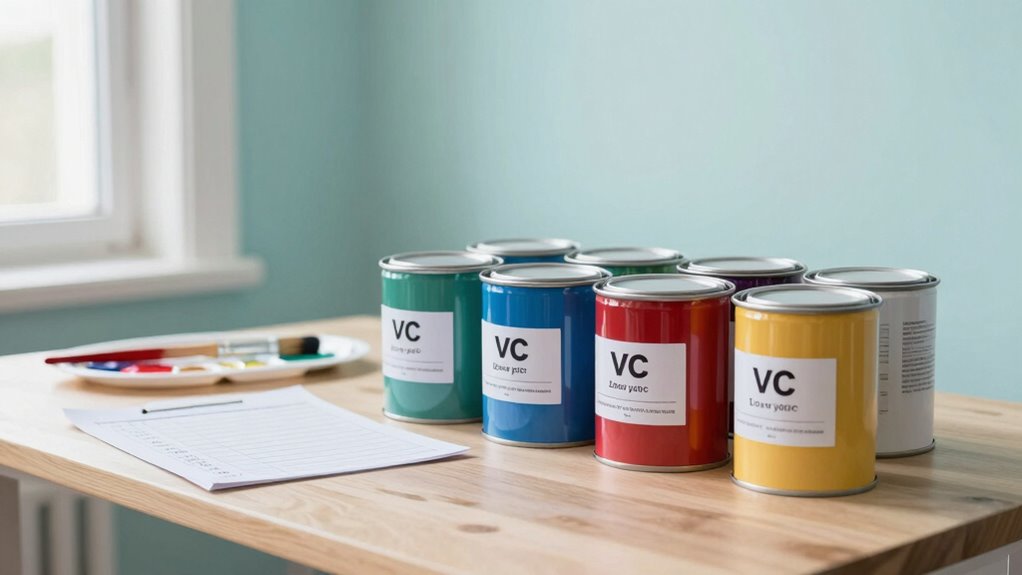
Have you ever wondered why choosing low-VOC paints makes a difference? The key lies in VOC levels, which are volatile organic compounds released into the air. High VOC paints can markedly impact indoor air quality, causing headaches, dizziness, or respiratory issues. By selecting low-VOC paints, you reduce these emissions, making your home healthier for everyone. Low-VOC options emit fewer chemicals, so you breathe easier during and after your project. This not only improves indoor air but also minimizes long-term health risks associated with chemical exposure. Using low-VOC paints helps create a safer environment for your family and pets. Plus, it’s an eco-friendly choice that supports better air quality indoors, making your painting project safer and more sustainable. Additionally, understanding color accuracy and proper lighting can further enhance the visual comfort of your space. Exploring indoor air quality can also motivate you to choose environmentally friendly products for your home improvements, especially when considering the benefits of VOC reduction for overall health. Implementing proper air purifier maintenance during your painting process can further improve indoor air by reducing airborne particles. Moreover, choosing low-VOC paints can contribute to environmental sustainability, aligning your home improvement projects with eco-conscious practices.
How to Choose Safe, Eco-Friendly Low-VOC Paints for Your Project

Choosing the right low-VOC paints for your project starts with understanding what makes a product safe and eco-friendly. Check the chemical formulations to guarantee they contain minimal harmful substances and avoid strong odors. Look for paints with eco label certifications, which verify they meet strict environmental and health standards. These certifications indicate that the product has been independently tested for low emissions and reduced chemical content. Always read labels carefully and choose brands committed to transparency about their ingredients. Selecting paints with eco-friendly credentials helps protect your health and the environment. Additionally, implementing standardized testing can ensure the paint performs reliably throughout your project. Incorporating independent testing can provide additional assurance of quality and safety. To further ensure safety, consider reviewing volatility levels, which measure the potential for harmful chemical off-gassing. Understanding chemical formulations is crucial to avoid products with hidden harmful ingredients. By prioritizing safe chemical formulations and eco label certifications, you’ll make informed choices that align with your goal of a headache-free, eco-conscious painting project.
How to Prepare Your Space for Headache-Free Eco Painting

Before you start painting, it’s essential to thoroughly prepare your space to guarantee a headache-free, eco-friendly project. Begin with proper surface preparation by cleaning and sanding surfaces to ensure paint adherence and reduce fumes. Next, implement effective ventilation strategies, such as opening windows, using exhaust fans, or installing air purifiers, to circulate fresh air and minimize VOC buildup. Keep the workspace well-ventilated throughout the process, especially during and after painting. Clear the area of clutter and cover furniture to prevent contamination. Properly sealing off non-painting areas helps maintain a controlled environment. Additionally, understanding the benefits of low-VOC paints can guide you in selecting safer options for your project. Using vetted products like Nightingale Studio’s low-VOC paints ensures you’re choosing high-quality, safe materials. Maintaining good indoor air quality during painting is crucial for health and comfort. Incorporating proper ventilation techniques can significantly reduce fumes and improve overall air circulation during your project. Being aware of VOC emissions and how to minimize them will further support a headache-free experience. By focusing on surface preparation and ventilation strategies, you create a safer, healthier space that supports headache-free, low-VOC painting.
What Are Best Practices for Applying Low-VOC Paint Safely?
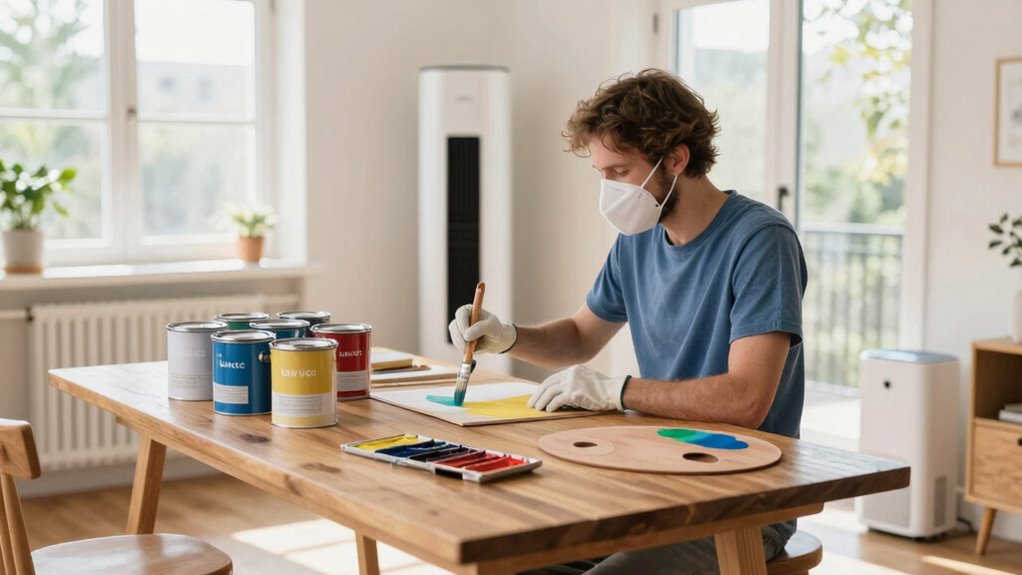
Applying low-VOC paint safely is vital to maintaining a healthy environment and reducing exposure to fumes. Use proper brush techniques by applying thin, even coats to minimize overspray and drips, which can release VOCs into the air. Maintain good ventilation strategies throughout the painting process—open windows, use fans, and keep air circulating to disperse any lingering fumes quickly. Wear a mask or respirator designed for paint fumes, and avoid painting in enclosed spaces without adequate airflow. Keep the workspace dry and clean to prevent dust and debris from mixing with the paint. Taking these precautions guarantees you limit VOC exposure, protect your health, and achieve a smooth, professional finish. Understanding VOC emissions and how to control them can significantly improve your painting experience and safety. Additionally, selecting paints that meet industry standards for low emissions ensures a safer indoor environment.
Post-Painting Tips to Ensure Quality and Keep Indoor Air Clean
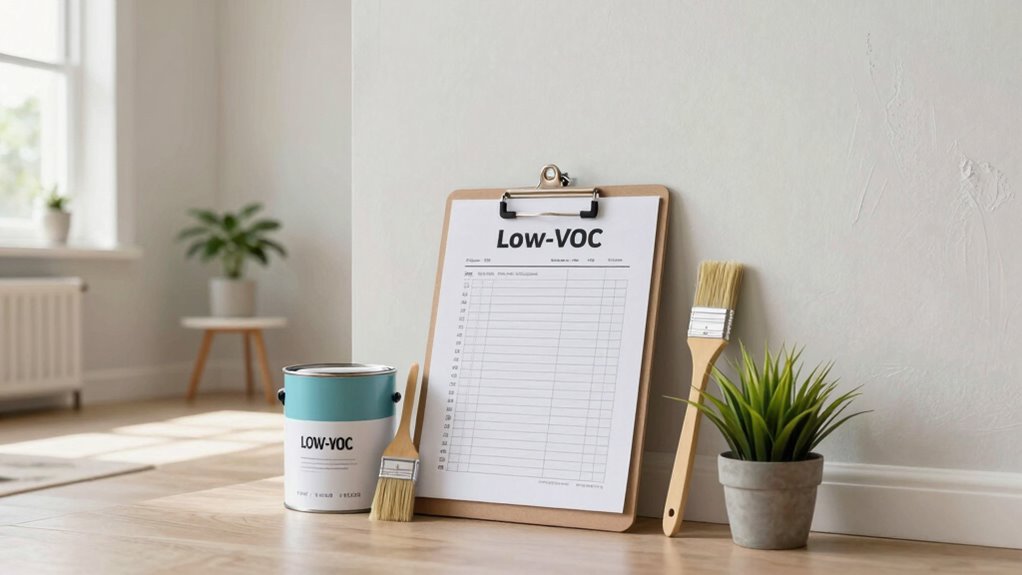
Once you’ve finished painting, it’s vital to take immediate steps to guarantee the job looks its best and your indoor air stays safe. First, keep windows open and use fans to improve air quality and promote airflow, helping with odor control. Allow the paint to cure fully before reoccupying the space, which reduces lingering fumes and ensures durability. Clean brushes and tools thoroughly to prevent residual VOCs from releasing into the air later. If odors persist, consider using air purifiers with HEPA filters, which can help trap airborne particles and improve overall air quality. Proper ventilation is essential for dispersing VOCs effectively and ensuring a safe, comfortable indoor environment. Additionally, choosing low-VOC paints can significantly reduce the emission of harmful fumes during and after painting. Incorporating smart air quality monitors can help you track indoor pollutant levels in real time and respond appropriately. Regularly monitor indoor air quality to detect potential issues early and take action if necessary. These steps help preserve paint quality and keep your indoor air clean.
Frequently Asked Questions
Are Low-Voc Paints Suitable for All Types of Surfaces?
Low-VOC paints are suitable for most surfaces, but you should check surface compatibility first. They work well on drywall, wood, and metal, offering a variety of finish options like matte, satin, or gloss. However, some surfaces like tiles or certain plastics might need specialty paints. Always read the manufacturer’s recommendations to guarantee the low-VOC paint meets your project needs and provides the desired finish.
How Long Should I Wait Before Ventilating After Painting?
Imagine breathing easy again. After painting, you should wait for about 24-48 hours before ventilating, depending on the paint’s curing duration. Proper ventilation timing helps clear out residual fumes and ensures your space feels fresh and safe. Keep windows open and fans on during this period. By giving the paint enough time to cure, you safeguard your health and enjoy your beautifully refreshed space sooner.
Can Low-Voc Paints Be Mixed With Other Paints?
Yes, you can mix low-VOC paints with other paints, but it’s best to do paint mixing carefully. Keep in mind that mixing different brands or types might affect color matching and finish quality. Always test the blend first to ensure consistent color and texture. This way, you can achieve the desired look without compromising the eco-friendly benefits of low-VOC paints, guaranteeing a smooth painting process.
What Are the Signs of Poor-Quality Low-Voc Paint?
You might notice a lingering paint odor or uneven color consistency, which signals poor-quality low-VOC paint. These signs often appear unexpectedly, like finding a forgotten sock in your clean laundry. Poor-quality low-VOC paints may also peel or crack sooner, showing their lack of durability. Trust your senses: if the odor is strong or the color looks patchy, it’s time to switch to a higher-quality option for a smoother, healthier finish.
Are There Any Safety Precautions for Children and Pets During Painting?
During painting, you should implement childproofing measures like keeping children and pets out of the area, and guarantee pet-safe ventilation by opening windows and using fans. Always store paints and supplies out of reach, and use low-VOC or zero-VOC paints to minimize fumes. After painting, wait until fumes dissipate before allowing kids and pets back inside, and continue good ventilation to maintain a safe environment.
Conclusion
By choosing low-VOC paints, you’re not just avoiding headaches—you’re protecting your home and health, just like a modern-day Florence Nightingale. Prepare properly, follow best practices, and give your space the royal treatment it deserves. Remember, it’s easier than wielding a quill in the Renaissance to keep indoor air clean and your project headache-free. So, go ahead, paint confidently, and enjoy the fresh, safe environment you’ve created—no need for a time-traveling headache!