
Focusing on dust collection and proper workshop lighting can greatly improve your projects more than just upgrading tools. Good dust control keeps your workspace cleaner and healthier, reducing cleanup time and improving safety. Proper lighting helps you see fine details clearly, reducing mistakes and rework. These systems create a more efficient environment, allowing you to work longer and more comfortably. If you’re curious about how to optimize your workshop for better results, there’s more to discover below.
Key Takeaways
- Proper dust collection maintains a clean environment, reducing health risks and preventing damage to tools and workpieces.
- Effective lighting enhances visibility, accuracy, and safety, leading to higher-quality craftsmanship.
- Organized workspaces improve workflow, making dust and lighting systems more efficient and easier to maintain.
- Investing in dust and light systems offers long-term benefits, reducing the need for frequent tool upgrades.
- Better dust and lighting management directly impact project precision and safety more than solely relying on new tools.
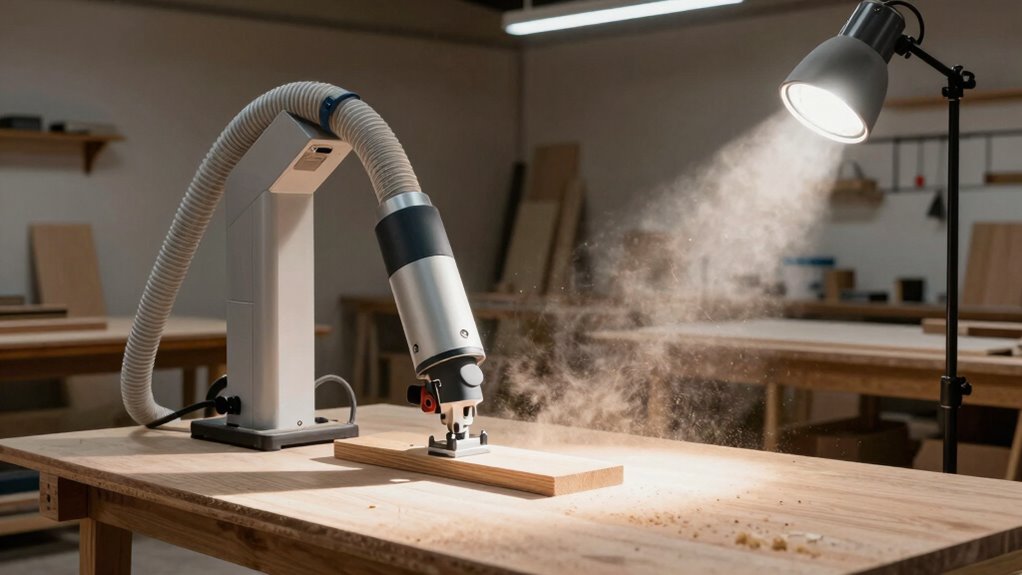
Have you ever wondered how to keep your workshop tidy and safe while working efficiently? The secret isn’t just in having the latest tools; it’s in setting up effective dust collection and proper lighting. These elements often go overlooked but play a pivotal role in improving your projects and your overall workspace environment. When you focus on air filtration, you guarantee that airborne dust and particles don’t settle on your workpieces or linger in the air, which can cause health issues or compromise the quality of your work. An efficient dust collection system pulls debris away at the source, making cleanup easier and maintaining a healthier atmosphere. This not only keeps your workspace neat but also minimizes the risk of dust-related respiratory problems, allowing you to work longer and more comfortably. Additionally, choosing the right dust collection equipment can significantly enhance your workshop’s cleanliness and safety. Investing in air filtration devices tailored for your space ensures continuous removal of harmful particles, further safeguarding your health.
Alongside air filtration, task illumination is essential. Good lighting reduces eye strain and helps you see fine details clearly, which leads to more precise cuts and finishes. Instead of relying on overhead lights alone, you should consider adjustable task lighting that can be directed exactly where you need it. Bright, focused light helps you identify imperfections early, avoiding costly mistakes or rework. It also improves safety because you’re less likely to accidentally cut or drill into hidden obstacles or wires. Proper lighting combined with dust control creates an environment where you can work confidently and efficiently. Furthermore, understanding the importance of workspace organization can help you optimize both dust collection and lighting setups for maximum effectiveness. Maintaining an organized workspace allows for easier installation and adjustment of lighting and dust collection systems, making your entire workflow smoother. Incorporating ergonomic principles into your workspace design can further enhance comfort and productivity during long hours of work.
Investing in these systems is often more cost-effective than constantly upgrading tools. While new tools can improve specific tasks temporarily, neglecting air filtration and task illumination means you’re fighting dust buildup and poor visibility every day. Over time, this can lead to equipment damage, increased health risks, and reduced project quality. Upgrading your dust collection setup may involve installing a powerful shop vacuum or a central dust extractor, which captures debris before it becomes airborne. Similarly, adding adjustable LED work lights or task lamps ensures you’re never working in shadows. These improvements make a noticeable difference, keeping your workspace cleaner and safer and allowing you to focus on craftsmanship rather than cleaning or struggling to see.
Ultimately, your workshop’s efficiency and safety depend more on how well you manage dust and lighting than on the latest power tools. Prioritize air filtration and task illumination, and you’ll notice your projects become more precise, your workspace stays cleaner, and your health improves. These investments pay off in the long run by creating a more productive, comfortable environment where you can truly focus on making your best work.

WEN DC1300 1,300 CFM 14-Amp 5-Micron Woodworking Dust Collector with 50-Gallon Collection Bag and Mobile Base , Black
- Air Circulation Rate: Circulates 1,300 CFM
- Tool Attachment: Dual 4-inch inlets for two tools
- Dust Collection Capacity: 50-gallon vertical bag
As an affiliate, we earn on qualifying purchases.
As an affiliate, we earn on qualifying purchases.
Frequently Asked Questions
How Do Dust Collection Systems Impact Overall Workshop Air Quality?
Dust collection systems considerably improve your workshop’s air quality by efficiently capturing dust and debris at the source. They enhance dust filtration, reducing airborne particles that can cause respiratory issues or irritation. With better air quality, you breathe easier and create a healthier environment for your projects. Proper dust collection minimizes cleanup time and keeps your workspace cleaner, proving that good dust management is essential for safety and overall workshop efficiency.
What Are the Best Lighting Options for Detailed Woodworking Tasks?
Think of your workspace as a stage where precision is the star. For detailed woodworking, opt for task illumination that mimics daylight, with a color temperature around 5000K to 6500K, ensuring clarity and true color rendering. Focus on adjustable LED lights or focused fixtures that cast bright, even light without shadows. This setup transforms your work into a symphony of accuracy, making every cut and detail pop with precision.
Can Improved Dust Collection Reduce Health Risks Long-Term?
Yes, improved dust collection can markedly reduce health risks long-term. By capturing airborne particles, you lower the amount of dust that circulates in your workshop. This decrease in airborne particles directly benefits your respiratory health, helping prevent issues like asthma or bronchitis over time. Regularly maintaining your dust collection system guarantees cleaner air, making your workspace safer and healthier for you during every project.
How Does Lighting Influence Precision in Woodworking Projects?
Lighting enhances your woodworking precision by improving visibility, reducing eye strain, and highlighting fine details. You benefit from ideal color temperature, which makes colors appear more true and helps distinguish materials easily. Proper task illumination ensures even, focused light on your work surface, preventing shadows and mistakes. When you prioritize good lighting—adjusting color temperature and focusing on task-specific illumination—you’ll notice your accuracy, quality, and confidence all improve markedly.
Are There Cost-Effective Ways to Upgrade Dust Collection and Lighting?
Yes, you can make budget upgrades and DIY solutions to improve your dust collection and lighting. For dust, attach a shop vac hose to a vacuum port or create a simple dust separator with a bucket and some PVC pipes. For lighting, use inexpensive LED work lights or clip-on lamps. These cost-effective changes boost safety, visibility, and project quality without breaking the bank.
Conclusion
Imagine stepping into your workshop, where dust is a distant memory and the glow of perfect lighting guides your hands. With better dust collection and lighting, you create a clean, inviting space that fuels your passion and sharpens your skills. These improvements transform your projects from cluttered chaos into a sanctuary of craftsmanship. Sometimes, it’s not about more tools, but about the environment you craft—making every cut precise and every detail shine.