
To adapt your home for wheelchair independence, start by removing physical barriers like narrow doorframes and high thresholds. Widen doorways, install ramps, and create clear, wide pathways for easy navigation. Add grab bars in bathrooms, lower switches, and consider accessible fixtures to boost safety and convenience. Small changes like lever handles and adjustable table heights also help. These modifications empower you to move freely and confidently, and exploring more tips can further enhance your living space.
Key Takeaways
- Widen doorframes and hallways to allow easy wheelchair navigation throughout the home.
- Install ramps and eliminate thresholds to facilitate smooth entry and movement between rooms.
- Incorporate accessible bathroom features like roll-in showers and grab bars for safety and independence.
- Lower switches, outlets, and countertops to be within reach for wheelchair users.
- Arrange furniture and storage to create clear, unobstructed pathways supporting autonomous movement.
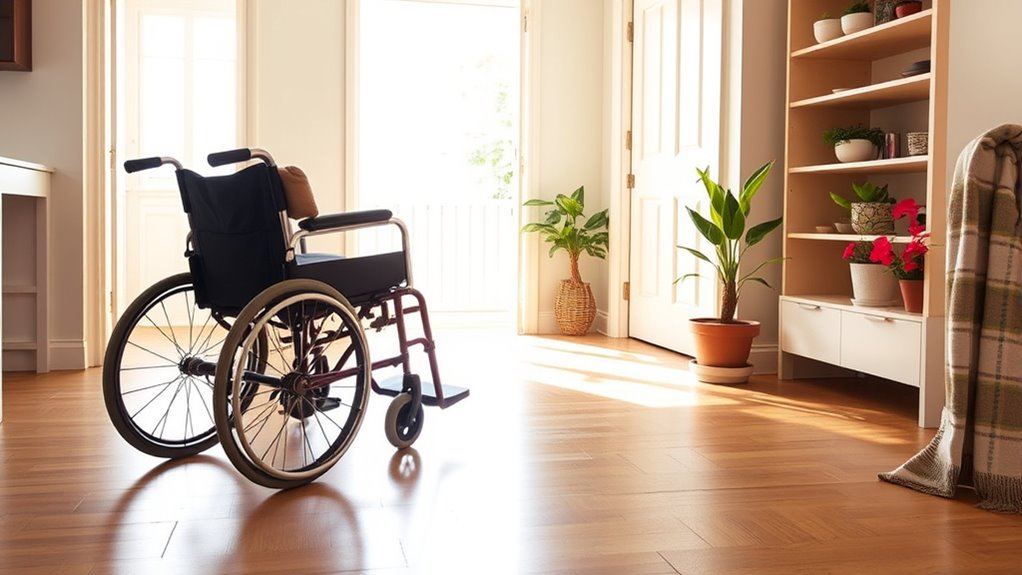
Have you ever wondered what it truly means to be independent in a wheelchair? It’s about more than just moving around; it’s about creating a space that empowers you to live comfortably and confidently. One of the most important steps toward independence is guaranteeing your home is accessible. This starts with accessible doorways, which are essential for seamless movement throughout your living space. Widening doorframes or installing automatic door openers can make a significant difference, allowing you to navigate freely without struggling or needing assistance. These modifications remove physical barriers, giving you full control over your environment and reducing frustration. Home accessibility plays a crucial role in promoting autonomy and safety for wheelchair users.
Bathroom modifications are equally crucial. A bathroom designed for wheelchair users isn’t just about convenience—it’s about safety and dignity. Installing a roll-in shower with a low or no threshold ensures you can enter comfortably without having to lift your legs over a high edge. Grab bars strategically placed around the shower and toilet provide support, helping you maintain balance and prevent falls. A raised or adjustable sink allows you to comfortably access water without straining, and a wheelchair-accessible toilet with proper clearance makes daily routines smoother. These modifications do more than improve functionality; they foster independence by allowing you to perform personal care tasks with confidence and privacy.
To make these changes effective, it’s important to tailor them to your specific needs. Consulting with an occupational therapist or a home modification specialist can help you identify the most practical solutions. They’ll assess your mobility, daily routines, and physical environment to recommend modifications that maximize your independence. Remember, small adjustments often have a big impact. For example, replacing doorknobs with lever handles can make opening doors easier, especially if grip strength is limited. Installing lower switches and outlets within reach also enhances safety and convenience.
Creating an accessible home environment isn’t just about physical changes; it’s about fostering a sense of control over your space. When you can move freely through your home without obstacles, you gain confidence and independence. This sense of empowerment influences every part of your daily life, from simple tasks like cooking and cleaning to social interactions. Ultimately, adapting your home with accessible doorways and bathroom modifications isn’t just a practical upgrade—it’s a crucial step toward living life on your own terms. By making your environment more accommodating, you’re investing in your independence and your overall well-being.

2 Pack Wheelchair Door Puller Handicap Door Opener One Handed Accessibility Aid for Disabled & Elderly
- Assists wheelchair users with door closing: Helps close doors safely and easily
- Lightweight and portable design: Easy to carry for daily use
- Universal strap fits most handles: Secure fit for various door handles
As an affiliate, we earn on qualifying purchases.
As an affiliate, we earn on qualifying purchases.
Frequently Asked Questions
How Do I Choose the Right Wheelchair for My Needs?
You should consider your daily needs, mobility, and comfort when choosing a wheelchair. Look for options with customizable wheelchair accessories to enhance functionality, and prioritize seating comfort to prevent pressure sores. Test different models to find one that fits your body, offers good support, and matches your lifestyle. Consulting with a healthcare professional or specialist can help you select the best wheelchair tailored to your specific requirements.
What Funding Options Are Available for Home Modifications?
You can explore government grants and assistance programs to fund home modifications, making your space wheelchair-friendly. Check if your home insurance offers coverage for accessibility upgrades, which can help offset costs. Local or national disability agencies often provide grants or subsidies specifically for home adaptations. Additionally, some charities and nonprofit organizations may offer financial aid, so researching these options guarantees you access all available funding sources to create a safer, more accessible home.
How Can I Improve Bathroom Accessibility Effectively?
To improve bathroom accessibility, start with essential bathroom modifications like installing grab bars, a roll-in shower, and a higher toilet seat. Use assistive technology such as bidet seats or touchless faucets to enhance independence. Guarantee enough space for maneuvering and consider a waterproof, non-slip flooring. These changes create a safer, more functional bathroom environment, making daily routines easier and more comfortable for you.
What Safety Measures Ensure Wheelchair User Independence?
You should install assistive technology like door openers, transfer aids, and accessible controls to promote safety and independence. Ensuring social support from family or caregivers provides reassurance and assistance when needed. Regularly check that mobility aids are in good condition, and keep pathways clear to prevent accidents. Combining these safety measures helps you confidently navigate your home, maintaining independence while feeling supported and secure.
How Do I Maintain and Troubleshoot Wheelchair Equipment?
To keep your wheelchair running smoothly, regularly check the battery maintenance and guarantee it’s fully charged, especially before outings. Inspect the tires often and inflate them to the recommended pressure to prevent flats and improve mobility. If you notice any unusual noises or difficulty maneuvering, troubleshoot by checking for debris or loose parts. Routine maintenance like cleaning the wheels and brakes can also extend your wheelchair’s lifespan and keep you safe.
Conclusion
Making your home wheelchair-friendly boosts independence and quality of life. With thoughtful adaptations like ramps, widened doorways, and accessible switches, you create a safe, functional space. Did you know that nearly 50% of wheelchair users report improved daily activity levels after home modifications? Small changes can make a big difference, empowering you to move freely and confidently within your own space. Embrace these adaptations, and enjoy the freedom and independence you deserve.