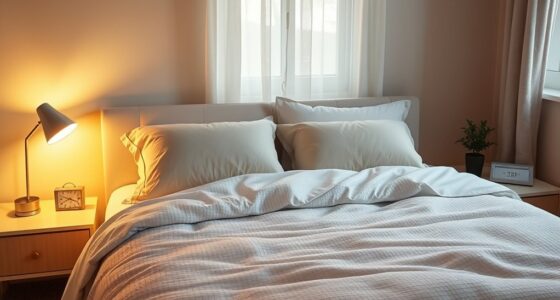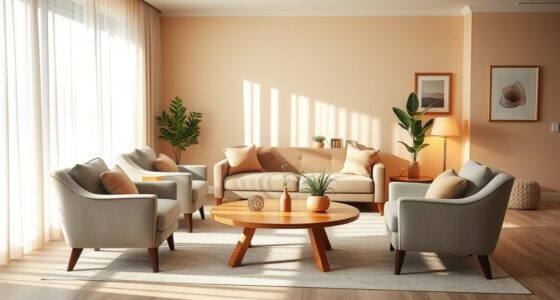
To design a soothing space for seniors with dementia, focus on creating a calm, inviting environment that promotes well-being and comfort. Incorporate gentle lighting, soothing colors, and natural elements like plants or water features. Use sensory stimulation thoughtfully—music therapy, aromatherapy, and textured objects—to evoke positive memories and reduce agitation. Keep the space clutter-free and safe, with quiet corners for relaxation. Exploring these strategies further will help you craft environments that truly support emotional and physical comfort.
Key Takeaways
- Incorporate soft lighting, calming visuals, and natural elements to create a peaceful, inviting atmosphere.
- Use familiar music and sensory stimuli like soothing scents to reduce anxiety and evoke positive memories.
- Maintain clutter-free, organized spaces with clear pathways to ensure safety and ease of movement.
- Include cozy corners, quiet areas, and textured objects to promote relaxation and sensory engagement.
- Personalize sensory experiences and integrate technology to enhance emotional well-being and comfort for seniors.
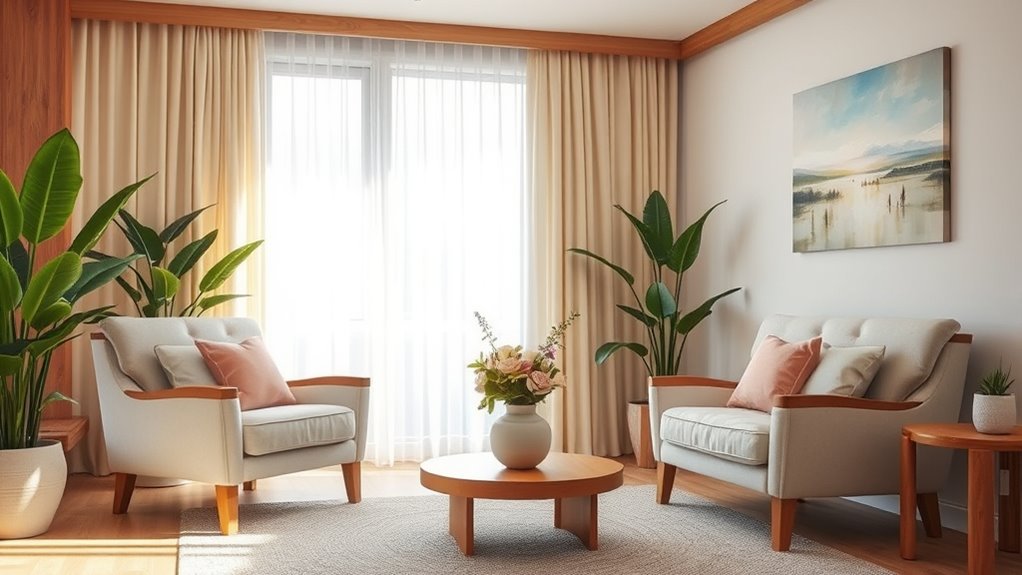
Creating a calming environment for seniors is essential for promoting their well-being and comfort. When designing spaces for seniors with dementia, incorporating elements like music therapy and sensory stimulation can make a significant difference in their daily experiences. Music therapy, in particular, offers a powerful way to soothe agitation, evoke memories, and foster emotional connections. Soft, familiar tunes played at a gentle volume can help seniors feel more relaxed, reducing anxiety and enhancing their overall mood. You might consider creating designated areas where calming music is played regularly, ensuring the environment remains peaceful and inviting.
Creating a calming space with music therapy enhances seniors’ well-being and emotional connection.
Sensory stimulation is equally important in crafting a calming space. By engaging multiple senses—such as sight, sound, touch, and smell—you help seniors anchor themselves in the present moment and reduce feelings of confusion or distress. Use soothing colors and natural lighting to create a visually calming atmosphere. Incorporate textured objects or soft fabrics, allowing seniors to explore different tactile sensations, which can be grounding and comforting. Aromatherapy with gentle scents like lavender or citrus can also promote relaxation, making the environment more inviting.
When designing the space, keep clutter minimal and organize items thoughtfully to prevent overstimulation. Clear pathways and easily accessible features help seniors move comfortably and confidently, minimizing frustration or falls. Incorporate natural elements like plants or water features, as these can provide subtle sensory input and promote tranquility. You might also include quiet corners or cozy nooks where seniors can retreat if they feel overwhelmed, giving them control over their environment.
Furthermore, integrating technology can enhance sensory engagement without overwhelming the space. For example, sound machines that produce calming nature sounds or visuals on screens displaying serene landscapes can be effective. Always ensure these features are used judiciously, maintaining a balance that promotes calm without creating distractions. Additionally, understanding that creativity can be cultivated by anyone, regardless of skill level, can inspire innovative ways to personalize sensory experiences for each individual.
Ultimately, designing a calming environment for seniors with dementia involves thoughtful planning and sensitivity to their needs. Combining music therapy with sensory stimulation creates a sanctuary where they can feel safe, relaxed, and engaged. Your goal should be to craft a space that nurtures their emotional well-being, minimizes stress, and encourages positive interactions. By focusing on these elements, you help improve their quality of life, offering comfort and reassurance amid their daily routines.
Frequently Asked Questions
How Can Lighting Be Optimized for Seniors With Dementia?
You can optimize lighting for seniors with dementia by using advanced lighting technology that mimics natural illumination, reducing confusion and agitation. Guarantee the environment has ample natural light during the day, as it helps regulate sleep cycles. Incorporate soft, warm artificial lighting in the evening to create a calming atmosphere. Adjust lighting levels to avoid glare and shadows, promoting safety and comfort for individuals with dementia throughout the day.
What Are the Best Sensory Elements to Include?
You should include sensory elements like soft, calming music therapy and gentle aromatherapy benefits to create a soothing environment. Music therapy can reduce agitation and improve mood, while aromatherapy with calming scents like lavender promotes relaxation. Incorporate textured fabrics and nature-inspired visuals to engage the senses further. These elements help seniors with dementia feel more secure, calm, and comfortable in their space.
How to Ensure Safety Without Sacrificing Comfort?
Imagine you’re in the 21st century, where safety tech is your trusty sidekick. You guarantee safety without sacrificing comfort by integrating safety technology like motion sensors and secure locks. Equally important, you provide staff training to handle emergencies calmly and compassionately. Regularly updating procedures and monitoring environments creates a secure, comforting space where seniors feel safe. Your proactive approach balances safety and warmth, making the space truly nurturing.
What Color Schemes Promote Calmness Effectively?
You should focus on color schemes that promote calmness through color psychology, such as soft blues, gentle greens, and warm neutrals. These colors create visual harmony, reducing stress and anxiety. Avoid bright or contrasting colors that can be overstimulating. By choosing soothing, muted tones, you foster a peaceful environment that helps seniors feel more relaxed and secure, enhancing their overall well-being.
How Can Personalized Items Enhance the Environment?
You might think personalized items are just clutter, but they actually create profound comfort. Incorporate familiar objects and personalized decor to evoke feelings of safety and belonging, reducing anxiety. These items connect seniors to their memories, making the environment more welcoming and calming. By doing so, you help them feel understood and at ease, transforming the space into a gentle sanctuary that supports their emotional well-being.
Conclusion
As you create a calming space, remember that sometimes, the simplest touches—like a familiar scent or soft lighting—can make all the difference. It’s often the small details that unexpectedly resonate, bringing comfort and peace to seniors with dementia. When you design with intention, you might find that the environment not only soothes but also sparks precious moments of clarity and connection. After all, the true magic lies in those subtle, meaningful coincidences you thoughtfully incorporate.