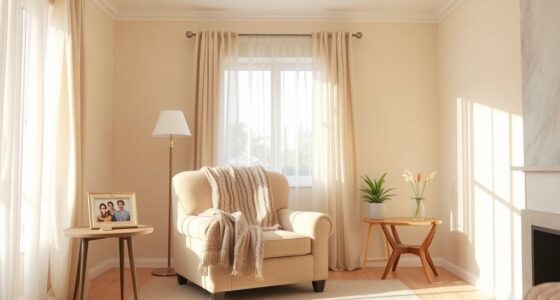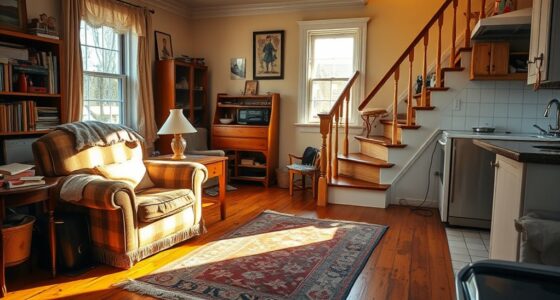
To create a calming space at home for your elderly loved one, focus on soft lighting with warm lamps and fairy lights to foster a gentle atmosphere. Incorporate sensory elements like fragrant plants and textured decorations, and position seating in shaded, safe areas. Use low-voltage lighting for pathways and avoid sharp edges to guarantee safety. These thoughtful touches promote relaxation, emotional stability, and well-being—discover more ways to design a peaceful environment that truly cares.
Key Takeaways
- Incorporate soft, warm lighting like table lamps and fairy lights to create a soothing ambiance and reduce glare.
- Design sensory gardens with fragrant plants, textured elements, and water features to promote relaxation and sensory engagement.
- Place seating in shaded, accessible areas and ensure pathways are safe with non-slip surfaces and appropriate lighting.
- Use non-toxic plants and avoid sharp edges to create a safe, allergen-free environment for elderly residents.
- Combine calming lighting and sensory elements to support mental well-being, reduce stress, and foster a peaceful home environment.

Creating a calming space at home for the elderly can considerably improve their well-being and overall quality of life. One way to achieve this is by thoughtfully incorporating decorative lighting. Soft, warm lights can create a gentle ambiance that reduces stress and encourages relaxation. Instead of harsh overhead fixtures, opt for table lamps, fairy lights, or wall sconces that cast a soothing glow. These lighting choices not only add aesthetic appeal but also help in creating a safe environment by reducing shadows and glare, which can be disorienting or dangerous for older adults. Proper lighting is especially important in areas like bedrooms, reading nooks, or walking paths, where comfort and safety are paramount.
Another effective way to foster a calming atmosphere is by designing sensory gardens. Sensory gardens are tailored outdoor spaces that appeal to the senses through various plants, textures, and natural elements. When creating a sensory garden, choose plants with different textures, colors, and fragrances to stimulate touch, sight, and smell. Incorporate features like fragrant herbs, soft-leaved shrubs, and colorful flowering plants to engage the senses and promote mental well-being. You can also add elements such as water features, wind chimes, or textured stones to enhance sensory experiences. These gardens serve as a peaceful retreat where seniors can unwind, connect with nature, and experience sensory stimulation that can improve mood and cognitive function. Including eye patches as part of relaxation routines can also provide additional comfort and skin benefits during self-care moments.
To maximize the benefits of decorative lighting and sensory gardens, consider their placement carefully. Position garden seating in shaded areas to encourage relaxation and interaction with nature. Use solar-powered or low-voltage lights to illuminate pathways and highlight key features without overwhelming the senses or increasing energy costs. When designing these spaces, keep safety in mind—avoid sharp edges, ensure stable footing, and select non-toxic plants to prevent accidents or allergic reactions.
Creating a calming space isn’t just about aesthetics; it’s about fostering an environment that nurtures the mental and physical health of your loved ones. Incorporate decorative lighting that invites tranquility and choose sensory gardens that stimulate the senses gently and safely. By combining these elements thoughtfully, you can craft a home environment that promotes comfort, reduces anxiety, and encourages a sense of peace and well-being for the elderly. This approach not only enhances their daily experience but also shows your care and dedication to their happiness and health.
Frequently Asked Questions
How Can I Personalize a Calming Space for Different Elderly Needs?
To personalize a calming space for different elderly needs, you should focus on sensory customization and activity preferences. Incorporate calming colors, soft lighting, and soothing sounds tailored to individual sensitivities. Add familiar items or hobbies they enjoy, like books or art supplies, to promote comfort. Regularly ask about their preferences and adjust the environment accordingly, ensuring it remains a peaceful, supportive space that truly meets their unique needs.
What Safety Features Are Essential in a Senior-Friendly Calming Environment?
Think of your calming space as a gentle lighthouse guiding safely through stormy seas. To guarantee safety, you need fall prevention measures like non-slip rugs and sturdy handrails, acting as your guiding beams. Emergency preparedness is like having a reliable radio ready to alert help. These features create a secure environment, so your loved ones can relax peacefully, knowing they’re protected from falls and emergencies.
How Do I Maintain Cleanliness and Hygiene in the Calming Area?
You should establish regular cleaning schedules to keep the space tidy and hygienic. Use effective hygiene products like disinfectants and gentle cleaners to eliminate germs without causing irritation. Make sure to wipe down surfaces daily, especially high-touch areas, and wash fabrics regularly. Keeping the area clean not only promotes good hygiene but also creates a calming environment where your loved one feels safe and comfortable.
What Are Cost-Effective Ways to Create a Soothing Space at Home?
Creating a soothing space at home doesn’t have to break the bank; it’s like turning pennies into gold. You can use affordable decor and DIY solutions to craft a calming environment for your loved one. Focus on soft lighting, cozy textures, and gentle colors. Repurpose items around the house and add plants for tranquility. With a little creativity, you’ll build a peaceful retreat that feels like a warm hug.
How Can I Involve the Elderly in Designing Their Calming Environment?
You can involve the elderly in designing their calming environment by encouraging them to choose art therapy projects they enjoy, like painting or coloring, which promotes relaxation. Incorporate sensory activities like soft lighting, calming scents, or textured fabrics, and ask for their input on these elements. Engaging them in selecting artwork and sensory items guarantees the space reflects their preferences, making it more comforting and personalized.
Conclusion
By transforming your home into a calming sanctuary, you’re offering your loved one more than comfort—you’re giving them peace and reassurance every day. But what if one small change could open a world of tranquility they’ve never experienced? The next step could be closer than you think, waiting to turn your efforts into a truly life-changing space. Are you ready to discover the secret that could make all the difference?