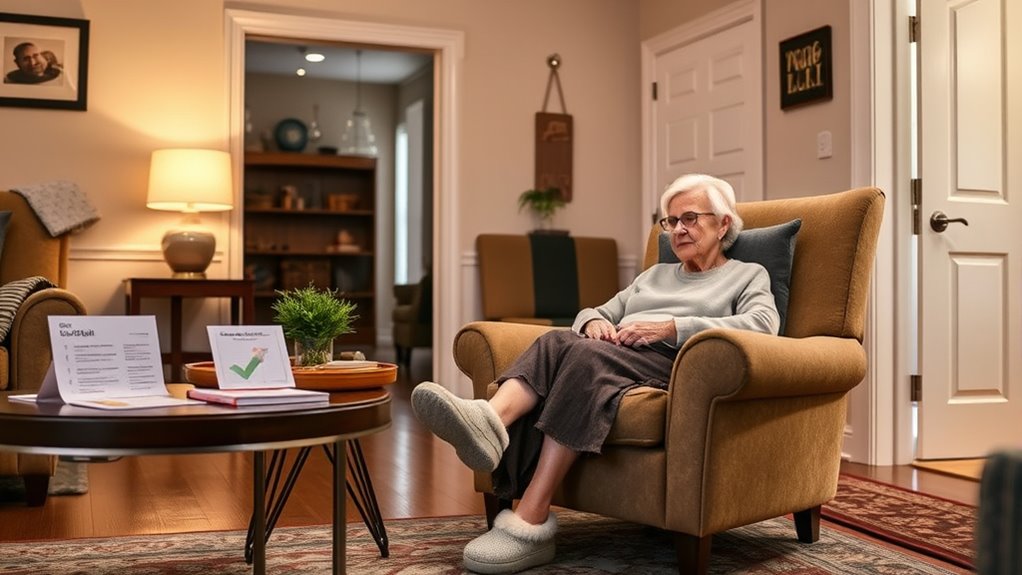

To stay safe and sound at home, start by conducting regular safety checks to identify hazards and keep walkways clear. Install grab bars in bathrooms, ensure good lighting, and keep items within easy reach. Secure loose rugs and cords to prevent falls, and have emergency contacts and devices ready. Taking these small steps creates a safer environment, helping you maintain independence. Continue exploring more tips to boost your home safety and confidence.
Key Takeaways
- Conduct regular home safety assessments and address hazards like loose rugs, clutter, and poor lighting.
- Install grab bars, non-slip mats, and sturdy handrails in bathrooms and on stairs.
- Keep emergency contacts and a phone within easy reach, and prepare for power outages or severe weather.
- Ensure pathways are clear, well-lit, and free of cords to prevent trips and falls.
- Share safety plans with trusted individuals to promote awareness and quick assistance if needed.
Ensuring your home is safe is essential for maintaining independence and preventing accidents. When you’re living alone, it’s especially important to stay prepared for emergencies and focus on fall prevention strategies that keep you secure. By taking proactive steps, you can create a safer environment that reduces risks and gives you peace of mind. Emergency preparedness isn’t just about having a first aid kit—it’s about planning for various scenarios. Keep a list of emergency contacts in an accessible spot, and make sure your phone is within easy reach at all times. Consider installing a medical alert system if you haven’t already; it can be a lifeline if you get injured or feel unwell. Having a plan for power outages, fires, or severe weather is equally *crucial*. Keep flashlights and extra batteries nearby, and know how to turn off utilities if needed. Regularly review your emergency plan so it stays fresh in your mind, and share it with a trusted neighbor or family member if possible. Additionally, understanding home safety assessments can help identify potential hazards you might overlook. When it comes to fall prevention, the focus should be on minimizing hazards and enhancing stability throughout your home. Remove loose rugs or secure them firmly to the floor with double-sided tape or rug pads to prevent tripping. Clear pathways by keeping clutter off walkways, and make sure all cords and wires are out of the way to avoid tripping hazards. Installing grab bars in the bathroom, especially near the toilet and shower, provides extra support where slips are most common. Non-slip mats inside and outside the shower or tub can make a significant difference in preventing falls. Adequate lighting is *crucial*—use bright, energy-efficient bulbs and consider motion-activated lights in hallways and stairways. If you have stairs, ensure they are well-lit, with sturdy handrails on both sides. Always keep frequently used items within easy reach to avoid unnecessary stretching or balancing on tiptoes. Regularly assess your home for potential hazards, and don’t hesitate to ask a trusted friend or family member for an extra set of eyes. Taking these steps toward emergency preparedness and fall prevention helps you stay independent longer and reduces the risk of injury. Prioritizing safety isn’t about living in fear; it’s about empowering yourself to live confidently and comfortably. With a few simple adjustments and a clear plan, you can make your home a safer place where you feel secure every day. Remember, small changes can have a big impact on your safety, allowing you to enjoy your independence without worry.
Frequently Asked Questions
How Often Should I Update My Home Safety Checklist?
You should update your home safety checklist at least every six months, or sooner if you experience changes like new fall prevention needs or emergency contacts. Regular updates guarantee your environment remains safe and emergency info stays current. Check for hazards, test smoke alarms, and review your emergency contacts frequently to stay prepared and prevent accidents. Staying proactive keeps your home secure and supports your independence.
What Are Affordable Home Safety Modifications for Seniors?
Affordable home safety modifications for seniors include installing grab bars, securing rugs, and adding bright, motion-activated lighting for falls prevention. You can enhance home security with simple solutions like doorbell cameras and sturdy door locks. These budget-friendly fixes make your space safer, more secure, and easier to navigate, helping you maintain independence while preventing accidents and intruders. Small changes make a significant, safe, and sound difference.
How Can I Involve Family in Home Safety Planning?
You can involve your family in home safety planning by having open family communication, discussing your needs, and sharing safety concerns. Encourage everyone to participate in safety education, such as identifying hazards and learning emergency procedures. Schedule regular safety check-ins and ask family members to help with modifications or emergency preparedness. This teamwork guarantees everyone stays informed, engaged, and supportive, making your home safer and strengthening your family bond.
Are There Technological Tools to Enhance Safety?
You might be surprised to find that smart sensors and wearable devices can markedly enhance your safety. Smart sensors detect falls, monitor temperature, or alert you to doors opening unexpectedly, while wearable devices track your health and send emergency alerts if needed. These tools work seamlessly, offering peace of mind and quick assistance when you need it most. Embracing technology helps you stay independent and safe at home.
What Resources Are Available for Emergency Preparedness?
You can access emergency preparedness resources like emergency kits and community programs designed for seniors. Building a well-stocked emergency kit with essentials such as water, medications, and first aid supplies guarantees you’re ready for any crisis. Additionally, community programs often offer training and support to help you develop personalized emergency plans. Stay proactive by engaging with local organizations to strengthen your preparedness and feel confident in handling emergencies.
Conclusion
By taking these simple steps, you create a safe haven where your home feels warm and secure, like a comforting hug around you. Imagine walking through each room, knowing every corner is prepared to protect you—lights bright enough to guide your way, secure rugs underfoot, and easy-to-reach essentials nearby. With these precautions in place, you can relax and enjoy your space, knowing it’s a safe sanctuary built just for you.