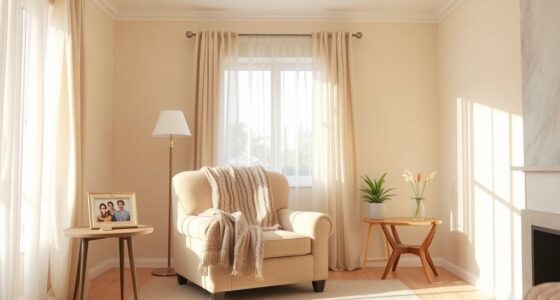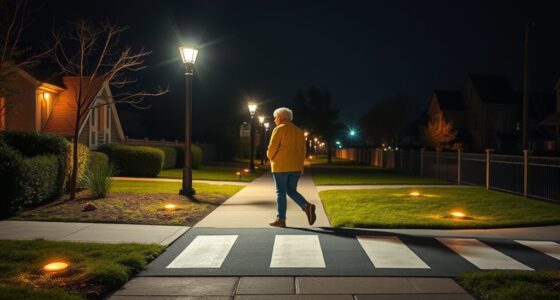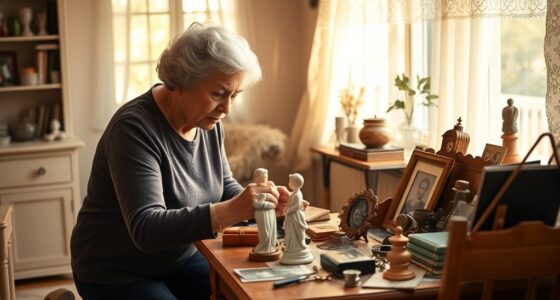
To create interiors that reduce senior anxiety, incorporate natural elements like plants, large windows for natural light, and natural textures such as wood or stone to foster calmness. Use soft, muted colors like blues and greens, which are known for their soothing effects. Also, include safety features like easy-to-use controls and clutter-free spaces to enhance security. By blending these calming design elements with thoughtful safety measures, you’ll craft a supportive environment that promotes mental well-being—discover more strategies ahead.
Key Takeaways
- Incorporate biophilic elements like natural light, plants, and textures to create calming, familiar environments.
- Use soft, muted colors such as blues and greens to promote relaxation and reduce overstimulation.
- Strategically position natural views and greenery near seating areas to foster tranquility and distraction from anxiety.
- Integrate safety features that enhance security, such as auto shut-off devices, to build confidence and ease stress.
- Design inviting, clutter-free spaces with natural materials and calming colors to support emotional well-being and mental stability.

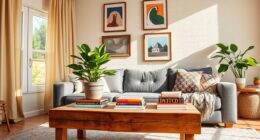
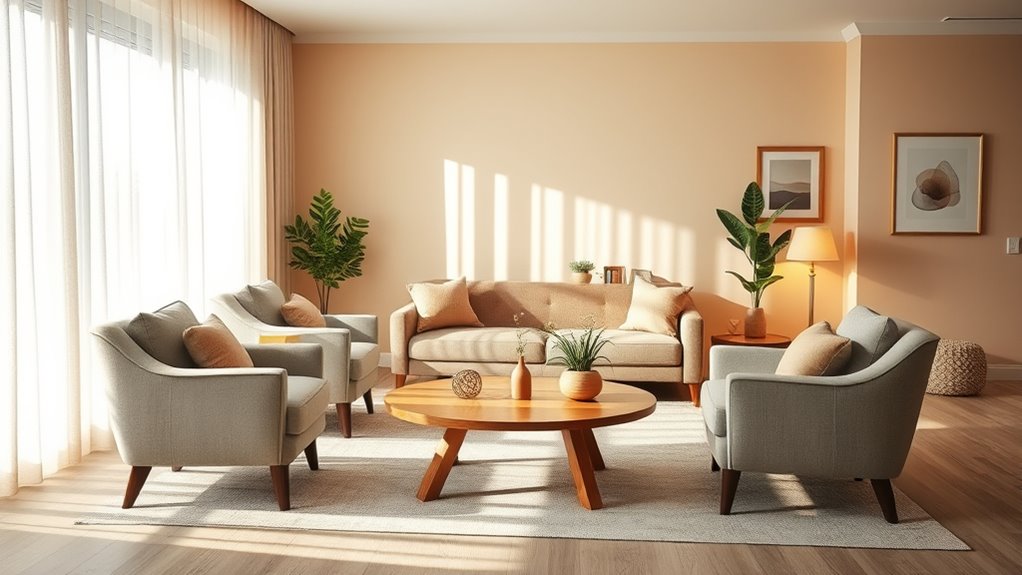
Creating interiors that reduce senior anxiety involves thoughtful design choices that promote comfort and security. When you focus on incorporating biophilic design, you bring elements of nature indoors, which can have a calming effect on seniors. Imagine large windows that flood the space with natural light, or plant life placed strategically around the room. These features help seniors feel more connected to the outdoors, reducing feelings of confinement and promoting relaxation. You can also include natural textures like wood or stone, which add warmth and a sense of grounding to the environment. The goal is to create a space that feels familiar and soothing, helping to ease anxiety and foster a sense of well-being.
Color psychology plays a crucial role in designing interiors that promote mental calmness. By choosing colors thoughtfully, you can influence mood and emotional response. Soft, muted tones like blues and greens are known for their calming properties, helping to lower stress levels. Light pastel shades can create a serene atmosphere that feels welcoming and safe. Conversely, you might want to avoid overly bright or intense colors, which can be overstimulating and increase anxiety. Incorporating these hues into walls, furnishings, or accents helps establish a peaceful environment where seniors feel at ease. Combining color psychology with biophilic design creates a harmonious space that supports mental health. Additionally, understanding the impact of safety features like auto shut-off in heated mattress pads can contribute to a sense of security for seniors when they use such devices.
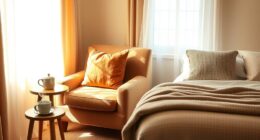
You should also consider the placement of colors and natural elements to maximize their calming effects. For example, a cozy corner with a soft blue armchair near a window with a view of greenery encourages relaxation. Adding plants not only enhances biophilic design but also provides gentle visual cues of nature, which can help distract from anxious thoughts. Keep clutter to a minimum, as disorganization can heighten stress. Instead, choose simple, clean lines and natural materials that evoke a sense of order and stability. Using familiar, comforting colors and natural patterns reassures seniors and helps reduce feelings of unease.
Finally, creating a space that reduces senior anxiety requires intentionality. When you combine biophilic elements with the principles of color psychology, you craft an environment that nurtures emotional health. Every choice—from the placement of plants to the hues on the wall—should be aimed at fostering comfort and security. This approach not only makes the space more inviting but also supports seniors’ mental clarity and emotional stability. In doing so, you help them feel more at home, confident, and less overwhelmed, making their daily routines more manageable and their overall quality of life considerably better.
Frequently Asked Questions
How Can Lighting Influence Senior Mental Health in Interior Design?
Lighting greatly influences senior mental health by creating calming, well-lit environments. You can incorporate adaptive technology, like adjustable lighting, to suit individual needs, reducing anxiety. Using acoustic treatments alongside proper lighting minimizes noise distractions, promoting relaxation. Bright, natural light during the day helps regulate sleep patterns and mood, while softer, dimmable lights in the evening encourage restful sleep. These strategies make interiors more comforting and supportive for seniors’ mental well-being.
What Materials Are Best for Sensory-Friendly Senior Environments?
You should choose textured fabrics and sound-absorbing panels for sensory-friendly senior environments. Studies show that textured fabrics can improve tactile stimulation and comfort, reducing anxiety. Sound-absorbing panels minimize noise distraction, calming the space. These materials create a soothing atmosphere, helping seniors feel more secure and relaxed. Incorporating them into design can markedly enhance mental well-being and sensory comfort for seniors.
How Do Color Choices Impact Anxiety Levels in Seniors?
Color choices greatly impact senior anxiety levels through color psychology. You should opt for calming palettes like soft blues, gentle greens, and warm neutrals, which promote relaxation and reduce stress. These soothing colors help seniors feel more at ease and secure in their environment. By carefully selecting these hues, you create a tranquil space that eases anxiety and enhances overall well-being, making the environment more comfortable and supportive.
What Role Does Furniture Layout Play in Reducing Senior Stress?
You can reduce senior stress by carefully planning furniture layout, ensuring ergonomic furniture is accessible and comfortable. Arrange pieces to promote smooth spatial circulation, avoiding clutter and obstacles that cause frustration or falls. Clear pathways enable easy movement, decreasing anxiety. Position furniture to foster social interaction and a sense of safety. Thoughtful layout creates an inviting environment where seniors feel relaxed and in control, minimizing stress and enhancing overall well-being.
Are There Specific Design Elements Proven to Improve Senior Mood?
You can boost senior mood by integrating garden elements and sound masking into your design. Adding natural greenery and outdoor views creates a calming environment, reducing anxiety. Incorporating sound masking helps drown out loud or stressful noises, fostering a peaceful atmosphere. These design elements work together to create a more comfortable, uplifting space that promotes mental well-being and enhances overall mood for seniors.
Conclusion
By creating calming, accessible interiors, you can considerably ease seniors’ anxiety and improve their quality of life. Some might think design changes are costly or complicated, but simple touches like soft lighting and clutter-free spaces make a real difference. Remember, thoughtful design isn’t just about aesthetics—it’s about making seniors feel safe, comfortable, and at home. With small efforts, you can create environments that truly support mental well-being and foster peace of mind.