
To set up a welcoming room for a caregiver, focus on creating a cozy, private space with a comfortable mattress, supportive pillows, and personalized touches like photos or favorite items. Guarantee good lighting, ventilation, and temperature control for comfort. Add a lockable storage area for privacy, soundproofing elements for peace, and organize the space to reduce clutter. Thoughtful touches and a well-designed environment help caregivers relax and recharge—discover more ways to make it truly welcoming.

Get furniture and decor delivered free with Prime
- Fast, free delivery on millions of items
- Prime Video, Amazon Music and more included
- Member-only deals all year
Key Takeaways
- Choose a supportive, comfortable mattress and pillows to ensure restful sleep for the caregiver.
- Incorporate privacy features like a lockable door and soundproofing for a secure, quiet environment.
- Install adjustable lighting and blackout curtains to control light and create a calming atmosphere.
- Personalize the space with photos, cozy blankets, and organized storage to foster a homely feel.
- Maintain cleanliness and use durable furniture to promote comfort, safety, and overall well-being.
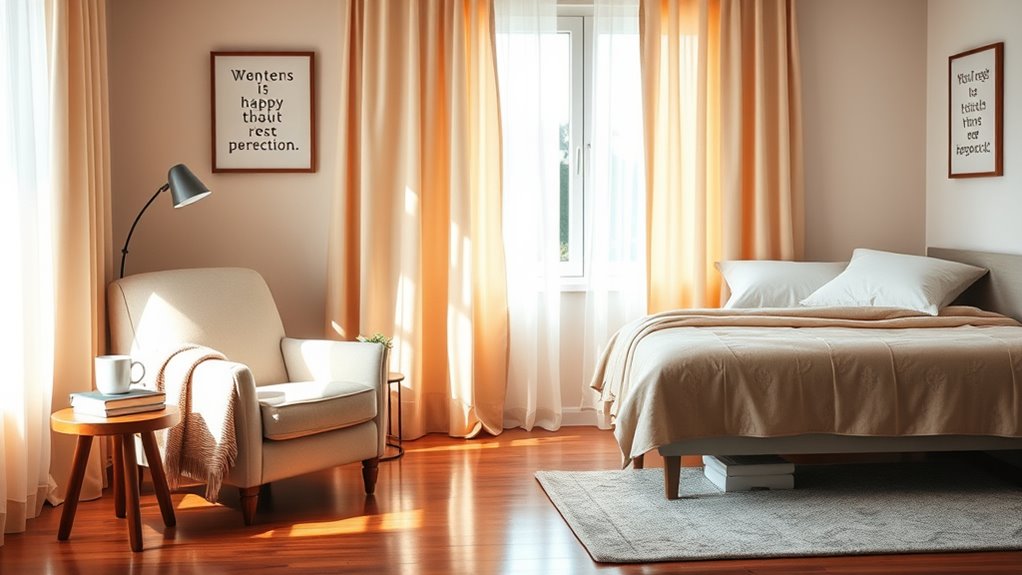
Creating a dedicated room for a caregiver shows your appreciation and guarantees they have a comfortable, functional space to rest and recharge. When designing this space, paying close attention to bed comfort and privacy needs is essential. You want your caregiver to feel valued and relaxed during their downtime, which means selecting a mattress that offers proper support and comfort. Consider a high-quality mattress that suits their preferences—whether they prefer a firm surface or something softer—and add supportive pillows to enhance their sleep quality. A comfortable bed isn’t just about physical rest; it’s about creating an environment where your caregiver can truly unwind after long hours of providing care.
Privacy needs are equally important. The room should have a door that can be closed to provide a sense of security and separation from other household activities. You might also consider adding soundproofing measures—such as thick curtains or rugs—to minimize noise and disruptions. Providing a lockable closet or a designated storage space allows your caregiver to keep personal belongings secure and organized, further respecting their privacy. It’s important to communicate openly about boundaries and expectations, so they feel comfortable retreating into their space without feeling exposed or intruded upon.
Lighting plays a pivotal role in creating a restful environment. Install adjustable lighting options, such as dimmable lamps or blackout curtains, to help regulate their sleep cycle and guarantee they can rest undisturbed. Good ventilation and temperature control also contribute to overall comfort, making the room a welcoming retreat. Consider adding personal touches, like a small desk or a reading nook, to make the space more inviting and tailored to their preferences.
Incorporating personal items—photos, favorite books, or a cozy blanket—can make the room feel more homely and less like a temporary space. Remember, the goal is to create an environment that promotes relaxation, respects their privacy, and meets their comfort needs. Invest in quality furniture that’s supportive yet functional, and organize the space thoughtfully to avoid clutter. When your caregiver feels comfortable and private in their room, they’ll be better equipped to provide compassionate care, knowing they have a sanctuary to call their own. This thoughtful setup not only enhances their well-being but also reflects your genuine appreciation for their hard work and dedication. Moreover, understanding the importance of attention in creating an ideal environment can significantly enhance the space’s effectiveness.
comfortable memory foam mattress for guest room
As an affiliate, we earn on qualifying purchases.
As an affiliate, we earn on qualifying purchases.
Frequently Asked Questions
How Can I Ensure Privacy for the Caregiver?
To guarantee privacy for the caregiver, you should focus on privacy enhancement by installing soundproofing methods like acoustic panels or weatherstripping on doors. Use curtains or room dividers to create a private space and consider a lock on the door for added security. Clear communication about boundaries helps maintain respect and privacy, making the caregiver feel comfortable and secure in their environment.
What Are Cost-Effective Ways to Furnish the Room?
Did you know that budget furniture can save you up to 50% compared to retail prices? To furnish the room affordably, focus on essential pieces like a comfortable bed and a small desk. Use DIY decor projects such as repurposing old items or creating wall art to add personality without extra cost. These methods help you create a cozy, functional space while keeping expenses low.
How Much Space Is Ideal for a Caregiver’s Room?
You should aim for a room size of at least 70 to 100 square feet to guarantee comfort and functionality. This allows enough space for essential furniture and storage solutions without feeling cramped. Prioritize smart storage options like shelves or under-bed bins to maximize space. Keep the layout open and organized, making it easier for your caregiver to move around comfortably and efficiently while providing care.
Are There Specific Safety Features to Include?
You should include safety features like emergency features and safety alarms, as falls are a leading cause of injury among caregivers. Approximately 1 in 4 falls happen at home, emphasizing the need for quick alert systems. Install safety alarms on doors and windows, and make certain easy access to emergency features like call buttons. These measures help you feel secure and prepared, reducing risks and promoting a safer environment for your caregiver.
How Can I Personalize the Space Without Clutter?
To personalize the space without clutter, focus on thoughtful decorating tips and organizational ideas. Choose a few meaningful items like photos or artwork that reflect your style and create a cozy atmosphere. Use storage solutions like baskets or shelves to keep belongings tidy and accessible. Incorporate soft lighting and comfortable textiles to make the room inviting. This way, you add a personal touch while maintaining a clean, functional environment.
Conclusion
By creating a cozy space, you invite comfort, support, and peace into your home. You provide a refuge where rest renews energy, where organization eases daily tasks, and where warmth fosters connection. When you set up a caregiver’s room thoughtfully, you nurture wellbeing, inspire confidence, and build a sanctuary that welcomes not just your caregiver, but also your loved ones. In this space, care flourishes, comfort reigns, and harmony thrives.
Halloween Picks
halloween
As an affiliate, we earn on qualifying purchases.