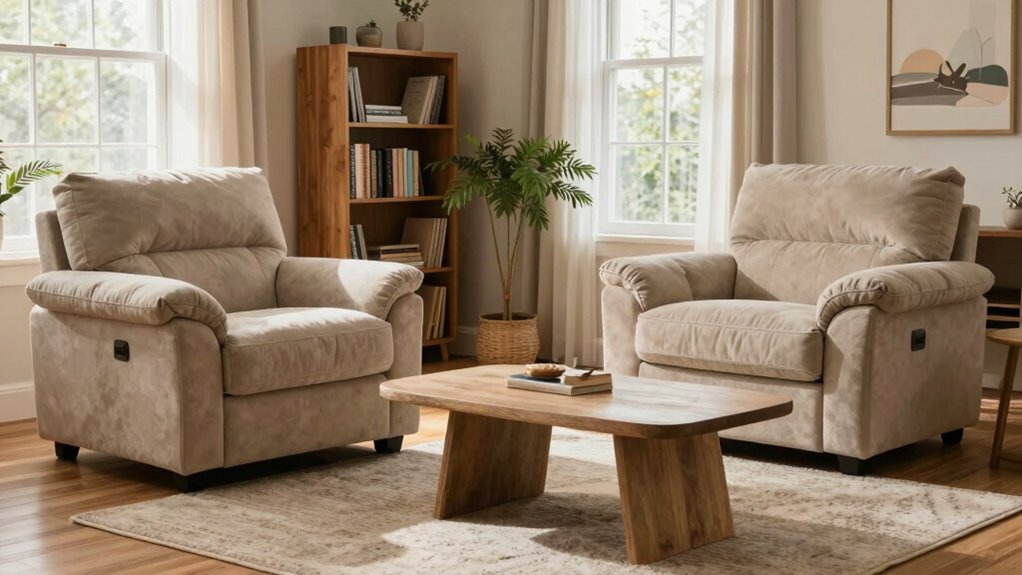

To make shared spaces more comfortable for your older family members, focus on safety, accessibility, and coziness. Incorporate ergonomic furniture with supportive features and guarantee pathways are clear and clutter-free. Use good lighting, including motion-activated lights, to prevent falls. Add safety features like handrails, non-slip mats, and easy-to-reach items. Creating a warm, accessible environment promotes independence and comfort. Keep exploring practical ways to enhance your loved ones’ space and improve daily living.
Key Takeaways
- Incorporate ergonomic furniture with supportive features like lumbar support and adjustable heights for comfort and safety.
- Ensure proper lighting with bright, well-placed, and motion-activated lights to improve visibility and reduce fall risks.
- Keep pathways clear of clutter and add non-slip rugs and handrails to enhance safety and ease of navigation.
- Utilize assistive technology such as voice-activated devices to promote independence and ease daily tasks.
- Design shared spaces with accessible features and cozy, welcoming elements to encourage activity and emotional well-being.

As families seek ways to support their aging loved ones, shared living spaces have become an increasingly popular solution. Making these spaces comfortable and accessible isn’t just about rearranging furniture; it’s about creating an environment that promotes independence and safety. Incorporating assistive technology can markedly enhance daily living, offering your loved ones tools that make mobility, communication, and tasks easier. For example, installing voice-activated devices or smart home systems allows them to control lights, thermostats, or even ask for help without physical effort. These innovations reduce frustration and foster a sense of autonomy, which is essential for their emotional well-being.
Assistive technology like voice-activated devices promotes independence and enhances daily comfort for aging loved ones.
Equally important is selecting ergonomic furniture designed to support comfort and reduce strain. Think about chairs with proper lumbar support, adjustable height tables, and beds that accommodate their specific needs. These pieces help minimize pain and prevent injuries caused by awkward postures or insufficient support. When choosing furniture, prioritize items that are easy to get in and out of, reducing the risk of falls. You might also consider furniture with built-in features such as armrests or non-slip surfaces, which provide additional stability and safety. By integrating ergonomic furniture into shared spaces, you create an environment that encourages activity and comfort without sacrificing safety. Additionally, accessible design principles can guide you in creating spaces that are easier to navigate and more accommodating for older family members. Incorporating smart technology can further enhance their independence by enabling remote control of various home systems.
Lighting plays a pivotal role in making the space more welcoming and secure. Bright, well-placed lighting reduces shadows and glare, helping your loved ones see clearly and navigate safely. Motion-activated lights can be particularly helpful during nighttime hours, minimizing the risk of trips and falls. Similarly, non-slip rugs and sturdy handrails along hallways and staircases add layers of safety without making the space feel clinical or uninviting. Always keep pathways clear of clutter to prevent accidental trips, and ensure that frequently used items are within easy reach to avoid unnecessary stretching or bending. Additionally, understanding the importance of home safety features can help you create a more secure environment for your loved ones. Incorporating lighting design that considers their specific needs can further improve both safety and comfort.
ergonomic supportive chairs for seniors
As an affiliate, we earn on qualifying purchases.
As an affiliate, we earn on qualifying purchases.
Frequently Asked Questions
How Can I Personalize Shared Spaces for Different Family Members?
You can personalize shared spaces by adding personalized decor that reflects each family member’s tastes and interests, making everyone feel more at home. Incorporate customized lighting options for different needs—brighter for reading, softer for relaxing. Encourage family members to contribute their favorite items or photos, creating a welcoming environment. This approach fosters a sense of ownership and comfort, making shared spaces more inclusive and enjoyable for everyone.
What Are Affordable Ways to Improve Comfort in Shared Areas?
Imagine transforming your shared space into a cozy retreat without breaking the bank. You can do this by adding decorative lighting that softens the atmosphere and makes everything feel warmer. Pair it with comfortable seating—think plush cushions or supportive chairs—that invites relaxation. These simple, affordable updates create an inviting environment, making your space more enjoyable for everyone, especially your older family members, without stretching your budget.
How Do I Address Privacy Concerns in Shared Family Spaces?
To address privacy concerns in shared family spaces, establish clear privacy boundaries by designating personal zones. Use room dividers, curtains, or furniture placement to create visual separation, giving each person a sense of personal space. Communicate openly with your family about respecting these boundaries, and encourage everyone to maintain boundaries consistently. This approach fosters respect, comfort, and a sense of security for older family members in shared areas.
What Safety Features Are Essential in Shared Living Areas?
You should prioritize safety features like clear furniture arrangements that prevent tripping hazards and guarantee easy navigation. Incorporate lighting adjustments, such as bright, adjustable lights, to improve visibility and reduce accidents. Install grab bars in key areas like bathrooms and secure rugs to prevent slips. These measures create a safer environment, making shared living areas more comfortable and accessible for your older family members.
How Can I Encourage Family Members to Keep Shared Spaces Tidy?
You can turn tidiness into a family game—like “Who Can Clear the Most Plates?”—to make cleaning fun. Add decorative plants and adjustable lighting to make the space inviting, encouraging everyone to keep it neat. Offer small rewards or praise for tidy spots, and set simple routines. When the environment feels cozy and appealing, your family might just want to maintain it without feeling nagged.
Conclusion
Creating a comfortable shared space for older family members shows you care and fosters stronger bonds. Focus on safety, accessibility, and cozy touches that make them feel at home. Remember, a little effort now can turn your living room into a timeless haven—like a good old record player—where everyone feels safe, loved, and relaxed. So, go ahead and make those tweaks; your family’s comfort is worth every bit of the effort!