To prevent falls, choose flooring with good slip resistance like textured vinyl, rubber, or treated tiles. Avoid smooth, glossy surfaces in moisture-prone areas, and use mats or rugs with non-slip backing in high-traffic zones. guarantee surfaces are easily dryable, and consider adding grab bars for extra support. Proper maintenance and moisture management are key. Keep these tips in mind, and you’ll discover more ways to enhance safety with the right flooring choices.
Key Takeaways
- Choose textured vinyl, rubber, or treated tiles for enhanced slip resistance in high-risk areas.
- Use waterproof flooring materials and quick-drying surfaces to prevent moisture buildup.
- Incorporate non-slip mats and rugs with secure backing in wet or high-traffic zones.
- Select flooring with a slight textured pattern, avoiding glossy or overly smooth finishes.
- Install supportive fixtures like grab bars and ensure proper maintenance to sustain safety over time.

Falls are a common hazard in many homes and public spaces, especially for the elderly or those with mobility issues. Choosing the right flooring can considerably reduce the risk of accidents, and one of the most important factors is slip resistance. When you pick flooring with good slip resistance, you’re providing a safer surface that minimizes the chances of slipping, even when the floor is wet or slick. Materials like textured vinyl, rubber, or specially treated tiles are excellent options because they offer better grip underfoot. Smooth, polished surfaces might look appealing, but they tend to be more slippery, especially when moisture is present. So, avoid glossy finishes in areas prone to spills or water exposure.
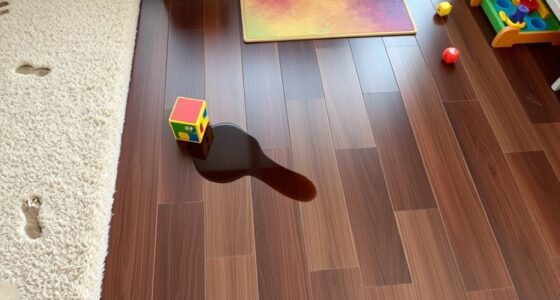
Moisture control plays a critical role in preventing falls as well. Excess moisture increases the likelihood of slips, so choosing flooring that resists water absorption or can be easily dried is essential. For instance, waterproof vinyl or rubber flooring not only resists water but also maintains consistent slip resistance, making them ideal for kitchens, bathrooms, or entryways. If you’re considering hardwood or laminate, look for options with moisture-resistant coatings or underlays that prevent water from seeping in, thereby maintaining a safer surface. Regular maintenance is essential too; promptly cleaning up spills and dampness can make a considerable difference. Using mats or rugs with non-slip backing in high-traffic or wet areas further enhances safety, especially in homes with seniors or children. Additionally, durability considerations are important to ensure your flooring remains slip-resistant over time despite wear and tear.
In addition to slip resistance and moisture control, think about the overall texture and surface pattern of your flooring. Slightly textured surfaces help increase traction without being uncomfortable to walk on. Avoid overly smooth or glossy finishes in areas where water might accumulate. The ideal flooring combines slip resistance with effective moisture management, ensuring that even if the floor gets wet, it remains safe to walk on. You might also consider installing grab bars or handrails in vulnerable areas to provide extra support, but the foundation of safety still starts with choosing the right flooring.
Frequently Asked Questions
Are There Specific Flooring Types Recommended for Outdoor Spaces?
For outdoor spaces, you should choose flooring with excellent outdoor durability and weather resistance. Options like stamped concrete, natural stone, or porcelain tiles are ideal because they withstand rain, sun, and temperature changes. These materials provide stability and reduce slipping hazards, ensuring safety. Make sure the surface is textured or treated with anti-slip coatings to enhance grip, giving you peace of mind in any weather condition.
How Often Should I Replace My Flooring to Maintain Safety?
You should replace your flooring based on its lifespan and your replacement schedule, not just when it looks worn out. Typically, durable flooring lasts 10-20 years, but high-traffic areas may need replacement sooner. Ironically, waiting too long can compromise safety, increasing fall risk. Regular inspections help determine when to upgrade, ensuring your floors stay slip-resistant and safe for years to come. Don’t delay—your safety depends on it!
Can Rugs or Mats Improve Slip Resistance on Smooth Floors?
Yes, adding rugs or mats can improve slip resistance on smooth floors. Rug enhancement with non-slip pads helps anchor the rug, preventing slips. Mat effectiveness depends on its material and grip, so choose those with textured, slip-resistant backing. Regularly check and replace worn mats or rugs to maintain safety, especially in high-traffic or wet areas. Properly used, these additions markedly reduce the risk of falls.
Are There Cost-Effective Solutions for Non-Slip Flooring?
Yes, there are cost-effective options for non-slip flooring. You can choose budget-friendly solutions like adhesive non-slip tapes, rubber mats, or textured vinyl flooring, which are easy to install and maintain. These options help improve safety without breaking the bank. By opting for these affordable solutions, you guarantee better grip and reduce fall risks, making your space safer while staying within your budget.
What Maintenance Is Required to Keep Flooring Slip-Resistant?
Think of your flooring as a trusted partner in safety—you need to nurture it. Regular cleaning protocols remove dirt and spills that can cause slips, while reapplying anti-slip coatings maintains grip. Keep an eye on wear and tear, and promptly address any damage. By consistently caring for your flooring, you guarantee it stays slip-resistant and safe, turning everyday maintenance into a simple act of prevention.
Conclusion
Choosing the right flooring could be the game-changer in your safety game—think of it as your personal superhero cape against falls! With slip-resistant options, you’ll practically have superpowers to stay upright no matter what. Imagine never worrying about slips again, even on the most treacherous tiles or slick surfaces. So don’t just walk—glide confidently through life, knowing your floors are your ultimate fall-fighting allies. Stay safe, stay unstoppable!