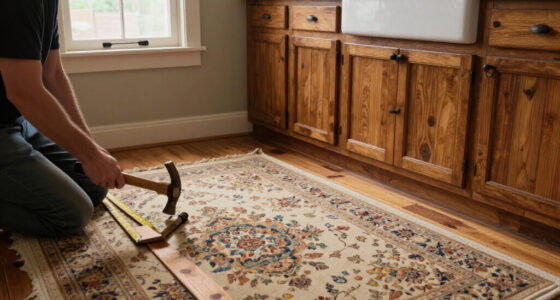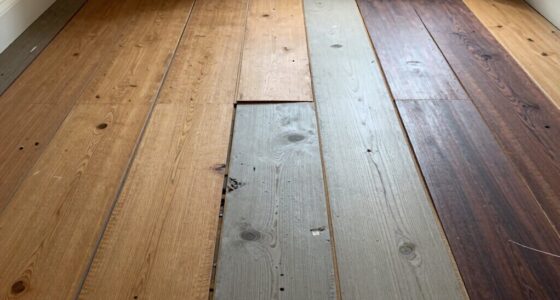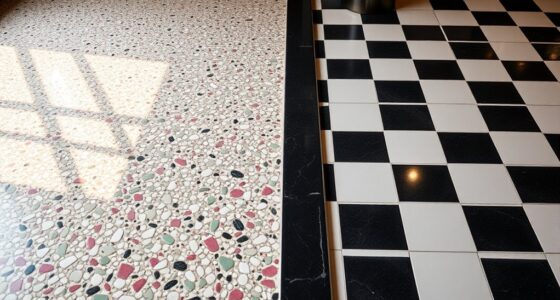
Sustainable flooring options like cork, bamboo, and reclaimed wood help you reduce environmental impact while adding style and durability to your home. Cork, harvested without harming trees, offers excellent insulation and natural texture, while bamboo grows quickly and is highly renewable. Reclaimed wood reduces waste and gives character to your space. Materials like linoleum also provide biodegradability and durability. To discover how these choices fit into eco-friendly home upgrades, continue exploring your options for greener flooring solutions.

Get furniture and decor delivered free — and shop member deals
- Fast, free delivery on millions of items
- Access to Prime Big Deal Days deals on October 6–7
- Prime Video, Amazon Music and more included
Key Takeaways
- Sustainable flooring options include cork, bamboo, reclaimed wood, and linoleum, which prioritize eco-friendly sourcing and manufacturing.
- Cork flooring is harvested from bark without harming trees, offering excellent insulation and natural aesthetics.
- Bamboo is a rapidly renewable resource, growing fully in 5-7 years, and offers durable, modern flooring solutions.
- Reclaimed wood reuses old timber, reducing demand for new lumber and adding character to interiors.
- Choosing eco-friendly floors minimizes environmental impact, supports sustainability, and enhances home style and health.
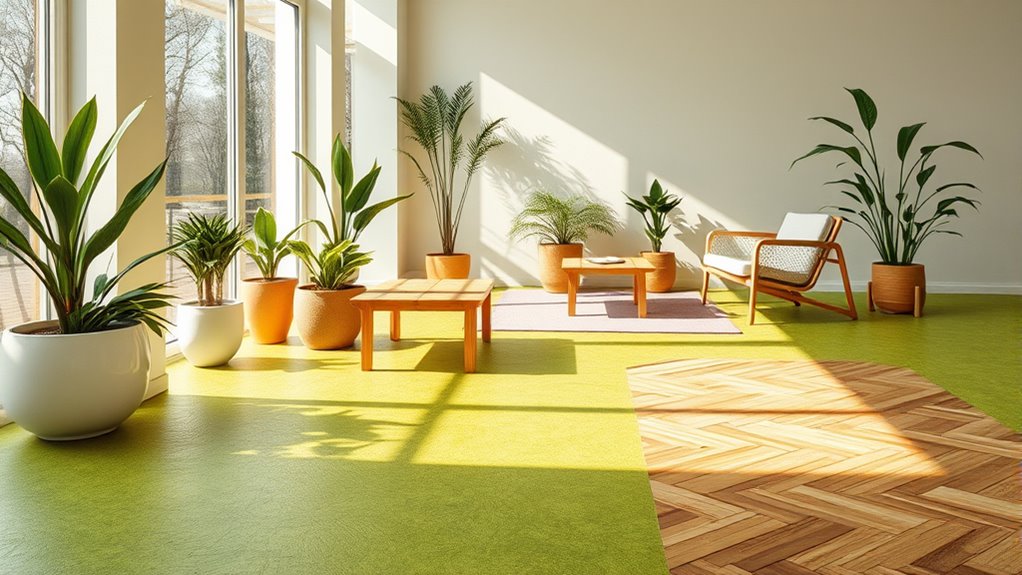
Are you looking for flooring options that are both stylish and eco-friendly? If so, exploring sustainable flooring materials can help you make a positive impact on the environment while enhancing your home’s aesthetic. Many eco-conscious options are available today, focusing on recyclable options and renewable resources that reduce waste and lessen your carbon footprint. These materials are designed to be durable, stylish, and environmentally responsible, making them an excellent choice for your next renovation project.
Explore stylish, eco-friendly flooring options that reduce waste and your carbon footprint for a sustainable home renovation.
One of the most popular sustainable flooring choices is cork. Harvested from the bark of cork oak trees, cork is a renewable resource because the trees aren’t cut down during harvesting. Instead, the bark regenerates naturally, allowing for repeated harvests every nine years. Cork flooring is not only renewable but also biodegradable and recyclable, which aligns perfectly with eco-friendly principles. It offers excellent insulation, soundproofing, and comfort underfoot, making it a practical yet stylish option for many homes. Plus, cork’s natural aesthetic adds warmth and texture, creating a cozy atmosphere.
Bamboo flooring is another highly sustainable option that you should consider. Bamboo is a grass, not a wood, which means it grows incredibly fast—often reaching maturity within five to seven years. This rapid growth rate makes bamboo a renewable resource that can be replenished quickly, unlike traditional hardwoods that can take decades to mature. Bamboo flooring is durable, easy to maintain, and has a modern look that complements contemporary interiors. Since bamboo can be processed into planks using eco-friendly manufacturing methods, it’s a popular choice among environmentally conscious homeowners. Additionally, bamboo is often recyclable, further emphasizing its sustainability.
In addition to cork and bamboo, there are other eco-friendly flooring options that focus on recyclability and sustainable sourcing. Reclaimed wood, for example, involves repurposing old timber from barns, factories, or demolished buildings. This reduces the demand for new lumber, conserving forests and decreasing waste. Reclaimed wood adds character and history to your floors while supporting sustainability. Linoleum, made from natural materials like linseed oil, cork dust, and wood flour, is another recyclable option. It’s biodegradable and known for its durability, making it an excellent choice for high-traffic areas.
Choosing sustainable flooring materials means understanding the importance of recyclable options and renewable resources. These materials help minimize environmental impact while offering stylish, durable, and healthy solutions for your home. By opting for cork, bamboo, reclaimed wood, or linoleum, you’re making a conscious decision to support eco-friendly practices and reduce waste. Additionally, selecting recyclable flooring options can contribute significantly to reducing landfill waste and conserving resources. In turn, you’ll enjoy beautiful floors that not only look good but also contribute to a healthier planet.
As an affiliate, we earn on qualifying purchases.
Frequently Asked Questions
How Long Do Sustainable Flooring Materials Typically Last?
Sustainable flooring materials usually last quite a while, but durability expectations can vary. For example, bamboo floors often have a lifespan of 20-25 years, while cork can last around 10-25 years with proper care. You’ll find that hardwoods tend to have a longer lifespan compared to other eco-friendly options. Overall, compare the lifespan of each material to your needs, and maintain it well to maximize its durability.
Are Sustainable Floors More Expensive Than Traditional Options?
Sure, sustainable floors are more expensive than traditional options—if you’re counting environmental impact as a cost. The cost comparison often shows higher upfront prices, but you save in the long run through durability and eco-friendliness. Plus, you reduce your carbon footprint. So, while the initial investment might sting, you get a stylish, eco-conscious floor that’s better for the planet—and your conscience. Isn’t that worth a little extra?
Can Sustainable Flooring Be Installed Over Existing Surfaces?
You can install sustainable flooring over existing surfaces, but be aware of potential installation challenges. Proper surface preparation is vital to guarantee a smooth, durable layer. You might need to remove or repair uneven spots or old flooring to prevent issues later. Always check manufacturer guidelines, as some eco-friendly options like cork or bamboo may require specific prep steps. With careful planning, you can successfully upgrade without removing your current flooring.
What Maintenance Do Eco-Friendly Floors Require?
You should follow specific cleaning routines to maintain your eco-friendly floors, which helps preserve their long-term durability. Use gentle, pH-neutral cleaners and avoid harsh chemicals to prevent damage. Regular sweeping or vacuuming keeps dirt away, while occasional damp mopping restores shine. By caring for your sustainable floors properly, you extend their lifespan, ensuring they stay beautiful and functional for years to come.
Are There Any Health Concerns With Natural Flooring Materials?
Oh, the irony! Natural flooring sounds perfect, right? But beware—some materials like certain cork or bamboo floors can emit chemicals, affecting indoor air quality. While they’re eco-friendly, they might still release low levels of chemical emissions, raising concerns about allergies or respiratory issues. Always guarantee proper installation and choose low-emission options. You get the beauty of natural materials without risking your health—talk about a win-win!
Conclusion
So, now that you’ve got the scoop on cork, bamboo, and other eco-friendly options, it’s clear you’re practically a flooring guru. Who knew saving the planet could be so stylish and easy? Just remember, choosing sustainable flooring isn’t just good for Mother Earth—it’s also a fantastic way to impress your friends with your eco-chic taste. So go ahead, make that switch. After all, a greener floor is a step in the right direction—literally.
Fall Picks
fall essentials
As an affiliate, we earn on qualifying purchases.