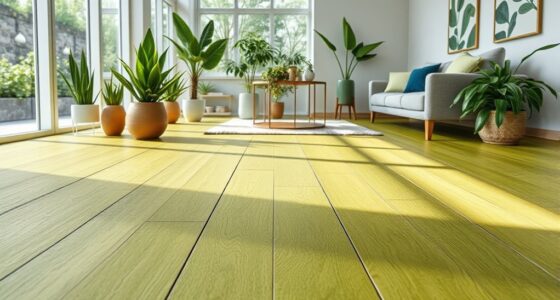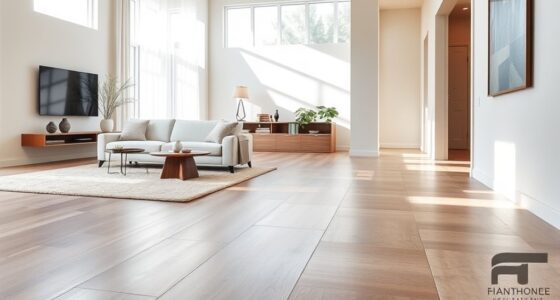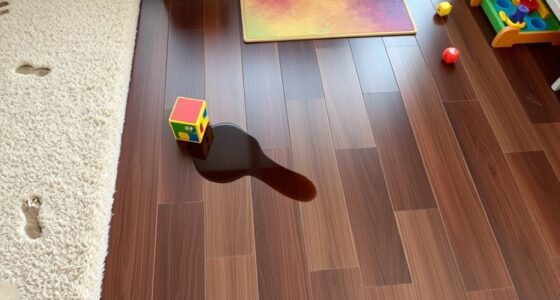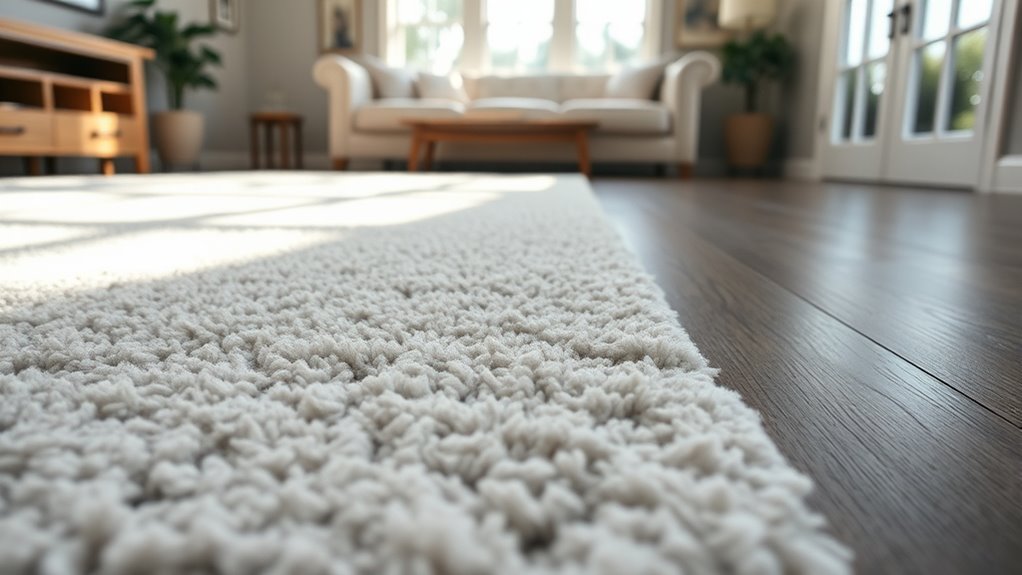

To make your home quieter, choose soft flooring options like carpets or area rugs, which absorb footsteps and reduce echo. Combining these with acoustic wall panels enhances sound insulation, especially in open spaces. Hard floors like wood or tile reflect noise, so layering soft coverings or adding sound-absorbing panels helps mute sound transfer. If you want to discover more ways to improve your home’s quietness, you’ll find plenty of effective ideas as you explore further.
Key Takeaways
- Use soft flooring materials like carpets or plush rugs to absorb footstep noise and reduce echoes.
- Incorporate sound-absorbing wall panels to contain and diminish room echo and external noise infiltration.
- Combine hard floors with area rugs to minimize sound reflection and footstep sound transmission.
- Add acoustic wall panels as decorative elements that enhance sound insulation and aesthetic appeal.
- Implement layered solutions, pairing soft flooring with wall treatments for comprehensive noise reduction.

When it comes to reducing noise in your home or office, choosing the right flooring can make a substantial difference. The surfaces you walk on, sit on, or place furniture on can either amplify sound or absorb it. To create a quieter environment, consider options that incorporate soft materials and sound-absorbing features. For example, adding area rugs is a simple yet effective way to dampen noise, especially in high-traffic areas. Thick, plush rugs can absorb footstep sounds and reduce echo, while also adding warmth and comfort. Pairing rugs with wall panels can further improve sound insulation. Wall panels, especially those made from acoustic materials, help contain sound within a room, preventing noise from traveling between spaces. When you choose wall panels designed for sound absorption, you’re effectively creating a barrier that minimizes echoes and muffles external noise, making your space feel calmer and more private.
If you prefer hard flooring like hardwood, laminate, or tile, integrating soft coverings becomes even more essential. These surfaces tend to reflect sound rather than absorb it, resulting in louder noise levels. Placing area rugs strategically in these spaces can help soften those reflections. For example, positioning a large rug under your dining table or in your living room can considerably cut down on footstep noise and echoes. Additionally, wall panels placed on the walls can absorb sound waves bouncing around the room, especially in areas with high ceilings or open layouts. Combining these elements creates a layered approach to soundproofing—soft surfaces on the floor and acoustic panels on the walls work together to soak up noise from multiple angles. Using waterproofing treatments on surfaces such as flooring or walls can also help prevent moisture issues that might exacerbate noise problems over time.
You can also consider installing specialized acoustic wall panels that double as decor, blending functionality with style. These panels are designed to absorb sound more effectively than standard wall coverings. When paired with area rugs, they help keep noise levels down and create a more peaceful atmosphere. Remember, the goal is to reduce sound transmission, not just hide noise within a room. A well-thought-out combination of soft flooring options like rugs and sound-absorbing wall panels offers a practical and aesthetic solution for quieter living or working spaces. By making these smart choices, you’ll enjoy a more serene environment, whether you’re working from home, relaxing, or hosting guests.
Frequently Asked Questions
How Do I Choose the Best Noise-Reducing Flooring for My Lifestyle?
To select the best noise-reducing flooring for your lifestyle, consider your daily activities and how much soundproofing you require. Opt for flooring materials like cork or carpet, which excel at sound absorption, and check their durability to match your use. Incorporate soundproofing techniques such as underlayment or padding to enhance noise reduction. Balancing these factors ensures you choose a flooring option that’s both effective and long-lasting for your home.
Are There Eco-Friendly Flooring Options That Also Dampen Sound?
Imagine your home as a peaceful garden, where sustainable materials bloom. Eco-friendly flooring options like cork or bamboo, made from recycled flooring and sustainable materials, not only nurture the environment but also dampen sound effectively. These choices help you create a tranquil space, reducing noise and supporting eco-conscious living. By choosing these options, you foster harmony in your home, much like a lush garden thriving in balance with nature.
What Is the Maintenance Required for Soundproof Flooring Materials?
You should regularly clean your soundproof flooring with gentle sweeping or vacuuming to remove dust and debris, avoiding harsh chemicals that could damage the material. Maintenance requirements are generally low, but you need to verify durability considerations for specific flooring types—like laminate or cork—to ensure they withstand foot traffic and moisture. Periodic inspections and prompt repairs help maintain soundproofing qualities, extending your floors’ lifespan and performance.
How Do Installation Costs Compare Among Different Quiet Flooring Options?
Installation costs for quiet flooring options vary widely, and they can be as high as climbing Mount Everest or as affordable as a cup of coffee. Generally, materials like cork or vinyl are budget-friendly, while engineered hardwood or carpet with thick padding may require higher installation costs. Your choice depends on material affordability and the complexity of installation, so compare estimates carefully to find the best balance between cost and soundproofing benefits.
Can Existing Floors Be Upgraded to Improve Sound Insulation?
Yes, you can upgrade existing floors to improve sound insulation through soundproofing techniques and flooring renovation. You might add underlayment, install acoustic underlay, or apply soundproof mats beneath your current flooring. These steps help absorb sound and reduce noise transmission. With proper soundproofing techniques, your renovation can make a noticeable difference in creating a quieter, more peaceful home environment.
Conclusion
Choosing the right flooring can transform your home into a peaceful retreat. As you walk across soft, noise-reducing surfaces, you’ll notice a calming silence that makes every moment at home more relaxing. It’s funny how a simple choice in flooring can make such a difference—turning your space into a sanctuary where every step feels like a quiet embrace. Sometimes, the smallest changes create the biggest comfort, making your home truly feel like yours.