
The color underfoot greatly influences your room’s mood and perception. Light shades like beige or pale wood make spaces feel open and bright, while dark tones such as deep browns add warmth and coziness. Bold contrasts can energize a room, while subtle tones foster calm. Your choice affects not just style but also your emotions and comfort. Want to know how to select the perfect floor hue for your space? Keep exploring for more insights.
Key Takeaways
- Floor color influences room atmosphere by setting a mood, with light tones making spaces feel larger and airy, while dark shades add warmth and intimacy.
- Different hues evoke specific emotions; bright floors promote openness and calm, while darker floors create coziness and sophistication.
- Contrasting floor shades add visual interest and depth, enhancing design harmony or energizing the space depending on the contrast level.
- The psychological effects of floor colors affect daily mood and behavior, with warm tones fostering comfort and cooler shades encouraging alertness.
- Thoughtful floor color choices, considering lighting and furniture, support the desired ambiance and overall aesthetic of the room.

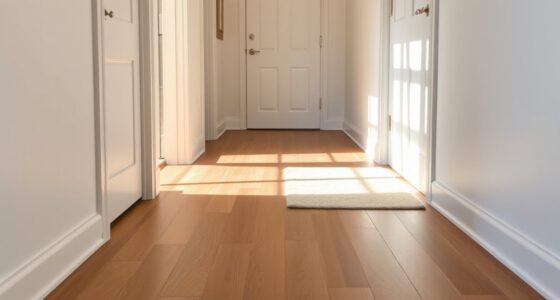
Choosing the right floor color can dramatically influence the overall feel of your room, setting the tone for your entire design. When you select a floor hue, you’re not just picking a shade—you’re tapping into floor color psychology, which can evoke specific emotions and influence how spacious or cozy your space feels. Light-colored floors, like soft beiges or pale wood tones, tend to make rooms look larger, brighter, and more open. They reflect more light, creating an airy, inviting atmosphere that’s perfect for smaller spaces or rooms meant for relaxation. Conversely, darker shades such as deep browns or charcoal tiles can add warmth and sophistication, making a room feel more intimate and grounding. However, they can also make a space seem smaller if not balanced properly, so thoughtful contrast and lighting are key.
Choosing the right floor color sets the mood and influences space perception, from bright, airy tones to warm, intimate shades.
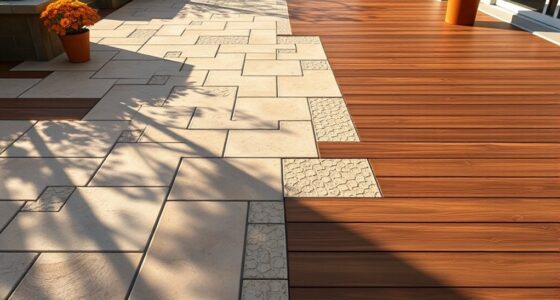
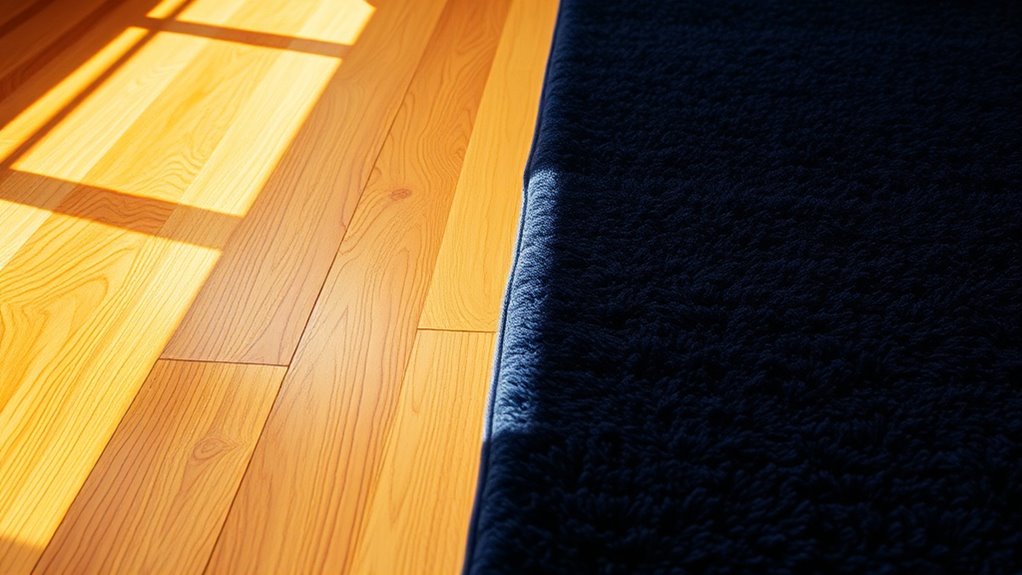
Contrasting floor shades can be a powerful tool in your design arsenal. When you incorporate contrasting shades, you add visual interest and depth to your room. For example, pairing a light-colored floor with dark furniture or accent walls creates a striking contrast that draws the eye downward, emphasizing the floor as a design feature. Similarly, mixing contrasting floor shades—like a patterned tile with varying tones—can break up monotony and add personality without overwhelming the space. It’s essential, though, to contemplate how these contrasts work together, ensuring they complement each other rather than clash. You want your floors to enhance the room’s overall aesthetic, not compete with it.
The psychology behind choosing contrasting shades also plays a role in your mood and behavior within the space. Bright, contrasting floors can energize a room, making it feel more lively and dynamic. On the other hand, subtle contrasts—using shades close in tone—can produce a calming, harmonious environment. When you think about the psychological impact, you realize that the color choices you make underfoot can influence your daily experience. For instance, a subtle contrast with warm tones can foster comfort and coziness, while stark contrasts with cooler hues might promote alertness and focus. Additionally, many flooring options are designed with color psychology principles in mind, helping you select shades that support your desired atmosphere.
Ultimately, selecting a floor color involves balancing style, function, and mood. Whether you lean toward light, airy shades or deep, contrasting tones, understanding the principles of floor color psychology and how contrasting shades work together can help you craft a space that feels perfect for your needs. Pay attention to how different colors interact with your lighting and furniture, and you’ll create a room that’s visually appealing and emotionally supportive.
Frequently Asked Questions
How Does Lighting Affect the Perception of Floor Color?
Lighting moods and color temperature greatly influence how you perceive your floor color. Warm lighting makes your floors look cozier and richer, while cool lighting can give a more modern, crisp feel. Bright, natural light highlights true colors, whereas dim or artificial lighting may alter their appearance. You should consider these factors to guarantee your floor’s color complements your room’s ambiance and mood, creating the perfect atmosphere.
Can Floor Color Influence the Room’s Perceived Size?
Imagine you’re in a room, and the floor’s color creates a spatial illusion, making it seem larger or smaller. You’ll find that light, neutral shades tend to expand the space, thanks to color psychology, while dark hues can shrink it visually. This effect is a clever use of spatial illusions, so choosing your floor color carefully can dramatically influence how spacious or cozy your room feels.
What Are the Best Floor Colors for Small Spaces?
For small spaces, light-colored floors like soft beiges, pale grays, or whites work best, creating an open feel. Opt for subtle floor patterns to avoid cluttered looks and keep maintenance tips simple by choosing durable, easy-to-clean materials. These choices make your room appear larger and brighter, enhancing comfort. Regular sweeping and occasional mopping will keep your light floors looking fresh without much effort, maintaining a spacious and inviting atmosphere.
How Does Floor Color Impact Room Acoustics?
Imagine your floor as a silent partner in your room’s harmony. Light-colored floors reflect sound, causing more echo and noise, while darker or textured floors absorb sound better. You can control echo and improve sound absorption by choosing floor colors and finishes that dampen sound waves. With the right floor color, you create a calmer, more balanced environment where sound feels natural and less intrusive.
Are Certain Floor Colors Better for Allergy-Sensitive Households?
For allergy-sensitive households, certain floor colors are better suited, especially when paired with allergy-friendly finishes and hypoallergenic flooring options. Light, neutral shades like beige or soft gray are easier to keep clean and show less dust and allergens. Opt for hypoallergenic materials like bamboo or sealed hardwood with allergy-friendly finishes to reduce dust accumulation. These choices help create a healthier environment while offering a calming, attractive look for your home.
Conclusion
So, next time you choose a floor color, remember it’s more than just style — it secretly shapes your mood and space perception. You might think you’re in charge, but your floor’s subtle influence often guides your choices and feelings more than you realize. Ironically, what’s under your feet could be the one thing dictating your room’s vibe, proving that sometimes, the smallest details have the biggest impact. After all, your floor knows more than you think.