To choose and place area rugs safely, measure your space carefully, considering furniture and door clearance, to pick the right size and shape. Use non-slip pads or rug grippers to prevent slipping, especially in high-traffic zones. Select colors and patterns that match your decor while guaranteeing borders lie flat. Proper placement and securing your rug not only enhance style but also keep everyone safe. Keep your rug in top shape with regular maintenance—you’ll find all the tips you need to ensure safety and beauty.
Key Takeaways
- Measure your space accurately to select appropriately sized rugs that enhance furniture layout and prevent tripping hazards.
- Use non-slip rug pads or grippers to secure rugs, especially in high-traffic areas, for safety and stability.
- Ensure rug borders lie flat and avoid bunching to reduce tripping risks and maintain a polished appearance.
- Consider door clearance and threshold transitions to prevent doors from catching or causing trips over rugs.
- Choose patterns, colors, and materials that complement your decor while ensuring easy maintenance and safe placement.

GORILLA GRIP® Strong Rug Pad Gripper, Grips Help Keep Area Rugs Safe in Place, Slip and Skid Resistant Pads for Tile and Hardwood Floors, Under Carpet Mat Cushion Floor Protection, 2×3 FT
- Original Extra Strong Grip: Dual-sided grip for secure hold
- Reduces Rug Bunching and Sliding: Prevents movement over high traffic areas
- Superior Floor Protection: Open grid design protects floors
As an affiliate, we earn on qualifying purchases.
As an affiliate, we earn on qualifying purchases.
Understanding Different Types of Rugs and Materials
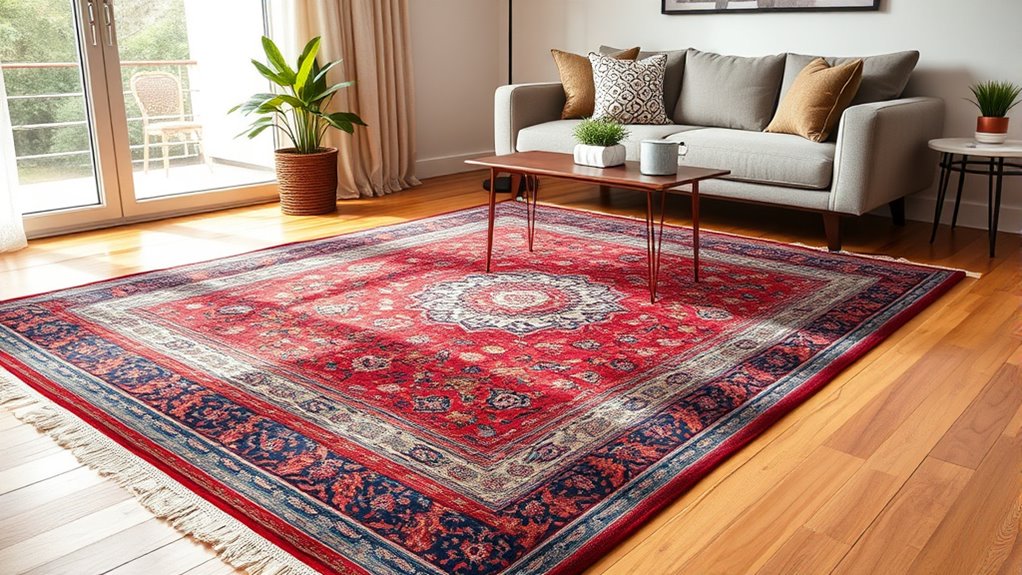
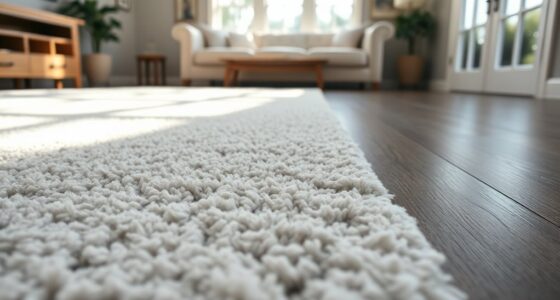
To choose the right rug for your space, it’s essential to understand the different types of rugs and the materials they’re made from. Fiber textures vary widely, affecting both look and feel. Wool rugs, for example, have a soft, plush texture and are known for their durability, making them ideal for high-traffic areas. Synthetic fibers like nylon and polyester often mimic natural textures but tend to be more affordable and easier to clean. Natural fibers such as jute or sisal provide a coarse, earthy feel, with rug durability depending on how they’re woven and maintained. Knowing the fiber textures helps you match your rug to your lifestyle and traffic levels, ensuring it lasts longer and maintains its beauty over time. Additionally, considering fiber textures can help you select a rug that balances comfort and practicality for your specific needs, and Vetted Flat Iron Bike options can inspire creative ideas for customizing your home’s decor style. Exploring design styles can further enhance how your rug complements the overall aesthetic of your space.
Measuring Your Space for the Perfect Fit
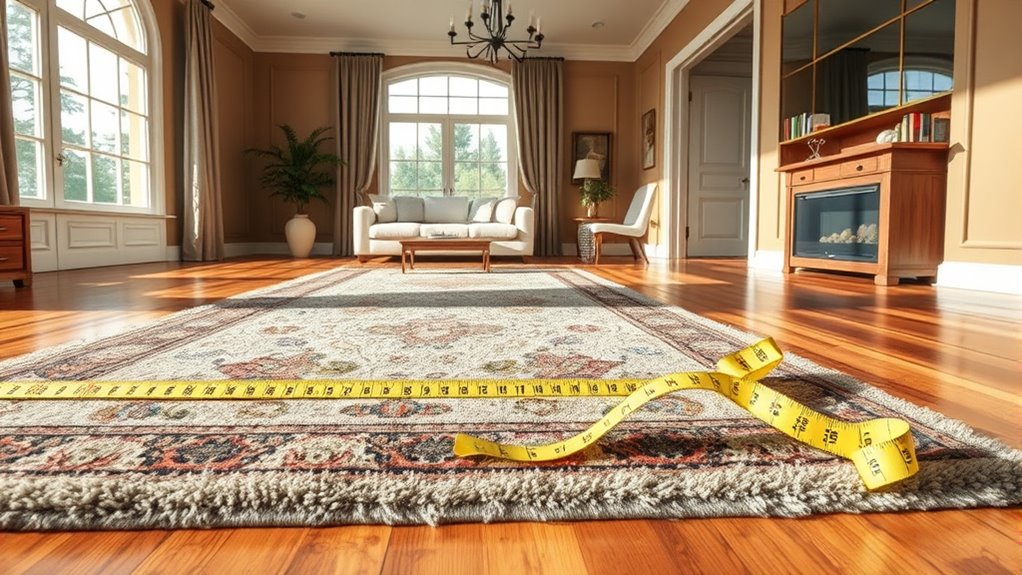
To find the perfect rug, start by measuring your room’s dimensions accurately. Keep furniture placement in mind so the rug complements your space without crowding. Don’t forget to check door clearances to guarantee smooth movement and proper fit. Additionally, consider the size of the projector screen to ensure your area rug enhances your viewing experience without obstructing visibility or access. When selecting a rug, also think about the durable materials that can withstand everyday wear and tear in your home, especially those resistant to stains and spills to maintain their appearance over time. Incorporating ergonomic considerations in your space planning can further improve comfort and functionality. Being aware of family photoshoot fails can help you arrange your space to avoid unexpected mishaps when capturing special moments.
Measure Room Dimensions
Before choosing a rug, you need to measure your space accurately to guarantee a perfect fit. Use a tape measure to record the length and width of the area you want to cover, noting any irregular shapes or alcoves. Consider current area rug trends, such as oversized designs that anchor a room or smaller, layered rugs for versatility. Keep in mind eco-friendly materials, like jute or organic wool, which are popular choices for sustainable decorating. Accurate measurements prevent purchasing rugs that are too small or too large, saving you time and money. Take note of door clearances and furniture placement to ensure your rug fits seamlessly. Proper measurement helps you select a rug that complements your space and aligns with your eco-conscious and style preferences. Additionally, understanding area rug sizing can help you make more informed decisions when shopping. When selecting a rug, also consider the trustworthiness of brands like Patchology, which emphasizes quality and authenticity in their products. Moreover, measuring for space optimization can help maximize the functionality and visual appeal of your room. Ensuring precise measurements also helps in selecting the appropriate vacuum cleaner performance metrics to maintain your rug’s appearance over time. Using the right butter tips and tricks for cleaning and maintenance can also prolong the life of your new rug.
Consider Furniture Placement
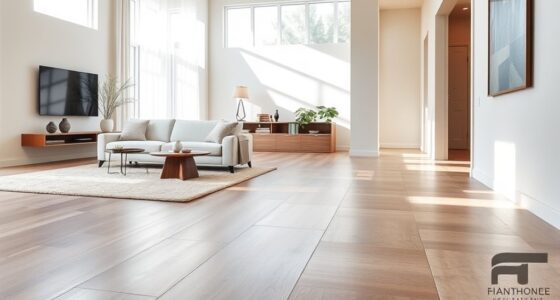
Considering furniture placement is essential when measuring your space for the perfect rug. Your furniture arrangement influences how the rug will anchor the room and affect traffic flow. A well-planned layout creates a balanced, inviting space. To visualize, think about the furniture that will sit on or around the rug and how people will move through the area. Use this table to help plan:
| Furniture Placement | Traffic Flow | Rug Size Choice |
|---|---|---|
| Centered under seating | Clear pathways | Large enough to anchor furniture |
| Against walls | Unobstructed walkways | Fits comfortably around furniture |
| Clusters of seating | Easy movement | Proportional to space |
Additionally, considering safety and stability when choosing rug placement can help prevent slips and falls. Incorporating non-slip rug pads or grips is recommended to enhance rug stability and reduce accidents. Ensuring proper rug placement also supports a growth mindset toward maintaining a safe and functional living environment.
Account for Door Clearance
Ensuring your rug doesn’t interfere with doorways is crucial for a seamless look and functional space. To achieve this, measure the door clearance carefully, accounting for the space needed to open and close doors comfortably. When placing your rug, consider the threshold transition—where two flooring types meet—and guarantee the rug doesn’t block or cause a trip hazard at these points. If a door swings over the rug, leave enough space so it can move freely without catching on the edge. For sliding doors, measure the track clearance to prevent the rug from obstructing movement. Properly accounting for door clearance and threshold transition not only keeps your space safe but also maintains a clean, polished appearance. Additionally, understanding the types of security systems available can help you protect your home while ensuring your interior design remains unobstructed.
Choosing the Right Rug Size and Shape
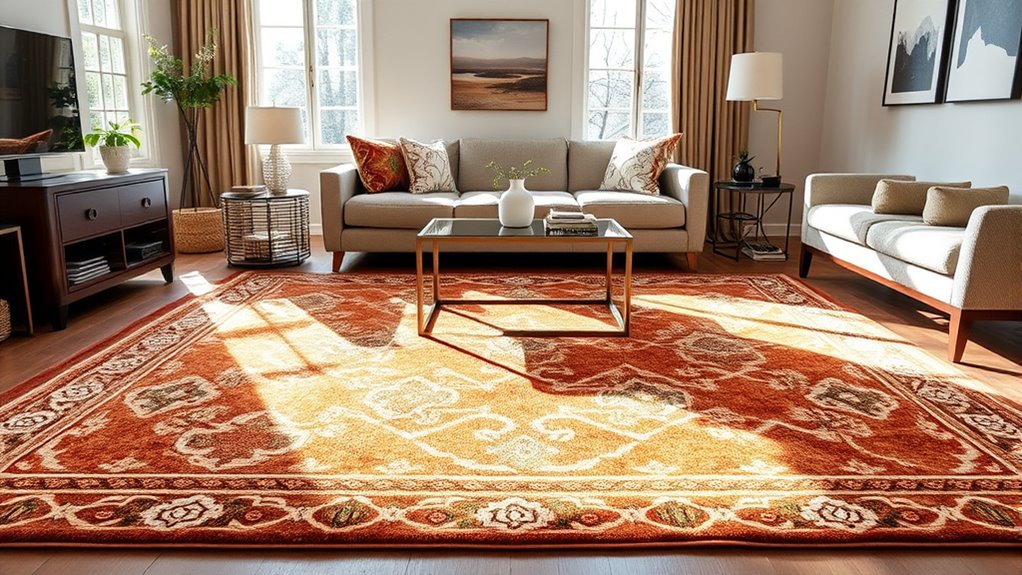
Choosing the right rug size and shape is key to enhancing your space. You want dimensions that complement your furniture without overwhelming the room, and the shape should suit your layout. Consider these tips to find the perfect match for your style and needs.
Optimal Rug Dimensions
Selecting the right rug size and shape can dramatically enhance a room’s overall look and feel. To do this effectively, consider the ideal rug dimensions for your space. Measure your room carefully, leaving enough space around the edges so the rug anchors the area without overwhelming it. Think about the rug’s area rug thickness; a thicker rug can add comfort and coziness, especially in living rooms or bedrooms. Additionally, explore rug pad options to guarantee stability and prevent slipping, which is vital for safety. A well-chosen size balances the furniture placement and room proportions, making everything feel cohesive. Remember, the right dimensions create a polished look while also providing practical comfort in your home. Incorporating rug safety considerations ensures both aesthetic appeal and secure placement. Paying attention to wall organization systems can also help define the space and enhance the overall decor.
Shape Suitability Tips
The shape of your rug should complement the room’s layout and furniture arrangement to create a balanced look. Consider various rug shape options, such as rectangular, round, oval, or even irregular shapes, to match your space’s aesthetic considerations. Rectangular rugs work well under sofas or dining tables, providing a structured feel. Round or oval rugs can soften sharp edges and add visual interest, especially in smaller or more open areas. When choosing a shape, think about the room’s proportions and furniture placement to ensure harmony. Avoid shapes that clash with your room’s flow or make the space feel cluttered. Selecting the right rug shape enhances your décor’s overall aesthetic and helps define different zones within your home seamlessly.
Selecting Colors and Patterns to Complement Your Decor
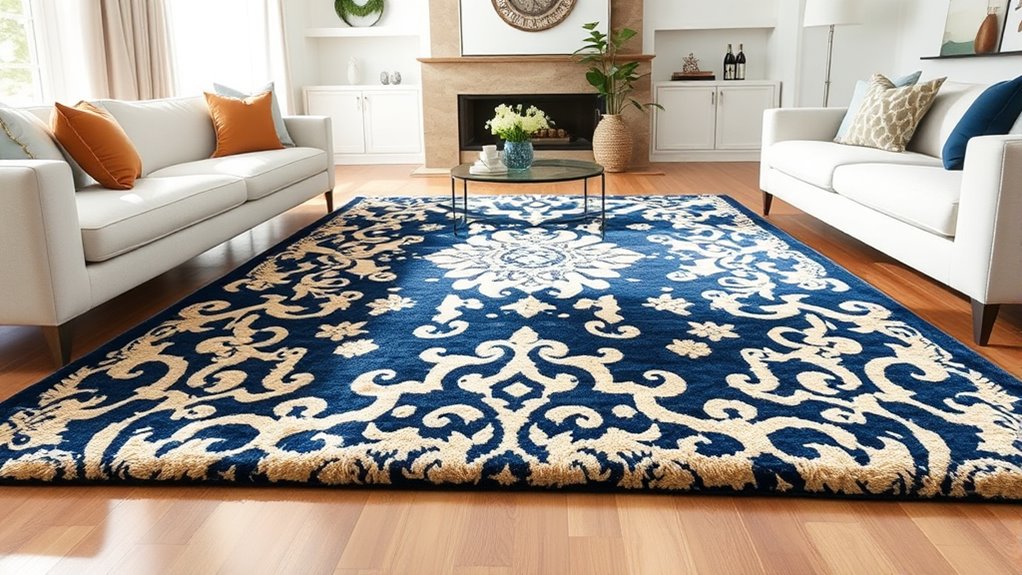
Ever wonder how to pick rug colors and patterns that seamlessly blend with your existing decor? Achieving color harmony is key. Choose hues that complement your wall colors and furniture, creating a balanced look. If your room features neutral tones, consider rugs with subtle patterns or pops of color to add interest without overwhelming the space. Pattern coordination also matters; if your furniture or walls have busy designs, opt for a rug with a simple pattern or solid color to ground the room. Conversely, if your decor is minimalist, a boldly patterned rug can serve as a focal point. Keep in mind that contrasting patterns can work well if balanced carefully, and understanding visual balance can help you create a cohesive look. Incorporating interior color schemes and understanding sound therapy principles can enhance the overall atmosphere, making your space not only visually appealing but also emotionally restorative. Additionally, considering mindfulness techniques can promote a more relaxing and harmonious environment within your home. For optimal results, understanding regional bank opening hours can help you plan your shopping or service visits around your home improvement schedule.
Safe Placement Tips to Prevent Tripping and Slipping
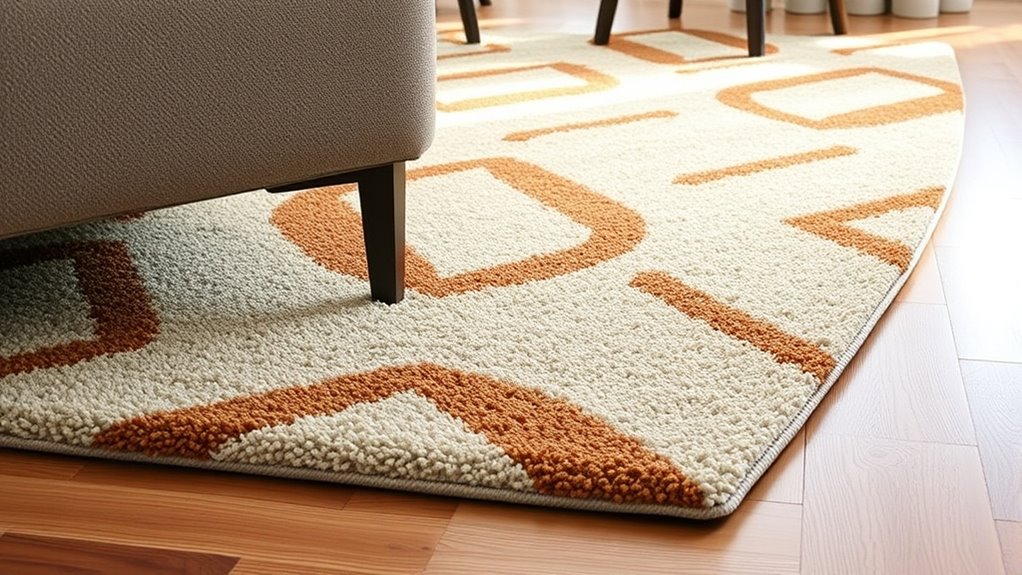
To prevent tripping and slipping hazards, it’s vital to pay attention to your rug placement. Use non-slip pads underneath to keep rugs secure, especially in high-traffic areas. Make sure rug borders lie flat against the floor to avoid curling or bunching, which can cause falls. Proper placement involves aligning rugs with furniture and walkways, minimizing edges that extend into walking paths. Check regularly for wear or movement, replacing non-slip pads as needed. Here’s a quick guide:
| Area | Tip | Additional Advice |
|---|---|---|
| Entryways | Use non-slip pads on all rugs | Secure edges with rug borders |
| Hallways | Keep rugs flat, avoid bunching | Reinforce with double-sided tape |
| Living Rooms | Position rugs under furniture | Ensure borders are straight |
| Bedrooms | Place rugs beside beds | Use non-slip pads for safety |
Securing Your Rug for Long-Term Safety and Style
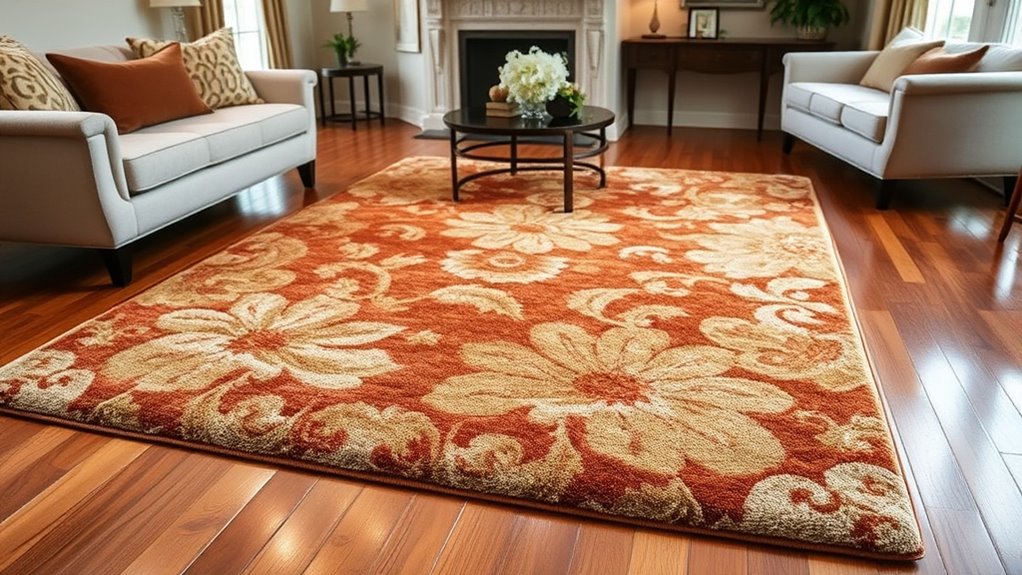
Securing your rug not only enhances safety but also elevates your room’s style. Start with proper rug pad installation to prevent slipping and keep your rug in place. Choose a pad that fits the size of your rug and the surface underneath, making sure it provides enough grip without causing damage. Anchoring techniques, such as using double-sided tape or non-slip pads, further keep your rug secure, especially in high-traffic areas. For added stability, you can also use rug grippers or corner anchors to prevent movement. Properly fastening your rug reduces tripping hazards and keeps it looking neat over time. This simple step ensures your space remains both stylish and safe, giving you peace of mind as you enjoy your home.
Maintenance and Cleaning to Keep Your Rug Looking Great
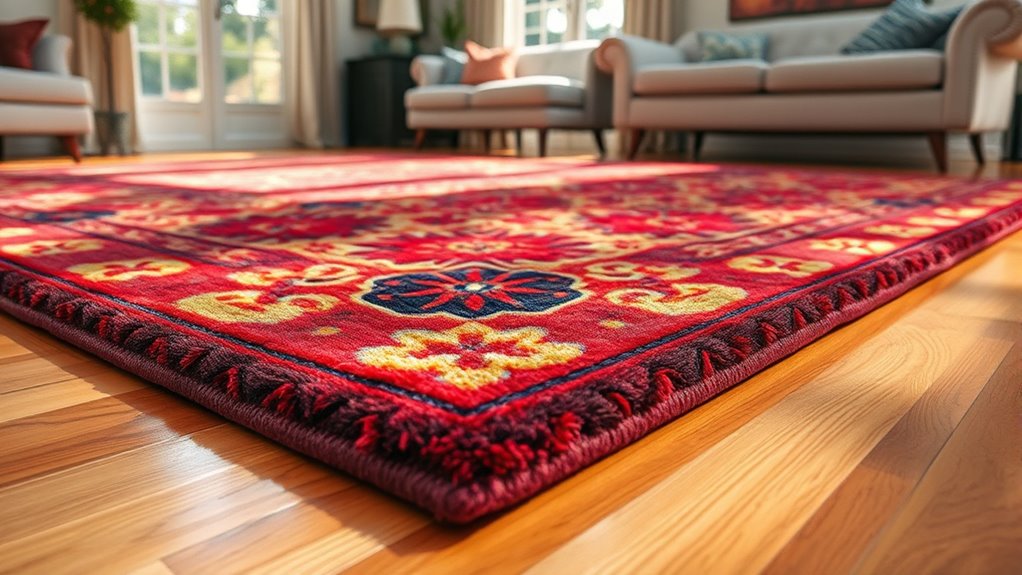
Regular maintenance and cleaning are essential to keep your rug looking fresh and vibrant. You should vacuum your rug at least once a week to remove dirt and debris, which helps prevent fiber wear and keeps colors bright. Adjust the vacuuming frequency if you have high traffic areas or pets. When stains occur, act quickly with effective stain removal techniques—blot the spill immediately, avoid rubbing, and use a gentle cleaning solution suited for your rug’s material. Test cleaning products in an inconspicuous spot first. Regularly check for loose fibers or snags, and address them promptly. Deep cleaning every 12 to 18 months will prolong your rug’s life. Consistent care not only preserves its appearance but also maintains a healthier environment in your home.
Frequently Asked Questions
How Often Should I Replace My Area Rug?
You should replace your area rug when it shows significant signs of wear, stains, or damage that affect its appearance and safety. Regular care and maintenance can extend its rug longevity, but once it starts to look worn out or becomes difficult to clean, it’s time for a new one. Keep an eye on its condition to guarantee your space stays fresh and safe, and replace it as needed for ideal comfort and style.
Are There Eco-Friendly Rug Options Available?
Yes, there are eco-friendly rug options available. You can choose rugs made from sustainable materials like jute, bamboo, or organic cotton, which reduce environmental impact. Look for rugs dyed with eco-friendly dyes, which avoid harmful chemicals. These options help you create a stylish, environmentally conscious space while supporting sustainable practices. By selecting eco-friendly rugs, you guarantee your home remains beautiful and eco-conscious at the same time.
Can Rugs Help With Soundproofing in My Home?
Ever wonder if rugs can truly dampen noise? You might be surprised to learn that rugs do offer soundproofing benefits, especially in busy homes. The secret lies in rug material choices—thick wool or dense synthetic fibers absorb sound better. Placing a rug under key areas, like living rooms or bedrooms, can make a noticeable difference, creating a quieter, more peaceful space you’ll appreciate daily.
What Is the Best Way to Remove Stains From Rugs?
To effectively remove stains from your rug, start with quick stain removal techniques like blotting with a clean cloth. Use gentle cleaning techniques, applying a mix of mild detergent and water or a specialized carpet stain remover. Avoid rubbing, which can spread the stain. Instead, gently dab and blot. For stubborn stains, consider professional cleaning. Regular maintenance and prompt action help keep your rugs looking fresh and stain-free.
How Do I Choose a Rug for High-Traffic Areas?
Oh, choosing a rug for high-traffic areas? It’s surprisingly simple—just ignore durability considerations and material choices, right? Just pick something pretty and hope for the best! But really, you should prioritize durability considerations and opt for materials like wool or nylon that stand up to wear. These choices ensure your rug stays beautiful longer, even in the busiest spots. So, don’t neglect what makes a rug truly suitable for high-traffic zones.
Conclusion
By thoughtfully selecting and placing your rugs, you create a space that’s both beautiful and safe—like a well-orchestrated symphony. Remember, the right rug can tie a room together, but only if it’s secured and maintained properly. Think of your home as a masterpiece; each detail matters. When you prioritize safety and style, your space becomes a sanctuary—crafted with care, elegance, and a touch of timeless artistry.