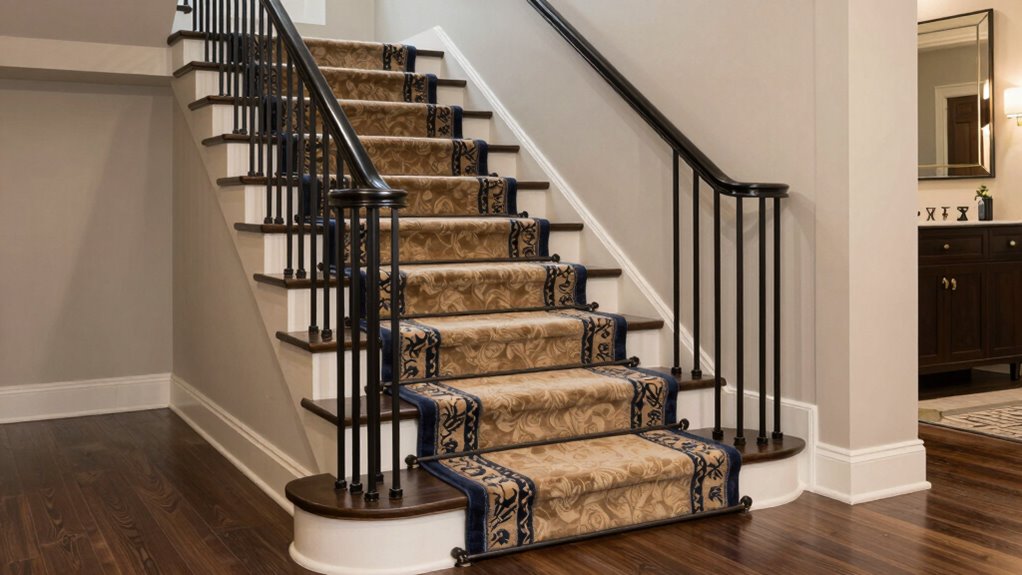

To make stair runners work with your overall design, choose styles, colors, and textures that blend seamlessly with your decor. Opt for hues that match or complement your walls, trim, and flooring for a cohesive look. Consider your interior style—classic, modern, or minimalist—and select patterns or solid colors that enhance that vibe. Pay attention to proportions and texture contrast to create visual interest, and guarantee proper installation for longevity. Keep exploring for expert tips to perfect your staircase style.
Key Takeaways
- Match runner colors and patterns with existing decor to create visual harmony and cohesive style.
- Choose materials and textures that complement the room’s overall aesthetic and enhance visual interest.
- Ensure runner proportions align with staircase dimensions for a balanced, integrated look.
- Use design tools like 3D visualization to preview how the runner blends with your interior.
- Select durable installation methods that secure the runner and maintain the desired style over time.
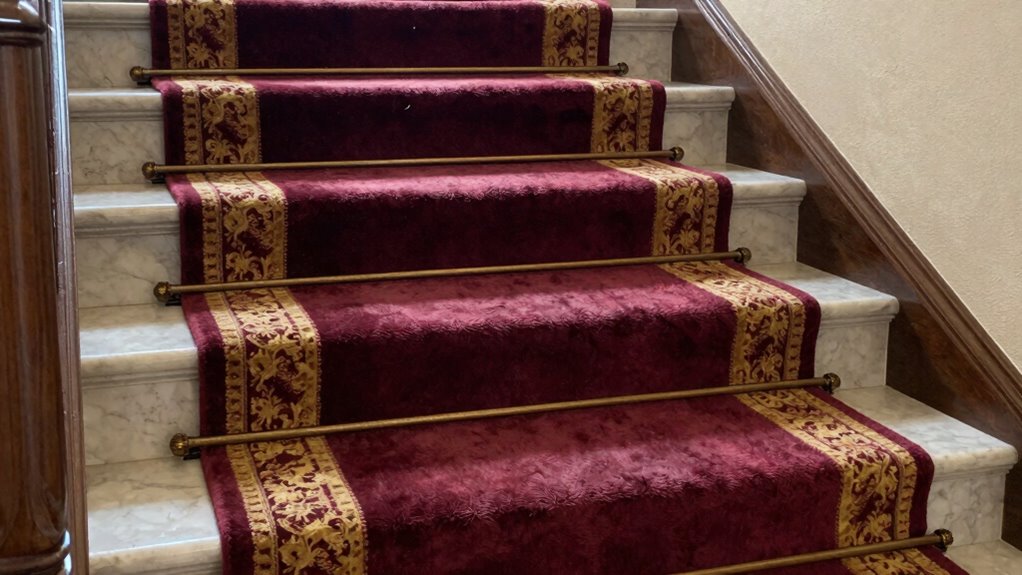
Stair runners are more than just functional—they’re a key element of interior design that can transform the look and feel of your space. When choosing a stair runner, you want to *contemplate* how it will blend with your existing decor and enhance the overall aesthetic. One of the most important factors is carpet durability. Since staircases see a lot of foot traffic, you need a runner made from sturdy materials that can withstand daily wear without fraying or fading. High-quality wool or nylon blends often provide excellent durability, ensuring your runner stays beautiful for years to come. A durable carpet not only maintains its appearance but also offers safety, reducing the risk of slips or trips as it stays securely in place over time. Additionally, selecting a durable material ensures your investment in the stair runner pays off long-term. Color coordination plays a *crucial* role in making your stair runner seamlessly fit with your interior style. Think about the color palette in your room and how your staircase connects to the rest of your home. If your space features neutral tones, a runner in soft beige, gray, or taupe can create a subtle, elegant *link*. For bolder interiors, consider a runner that introduces a pop of color or an interesting pattern that complements your accent pieces. You want the runner to unify the space, so it’s wise to choose colors that either match or harmonize with your walls, trim, or flooring. This way, the stairway becomes a cohesive part of your design rather than a disjointed element. When you plan your stair runner, keep the overall style of your home in mind. For traditional decor, a runner with intricate patterns or classic motifs can enhance the timeless feel. If your style is modern or minimalist, a sleek, solid-colored runner with clean lines may be more suitable. Remember that the size and width of the runner should also align with your staircase’s proportions, ensuring it doesn’t look out of place or overwhelming. Finally, think about how your chosen runner interacts with other textures and materials in your space. Mixing different textures—like pairing a plush runner with smooth hardwood floors or matte walls—can add visual interest. Incorporating 3D scanning or printing technology can help you visualize and customize your stair runner design more precisely before purchase. Paying attention to carpet installation techniques can also ensure your runner stays securely in place and maintains a polished look over time. To make the most informed choice, understanding carpet durability can guide you toward selecting the best material for your needs. By balancing durability, color coordination, and overall style, you can make your stair runner a stunning feature that ties your entire interior design together. With thoughtful selection, your staircase can become a beautiful, functional centerpiece that elevates your home’s aesthetic.

Oak Valley Designs™ Rounded Bullnose Wool Carpet Stair Treads – Anti Slip Indoor Stair Mats for Wooden Stairs, Style: Nantucket, Linen, 35" W X 9.75" D (Set of 14)
- Reinforced Bullnose Front: Triple reinforced rounded edge with non-slip pad
- Premium Wool Material: Made with 100% New Zealand wool for durability
- Stain and Soil Resistant: Naturally resistant to soiling and staining
As an affiliate, we earn on qualifying purchases.
As an affiliate, we earn on qualifying purchases.
Frequently Asked Questions
Can Stair Runners Be Used Outdoors?
Yes, stair runners can be used outdoors if you choose ones with outdoor durability. Look for runners made from weather-resistant fabrics designed to withstand sun, rain, and foot traffic. These materials prevent mold and fading, ensuring longevity. Make sure to secure the runner properly to prevent slipping or shifting. With the right outdoor-specific runner, you can add style and safety to your outdoor stairs without worrying about weather damage.
How Do I Clean and Maintain My Stair Runner?
To keep your stair runner looking its best, regularly vacuum it using a brush attachment to remove dirt and debris. For cleaning tips, spot clean stains with a mild detergent and water, then blot dry. Establish a maintenance schedule—deep clean every few months to prevent dirt buildup. Avoid harsh chemicals, and consider professional cleaning if your runner is particularly stained or delicate, ensuring it stays vibrant and lasts longer.
What Materials Are Best for High-Traffic Stairs?
Think of high-traffic stairs as a busy highway—only tough materials can stand the rush. For durability considerations, choose materials like wool, nylon, or tightly woven polypropylene, which resist wear and stains. Material comparisons show wool’s resilience and plush feel, while nylon offers strength and stain resistance. Both are excellent choices for high-traffic stairs, ensuring your stair runner endures daily traffic without losing its charm or comfort.
Are Stair Runners Suitable for Curved Stairs?
Yes, stair runners are suitable for curved stairs. During curved stair installation, you can choose matching stair runner patterns that follow the gentle or sharp curves seamlessly. It’s essential to work with an experienced installer who can cut and stretch the runner to fit the contours perfectly. This guarantees your staircase looks cohesive and elegant, with a smooth flow that complements your overall design while providing safety and style.
How Long Does a Stair Runner Typically Last?
Stair runners typically last between 5 to 15 years, depending on durability factors like traffic and material quality. You can extend their lifespan by choosing durable fabrics and maintaining them regularly. Style coordination also plays a role; a well-selected runner complements your home’s decor and keeps it looking fresh longer. With proper care, a quality stair runner can stay beautiful and functional for many years.
Conclusion
By thoughtfully integrating stair runners with your overall design, you create a seamless flow that ties every space together. Remember, a well-chosen runner isn’t just a practical addition—it’s the thread that weaves your decor into a cohesive tapestry. When you balance texture, color, and pattern, your staircase transforms into a statement piece that elevates your entire home. After all, isn’t a staircase the literal and figurative way to ascend in style?




![Bukit Bintang Hicks Flat: DBKL Orders Cleanup After Viral Video Exposes Dirty Conditions [WATCH] - NST Online](https://charlottesfurniture.com/wp-content/uploads/2026/08/bukit-bintang-hicks-flat-dbkl-orders-cleanup-after-viral-video-exposes-dirty-con-featured-260x140.jpg)