
To make large furniture feel lighter in a small room, use light-colored upholstery like beige or pale gray that blends with your walls, creating a seamless look. Balance heavy pieces with delicate accessories and layered lighting to add depth. Proper proportions and scaled furniture help prevent a cramped feel, while contrasting colors in accessories can bring interest without overwhelming. Keep an eye on these strategies to open up your space—there’s more to discover on how to perfect this balance.

Get furniture and decor delivered free — and shop member deals
- Fast, free delivery on millions of items
- Access to Prime Big Deal Days deals on October 6–7
- Prime Video, Amazon Music and more included
Key Takeaways
- Use light, neutral colors on large furniture to reduce visual weight and create a sense of openness.
- Incorporate lighter accessories and textiles to soften the appearance of bulky furniture pieces.
- Choose appropriately scaled furniture that balances size with the room’s proportions to avoid overwhelming space.
- Layer lighting to add depth and make large furniture blend seamlessly into the room.
- Balance large furniture with contrasting, lighter elements to maintain visual harmony and prevent cluttered feel.

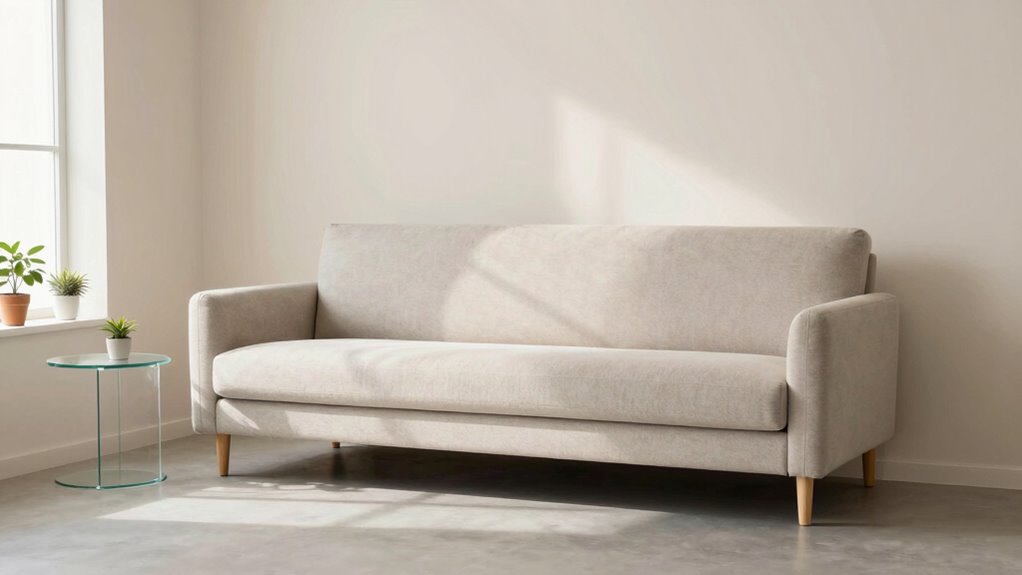
When you’re working with a small room, large furniture can quickly feel overwhelming and cramped. To prevent this, you need to focus on creating a sense of openness. One effective way is through thoughtful color contrast. Light, neutral shades on your furniture can make bulky pieces seem less imposing. For example, opting for a sofa in soft beige or pale gray helps it blend seamlessly with the walls, rather than standing out aggressively. Conversely, if you want to add depth or interest, use contrasting colors strategically. A dark piece against a light wall creates a focal point without overwhelming the space. Keep in mind, high contrast can also add visual weight, so balance it with lighter accessories or nearby elements to avoid making the room feel disjointed. Additionally, incorporating visual harmony through color and design choices can further enhance the feeling of openness and coherence in your space. Achieving a cohesive look involves understanding how different elements interact to influence perception and atmosphere. Being mindful of spatial perception can help you craft a room that feels larger and more inviting. Incorporating proportion and scale considerations when selecting furniture can also make a significant difference in how spacious a room feels, especially when paired with large furniture pieces. Using lighting techniques such as layered lighting or strategically placed fixtures can also significantly impact how spacious a room feels, especially when paired with large furniture pieces.
light-colored sofa beige pale gray
As an affiliate, we earn on qualifying purchases.
As an affiliate, we earn on qualifying purchases.
Frequently Asked Questions
Can Painting Furniture Lighter Colors Make It Feel Less Bulky?
Yes, painting furniture lighter colors can make it feel less bulky because of color psychology; lighter shades tend to open up space and create an airy feel. A smooth surface finish enhances this effect by reflecting more light, further reducing visual weight. Opt for soft pastels or neutral tones to make your furniture blend seamlessly with your room, making it appear more spacious and less overwhelming.
Does Adding Mirrors Improve the Perceived Size of Large Furniture?
Mirrors work wonders, turning a small room into a vast, open space with their mirror illusion. You’ll see large furniture magically shrink, as reflective surfaces bounce light and create the illusion of depth. Just place a sizable mirror opposite or adjacent to your furniture, and watch how it visually doubles the space, making bulky pieces seem far less overwhelming. It’s a simple trick with a surprisingly powerful effect.
How Does Furniture Placement Impact Room Spaciousness?
You can enhance room spaciousness by carefully placing furniture to create open pathways and avoid clutter. Use color contrast wisely—lighter shades make furniture recede, while darker tones highlight it. Incorporate lighting effects, like natural light or layered lamps, to add depth and brightness, making the space feel larger. Strategic placement combined with these visual tricks helps your room appear more open and airy, even with large furniture.
Are Multi-Functional Pieces Better for Small Spaces?
Yes, multi-use furniture is better for small spaces because it maximizes your space-saving strategies. You can choose pieces like sofa beds, storage ottomans, or fold-out tables that serve multiple functions. This approach reduces clutter and makes your room look bigger. Multi-functional furniture allows you to optimize every inch, making your small room feel more open and comfortable without sacrificing style or utility.
Can Choosing Transparent or Open-Legged Furniture Reduce Bulk?
Choosing transparent or open-legged furniture definitely reduces bulk, making your space feel more open. Material textures and structural designs play a big role here—glass or acrylic pieces add visual lightness, while open-legged designs create a sense of airiness. These choices help break up visual weight, making even large furniture seem less imposing. So, opt for sleek, transparent, or open-legged styles to maximize your small room’s feel of spaciousness.
Conclusion
By choosing the right furniture and styling tricks, you can make large pieces feel less overwhelming in a small space. For example, a friend turned her bulky sofa into a lighter, airy centerpiece by using slim legs and soft fabrics. Remember, balance and strategic placement are key. With a few simple tweaks, your room will feel more open and inviting—making even the biggest furniture pieces seem just right for your cozy space.
Fall Picks
fall essentials
As an affiliate, we earn on qualifying purchases.