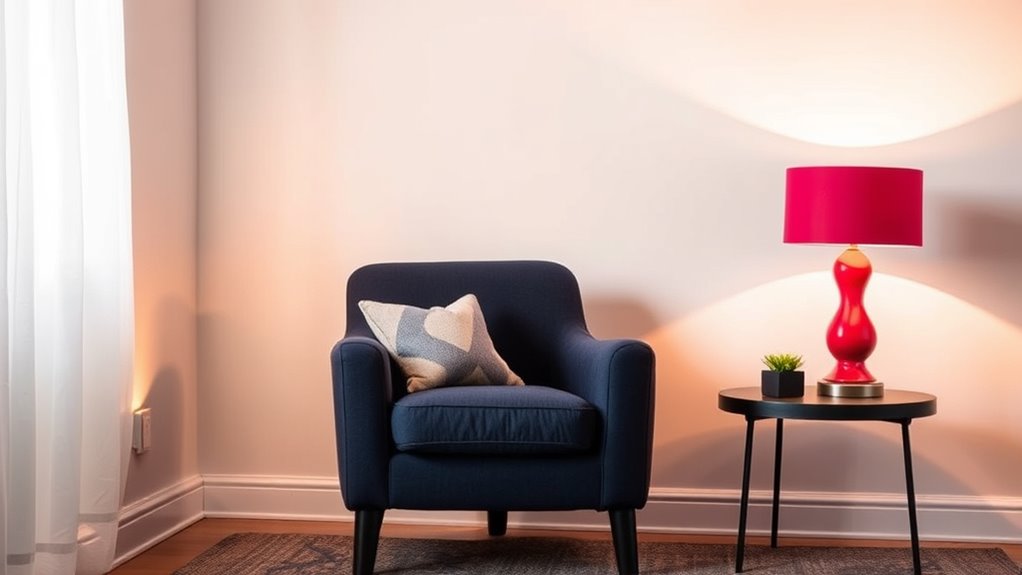

To create a stylish, safe space for seniors with low vision, focus on high-contrast furniture choices like dark sofas against light walls or textured finishes that stand out. Prioritize stable, easy-to-identify pieces with tactile cues, and guarantee ample, well-placed lighting to improve visibility. Incorporate simple, clean designs to reduce clutter and confusion. Keep exploring for more tips on blending safety with style to make your space both functional and beautiful.
Key Takeaways
- Use high-contrast color schemes for furniture and flooring to enhance visibility without sacrificing style.
- Incorporate tactile markings and textured edges on furniture for intuitive identification and safety.
- Choose stable, broad-based furniture with simple designs to prevent wobbling and reduce visual clutter.
- Enhance lighting with adjustable, well-placed fixtures to improve contrast and highlight key furniture pieces.
- Select durable, stylish materials and organize furniture to create clear, defined spaces that support independence.
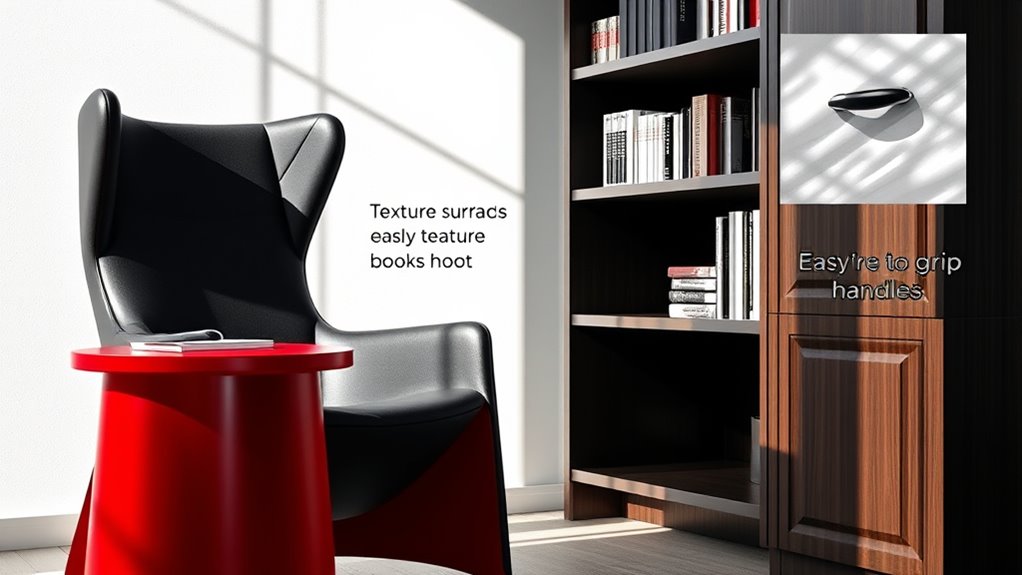
Living with low vision can make maneuvering your home challenging, but choosing the right furniture can greatly improve safety and independence. One of the most effective ways to do this is by emphasizing color contrast. When furniture pieces stand out against the background of your floors and walls, it becomes easier to identify them quickly and avoid accidents. For example, opt for a sofa with a dark base against a light-colored carpet or a bed frame painted in a bold, contrasting hue to your wall colors. These simple changes make a significant difference in helping you navigate your space confidently.
In addition to color contrast, tactile markings are an essential feature for furniture tailored to your needs. These markings provide tactile cues that allow you to feel and identify furniture edges, switches, or storage compartments without needing to see them clearly. You might consider adding textured strips or rubberized grips along the edges of tables and countertops. Such tactile markings serve as physical indicators, guiding your movements and reducing the risk of bumping into corners or knocking over items. Incorporating these tactile details can turn your furniture into intuitive tools that support your independence.
When selecting furniture, prioritize pieces with stable, broad bases to minimize wobbling or tipping. If you have difficulty judging the stability of furniture, look for options with a low center of gravity, which are less likely to tip over if bumped. Also, choose furniture with simple, clean lines and minimal intricate details to avoid visual clutter that can be confusing or overwhelming. Clear, straightforward designs help your eyes quickly distinguish between different pieces and surfaces, reducing disorientation.
Lighting plays a fundamental role in enhancing the effectiveness of high-contrast furniture. Well-placed, bright lighting can amplify the differences in color contrast and make tactile markings more noticeable. Use adjustable lamps or directed lighting to highlight key areas, like the edges of tables or the borders of rugs. Proper lighting not only boosts visibility but also complements your furniture choices, creating a safer environment.
Additionally, choosing furniture made from durable materials ensures longevity and safety, especially if you need to rely on furniture for support. Finally, remember that organization and consistency are key. Keep furniture arrangements predictable, and use contrasting rugs or mats to define walkways and seating areas. By combining high-contrast colors, tactile markings, stable designs, and good lighting, you create a home environment that promotes safety, ease of movement, and confidence. With thoughtful furniture choices, you can navigate your space more independently and enjoy your home with greater comfort.

Trygoal 45" Boneless Folding Sofa Bed, 2-in-1 Convertible Cloud Couch to Sleeper Sofa with Wide Armrest & High-Density Foam, Corduroy Single Floor Sofa for Living Room, No Assembly Required, Black
- 2-in-1 Convertible Design: Transforms from sofa to bed easily
- Durable Corduroy Fabric: Soft, textured, and wear-resistant
- High-Density Foam Cushion: Provides plush, supportive comfort
As an affiliate, we earn on qualifying purchases.
As an affiliate, we earn on qualifying purchases.
Frequently Asked Questions
What Affordable Furniture Options Are Best for Seniors With Low Vision?
When choosing furniture for seniors with low vision, you want budget-friendly options that are both safe and practical. Look for sturdy pieces with simple designs, or try DIY furniture ideas to customize height and contrast. Bright, solid colors and clear labels help improve visibility. You can find affordable options at thrift stores or repurpose old furniture, making it easier to create a comfortable, accessible space without breaking the bank.
How Can I Incorporate Safety Features Into Stylish Furniture?
Think of your furniture as a trusty ship steering tricky waters. To keep it steady, focus on designing ergonomic seating that supports comfort and choosing tactile finishes that guide your touch. These safety features act like guiding stars, making your furniture both stylish and secure. By blending function with design, you create a space that’s safe, accessible, and inviting—helping you navigate your home with confidence and ease.
Are There Specific Materials That Are Better for Low-Vision Furniture?
You should choose furniture with tactile textures, so you can easily identify pieces by touch. Avoid reflective surfaces, as they can create glare and make it harder to see clearly. Materials like matte wood, fabric, or textured plastics are ideal because they offer better grip and visibility. By selecting these materials, you enhance both safety and usability, making your space more accessible and comfortable for low-vision needs.
How Do I Maintain High Contrast Furniture Over Time?
Did you know that proper contrast can reduce falls in seniors by up to 45%? To maintain high contrast furniture, regularly check and clean surfaces to preserve color vibrancy. Use thoughtful color coordination to keep contrast sharp, and make lighting adjustments to enhance visibility. These simple steps help your furniture stay visually distinct over time, ensuring safety and style without constant replacement.
Can Customizable Furniture Enhance Visibility for Seniors With Low Vision?
Customizable furniture can definitely improve visibility for seniors with low vision. By choosing pieces with color contrast that stands out against the surroundings, you make items easier to see. Additionally, adjustable lighting features allow you to optimize brightness and reduce glare, enhancing clarity. These options create a more accessible environment, helping seniors navigate safely and comfortably without sacrificing style or functionality.
Conclusion
By choosing furniture with bold contrasts and thoughtful design, you create a space where comfort and safety gently coexist. These small adjustments make everyday moments more joyful and less stressful, allowing you to enjoy your home with confidence. Remember, it’s the simple touches that can brighten your surroundings and bring a sense of ease. Embrace these gentle changes, and let your home become a sanctuary where beauty and practicality happily intertwine.